Weak demand and recovering supply drive energy prices lower
Weekly energy commodity price trends
Published by Daniel Vito Lobasso. .
Energy Weekly energy analysisNatural Gas
The following figures show the changes in natural gas prices recorded on friday, november 20, compared with the previous friday:
- Dutch TTF 88.5 €/MWh (-2.5 €/MWh)
- US Henry Hub 10.6 €/MWh (+0.6 €/MWh)
- Asian JKM 88.2 €/MWh (-8.6 €/MWh)
Chart 1: TTF Natural Gas price trends and comparison across international markets
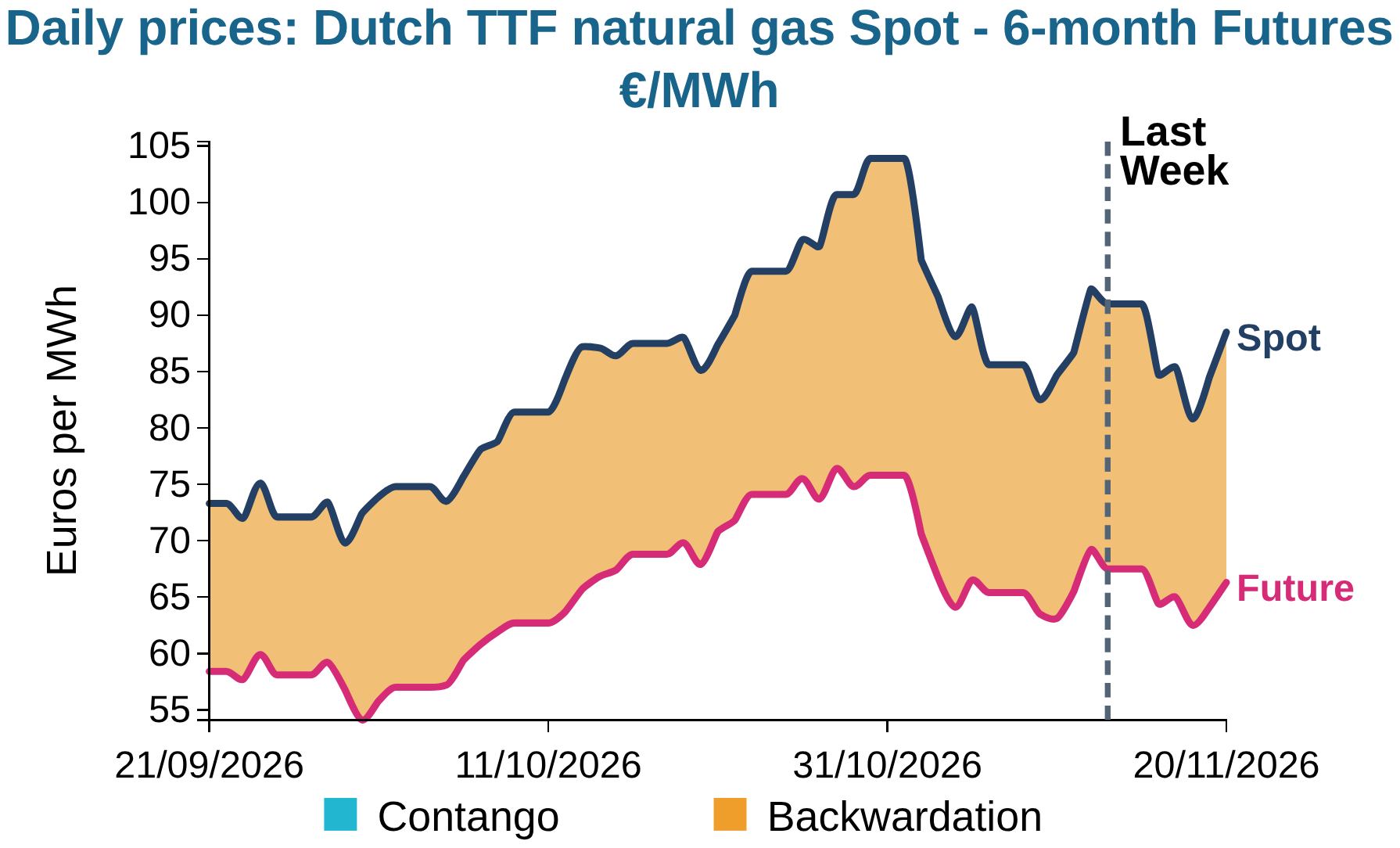
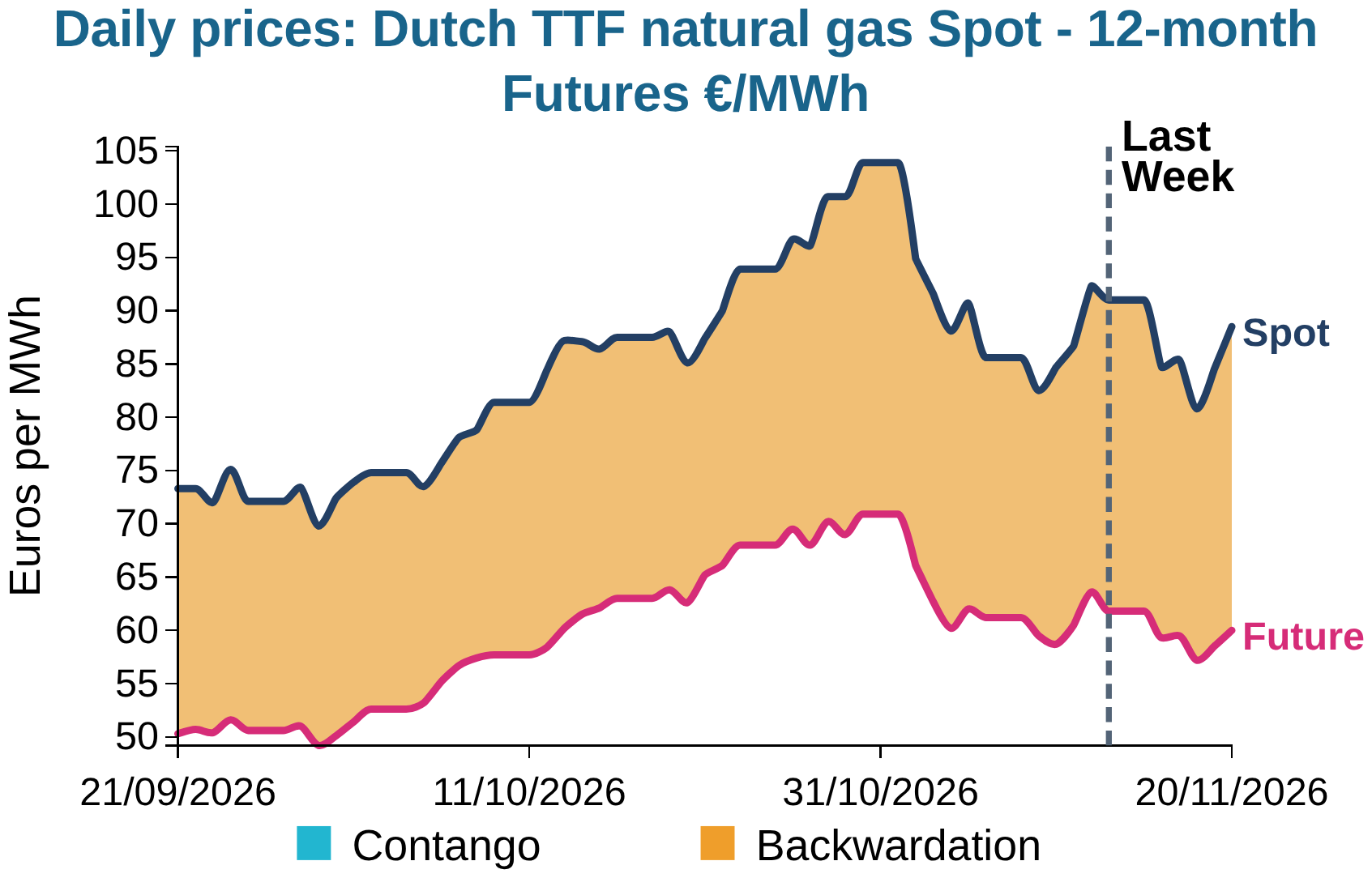
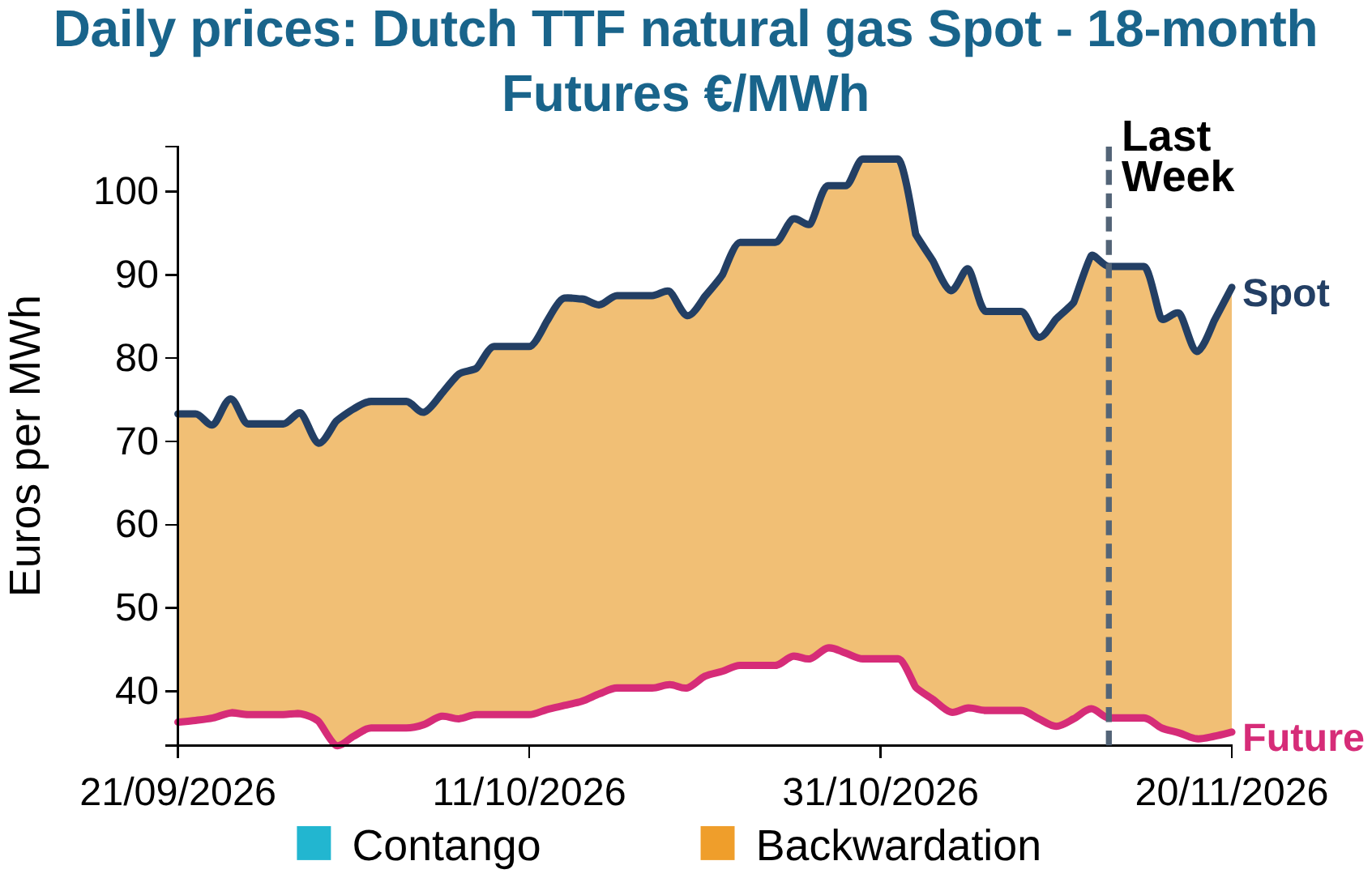
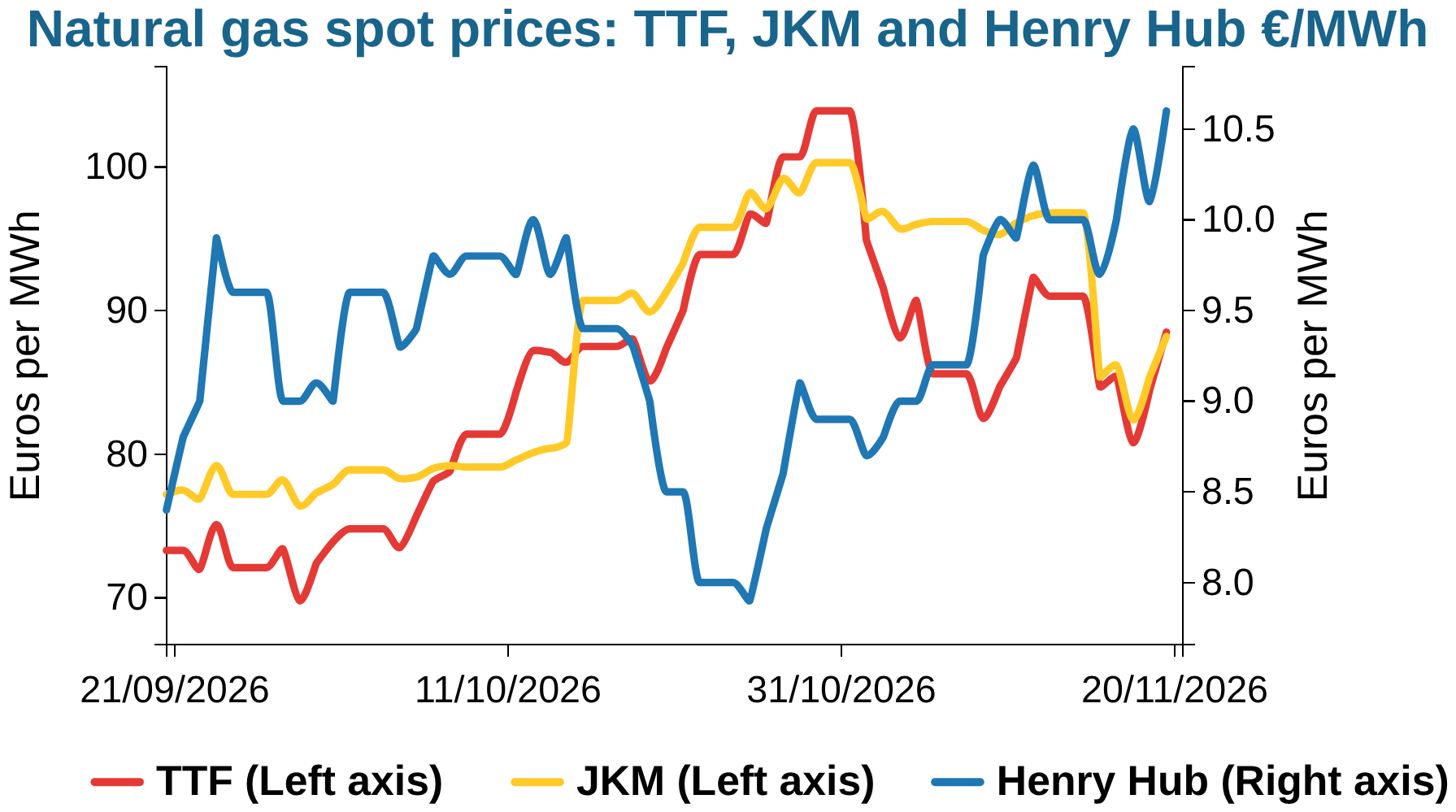
European natural gas prices resumed their downward trend this week, supported by easing concerns over exports through the Strait of Hormuz, increased availability of US liquefied natural gas (LNG), and subdued Asian demand. Persistently high LNG prices on international markets continue to discourage purchases by Asian buyers, particularly in China and Japan, reducing competition for supplies and benefiting European importers. Weak Asian demand was especially evident in the performance of the JKM benchmark, which recorded the sharpest decline among the main international natural gas price benchmarks.
However, several factors continue to limit the decline in prices, including low European gas storage levels, which have fallen below 70% of available capacity, ongoing disruptions to Norwegian gas production, and persistent constraints on Qatar's LNG production and export capacity.
In contrast to European and Asian markets, the US Henry Hub benchmark recorded a modest week-on-week increase, supported by strong demand for natural gas used in LNG production for export. Nevertheless, relatively abundant domestic supply continues to limit upward price pressures.
Want to stay up to date on commodity market trends?
Subscribe to the free PricePedia newsletter!
Crude Oil
On friday, november 20, Brent crude oil prices closed at 92.6 $/bbl, down -3.2 $/bbl from the previous week's close. WTI crude oil recorded a sharper decline of -4.6 $/bbl, closing at 84 $/bbl.
Chart 2: Crude Oil price trends
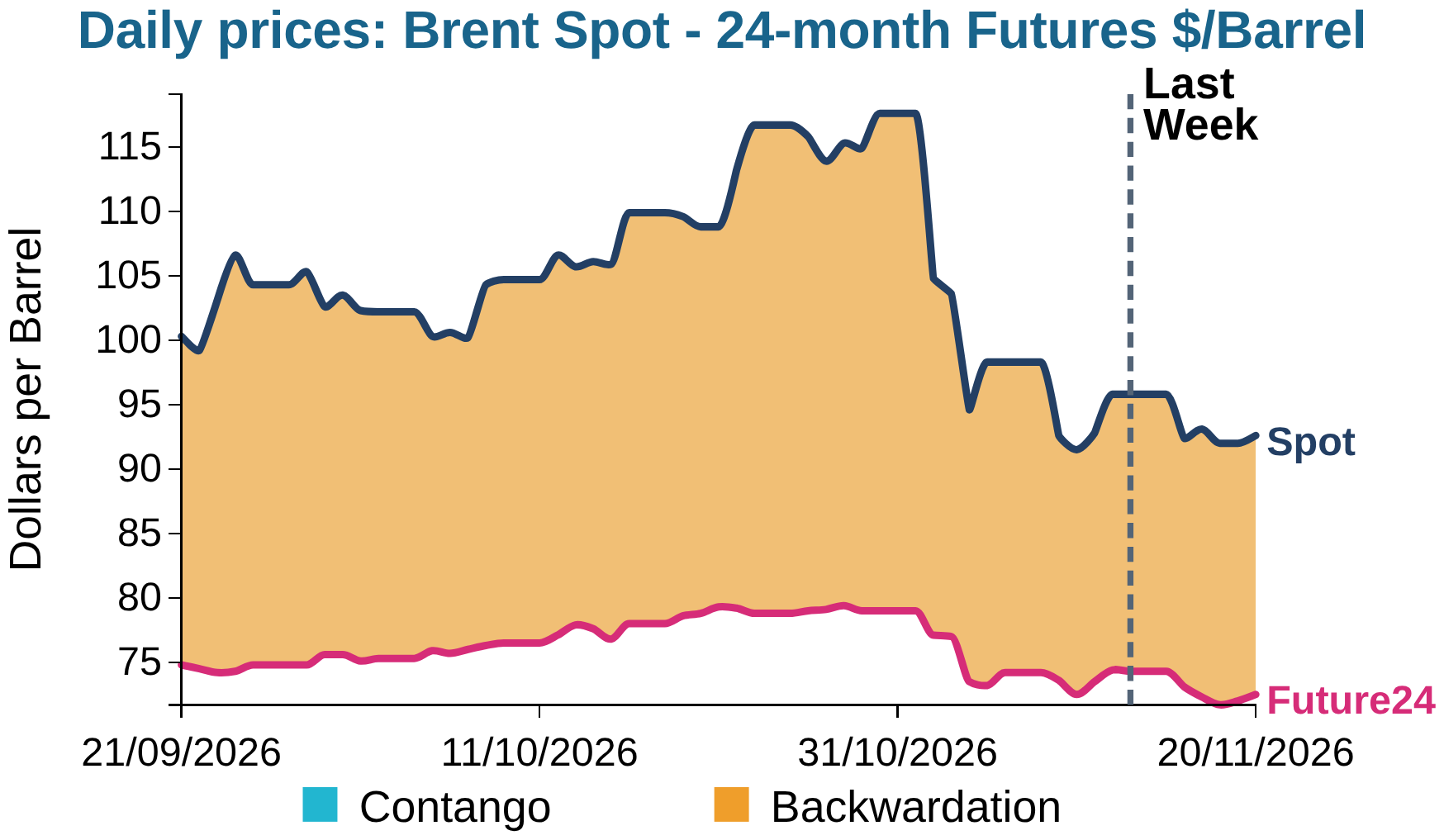
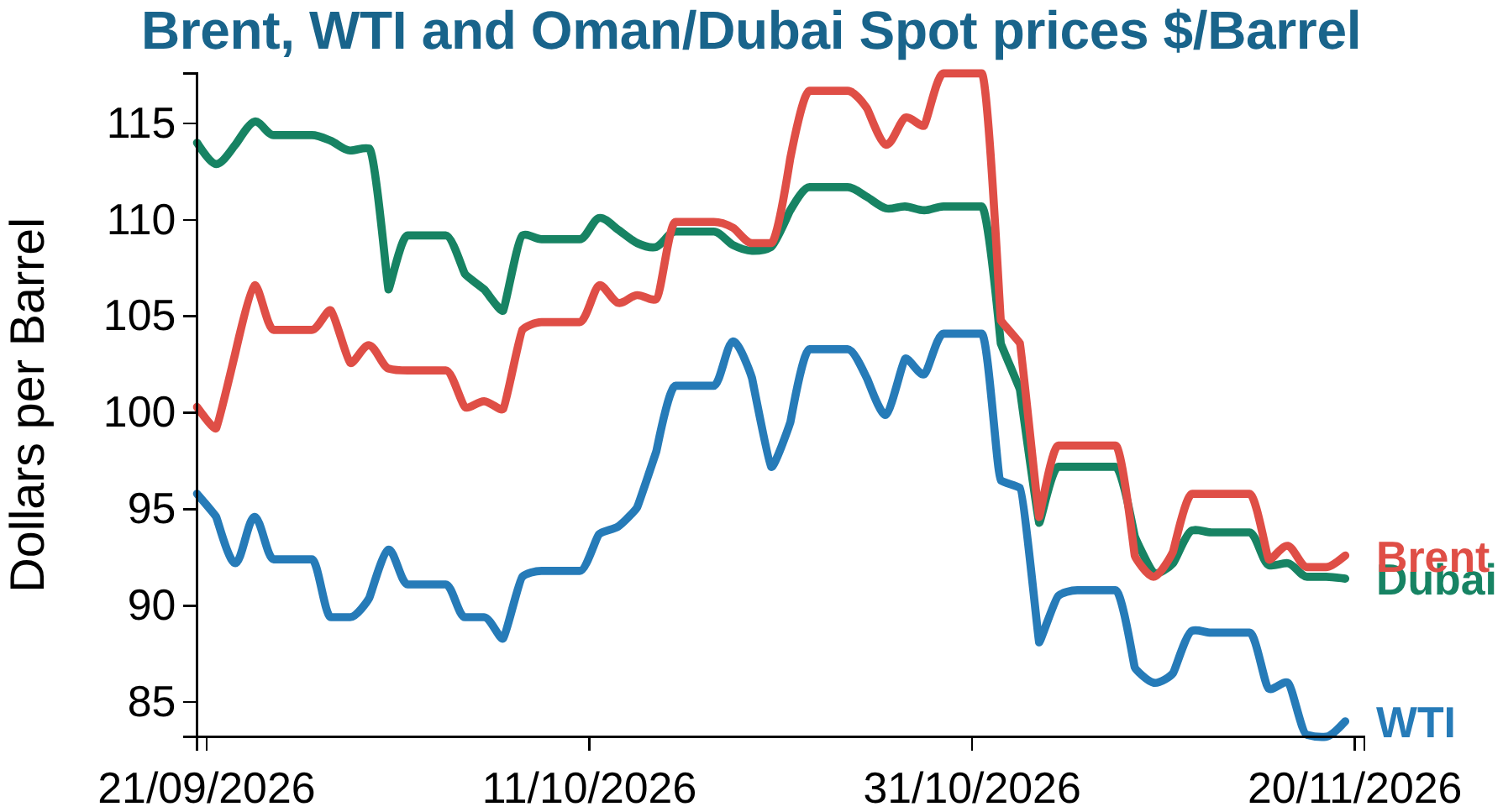
Crude oil prices extended their downward trend for the second consecutive week, driven by expectations of a growing global supply surplus. Alongside the gradual recovery in Middle Eastern exports, further signs of easing supply constraints have emerged in the US market. According to the latest data from the Energy Information Administration (EIA), US commercial crude oil inventories increased by 3.4 million barrels in the week ending November 13, marking the second consecutive weekly build.
However, the recovery in exports from the Persian Gulf continues to face significant logistical challenges. Reduced tanker availability for shipments to the Gulf of Oman, elevated insurance costs, and renewed attacks on vessels remain obstacles to the full normalization of trade flows. These disruptions are compounded by interruptions to Russian refining operations following intensified Ukrainian attacks on energy infrastructure. Despite expectations of increased crude oil availability, the oil market therefore remains exposed to supply risks, which continue to limit downward pressure on prices.
Thermal Coal
The front-month european API2 thermal coal futures contract closed at 132.5 $/tonne, down -3.9 $/tonne from the previous week. Australian thermal coal prices were comparatively stable, closing at 146.8 $/tonne, up just 1.0 $/tonne week-on-week.
Chart 3: European Thermal Coal price trends
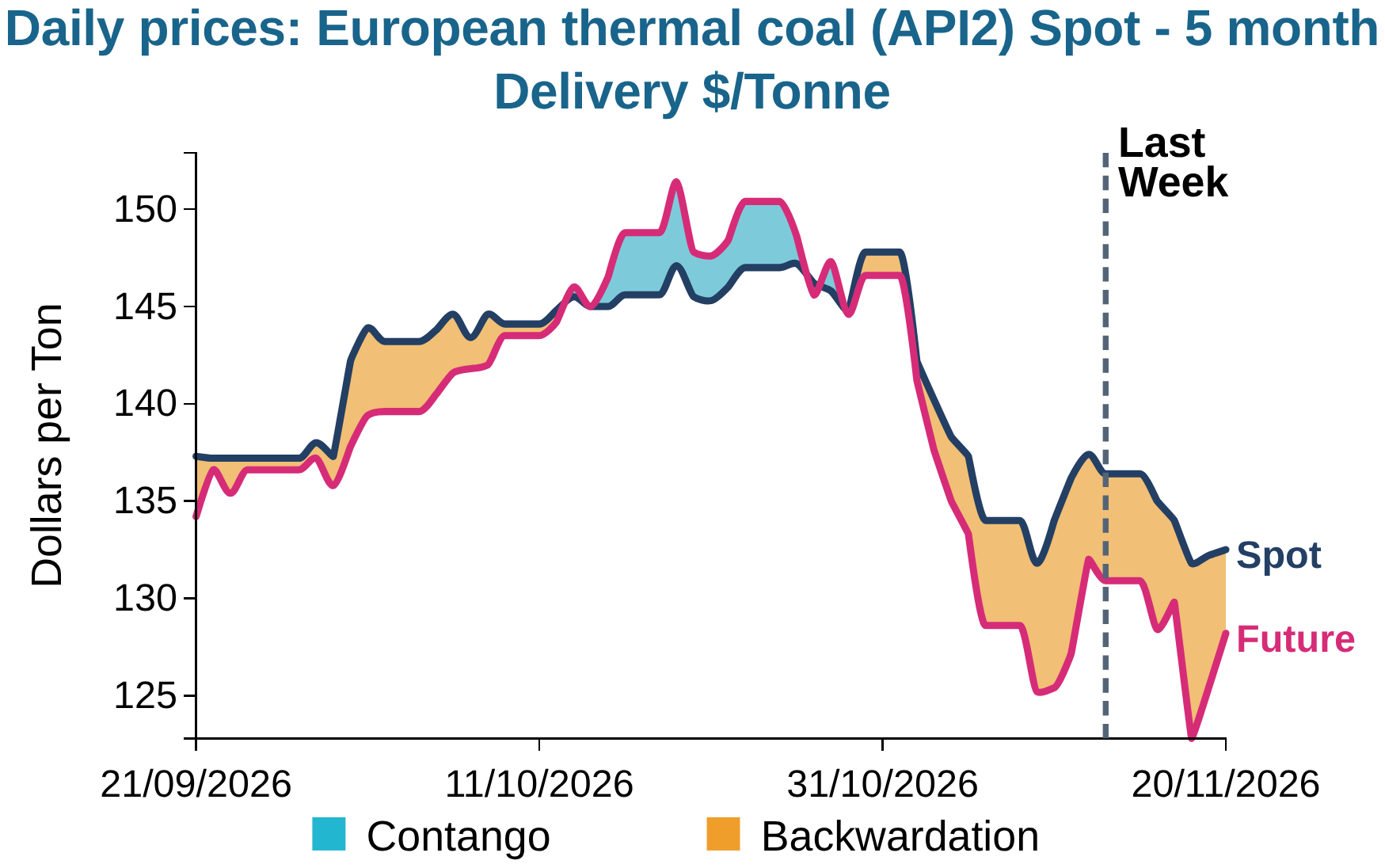
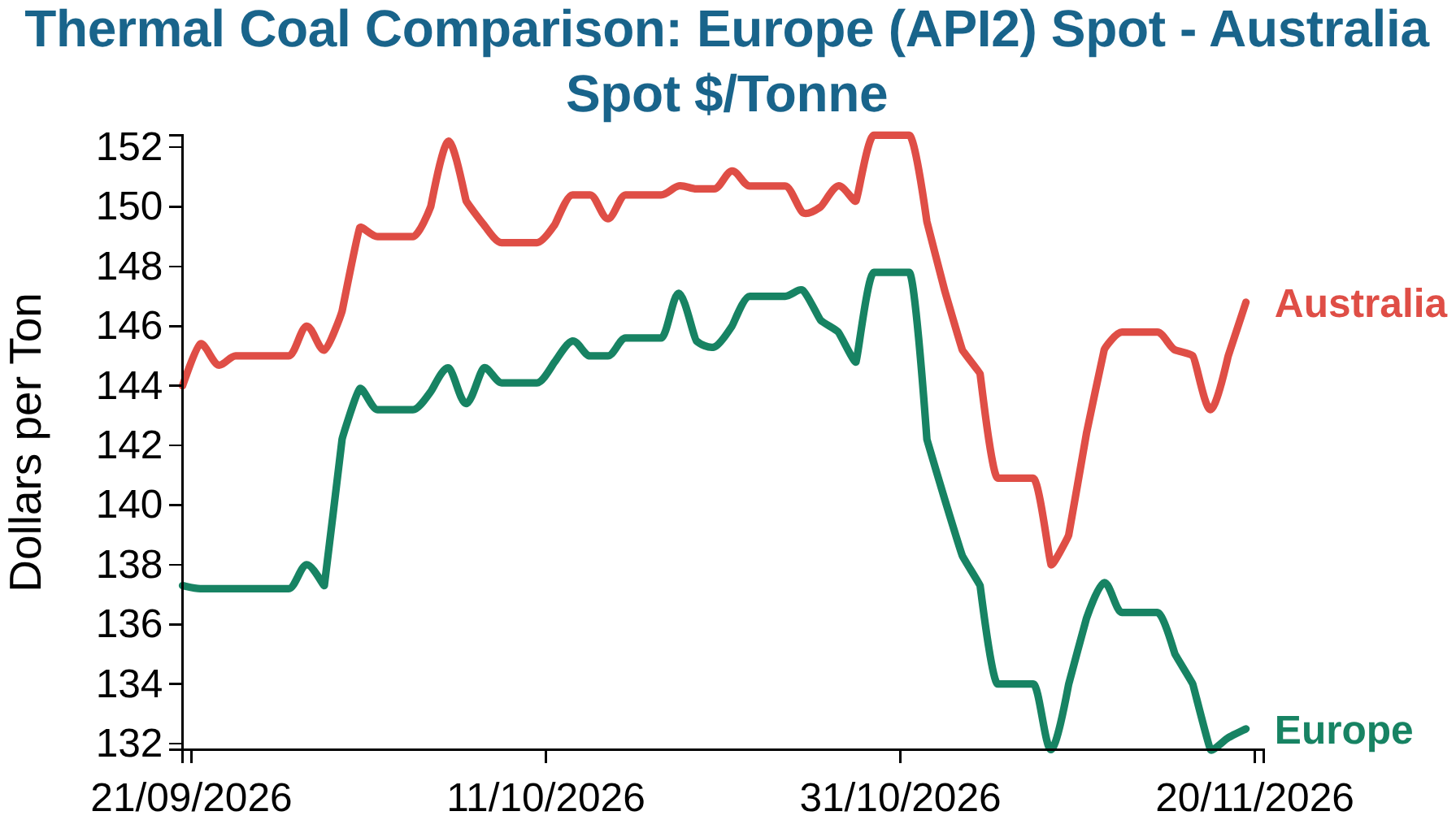
The European thermal coal market followed the broader decline in energy prices, weighed down by falling natural gas prices, which reduced the economic attractiveness of coal-fired power generation. However, the decline in EU Emissions Trading System (EU ETS) carbon allowance prices, which fell by more than 6%, helped mitigate downward pressure on coal prices. Lower carbon costs particularly benefit coal-fired power plants, improving their competitiveness relative to gas-fired facilities and, consequently, supporting coal demand.
You may be interested in:

Strait of Hormuz risk after more than six months of conflict in the Persian Gulf
Published by Pasquale Marzano. .
Energy Organic Chemicals Petrolchimica Strait of HormuzTrade flows and prices of the commodities most vulnerable to a Strait of Hormuz closure [ Read all ]

Forecasting CO2 allowance prices in the European ETS market
Published by Martina Gallus. .
Energy Analysis tools and methodologiesUn approccio econometrico a due stadi [ Read all ]
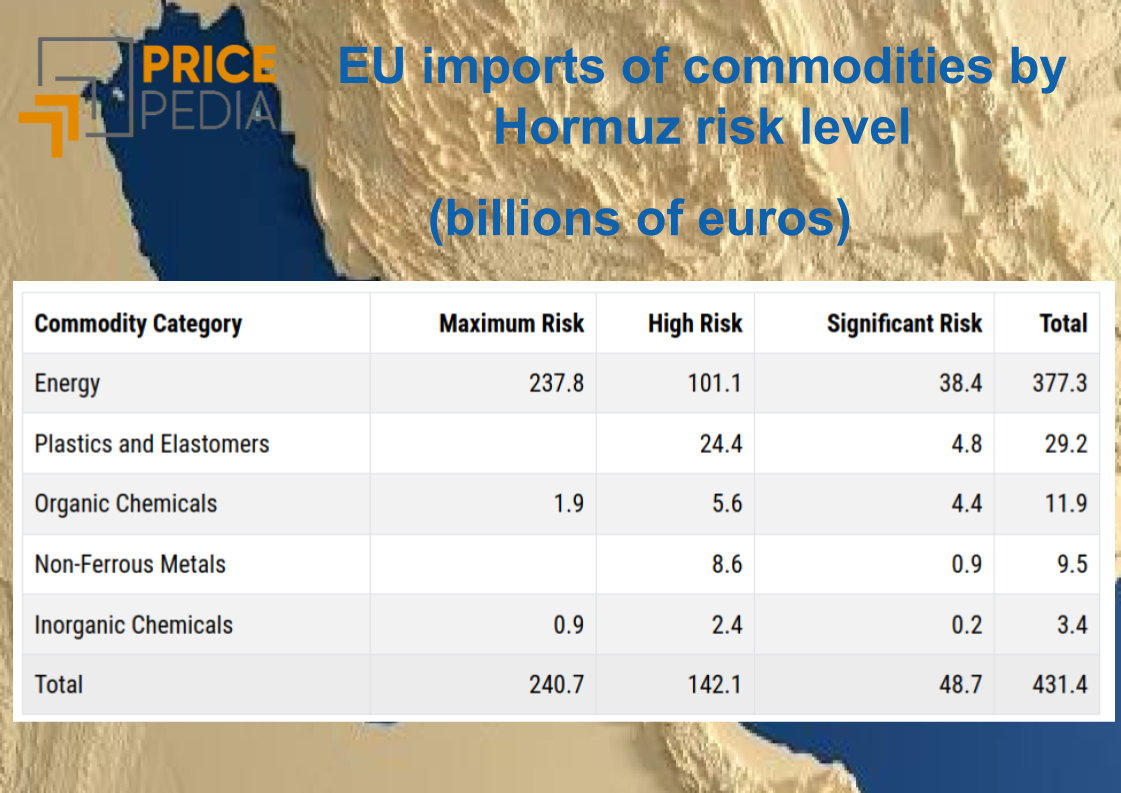
Supply Risk in the Event of a Closure of the Strait of Hormuz
Published by Luigi Bidoia. .
Energy Organic Chemicals Petrolchimica Strait of HormuzLe commodity europee maggiormente esposte al rischio Hormuz [ Read all ]