The reaction of commodity markets to the results of the U.S. midterm elections
The Democrats' victory in the United States reduces geopolitical risk
Published by Luca Sazzini. .
Conjunctural Indicators Commodities Financial WeekThe outcome of the US midterm elections, with a clear victory for the Democrats, helped ease market concerns in the energy sector over a possible escalation of the conflict with Iran. The Republicans' electoral defeat increases Trump's political incentives to seek a diplomatic solution, fuelling expectations of a gradual normalisation of oil exports from the Middle East and reducing the geopolitical risk premium embedded in crude oil prices.
Overall, the entire energy sector was characterised by a widespread decline in prices, which also affected European natural gas, despite low temperatures and the start of the heating season, with the first withdrawals beginning to draw down inventories.
By contrast, precious metal prices recovered, with gold moving back above $4000 per ounce, supported by falling energy prices. Demand for gold from central banks remains high, but in the short term prices will continue to be influenced primarily by expectations of a more restrictive monetary policy stance, fuelled by recent inflationary pressures.
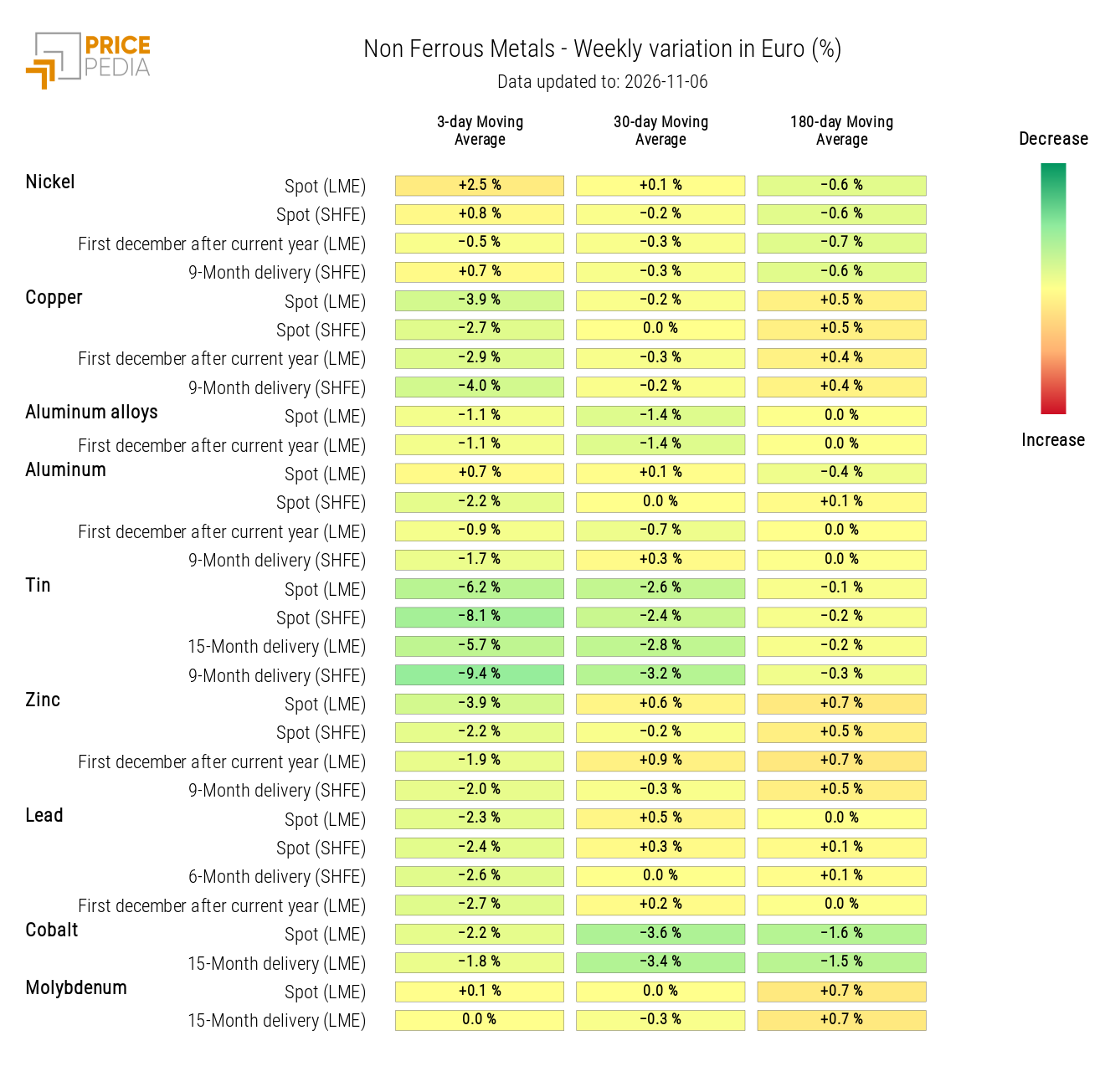
Among industrial metals, a slight increase was recorded in ferrous metals, while non-ferrous metals underwent a correction. The steepest declines affected tin and copper, two base metals particularly closely linked to the semiconductor industry and the development of artificial intelligence. The Democrats' victory fuelled expectations of a slowdown in investment in data centre construction. This scenario triggered stock market corrections in Big Tech and semiconductor manufacturers, partially affecting the prices of metals used in their construction.
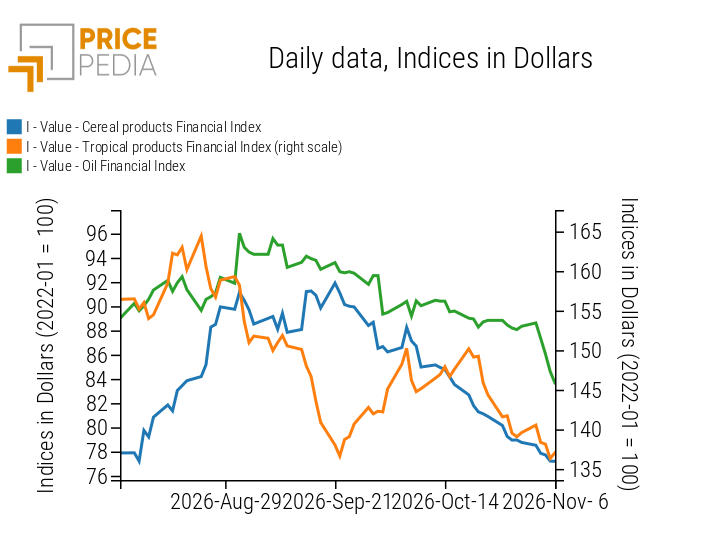
In the agricultural commodities sector, prices declined across all three main categories: cereals, tropical products and edible oils.
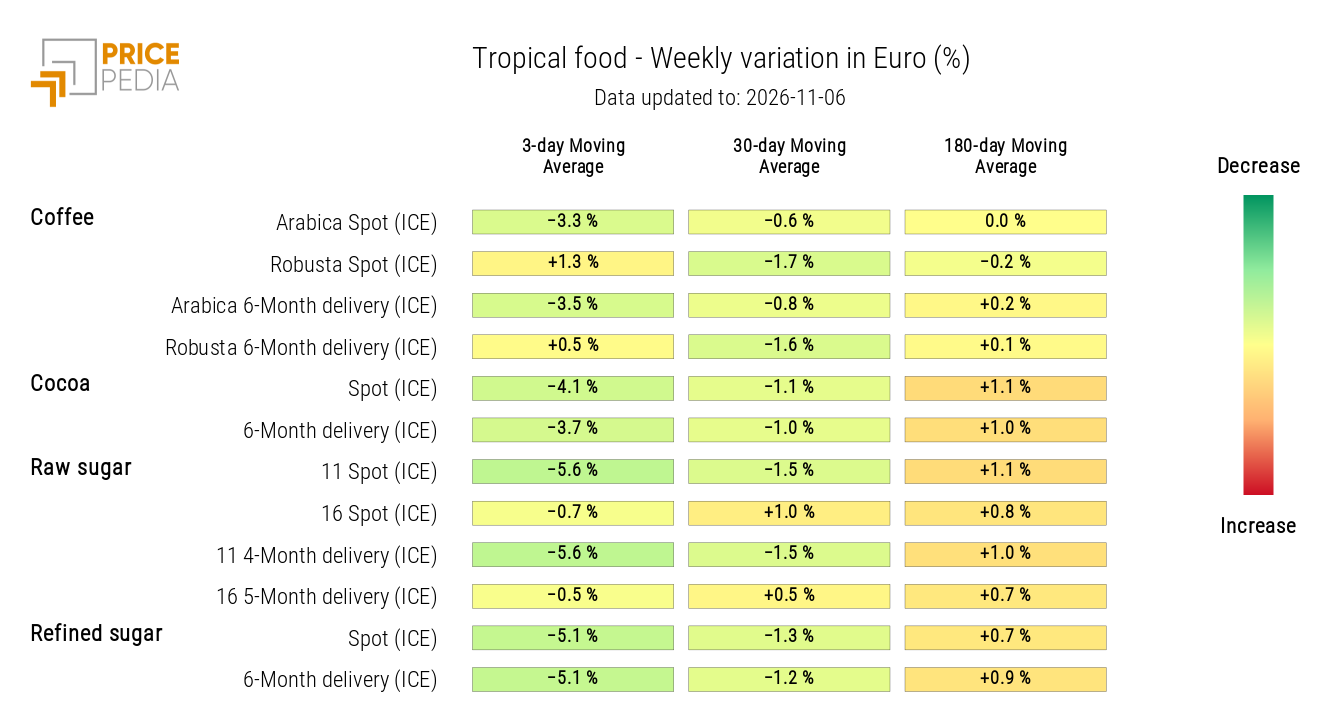
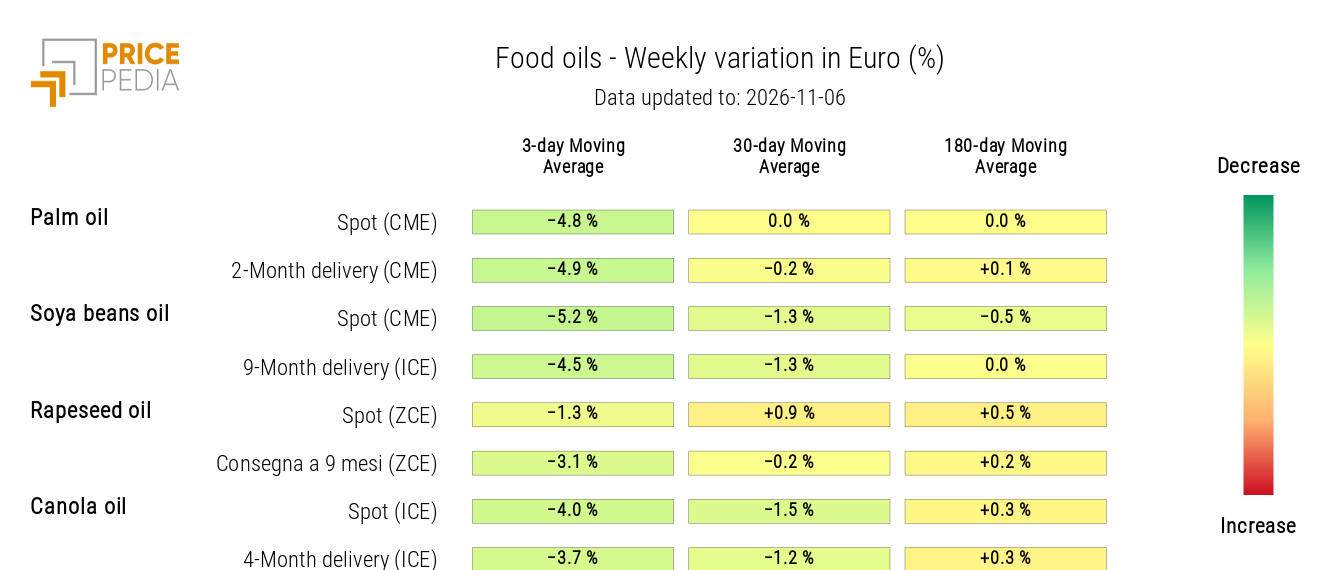
In the cereals sector, supply risks from the Black Sea region partially eased amid expectations of possible diplomatic developments in the conflict between Ukraine and Russia. Among tropical products, prices were mainly affected by improved production prospects and greater expected availability of coffee and cocoa, following the recovery of harvests in the main producing countries. Edible oils, on the other hand, followed the decline in energy prices, particularly those used in biodiesel production. These oils represent an alternative to fossil fuels and therefore tend to be affected by changes in oil prices.
NUMERICAL APPENDIX
ENERGY
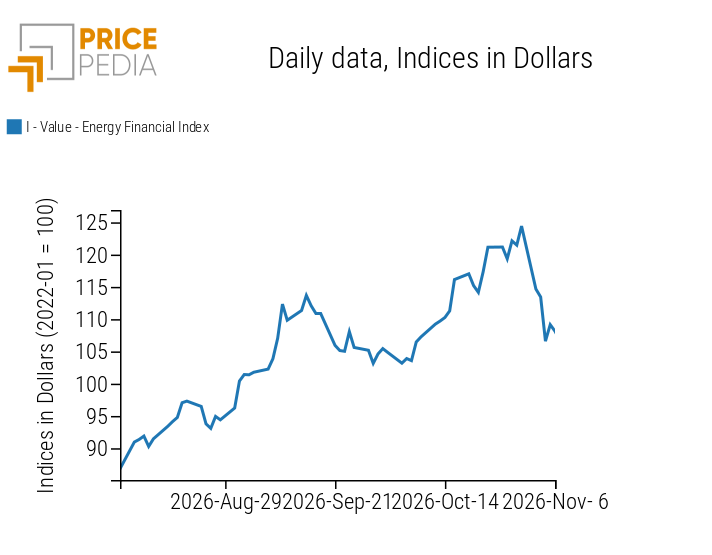
The PricePedia financial index of energy products shows a price correction, in line with the reduction in the geopolitical risk premium.
PricePedia Financial Index of Energy Prices in US Dollars
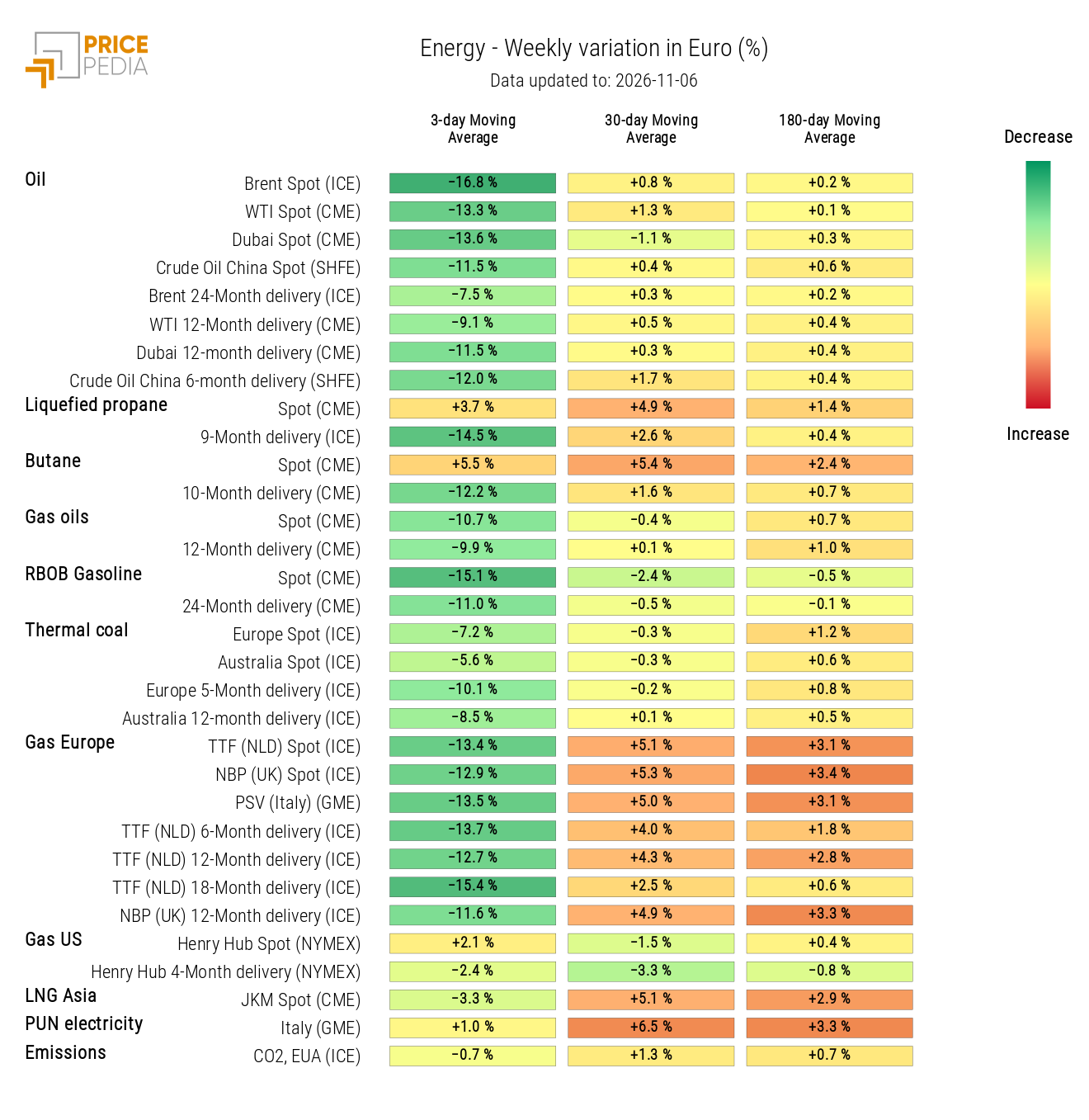
The energy heatmap turns green, reflecting the extent of the price decline.
HeatMap of Energy Prices in Euro
PLASTICS AND ELASTOMERS
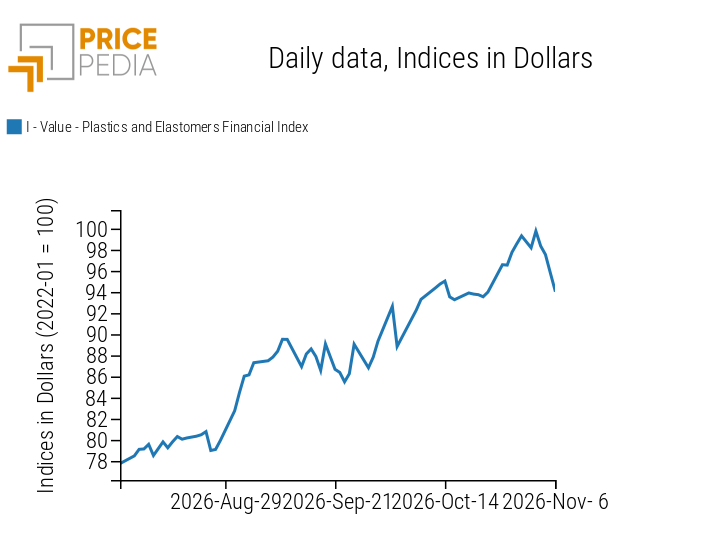
The PricePedia financial index of plastics and elastomers breaks its upward trend due to the decline in energy prices.
PricePedia Financial Index of Plastics and Elastomer Prices in US Dollars
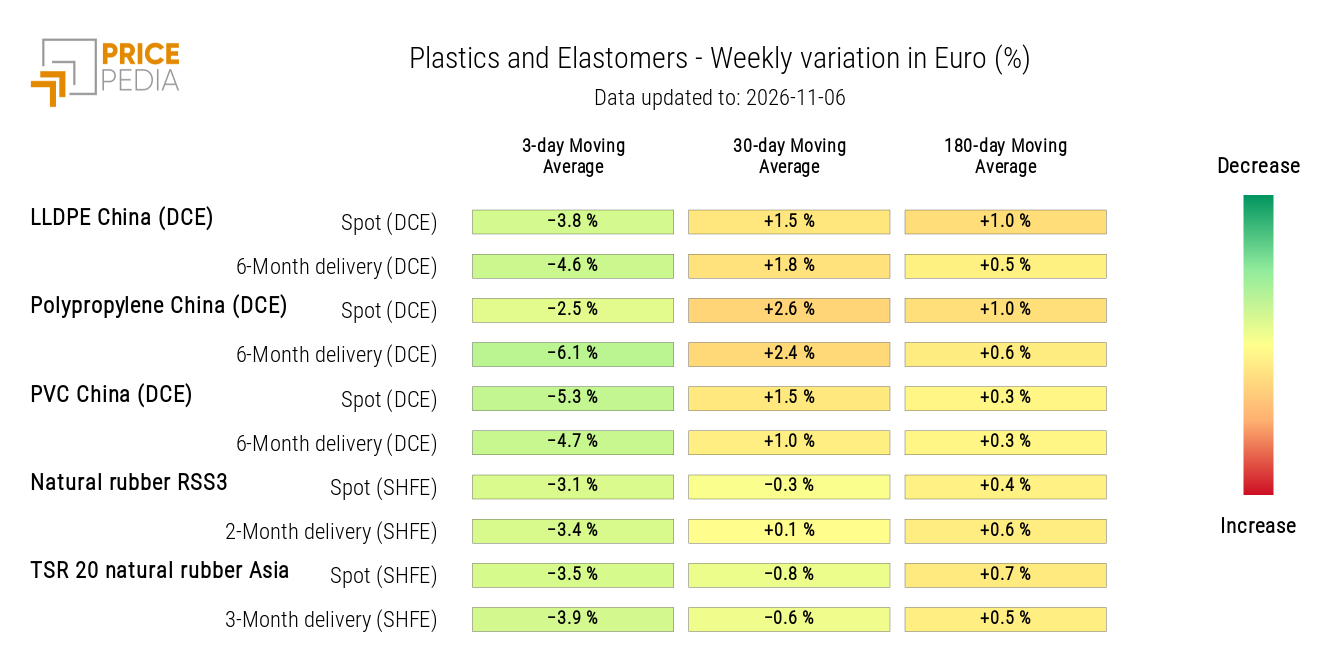
The heatmap highlights a widespread decline in prices.
HeatMap of Plastics and Elastomer Prices in Euro
PRECIOUS METALS
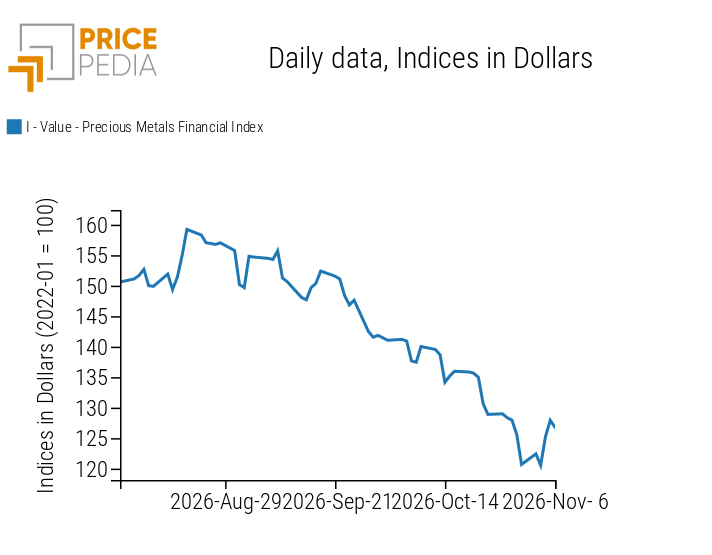
The financial index of precious metals shows a recovery in prices, confirming the recent negative correlation with energy prices.
PricePedia Financial Index of Precious Metal Prices in US Dollars
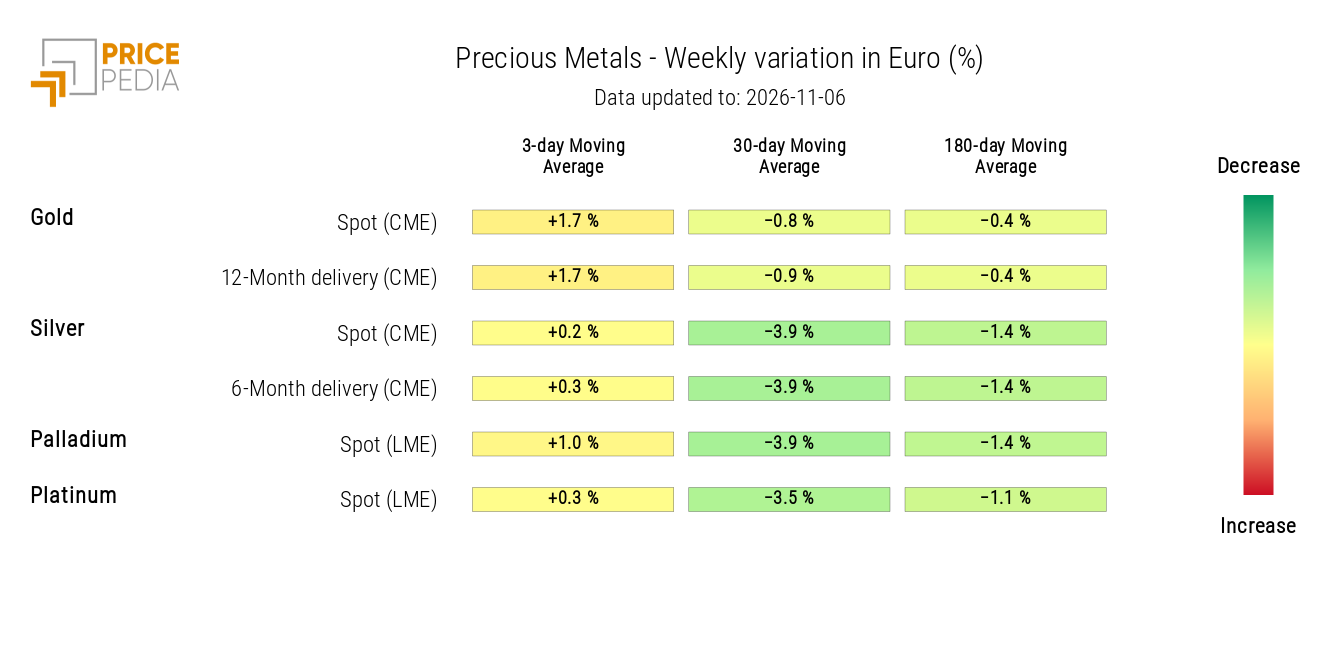
The precious metals heatmap shows a slight increase in gold prices.
HeatMap of Precious Metal Prices in Euro
FERROUS METALS
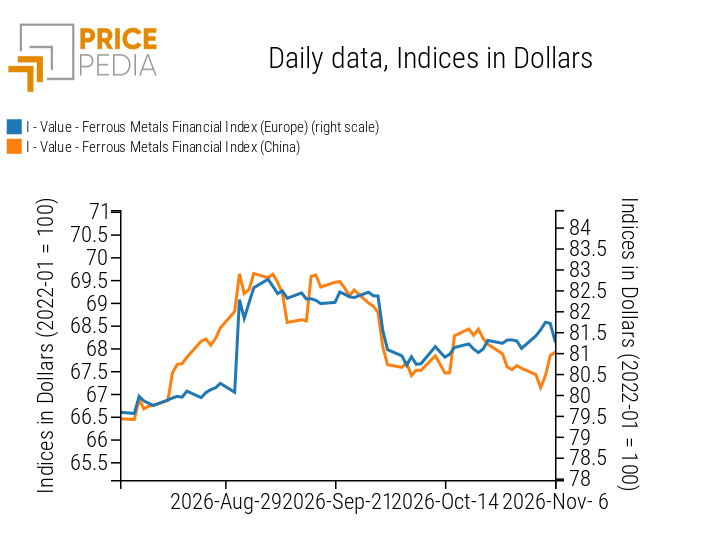
Despite fluctuations, both ferrous metal indices show a weekly increase in prices.
PricePedia Financial Indices of Ferrous Metal Prices in US Dollars
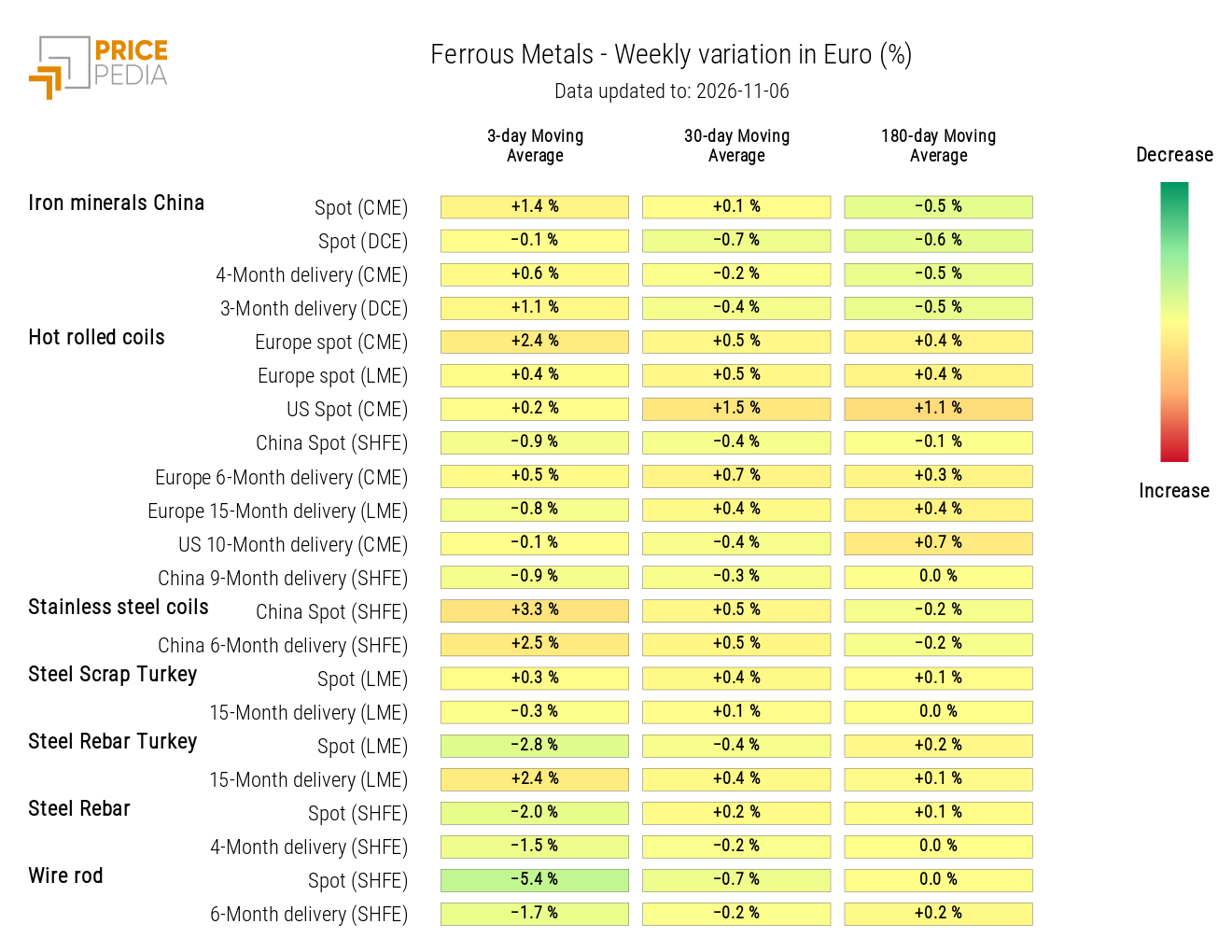
The heatmap analysis highlights an increase in European hot-rolled coil prices and Chinese iron ore and stainless steel coil prices. By contrast, rebar and wire rod prices declined.
HeatMap of Ferrous Metal Prices in Euro
Do you want to stay up-to-date on commodity market trends?
Sign up for PricePedia newsletter: it's free!
INDUSTRIAL NON-FERROUS METALS
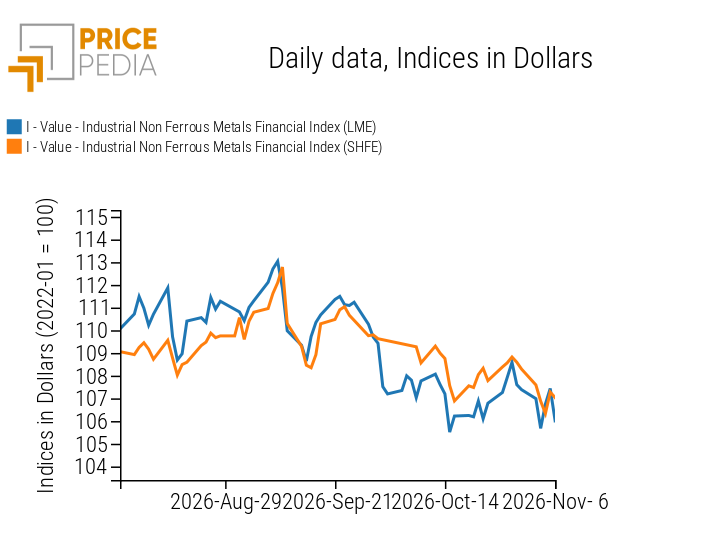
Both financial market indices for non-ferrous metals are undergoing a period of declining prices.
PricePedia Financial Indices of Industrial Non-Ferrous Metal Prices in US Dollars
The non-ferrous metals heatmap highlights the price correction in tin and copper.
HeatMap of Non-Ferrous Metal Prices in Euro
FOOD
All three food product indices share a downward trend.
PricePedia Financial Indices of Food Prices in US Dollars
CEREALS
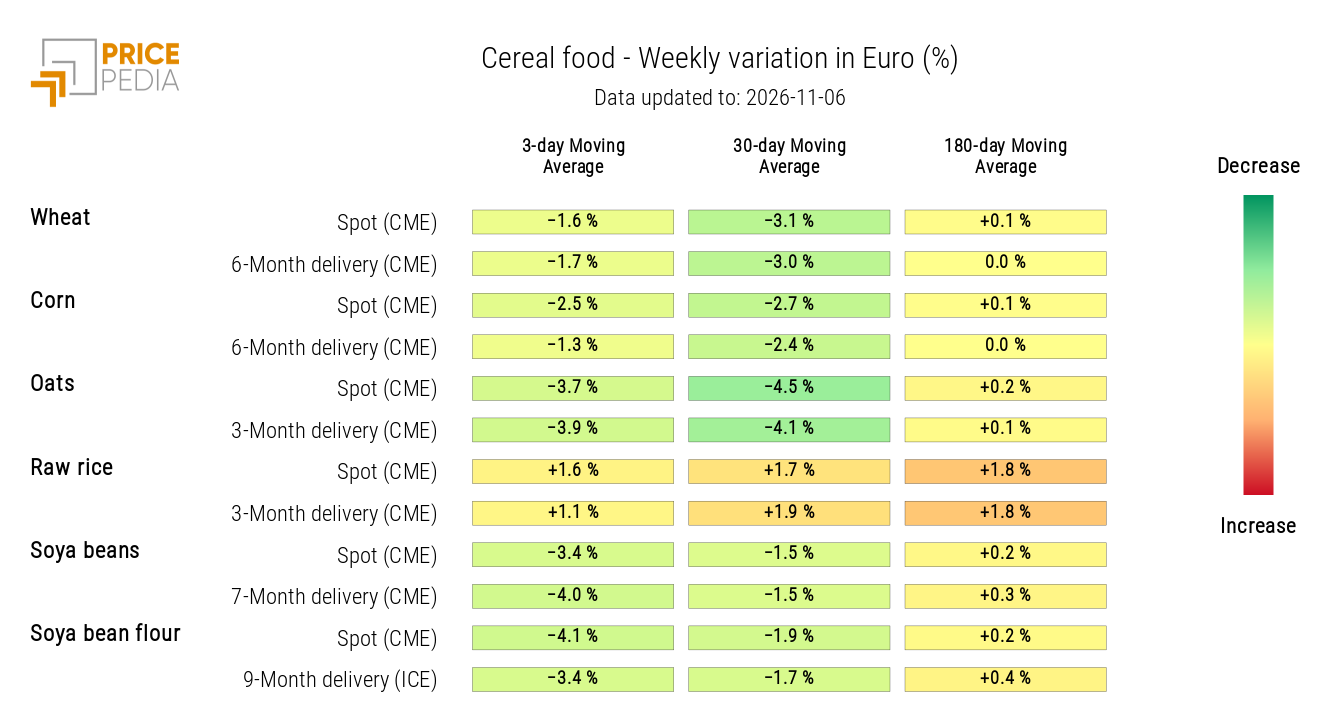
The cereals heatmap shows a decline in soybean and oat prices.
HeatMap of Cereal Prices in Euro
TROPICAL PRODUCTS
With the exception of robusta coffee, the tropical products heatmap shows a widespread decline in prices.
HeatMap of Tropical Food Prices in Euro
OILS
The edible oils heatmap shows marked price declines.
HeatMap of Edible Oil Prices in Euro
You may be interested in:

Supply-side tensions are exacerbating backwardation in non-ferrous metals
Published by Luca Sazzini. .
Conjunctural Indicators Commodities Financial WeekExpectations of monetary tightening are rising [ Read all ]

China economic update September 2026
Published by Luca Sazzini. .
Conjunctural Indicators Global Economic TrendsIndustrial commodity prices between rising energy input costs and domestic competitive pressure [ Read all ]

Commodity markets influenced by supply tensions and interest rate expectations
Published by Luca Sazzini. .
Conjunctural Indicators Commodities Financial WeekThe announcement of new production cuts in Indonesia is boosting the nickel market’s recovery [ Read all ]