Supply Risk in the Event of a Closure of the Strait of Hormuz
Which Commodities Face the Greatest Risks
Published by Luigi Bidoia. .
Energy Organic Chemicals Petrolchimica Strait of Hormuz
European companies are looking with clear relief at the prospect of the reopening of the Strait of Hormuz and a return to normal maritime trade flows. Even if the current tensions involving the United States, Israel, and Iran were to ease, what has happened in recent weeks leaves a clear lesson: Hormuz will remain one of the world’s main geopolitical chokepoints for global trade.
For this reason, the risk associated with a possible closure must become a permanent part of supply risk assessments for key commodities.
A Measure of Supply Risk Resulting from a Closure of Hormuz
To quantify this specific risk component, we estimated for each PricePedia commodity the share of trade flows passing through the Strait of Hormuz and destined for the European Union, relative to total EU imports of the same commodity. In the absence of complete direct data on the logistics routes actually used, this share was approximated — with a possible slight overestimation — by using as a proxy the flows exported to the EU by the eight countries bordering the Persian Gulf. We denote this indicator as SHUE(i), where i identifies the individual commodity.
However, this indicator captures only the direct component of the risk. Most commodities are traded in global markets, where tensions, shortages, and trade flow reallocations tend to spread rapidly across different geographic areas. As a result, even when the EU has low direct exposure, a closure of Hormuz could still generate significant effects on European supply conditions if a substantial share of global demand depends on goods transiting through the Strait.
To take this systemic dimension into account, we therefore built a second indicator equal to the share of exports from the eight Persian Gulf countries in total world trade of the same commodity. We denote this share as SHWLD(i). It represents the indirect component of European vulnerability: the greater the role of these countries in global supply, the stronger the spillover effects on prices, availability, and delivery times may be, including for EU companies.
To obtain a synthetic measure of overall vulnerability, we combined the two indicators through a multiplicative function. This choice reflects two economic assumptions. First, risk tends to increase when both direct and indirect exposure rise simultaneously. Second, the effects are likely to grow more than proportionally as the shares involved increase: a rise from 1% to 2% generally has a limited impact, whereas an increase from 10% to 20% can produce far more significant consequences.
Based on these considerations, the supply vulnerability index of EU companies to a closure of the Strait of Hormuz is defined as follows:
IND-VUL(i) = (1 + SHUE(i)/100)2 * (1 + SHWLD(i)/100)1.5
The different values of the exponents make it possible to assign greater weight to the direct component of risk — namely the dependence of EU imports on flows passing through Hormuz — than to the indirect component, linked to tension and shortage effects in the global market.
Commodities Facing the Highest Risk
The table below reports, for the eight commodities showing a particularly high IND-VUL index (above 2), the main indicators used in the calculation: the share of EU imports exposed to flows passing through Hormuz (SHUE), the share of world trade attributable to the Persian Gulf countries (SHWLD), and the value of European Union imports in 2025.
A high index value identifies commodities for which the closure or severe restriction of traffic through the Strait of Hormuz could generate particularly intense risks for European companies. These risks may emerge in direct form, through supply difficulties and delivery delays, or in indirect form, through rising international prices, trade flow reallocations, and stronger competition among economic regions for available supplies.
Commodities Most Vulnerable to a Closure of the Strait of Hormuz
| Commodity | EU Share (SHUE) | World Share (SHWLD) | Vulnerability Index | EU Imports (€ Bn) |
|---|---|---|---|---|
| Crude Oil | 10.8 | 39.0 | 2.02 | 234.5 |
| Fuel Oil for Chemical Uses | 41.1 | 10.9 | 2.30 | 3.3 |
| Helium | 20.1 | 34.8 | 2.11 | 0.9 |
| Ethylene Glycol | 14.6 | 49.5 | 2.48 | 0.8 |
| Cyclohexane | 33.2 | 31.6 | 2.72 | 0.5 |
| Diethylene Glycol | 25.2 | 21.5 | 2.17 | 0.3 |
| p-Xylene | 28.7 | 16.2 | 2.03 | 0.2 |
| Triethanolamine | 25.8 | 35.7 | 2.59 | 0.1 |
Within this group, by far the most economically relevant commodity in terms of EU import value is crude oil, with estimated purchases in 2025 of around €235 billion. The risk associated with this commodity does not concern only the energy sector, but extends downstream across the entire European production system: refining, transport, logistics, fuel production, basic petrochemicals, and more broadly all energy-intensive industries.
The second most economically important commodity in the group is fuel oil for chemical uses, a relevant energy and process input for numerous industrial activities. Any tensions affecting this item could increase operating costs across broad segments of the European chemical industry. The third commodity by import value is helium, whose EU imports in 2025 approached €1 billion. Although relatively small in market size, helium plays a strategic role in many high-tech applications, including healthcare, electronics, semiconductors, specialized welding, and scientific research.
The commodity showing the highest vulnerability index, however, is cyclohexane, due to a share of flows through Hormuz exceeding 30% both relative to EU imports and to world trade. This is particularly significant because cyclohexane is an essential raw material for the production of intermediates used in the nylon value chain, engineering plastics, and numerous industrial materials.
Very high vulnerability is also found in ethylene-derived glycols — especially monoethylene glycol and diethylene glycol — used in the production of resins, polymers, technical fluids, detergents, and industrial formulations. Similarly, p-xylene, which is crucial in the production of PTA and therefore PET, points to potential downstream effects on the packaging, bottle, and synthetic fiber industries.
Finally, the presence of triethanolamine among the most vulnerable commodities deserves attention. This result reflects both the petrochemical production capacity of the Persian Gulf countries and the role of some regional trading hubs in international re-exports. Triethanolamine is used in detergents, cosmetics, cement, surface treatment, and specialty chemical formulations: any disruption in supply could therefore spread downstream across numerous manufacturing segments.
An Overview of Commodities at Risk
Using the vulnerability index described above, in addition to the commodities included in the highest-risk group, two further categories were identified: a high-risk group (with IND-VUL between 1.5 and 2) and a significant-risk group (with IND-VUL between 1.2 and 1.5).
The table below reports the value of EU imports in 2025 for the commodities falling within these three risk categories. Import values are also broken down by the different commodity groups.
EU Commodity Imports (€ Bn) by Hormuz Risk Level
| Commodity Category | Maximum Risk | High Risk | Significant Risk | Total |
|---|---|---|---|---|
| Energy | 237.8 | 101.1 | 38.4 | 377.3 |
| Plastics and Elastomers | 24.4 | 4.8 | 29.2 | |
| Organic Chemicals | 1.9 | 5.6 | 4.4 | 11.9 |
| Non-Ferrous Metals | 8.6 | 0.9 | 9.5 | |
| Inorganic Chemicals | 0.9 | 2.4 | 0.2 | 3.4 |
| Total | 240.7 | 142.1 | 48.7 | 431.4 |
Do you want to stay up-to-date on commodity market trends?
Sign up for PricePedia newsletter: it's free!
In absolute terms, the commodity group facing the greatest risks is Energy Commodities, where, in addition to crude oil, liquefied natural gas is also included and accounts for almost half of the more than €100 billion of EU imports falling within the High-Risk group.
The second largest category by value of at-risk imports is Plastics and Elastomers, with almost €25 billion of imports classified as High Risk. A large share of the commodities in this group belongs to the ethylene value chain.
At-risk organic chemical commodities exceed €10 billion overall. This group is composed of a wide range of products, among which Urea and Methanol stand out.
At-risk non-ferrous metals are almost entirely attributable to Primary Aluminium Alloys.
A significant weight is also represented by inorganic chemicals, where, in addition to helium in the Maximum-Risk group, commodities such as Ammonia and Sulphur are included in the High-Risk group.
Conclusions
EU imports showing significant or higher vulnerability to the effects of a closure of the Strait of Hormuz reached a value of €431 billion in 2025. A substantial share of these imports concerns crude oil, refined products, and liquefied natural gas. However, the data presented in this article highlight that the risk linked to the Strait of Hormuz does not concern only oil and gas, but also involves a wide range of chemical intermediates and industrial raw materials whose unavailability could generate significant effects across European value chains.
You may be interested in:
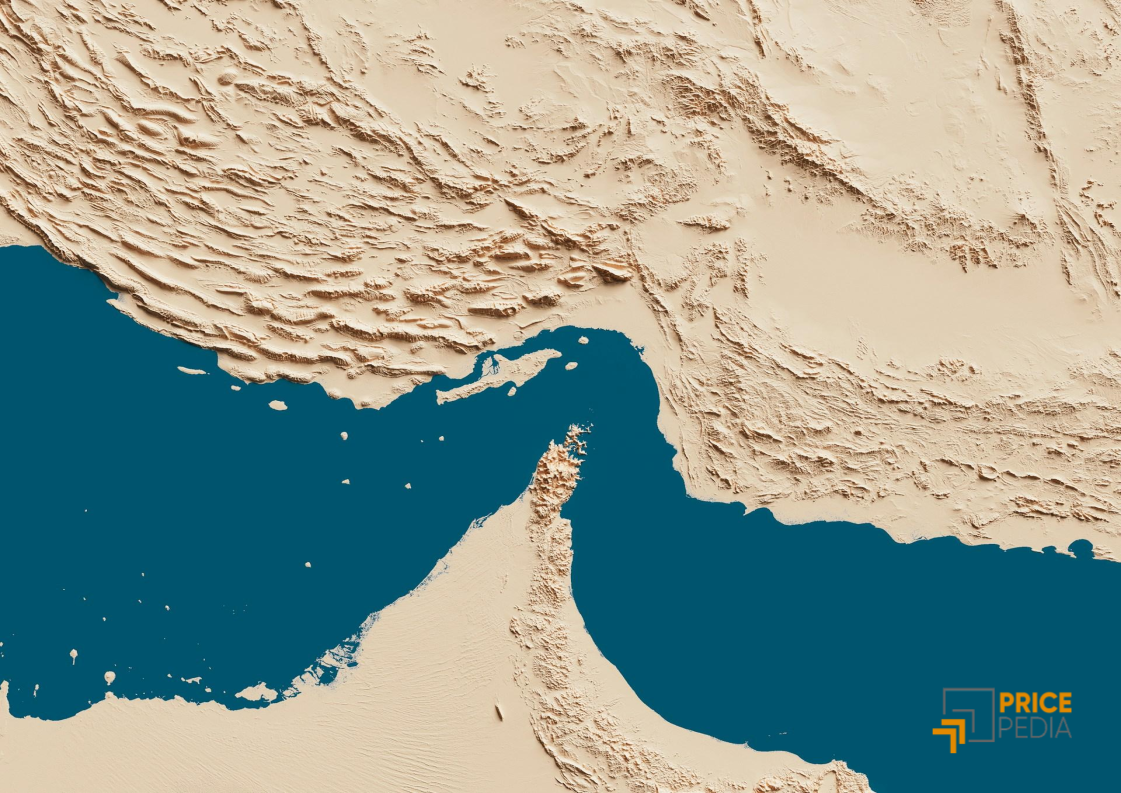
Strait of Hormuz risk after more than six months of conflict in the Persian Gulf
Published by Pasquale Marzano. .
Energy Organic Chemicals Petrolchimica Strait of HormuzTrade flows and prices of the commodities most vulnerable to a Strait of Hormuz closure [ Read all ]
Cyclohexanone cost pass-through
Published by Daniel Vito Lobasso. .
Organic Chemicals Price DriversThe role of phenol and cyclohexane in the price formation and transmission of one of the most important chemical intermediates in the benzene-nylon value chain [ Read all ]
Polymeric MDI: Prices rising across international markets
Published by Daniel Vito Lobasso. .
Organic Chemicals Strait of HormuzThe Hormuz crisis reduces Saudi supply and strengthens China’s role as a benchmark in the global market [ Read all ]