A stronger dollar is putting downward pressure on metal prices
US-Iran tensions increase volatility in commodity markets
Published by Luca Sazzini. .
Conjunctural Indicators Commodities Financial WeekThe Republicans' electoral defeat in the United States in the midterm elections had initially fuelled expectations of a more moderate geopolitical stance by the Trump administration, encouraging a easing of tensions with Iran and a decline in energy prices. However, the latest developments appear to point to a shift in Washington's approach, with the suspension of diplomatic initiatives and the continuation of its pressure strategy towards Tehran, fuelling renewed tensions and driving energy prices higher.
Rising energy prices have heightened concerns about persistent inflation, contributing to a decline in precious metals, which had already been affected by US inflation data. In October, the US Consumer Price Index (CPI) rose by 0.4% month-on-month, exceeding analysts' expectations of +0.3%. The core index, which excludes food and energy, also recorded a higher-than-expected increase of 0.3%, compared with the forecast of +0.2%.
Persistent inflationary pressures have strengthened expectations of a more restrictive stance by the Federal Reserve, reducing the likelihood of interest rate cuts. These factors have supported the US dollar, contributing to a decline in the price of gold, which fell by 4.6% week-on-week, despite continued strong demand from central banks.
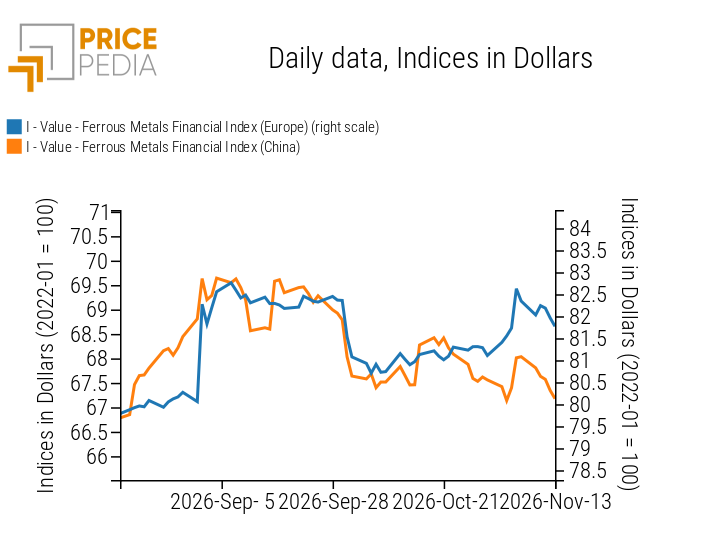
The strengthening of the US dollar has also affected other financial commodity markets denominated in US currency, exerting downward pressure on industrial metal and food prices. In the industrial sector, the sharpest declines affected ferrous metals, which continue to be weighed down by weak Chinese demand. The limited absorption capacity of the country's steel market is keeping iron ore availability high, resulting in excess supply relative to demand.
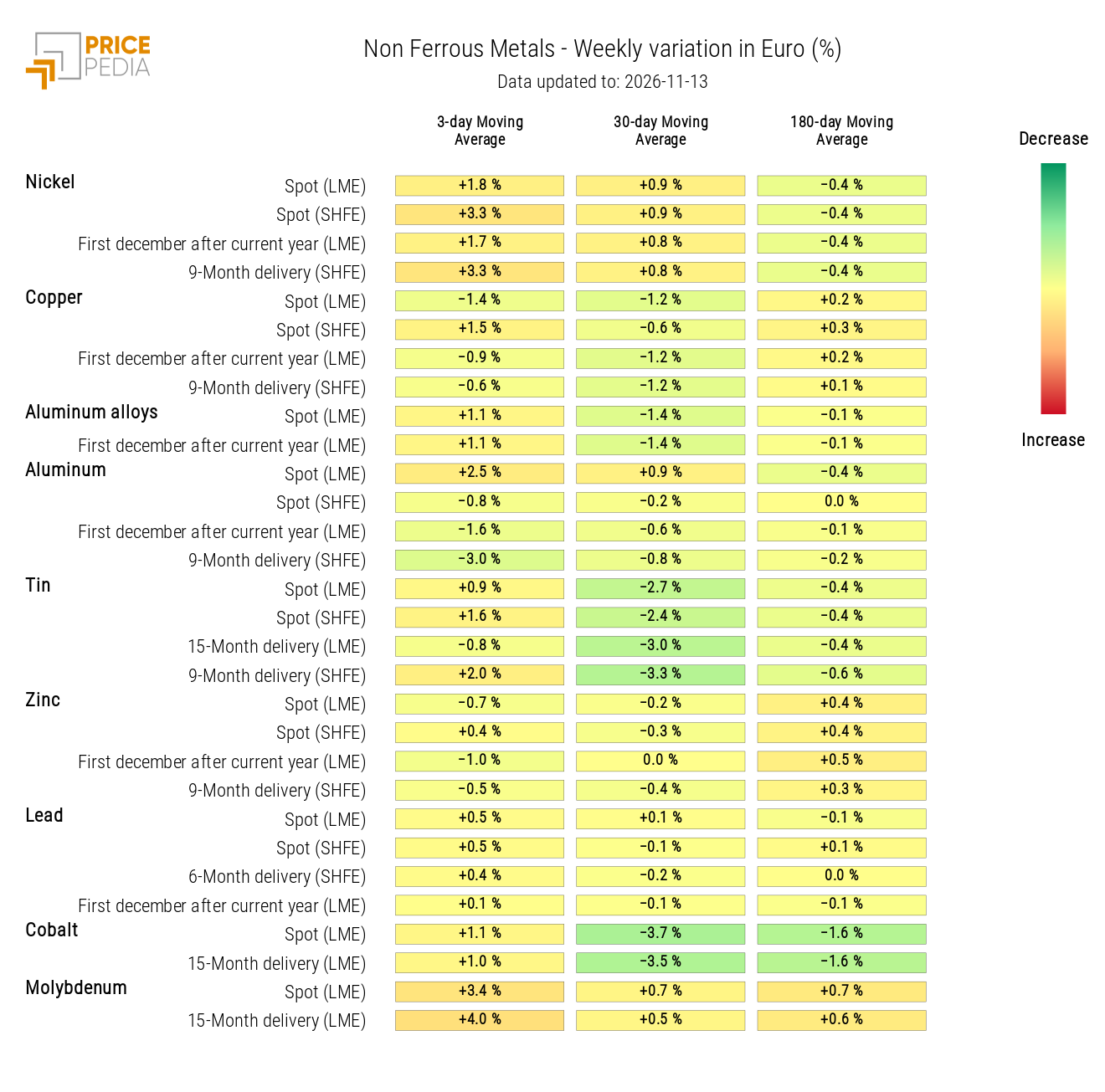
Among non-ferrous metals, copper recorded the steepest losses, also reflecting a downward revision in US demand prospects. The Democrats' recent victory in the midterm elections could lead to a scaling back of investment programmes in artificial intelligence infrastructure, dampening one of the main expected drivers of copper consumption growth. At the international level, the prospect of easing trade tensions is also playing a role. The lower likelihood of US tariffs being imposed on copper cathodes reduces the incentive to build up inventories in the United States, a strategy that had diverted metal supplies away from other geographical markets in recent months. The scaling back of protectionist expectations could therefore encourage a more balanced distribution of international supplies, helping to ease price pressures.
By contrast, some non-ferrous metals moved higher. In particular, molybdenum continued its upward trend, supported by a contraction in mine supply and limited inventory availability, while nickel recovered some ground following earlier declines linked to expectations of a further increase in Indonesian supply.
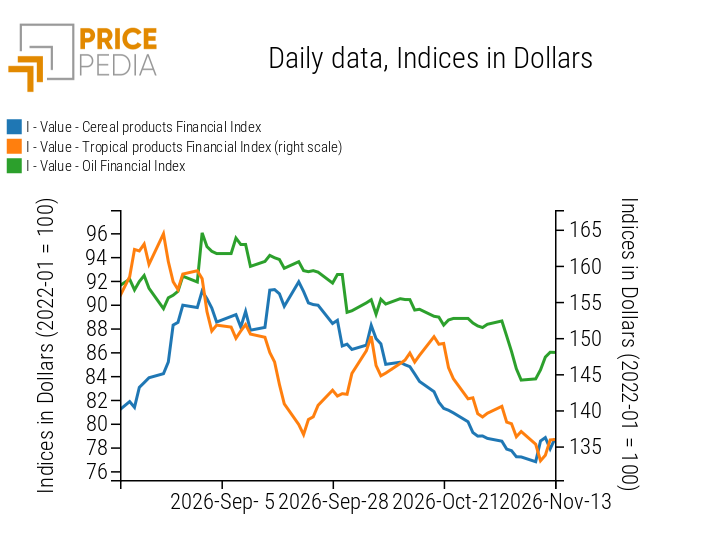
In the food commodity sector, prices of cereals and edible oils increased, while tropical commodities declined.
NUMERICAL APPENDIX
ENERGY
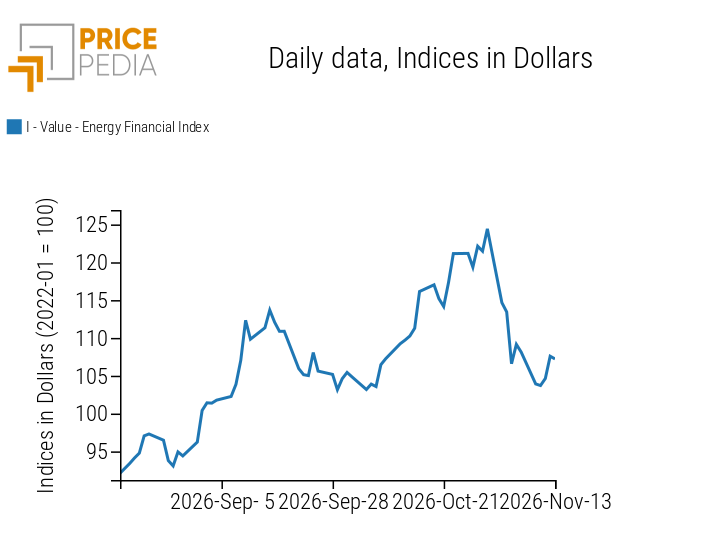
Despite daily fluctuations, the PricePedia financial index for energy products remains relatively stable on a weekly basis.
PricePedia Financial Index of Energy Prices in US Dollars
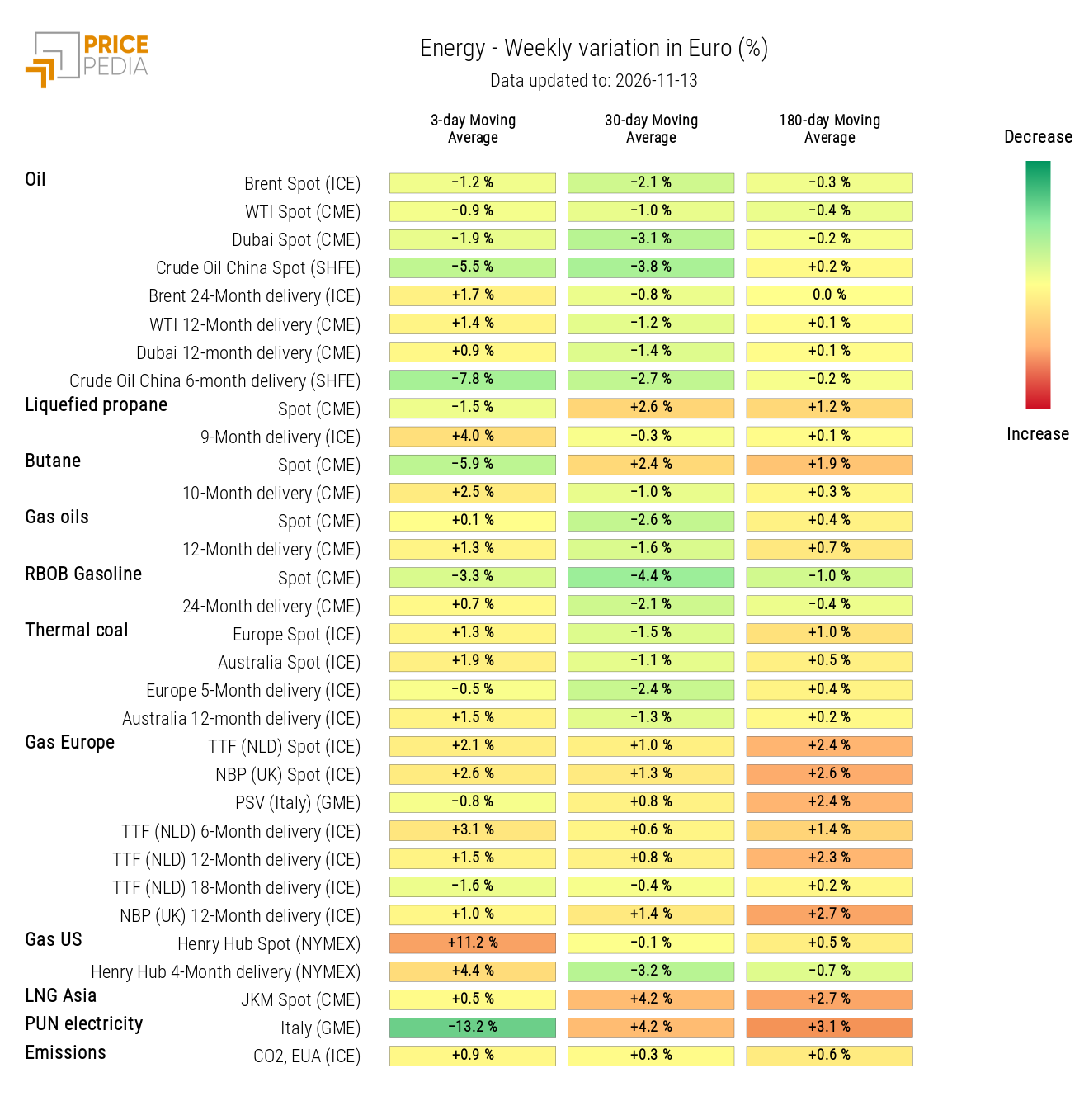
The energy heatmap shows a decline in Chinese oil and butane prices, alongside an increase in US natural gas prices.
HeatMap of Energy Prices in Euros
PRECIOUS METALS
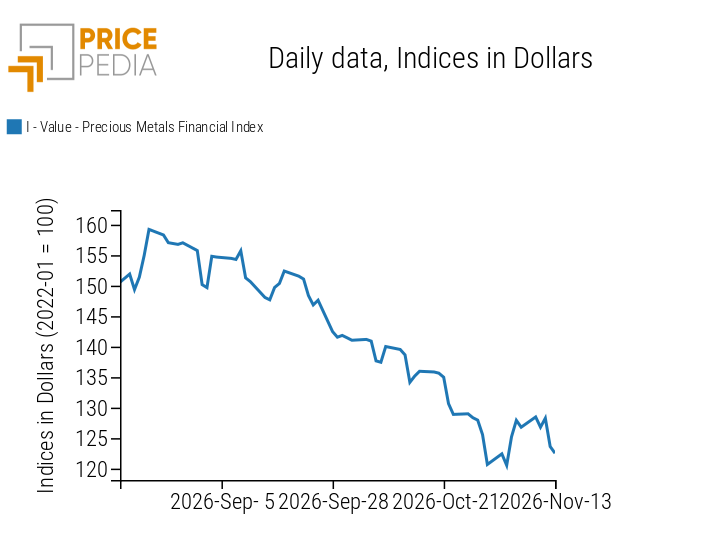
The financial index for precious metals shows a decline in prices.
PricePedia Financial Index of Precious Metal Prices in US Dollars
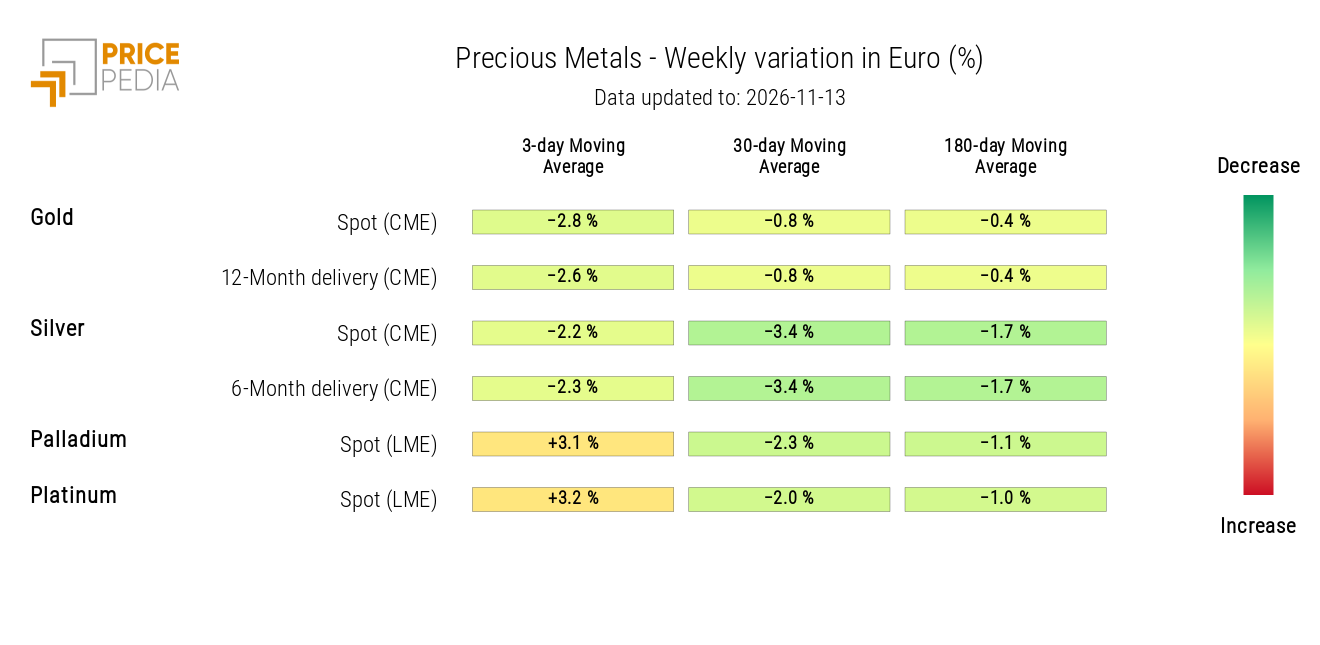
The precious metals heatmap shows a decline in gold and silver prices and an increase in palladium and platinum prices.
HeatMap of Precious Metal Prices in Euros
FERROUS METALS
Both ferrous metal indices show a downward trend in prices over the week.
PricePedia Financial Indices of Ferrous Metal Prices in US Dollars
Do you want to stay up-to-date on commodity market trends?
Sign up for PricePedia newsletter: it's free!
INDUSTRIAL NON-FERROUS METALS
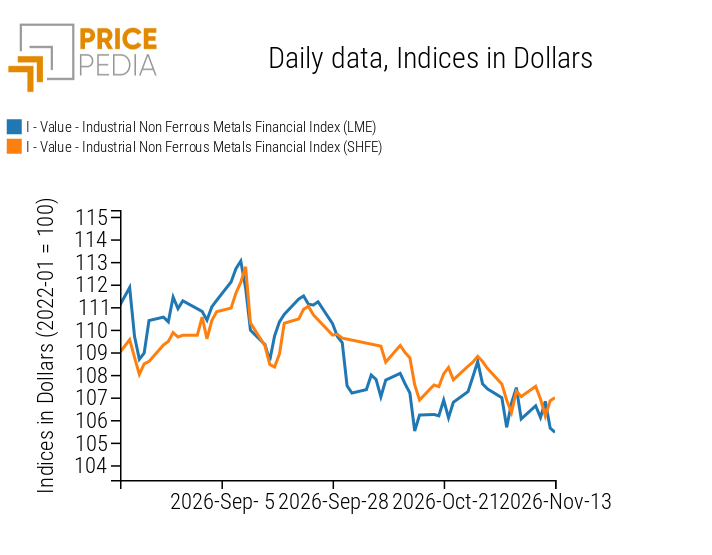
The LME financial index for non-ferrous metals declined, while the SHFE index remained stable.
PricePedia Financial Indices of Industrial Non-Ferrous Metal Prices in US Dollars
The non-ferrous metals heatmap shows an increase in the 3-day moving average of molybdenum and nickel prices in euros.
HeatMap of Non-Ferrous Metal Prices in Euros
FOOD COMMODITIES
The financial indices for edible oils and cereals show an increase in prices, while the index for tropical commodities points to a decline.
PricePedia Financial Indices of Food Commodity Prices in US Dollars
CEREALS
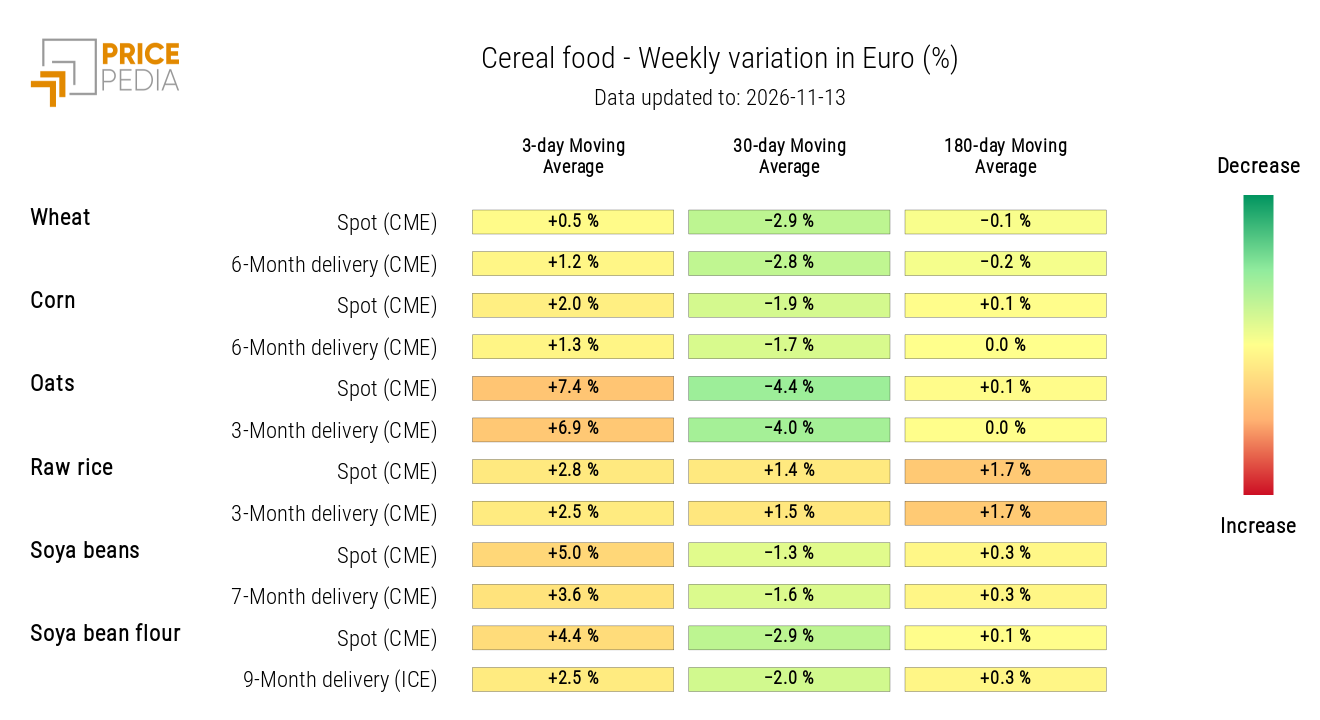
The cereals heatmap shows an increase in oat, rough rice and soybean prices.
HeatMap of Cereal Prices in Euros
TROPICAL COMMODITIES
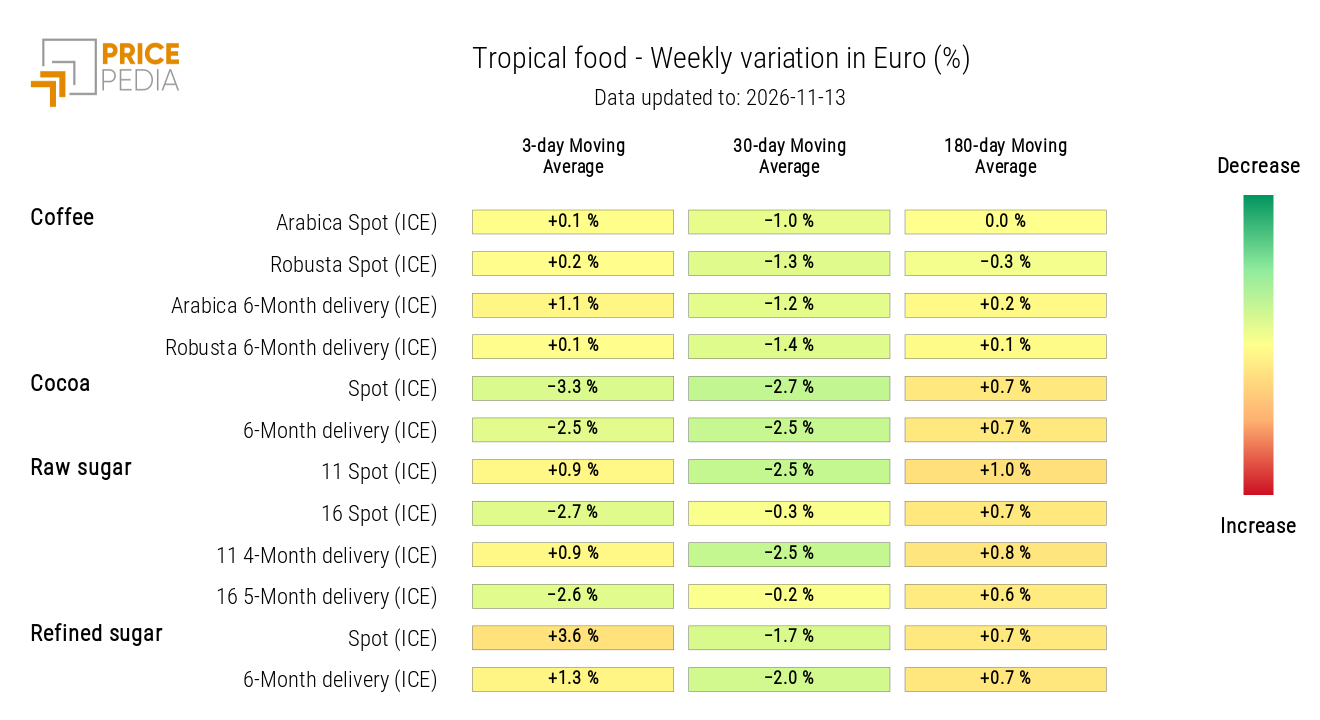
The tropical commodities heatmap shows a decline in cocoa and No. 16 raw sugar prices.
HeatMap of Tropical Food Commodity Prices in Euros
EDIBLE OILS
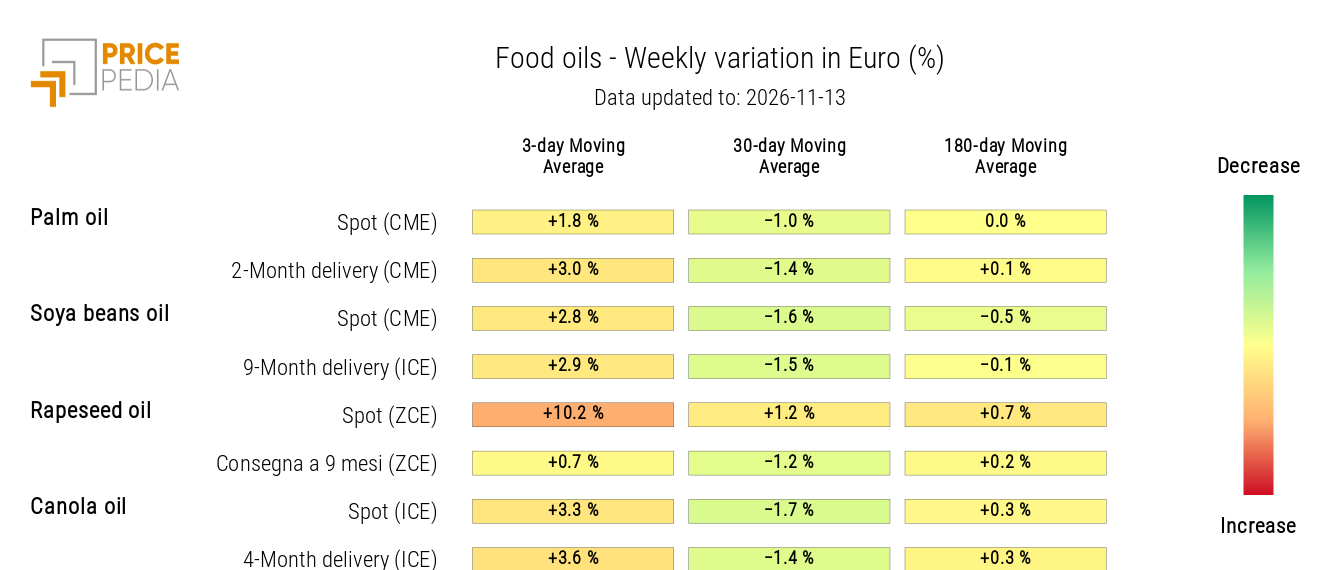
The edible oils heatmap shows a marked increase in rapeseed oil prices.
HeatMap of Edible Oil Prices in Euros
You may be interested in:

The reaction of commodity markets to the results of the U.S. midterm elections
Published by Luca Sazzini. .
Conjunctural Indicators Commodities Financial WeekThe Democrats' victory in the United States reduces geopolitical risk [ Read all ]

Supply-side tensions are exacerbating backwardation in non-ferrous metals
Published by Luca Sazzini. .
Conjunctural Indicators Commodities Financial WeekExpectations of monetary tightening are rising [ Read all ]

China economic update September 2026
Published by Luca Sazzini. .
Conjunctural Indicators Global Economic TrendsIndustrial commodity prices between rising energy input costs and domestic competitive pressure [ Read all ]