Supply-side tensions are exacerbating backwardation in non-ferrous metals
Expectations of monetary tightening are rising
Published by Luca Sazzini. .
Conjunctural Indicators Commodities Financial Week
Financial markets for energy commodities showed diverging weekly trends, with oil prices remaining broadly stable while natural gas prices continued to rise.
The oil market remains in a stalemate, which could persist until the US midterm elections. The election results could provide financial market participants with further insights into the Trump administration's next moves towards Iran.
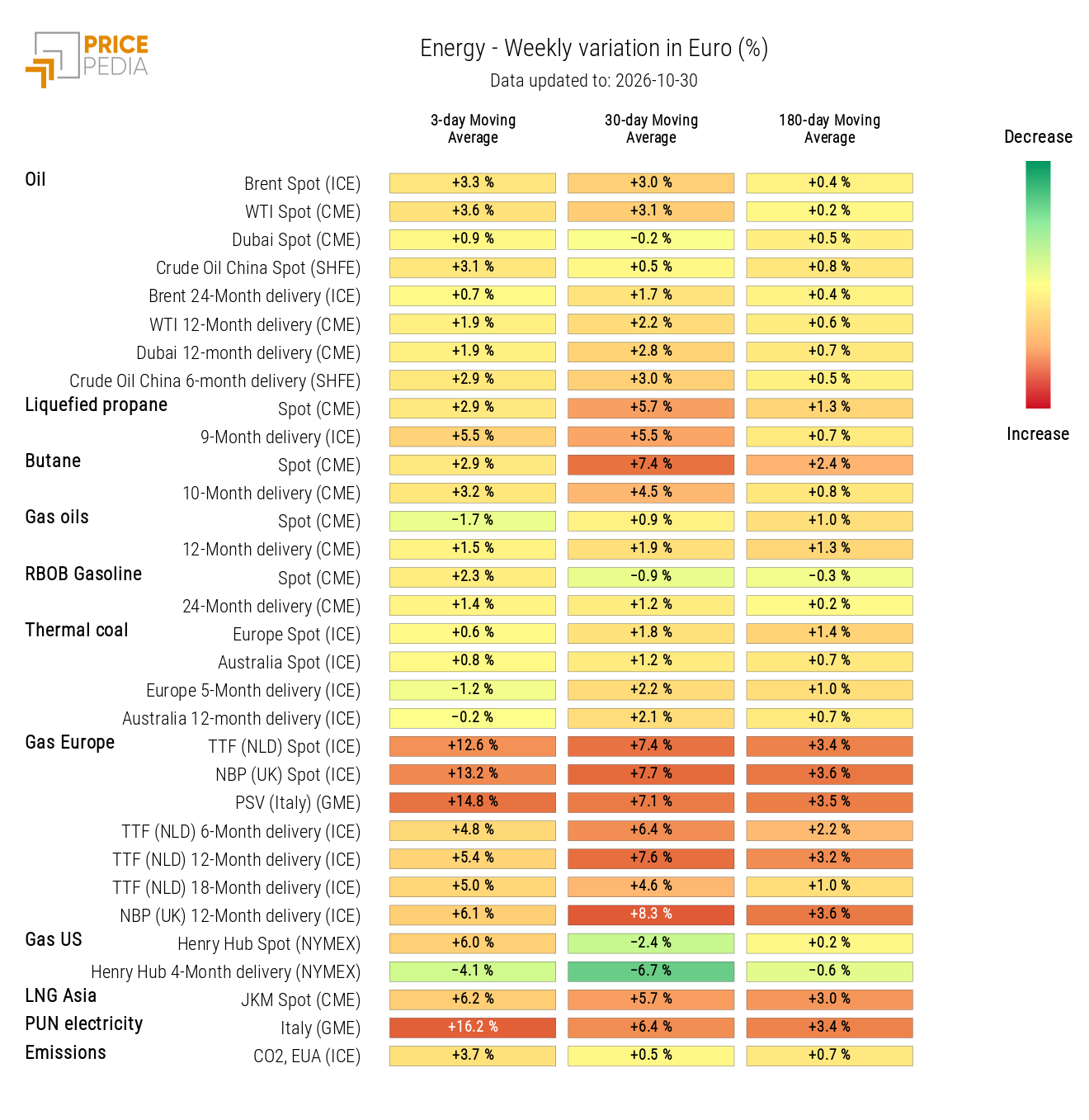
In the European natural gas market, TTF prices exceeded €100/MWh. The increase was mainly driven by QatarEnergy's decision to extend its force majeure clause for several buyers until the end of the year. This news comes against a backdrop already characterised by forecasts of colder temperatures in Europe and low storage levels, factors contributing to mounting upward pressure on the gas market.
The precious metals market was affected by increasingly strong expectations of a more restrictive monetary policy stance, which weighed on safe-haven assets.
In the United States, the Fed left interest rates unchanged, although two FOMC members supported an immediate 25-basis-point increase. Ahead of the December meeting, market expectations point towards another tightening move, amid persistent inflationary pressures.
In Europe, the ECB confirmed interest rates, but expectations of an initial tightening move as early as the December meeting strengthened in response to growing inflationary risks associated with higher energy prices.
In the industrial metals sector, ferrous metal prices remained stable in Europe and declined in China, mainly due to weaker Chinese demand for steel. In the United States, hot-rolled coil prices continued to rise, with CME prices up by almost 44% since the beginning of the year.
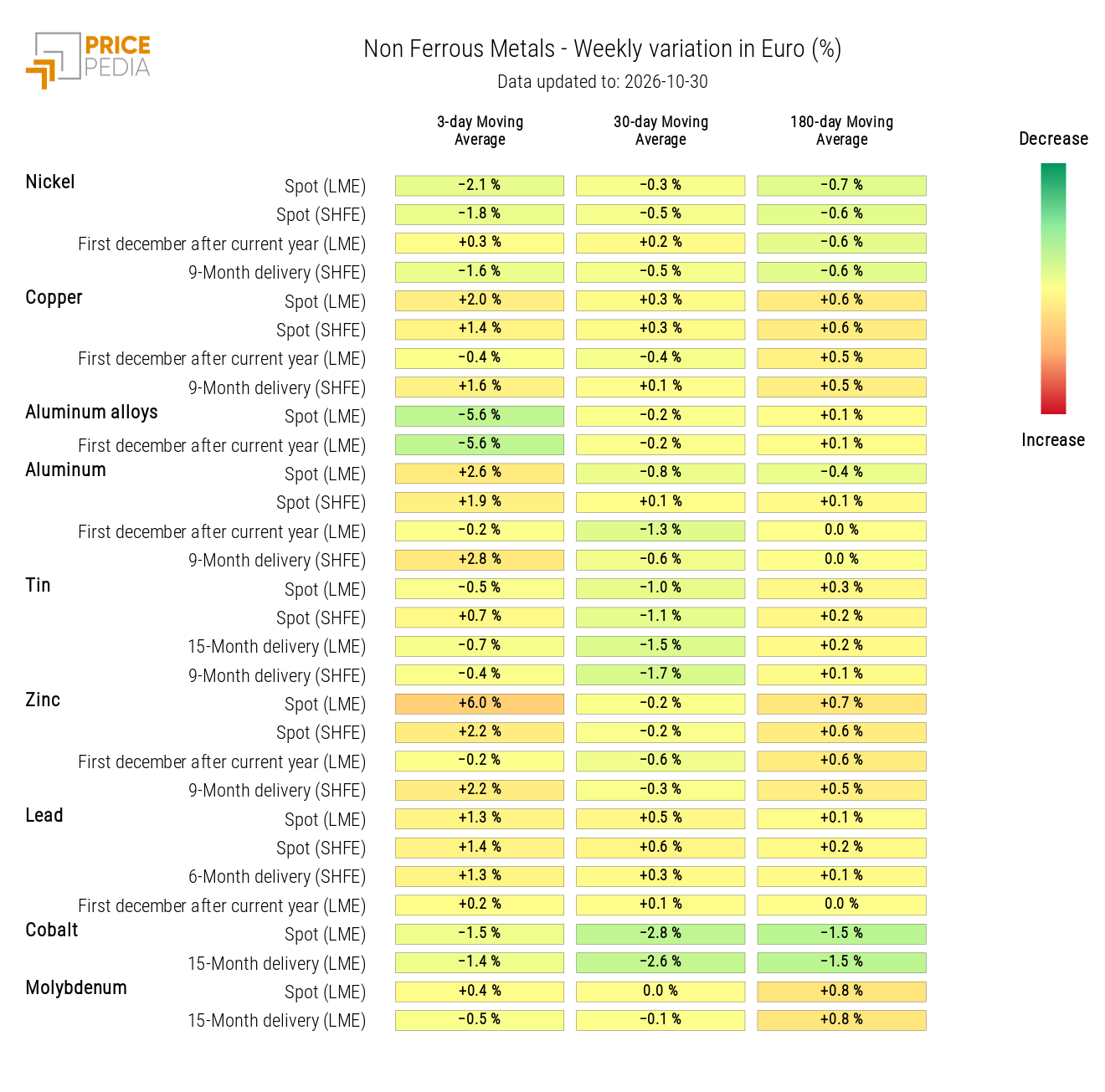
Among non-ferrous metals, prices generally moved upwards, driven by several supply-side issues. Zinc recorded the largest weekly increase, following downward revisions to global mine production forecasts for 2026, difficulties faced by smelters in sourcing concentrates and the resulting pressure on processing margins.
Another metal experiencing price increases was copper, whose performance was influenced by the growing concentration of inventories in US warehouses, driven by concerns over potential tariffs on cathode imports. This development reduced availability in the Chinese and European markets, contributing to increased pressure on spot prices.
For the coming months, however, financial markets are pricing in expectations of a partial price correction. Several non-ferrous metals, including zinc, copper, aluminium and molybdenum, currently exhibit a backwardation forward curve, characterised by futures prices below spot prices. This market structure reflects expectations of gradually declining prices over the coming months. Without such expectations, no market participant would have an incentive to agree today to a forward sale at a price below the spot price, while also bearing storage costs and financing expenses until delivery.
NUMERICAL APPENDIX
ENERGY
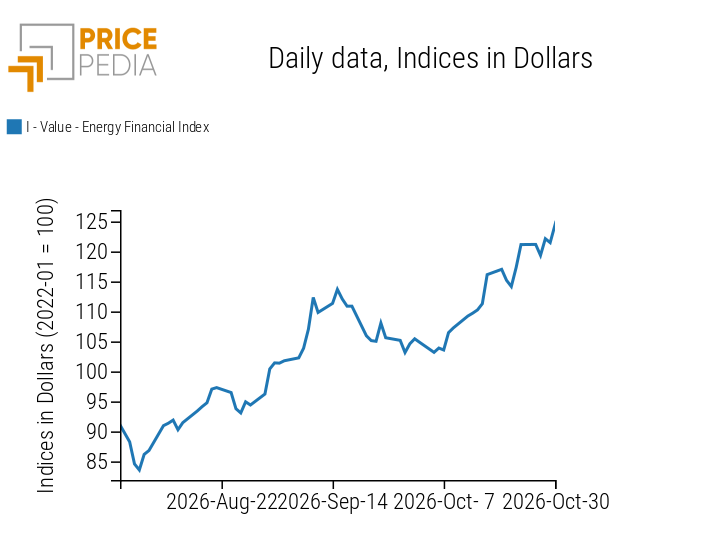
The PricePedia financial index for energy products continues its upward trend.
PricePedia Financial Index of Energy Prices in US Dollars
The energy heatmap highlights the sharp increase in European natural gas prices.
HeatMap of Energy Prices in Euros
PLASTICS AND ELASTOMERS
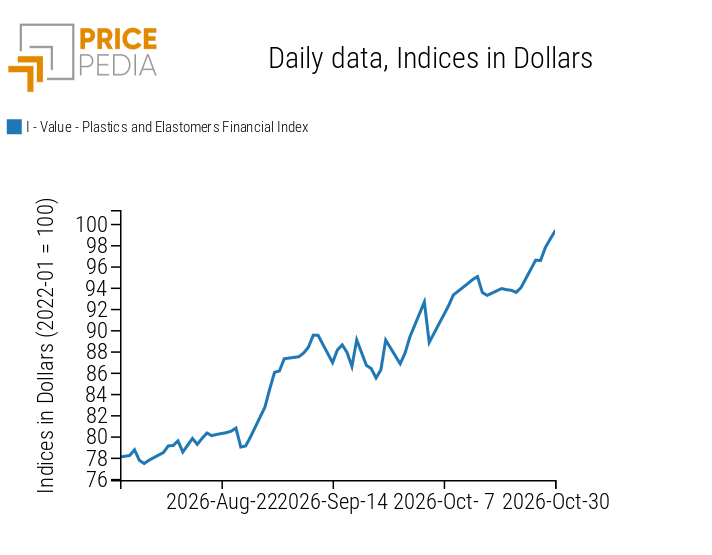
The PricePedia financial index for plastics and elastomers prices accelerated its upward trend, driven by increases in thermoplastics.
PricePedia Financial Index of Plastics and Elastomers Prices in US Dollars
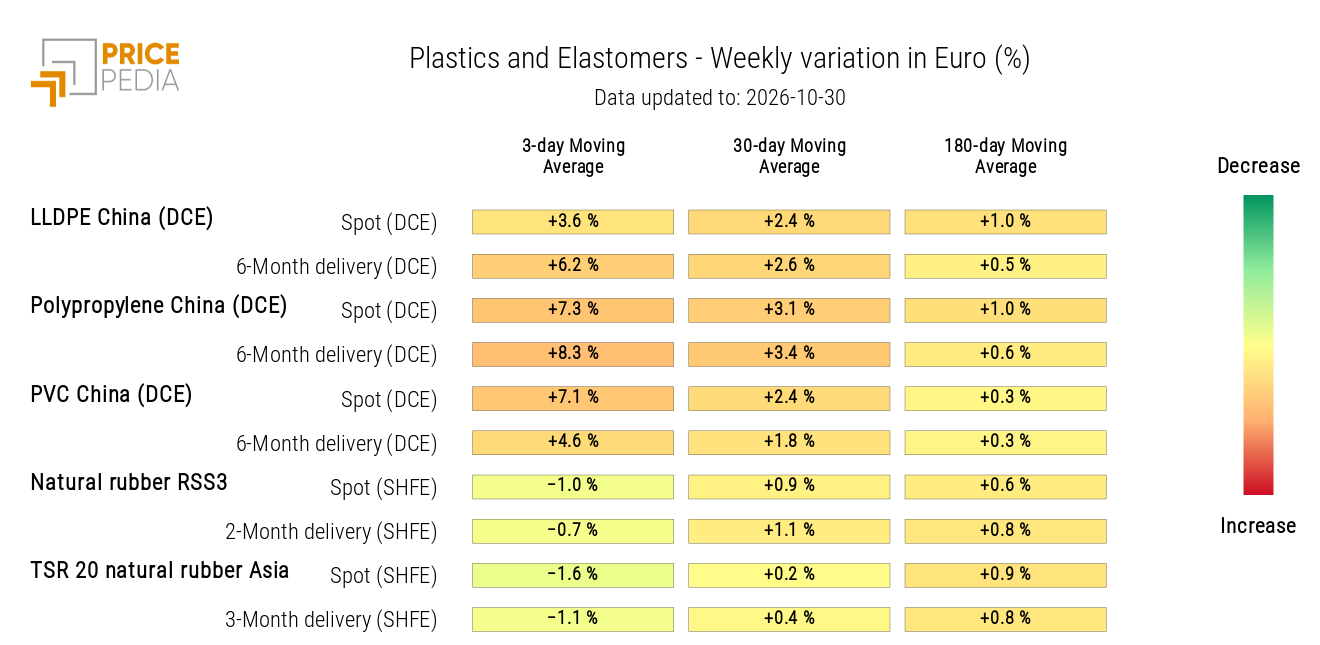
The heatmap highlights price increases for polypropylene, PVC and LLDPE.
HeatMap of Plastics and Elastomers Prices in Euros
PRECIOUS METALS
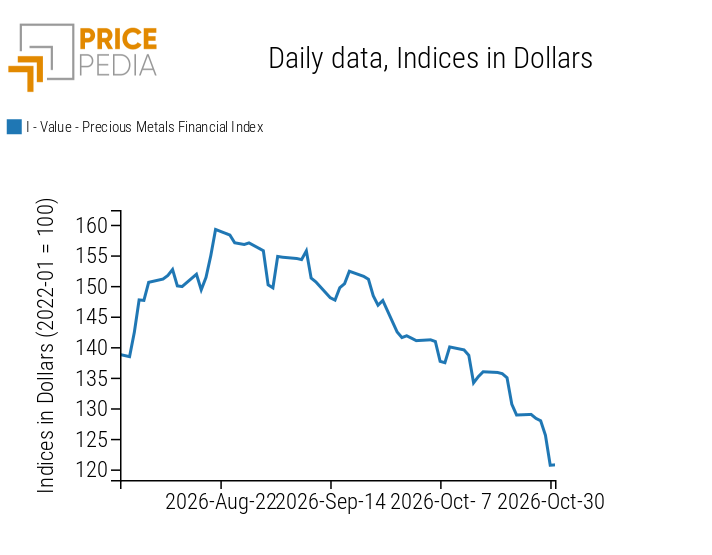
The financial index for precious metals continues to show a downward trend, reflecting expectations of a more restrictive monetary policy stance.
PricePedia Financial Index of Precious Metals Prices in US Dollars
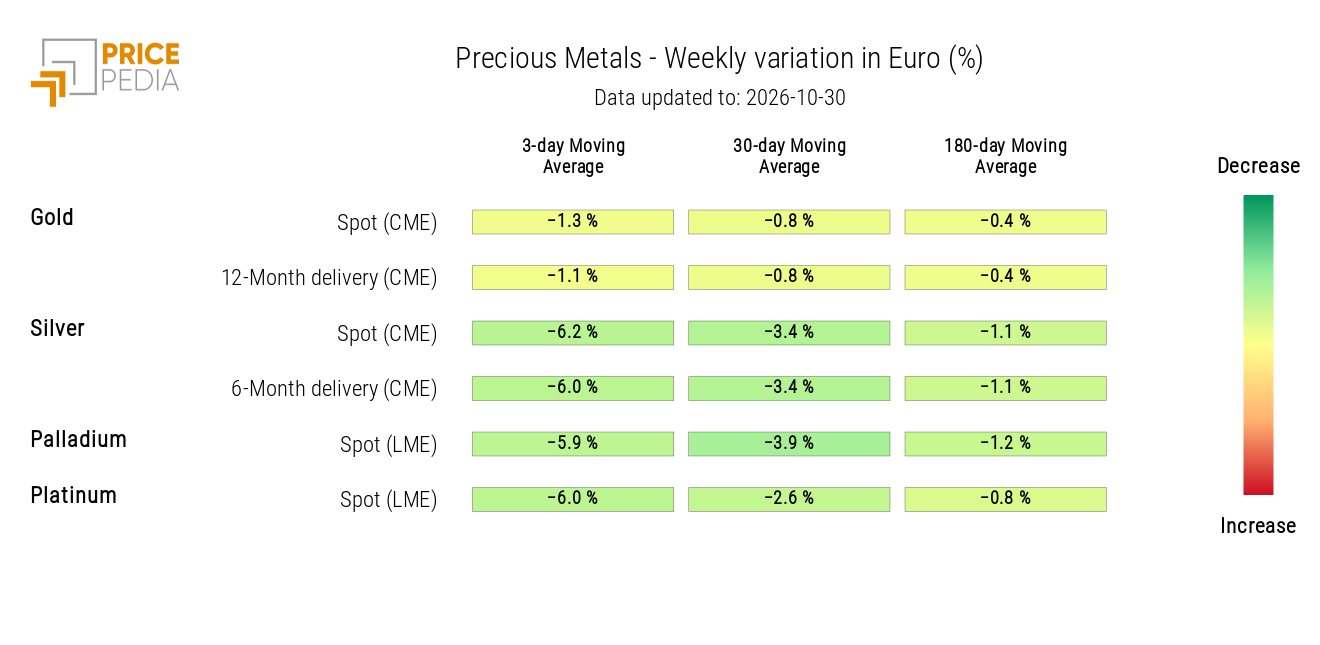
The precious metals heatmap shows a weekly decline in silver, palladium and platinum prices.
HeatMap of Precious Metals Prices in Euros
FERROUS METALS
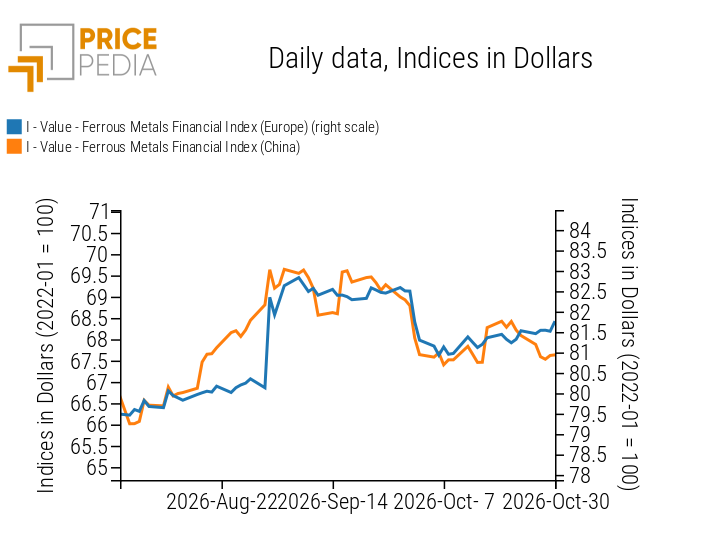
The European ferrous metals index remained stable on a weekly basis, while the Chinese index declined.
PricePedia Financial Indices of Ferrous Metals Prices in US Dollars
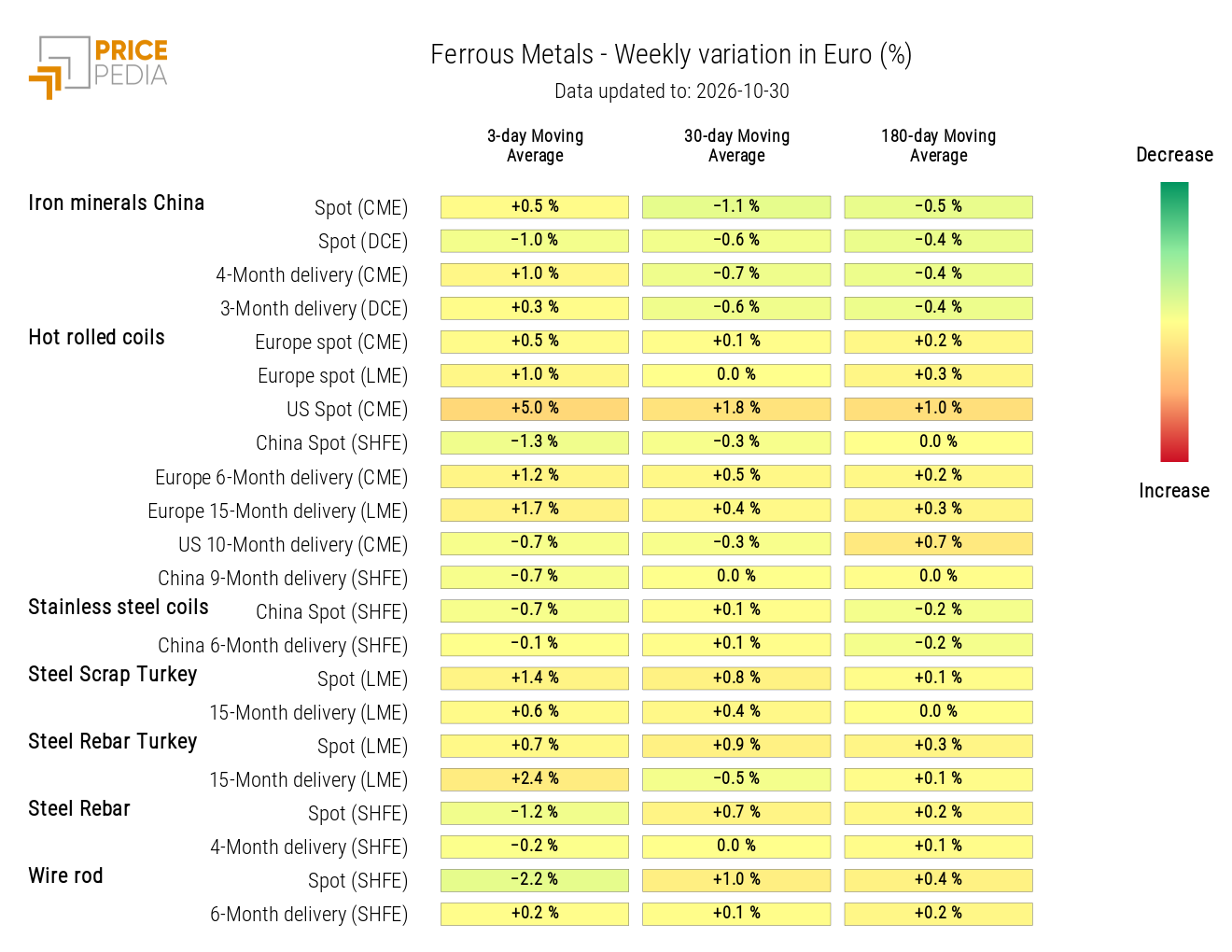
The heatmap highlights an increase in hot-rolled coil prices in the US market.
HeatMap of Ferrous Metals Prices in Euros
Do you want to stay up-to-date on commodity market trends?
Sign up for PricePedia newsletter: it's free!
INDUSTRIAL NON-FERROUS METALS
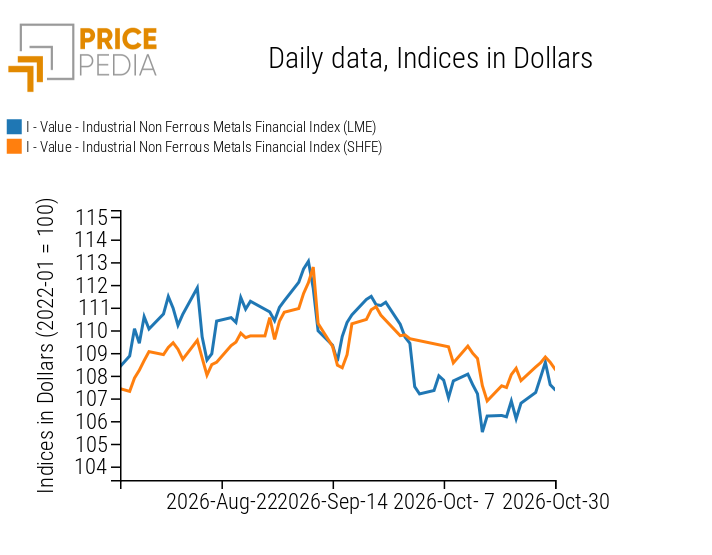
Both financial indices for non-ferrous metals show an upward weekly trend.
PricePedia Financial Indices of Industrial Non-Ferrous Metals Prices in US Dollars
The non-ferrous metals heatmap shows price increases for zinc, aluminium and copper, while aluminium alloys recorded a decline.
HeatMap of Non-Ferrous Metals Prices in Euros
FOOD
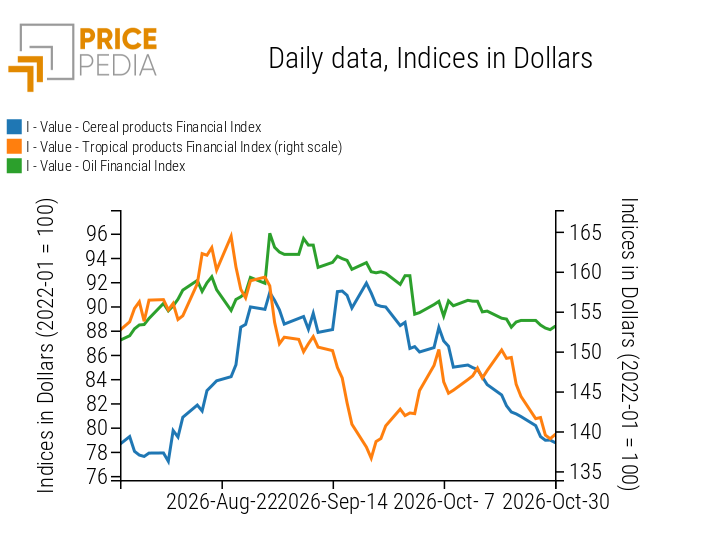
All three food indices show a weekly downward trend in prices.
PricePedia Financial Indices of Food Prices in US Dollars
CEREALS
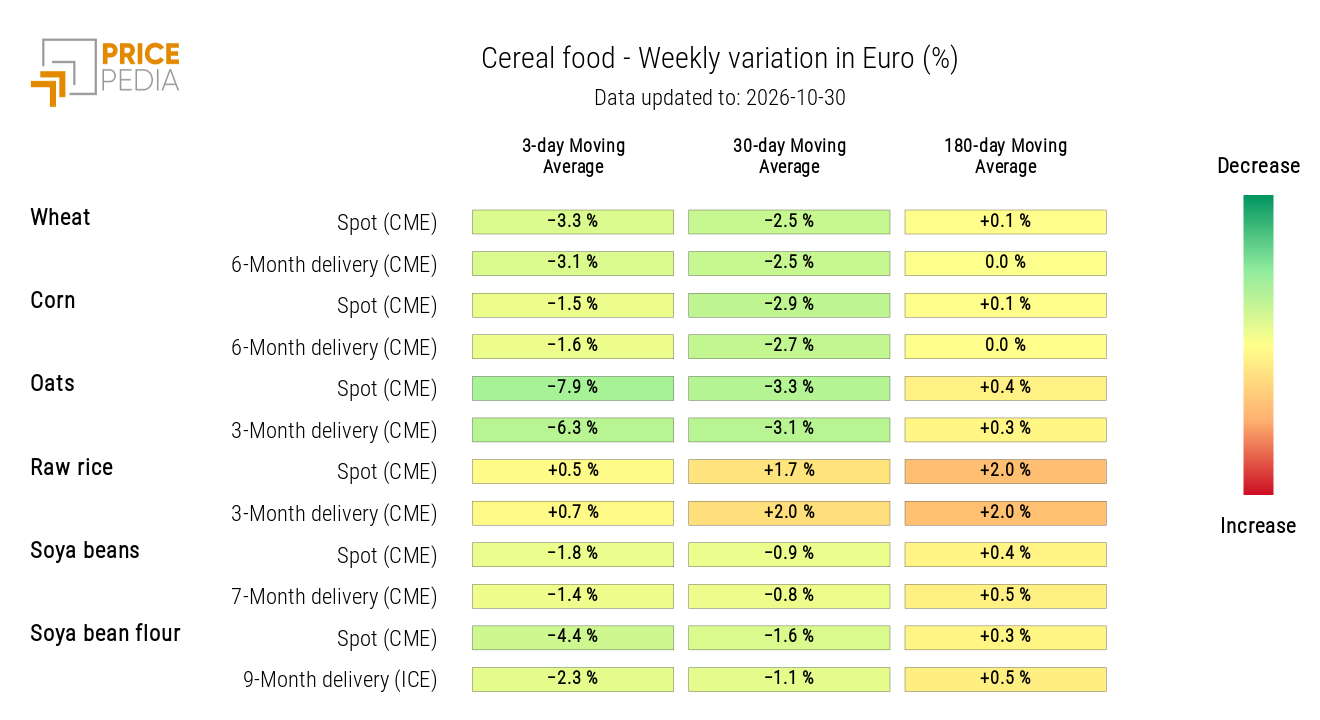
The cereals heatmap shows a decline in oat, soybean meal and wheat prices.
HeatMap of Cereal Prices in Euros
TROPICAL COMMODITIES
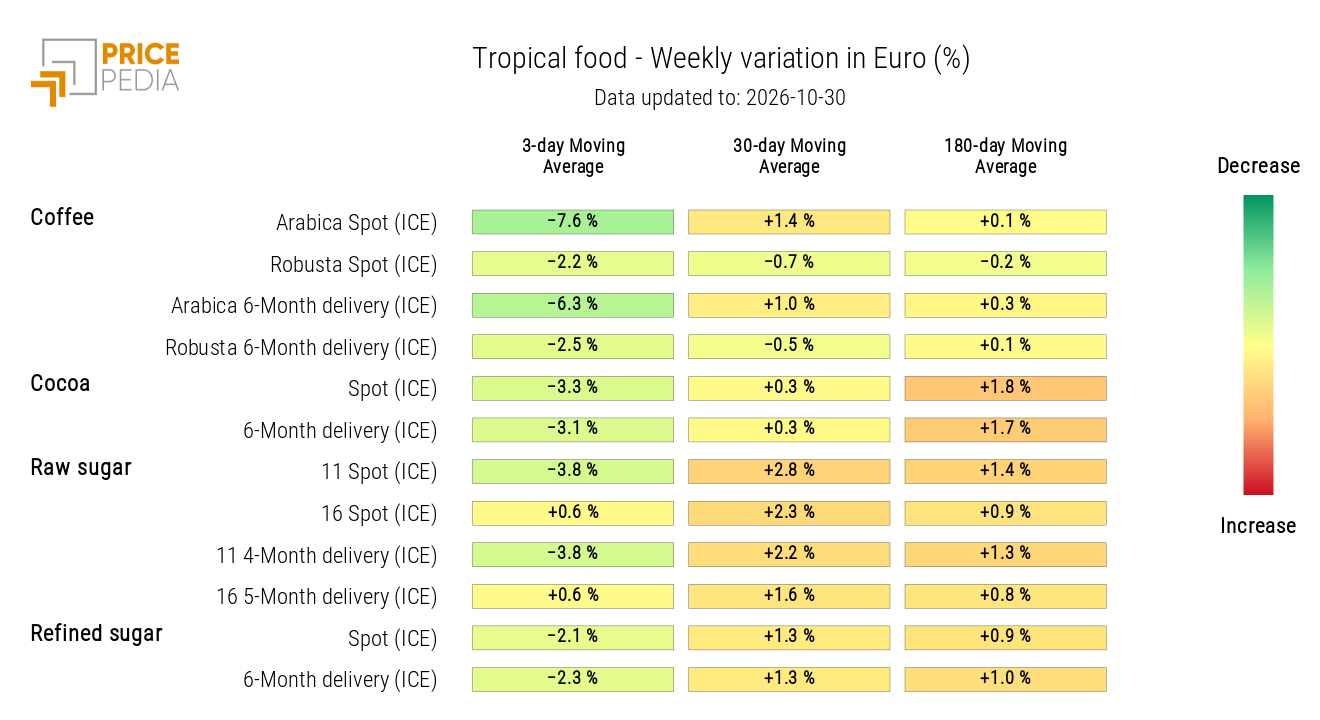
With the exception of raw sugar 16, which remained stable, the tropical commodities heatmap shows a widespread decline in prices.
HeatMap of Tropical Food Commodity Prices in Euros
You may be interested in:

China economic update September 2026
Published by Luca Sazzini. .
Conjunctural Indicators Global Economic TrendsIndustrial commodity prices between rising energy input costs and domestic competitive pressure [ Read all ]

Commodity markets influenced by supply tensions and interest rate expectations
Published by Luca Sazzini. .
Conjunctural Indicators Commodities Financial WeekThe announcement of new production cuts in Indonesia is boosting the nickel market’s recovery [ Read all ]

Commodity markets dominated by supply uncertainties and inflationary pressures
Published by Luca Sazzini. .
Conjunctural Indicators Commodities Financial WeekThe EU is tightening sanctions against Russia, while the U.S. is considering further easing of restrictions [ Read all ]