A bearish week for commodity prices
Non-ferrous metals are increasingly linked to stock market trends
Published by Luca Sazzini. .
Conjunctural Indicators Commodities Financial Week
The gradual rebalancing of oil market supply conditions is helping to contain financial energy prices, which declined this week. Although tensions in the Strait of Hormuz remain a potential source of price increases, higher OPEC+ production, continued Russian exports and the accumulation of US inventories are improving supply prospects and easing concerns over oil availability.
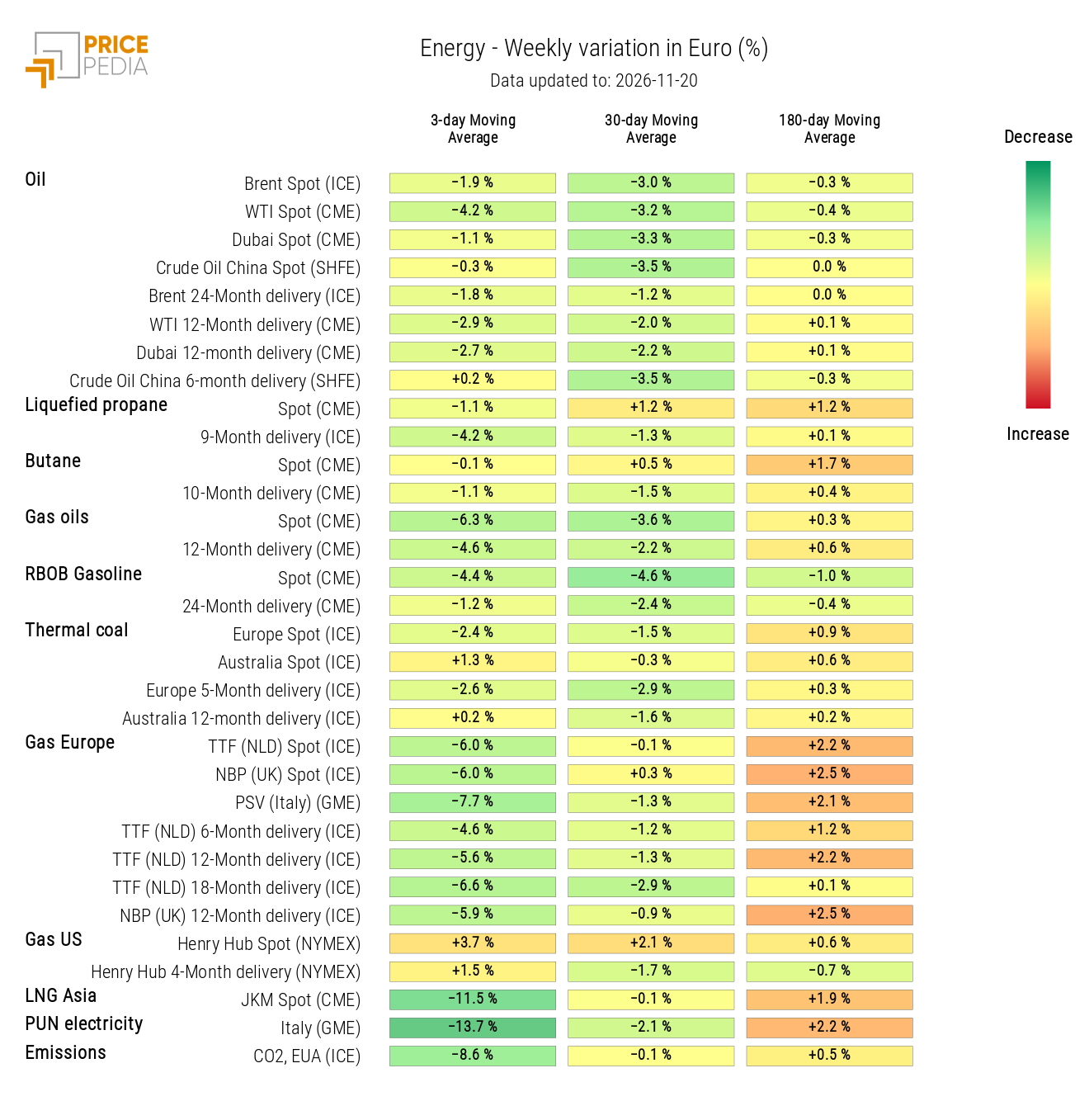
The European natural gas market also followed a downward trend during the week, supported by greater availability of LNG from the United States and forecasts of mild temperatures, which have reduced expectations for heating demand.
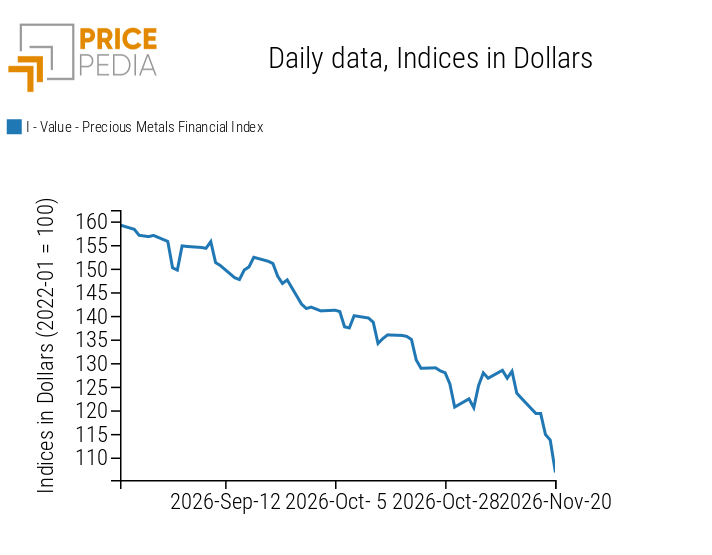
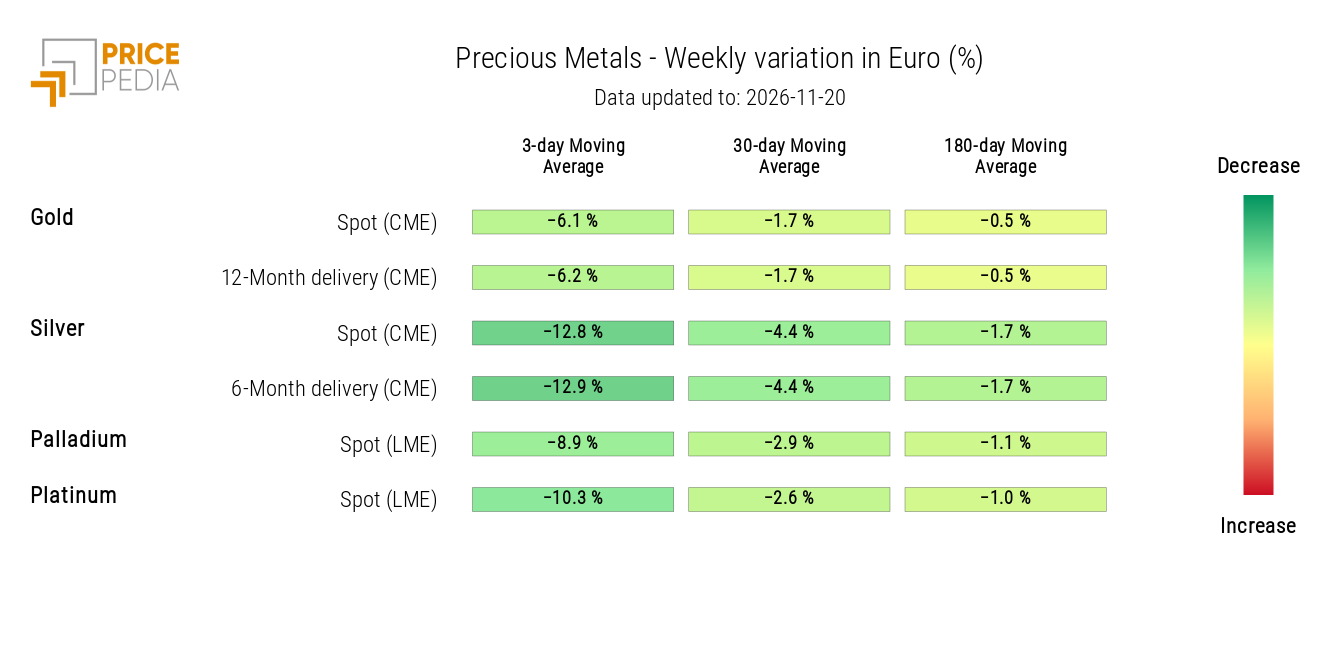
The decline in energy prices has not translated into a recovery in precious metals, despite the negative correlation between the two market segments observed since the outbreak of the conflict. Gold and other safe-haven assets continued to fall, mainly reflecting growing expectations of a tighter monetary policy by the Federal Reserve, following the release of the minutes of its latest meeting. This was compounded by investor selling, as market participants liquidated part of their gold positions to offset losses in equity markets.
In the short term, a stronger dollar and rising government bond yields are likely to continue to limit any recovery in gold prices, despite ongoing support from sustained central bank demand.
Industrial metal prices followed a predominantly downward trend during the week, reflecting uncertainty surrounding demand prospects and expectations regarding future supply developments.
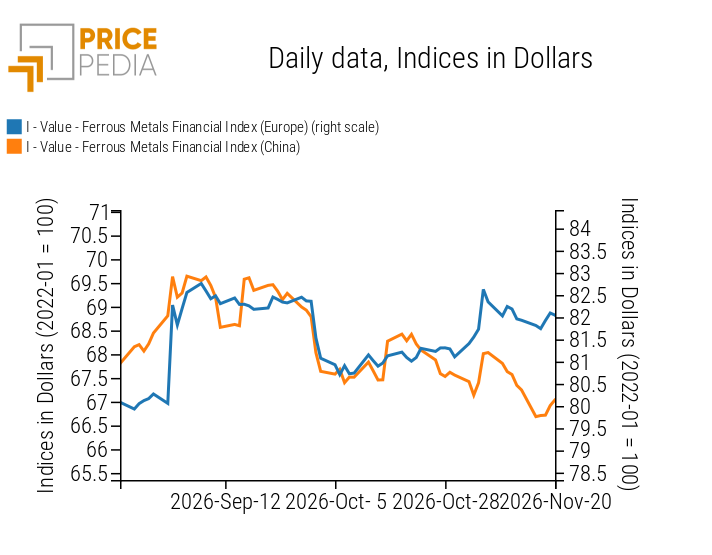
In the ferrous metals sector, the decline affected the Chinese market, where iron ore prices were impacted by the gradual weakening of steel demand, accompanied by lower steel production and narrow profit margins for steelmakers. These factors are compounded by abundant iron ore inventories at Chinese ports and expectations of increased supply, partly due to the gradual start-up of production at the Simandou mine in Guinea.
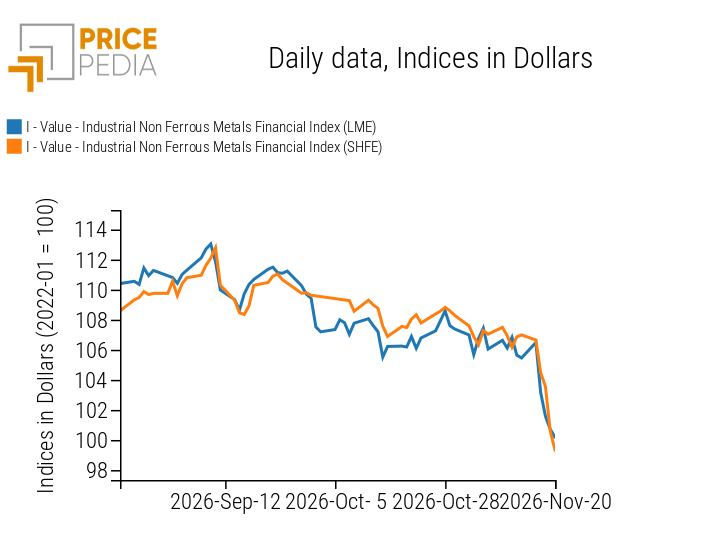
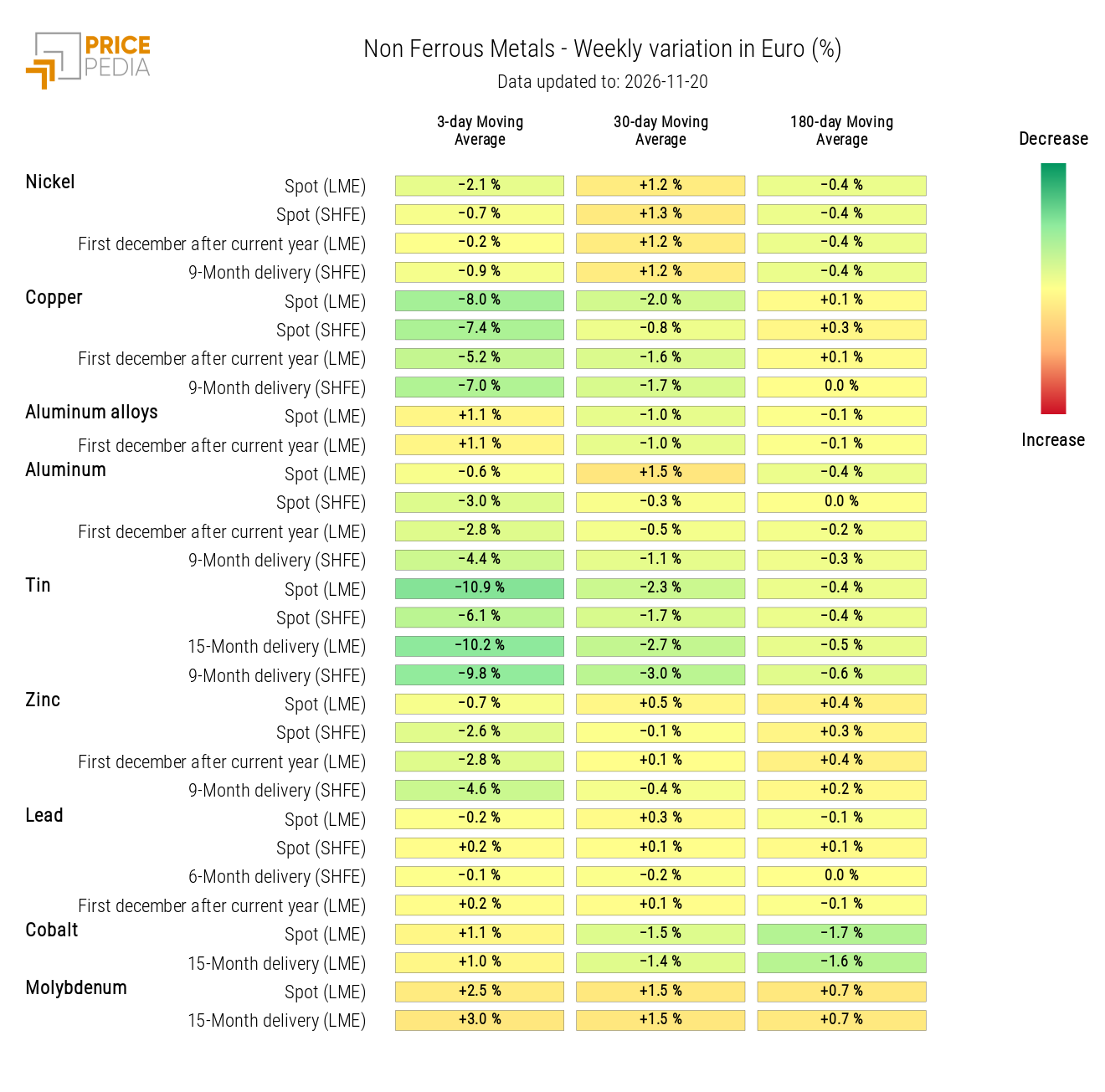
The steepest declines affected non-ferrous metals, particularly copper and tin, whose prices are showing increasing sensitivity to movements in equity markets. This correlation reflects the growing importance of expectations regarding data centre investment, which represents a major source of support for demand for both metals.
Aluminium, by contrast, experienced a more moderate decline, supported by limited short-term availability of physical metal. Inventories held at the London Metal Exchange (LME) have fallen by more than half since the beginning of the year, reaching their lowest level since 1990. The shortage of immediately available metal, exacerbated by the predominantly Russian origin of the remaining stocks, has led to a pronounced backwardation in the forward price curve, with spot prices trading above three-month prices.
Looking ahead, the expected increase in production next year should support a gradual rebalancing of the market. However, higher supply may not immediately translate into a rebuilding of LME inventories.
DATA APPENDIX
ENERGY
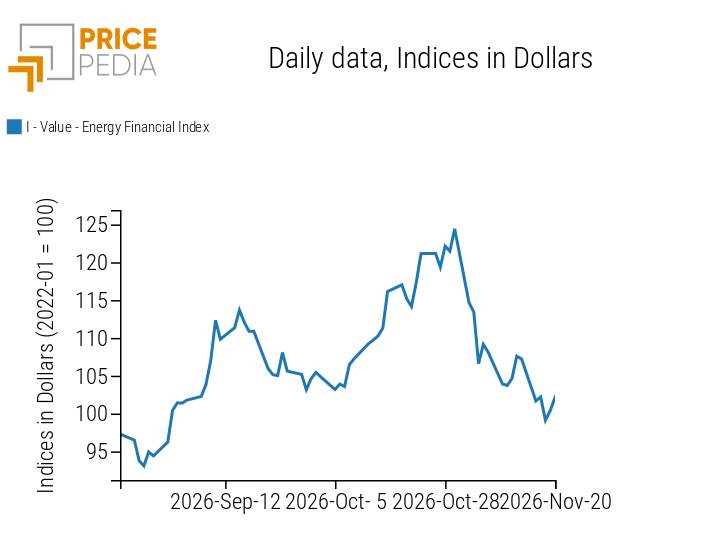
The PricePedia Financial Index of energy products continues its downward trend, supported by the gradual recovery in supply.
PricePedia Financial Index of Energy Prices in US Dollars
The energy heatmap highlights the decline in European natural gas and Asian LNG prices.
HeatMap of Energy Prices in Euros
PLASTICS AND ELASTOMERS
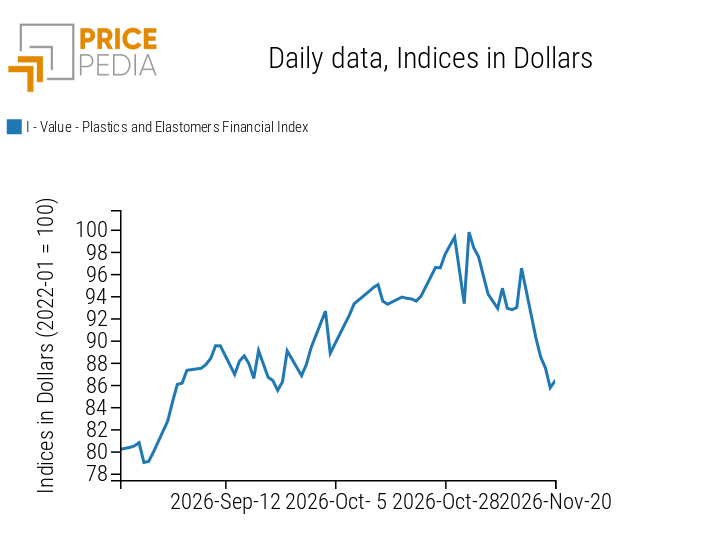
The PricePedia Financial Index of plastics and elastomers shows a sharp decline in prices.
PricePedia Financial Index of Plastics and Elastomers Prices in US Dollars
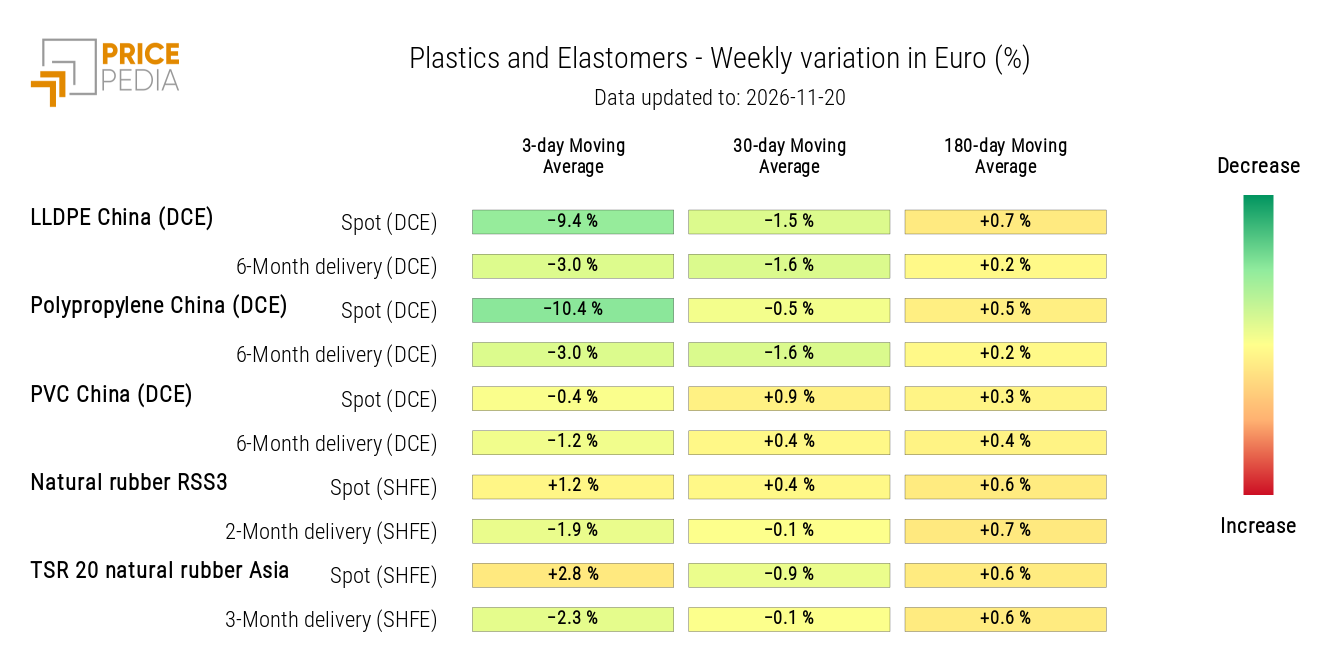
The heatmap analysis highlights the sharp decline in LLDPE and polypropylene prices.
HeatMap of Plastics and Elastomers Prices in Euros
PRECIOUS METALS
The Financial Index of precious metals shows a further acceleration in the downward trend in prices.
PricePedia Financial Index of Precious Metals Prices in US Dollars
The precious metals heatmap turns green, highlighting the decline in safe-haven asset prices.
HeatMap of Precious Metals Prices in Euros
FERROUS METALS
The European ferrous metals index remains broadly stable, unlike the Chinese index, which shows a decline.
PricePedia Financial Indices of Ferrous Metals Prices in US Dollars
Do you want to stay up-to-date on commodity market trends?
Sign up for PricePedia newsletter: it's free!
INDUSTRIAL NON-FERROUS METALS
The downward trend in non-ferrous metal prices is gaining momentum.
PricePedia Financial Indices of Industrial Non-Ferrous Metals Prices in US Dollars
The non-ferrous metals heatmap highlights the sharp correction in tin and copper prices.
HeatMap of Non-Ferrous Metals Prices in Euros
FOOD PRODUCTS
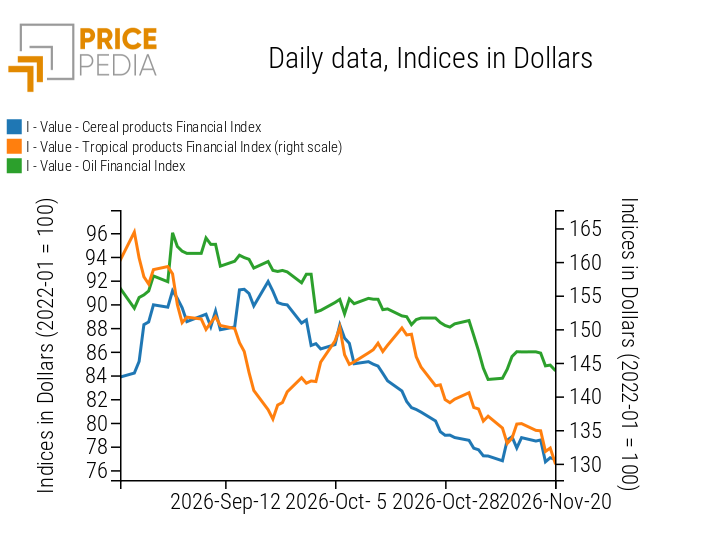
All three food product indices share a downward price trend.
PricePedia Financial Indices of Food Prices in US Dollars
TROPICAL PRODUCTS
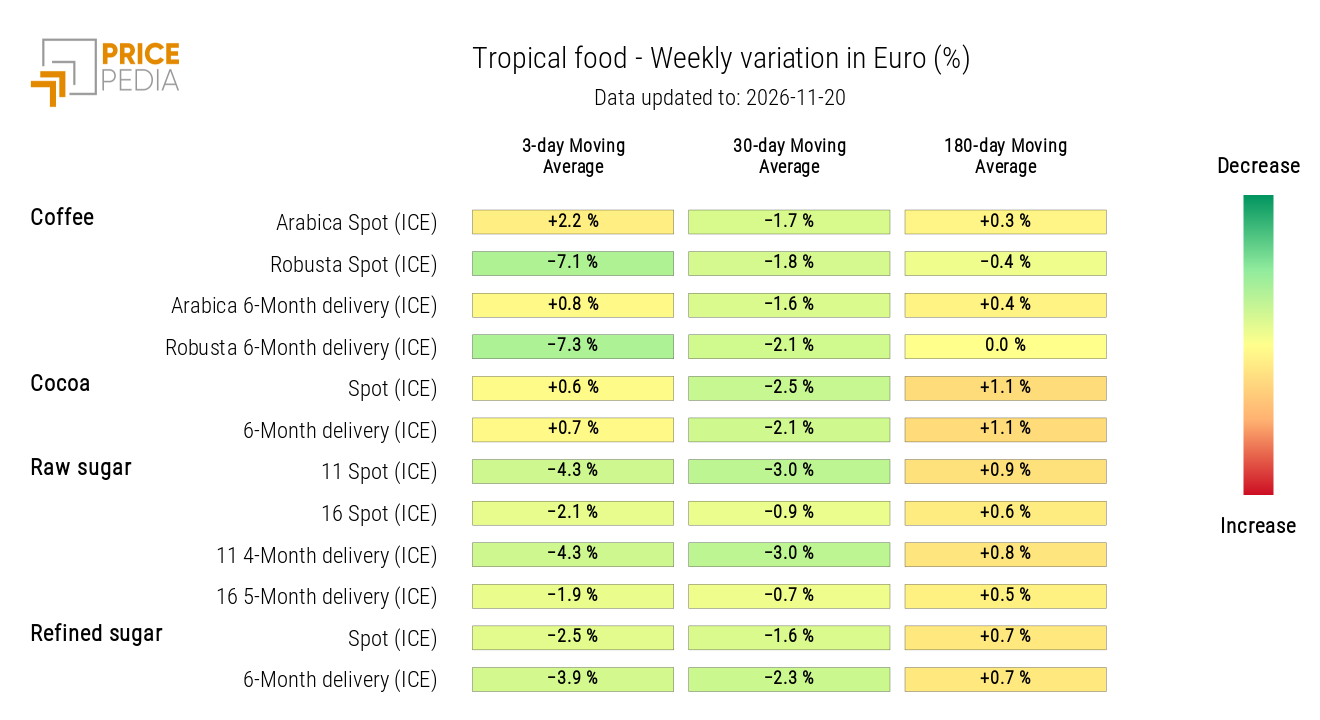
The tropical products heatmap highlights a decline in robusta coffee and sugar prices.
HeatMap of Tropical Food Prices in Euros
EDIBLE OILS
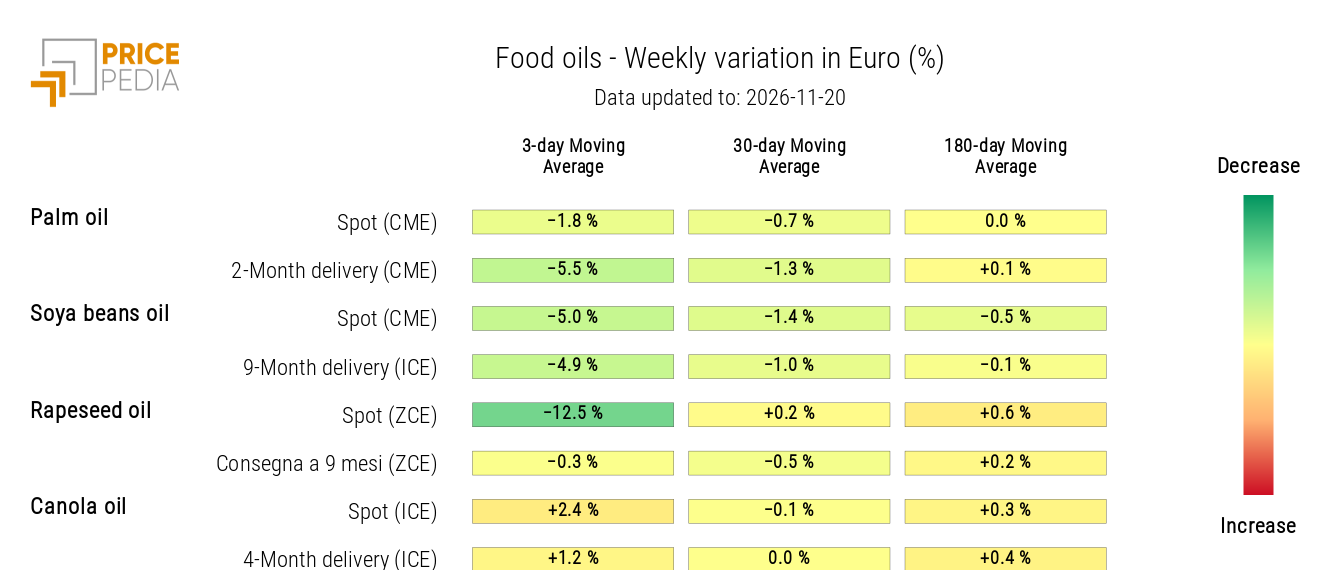
The edible oils heatmap shows a sharp decline in rapeseed oil prices.
HeatMap of Edible Oil Prices in Euros
You may be interested in:

A stronger dollar is putting downward pressure on metal prices
Published by Luca Sazzini. .
Conjunctural Indicators Commodities Financial WeekUS-Iran tensions increase volatility in commodity markets [ Read all ]

The reaction of commodity markets to the results of the U.S. midterm elections
Published by Luca Sazzini. .
Conjunctural Indicators Commodities Financial WeekThe Democrats' victory in the United States reduces geopolitical risk [ Read all ]

Supply-side tensions are exacerbating backwardation in non-ferrous metals
Published by Luca Sazzini. .
Conjunctural Indicators Commodities Financial WeekExpectations of monetary tightening are rising [ Read all ]