Commodity markets between supply risks and geopolitical uncertainty
The strength of the U.S. economy is bolstering expectations of a more restrictive monetary policy
Published by Luca Sazzini. .
Conjunctural Indicators Commodities Financial WeekExpectations of higher Saudi exports, progress in US-Iran talks and a larger-than-expected increase in US crude oil inventories contributed to a decline in oil prices over the week.
Supply concerns nevertheless remain elevated. Disruptions to the East-West pipeline in Saudi Arabia could limit crude oil availability at Yanbu for several weeks, while production at Libya's Sharara oil field has declined following the shutdown of the pipeline to the Zawiya terminal. These factors are compounded by Houthi attacks on Saudi Arabia and statements by Yahya Rahim Safavi, military adviser to Iran's Supreme Leader, according to whom any resumption of US or Israeli attacks could extend the conflict to the Indian Ocean, creating new risks for major oil shipping routes.
Supply-side tensions therefore continue to support Brent oil prices, which closed the week at $104/barrel.
In the distillates market, diesel prices declined, also following the White House's denial of reports that the United States was preparing a 90-day ban on diesel exports. Supply concerns nevertheless remain elevated in this market as well. Trump has expressed support for limiting or banning diesel exports, while Russia could further extend its own export restrictions.
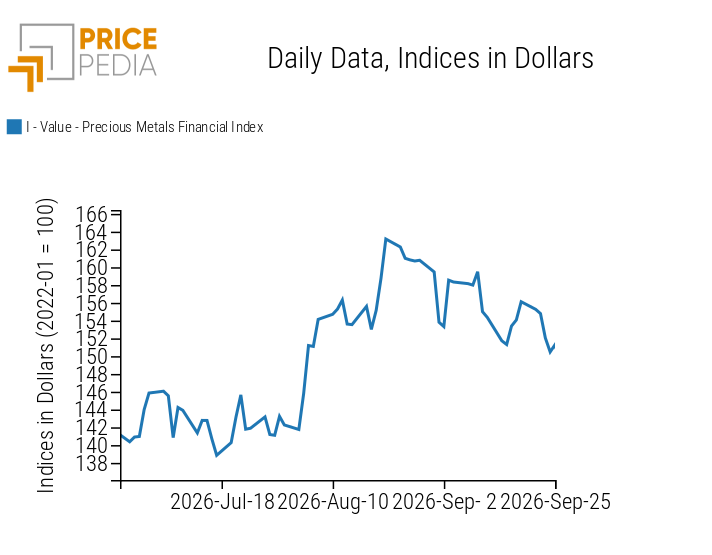
Financial prices of precious metals declined, driven by a stronger dollar and higher yields on the 10-year Treasury, which reached 5.19%, the highest level since July 2007.
The sharp increase in the US PMI, well above expectations, highlighted the resilience of the US economy and strengthened expectations of a more restrictive monetary policy stance by the Fed, which may place greater emphasis on containing inflation. These factors contributed to a decline in gold prices, despite continued strong demand from central banks.
The ferrous metals sector shows relatively stable prices, while a predominantly upward trend prevails among non-ferrous metals.
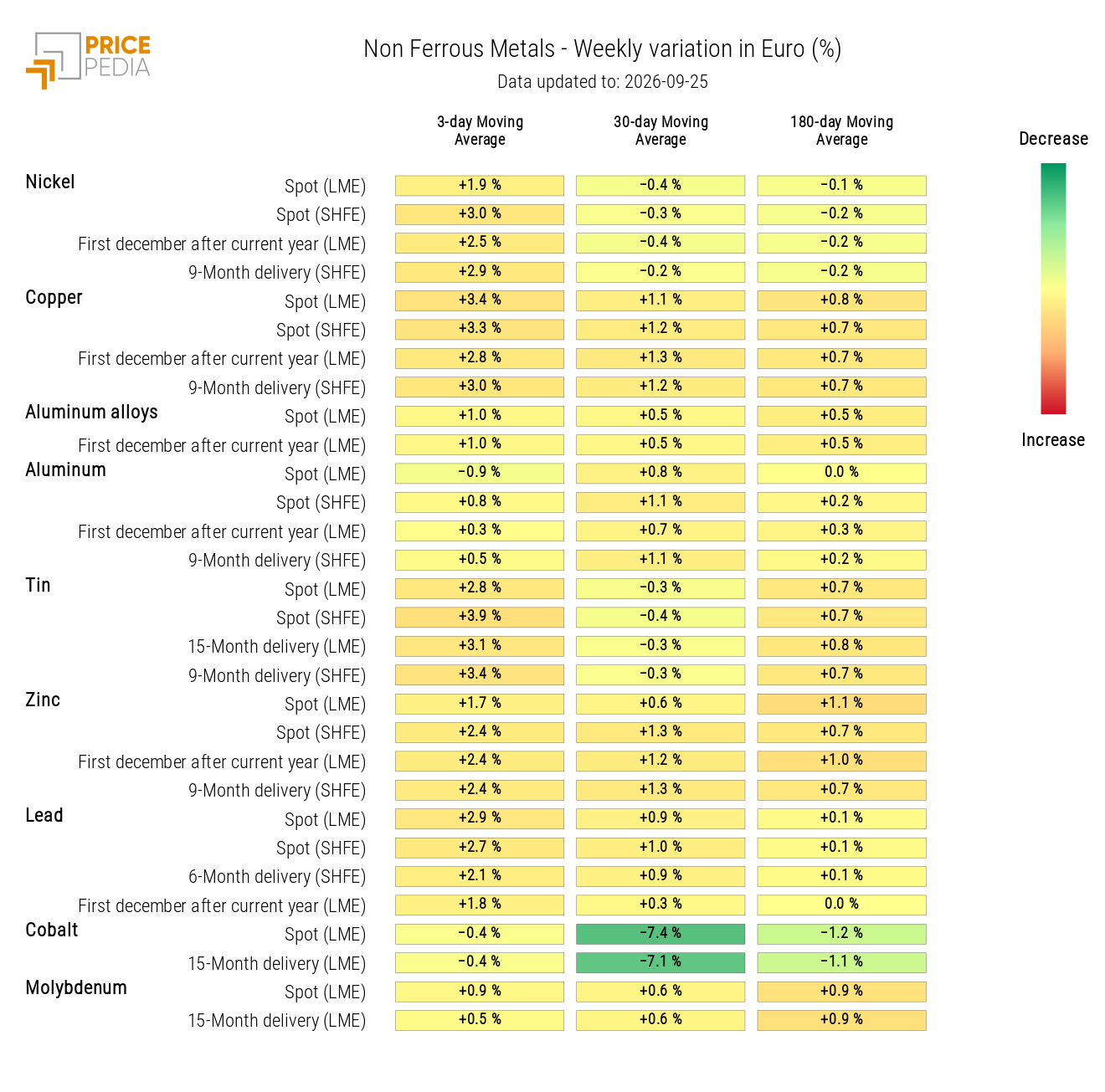
Copper moved closer to its all-time highs, closing the week at $14,740/tonne on the London Metal Exchange. The increase was supported by stronger Chinese demand, which brought cathode inventories in Shanghai to their lowest level since 2023. Purchases also increased ahead of the holidays at the end of September and beginning of October, while the Yangshan import premium reached its highest level in recent years.
Other non-ferrous metals also followed a predominantly upward trend. Zinc benefited from supply concerns following Nyrstar's announcement of a strategic review of its Budel smelter operations in the Netherlands. Nickel prices continue to be affected by uncertainty surrounding Indonesian production, while tin maintained a positive trend, supported by still relatively tight market conditions.
NUMERICAL APPENDIX
ENERGY
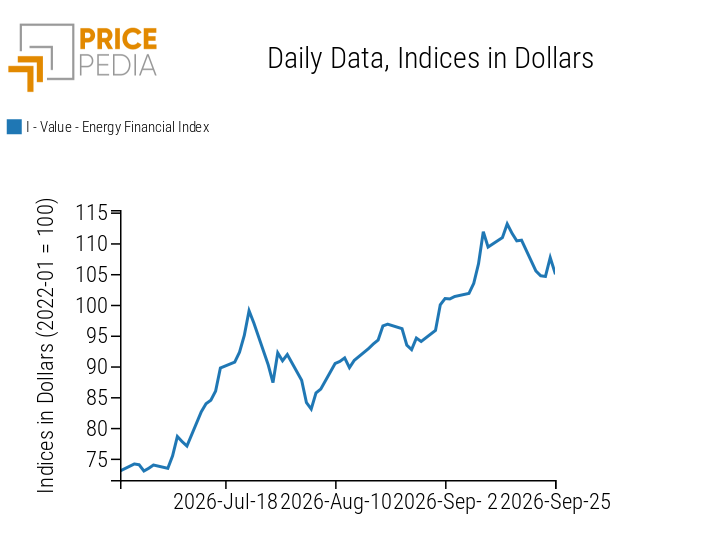
Excluding fluctuations related to geopolitical developments, the PricePedia financial index of energy products recorded a weekly decline.
PricePedia Financial Index of Energy Prices in Dollars
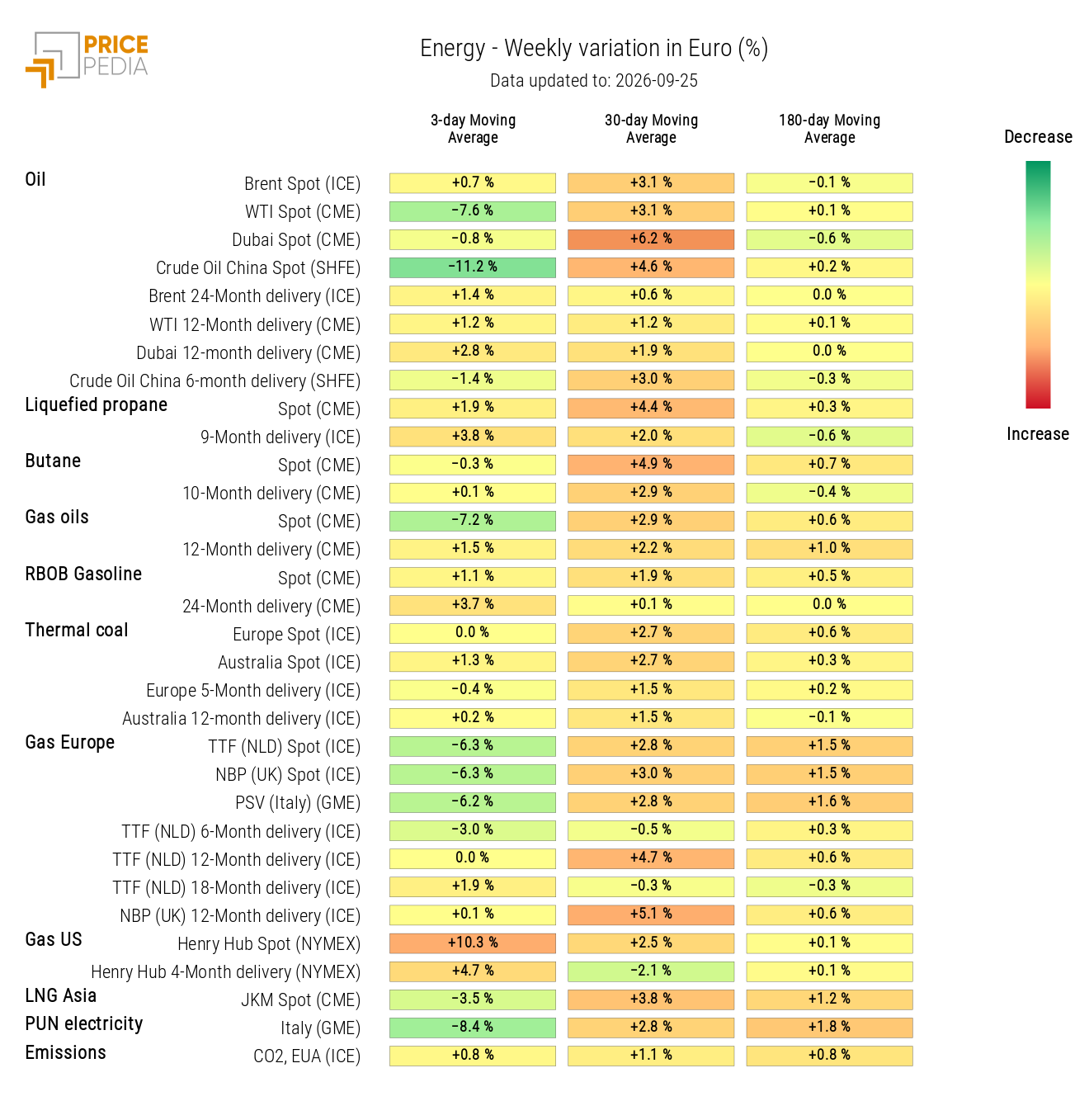
The energy heatmap shows a weekly decline in the prices of Chinese oil, WTI, diesel and TTF, while US Henry Hub natural gas prices increased. The increase in US gas prices was supported by lower US production and forecasts of lower temperatures, which could increase heating demand.
HeatMap of Energy Prices in Euros
PRECIOUS METALS
The financial index of precious metals followed a weekly decline in prices, linked to expectations of a more restrictive monetary policy stance by the Fed.
PricePedia Financial Index of Precious Metal Prices in Dollars
FERROUS METALS
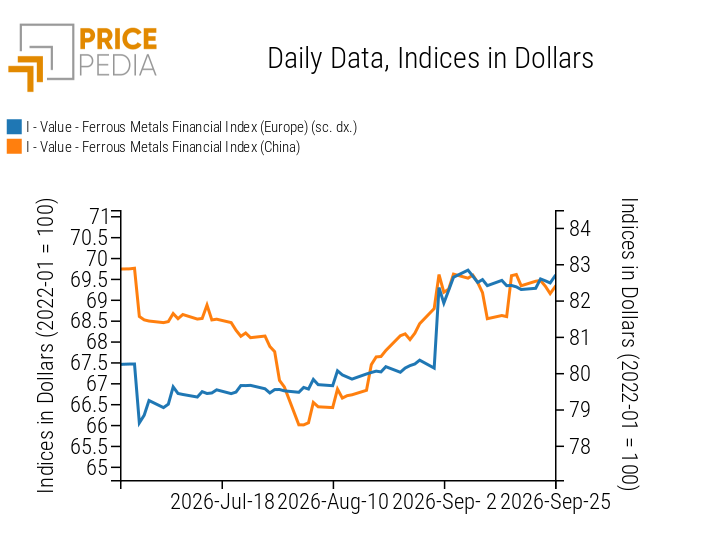
The two financial indices of ferrous metals remained broadly stable on a weekly basis.
PricePedia Financial Indices of Ferrous Metal Prices in Dollars
Do you want to stay up-to-date on commodity market trends?
Sign up for PricePedia newsletter: it's free!
INDUSTRIAL NON-FERROUS METALS
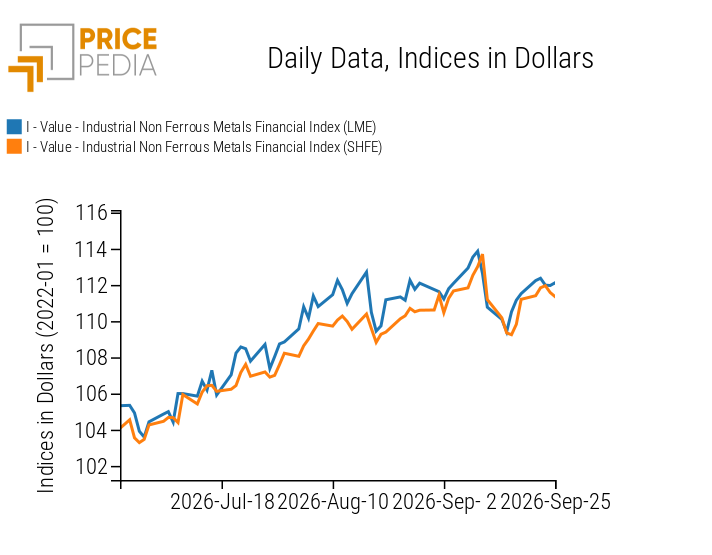
The financial indices of non-ferrous metals continued the upward price trend that began at the end of last week.
PricePedia Financial Indices of Industrial Non-Ferrous Metal Prices in Dollars
The non-ferrous metals heatmap shows a broad-based increase in the prices of base non-ferrous metals.
HeatMap of Non-Ferrous Metal Prices in Euros
FOOD
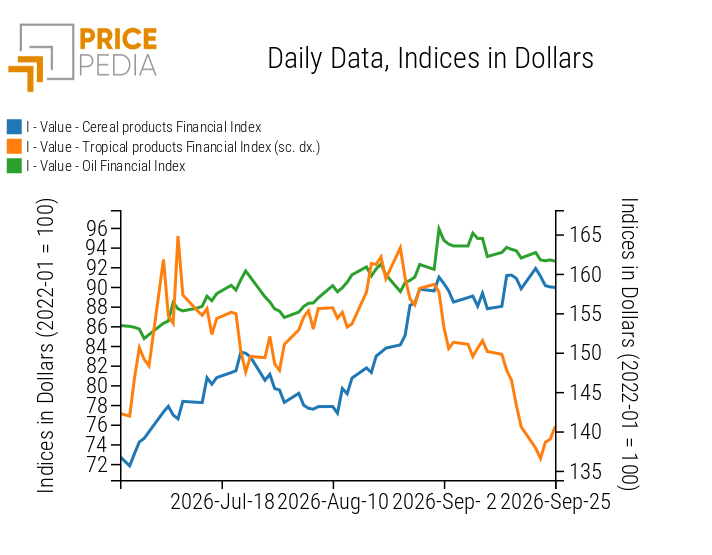
The three PricePedia financial indices of food commodities show mixed price changes, without altering their overall trend.
PricePedia Financial Indices of Food Commodity Prices in Dollars
CEREALS
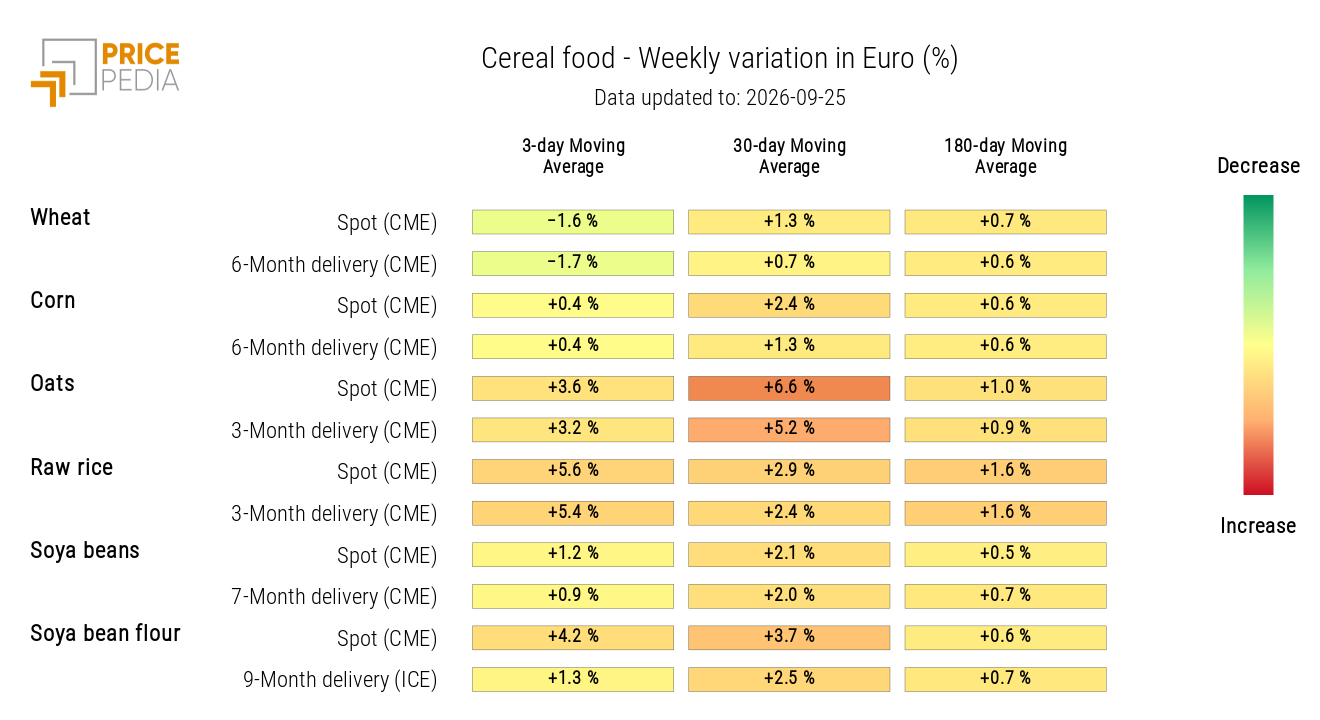
The cereals heatmap shows an increase in oat and rough rice prices.
HeatMap of Cereal Prices in Euros
TROPICALS
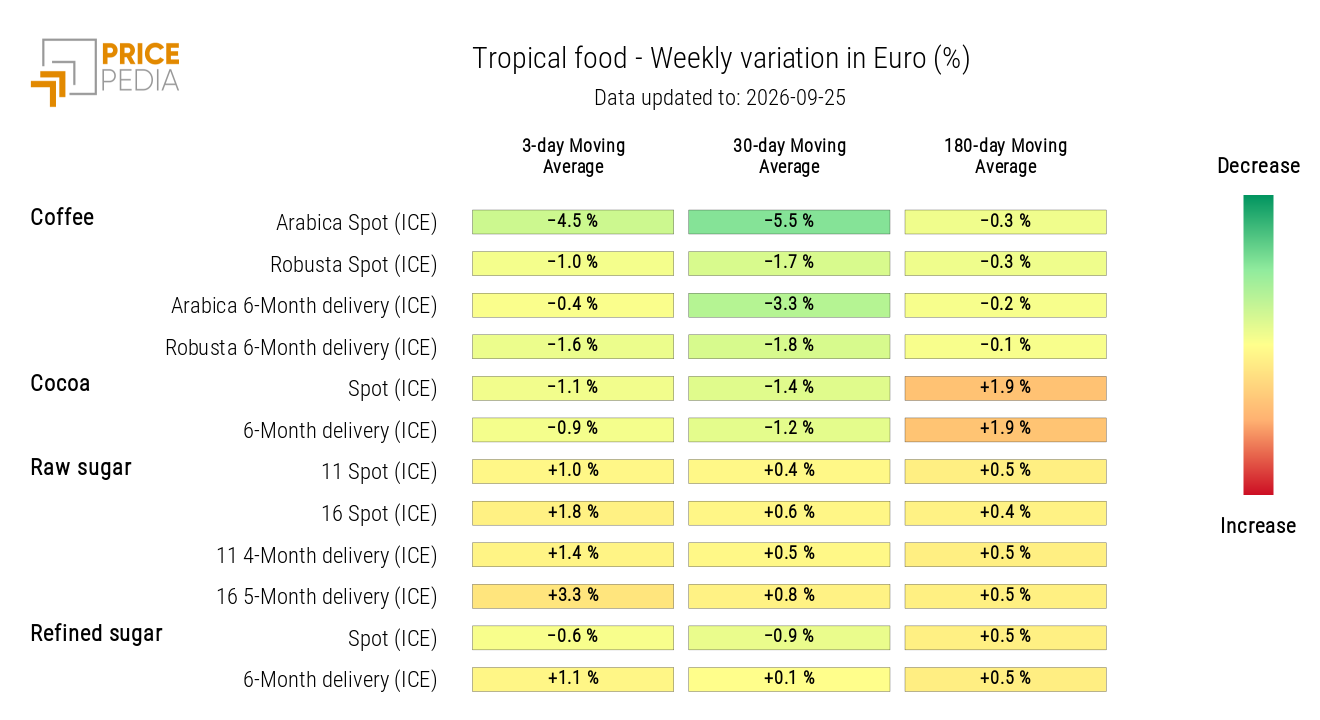
The tropical commodities heatmap shows a decline in the weekly changes of the 3-day moving averages of arabica coffee prices.
HeatMap of Tropical Food Prices in Euros
You may be interested in:

China economic update August 2026
Published by Luca Sazzini. .
Conjunctural Indicators Global Economic TrendsIncreased competitive pressure is driving down the prices of Chinese commodities [ Read all ]

Uncertainty in the commodity markets remains high
Published by Luca Sazzini. .
Conjunctural Indicators Commodities Financial WeekCommodity prices show divergent trends [ Read all ]

From Hormuz to Bab el-Mandeb, tensions are rising over energy commodity prices
Published by Luca Sazzini. .
Conjunctural Indicators Commodities Financial WeekIncreased supply is driving down cobalt prices [ Read all ]