Geopolitical tensions and tight supply are supporting commodity markets
Supply risks are driving up prices for energy, metals, and cereals
Published by Luca Sazzini. .
Conjunctural Indicators Commodities Financial Week
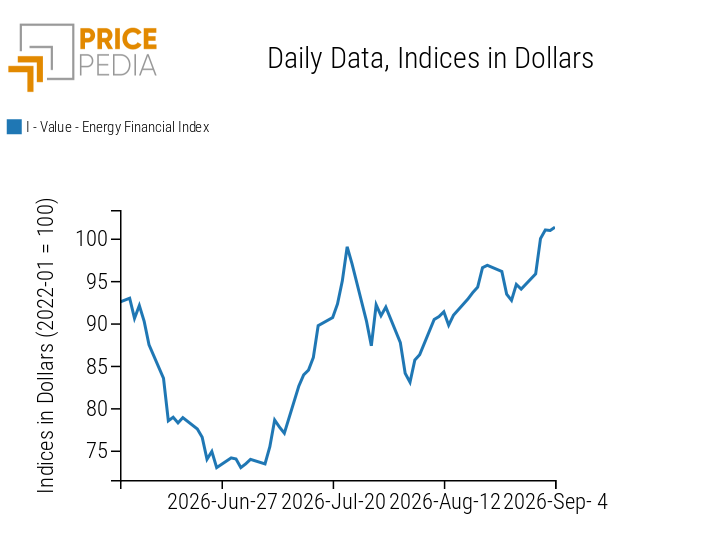
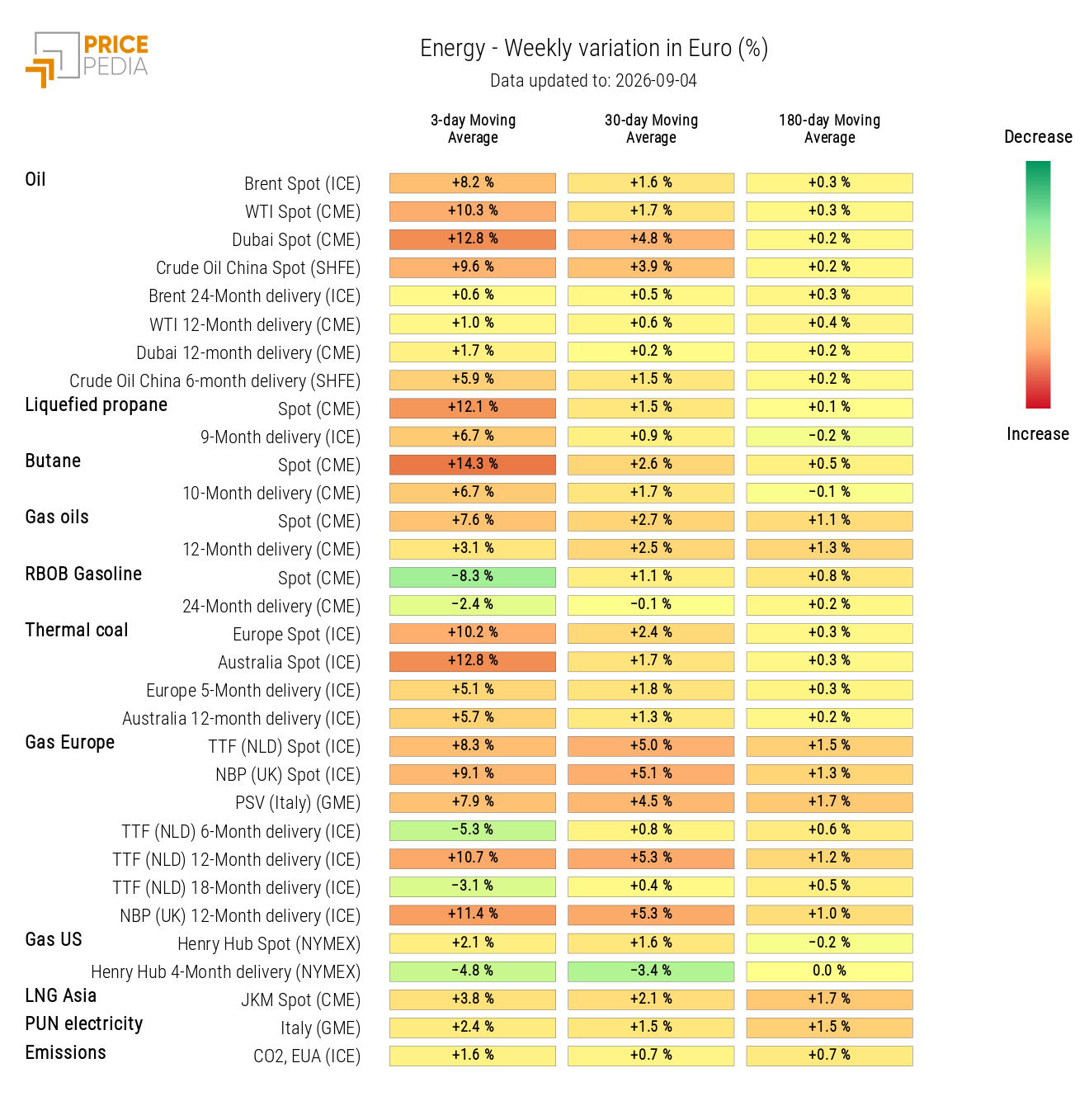
After the stalemate in the peace negotiations between the United States and Iran and the renewed escalation of tensions in recent weeks, financial energy prices have recorded further increases during August and the first week of September. The continuation of the conflict continues to restrict traffic through the Strait of Hormuz, which remains at negligible levels compared with those recorded before the conflict. The reduction in flows keeps supply-side risks elevated, supporting the price of Brent crude oil, which closed last week above $95/barrel.
The distillates market also remains characterized by a significant supply shortage, particularly for diesel, whose price reached $4.6/gallon. Russia has in fact extended its diesel export ban by a further month, in an attempt to stabilize the domestic market, which has come under pressure from Ukrainian attacks on refineries that have reduced refining capacity and aggravated fuel shortages in the country.
Other energy markets characterized by a particularly critical supply situation are those for natural gas in Europe and Asia. The resumption of hostilities in the Middle East represents an additional supply risk, in a context characterized by low European storage levels and intense competition between Europe and Asia for LNG cargoes. Against this backdrop, the price of Dutch TTF gas exceeded €70/MWh, reaching its highest levels since the 2022 energy crisis.
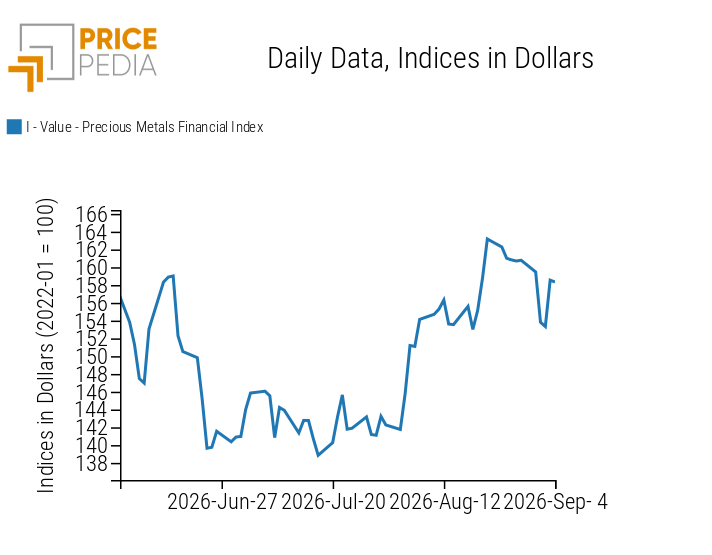
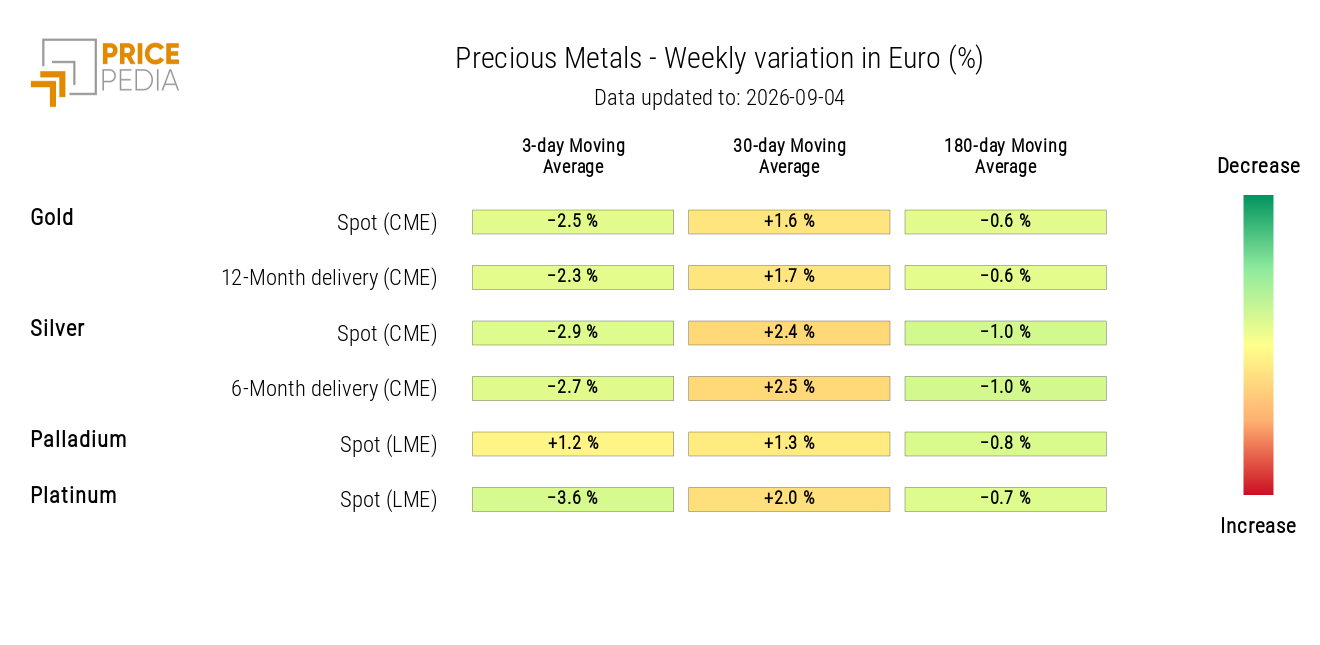
The precious metals sector was the focus of a strong rally in August, with gold recording a monthly increase of more than 8% compared with the July average. The subsequent renewed escalation of geopolitical tensions and the progressive increase in energy prices nevertheless weighed on precious metals last week, fueling concerns about a possible interest rate hike by the Fed.
Over the medium to long term, gold prices remain supported by central bank purchases, while in the short term they will be mainly influenced by the evolution of inflation and the resulting monetary policy decisions. This is further confirmed by the almost 3% increase in gold recorded on Thursday, after Christopher Waller, a member of the Fed's Board, stated that he favored keeping interest rates unchanged if the next data were to show a further slowdown in inflation.
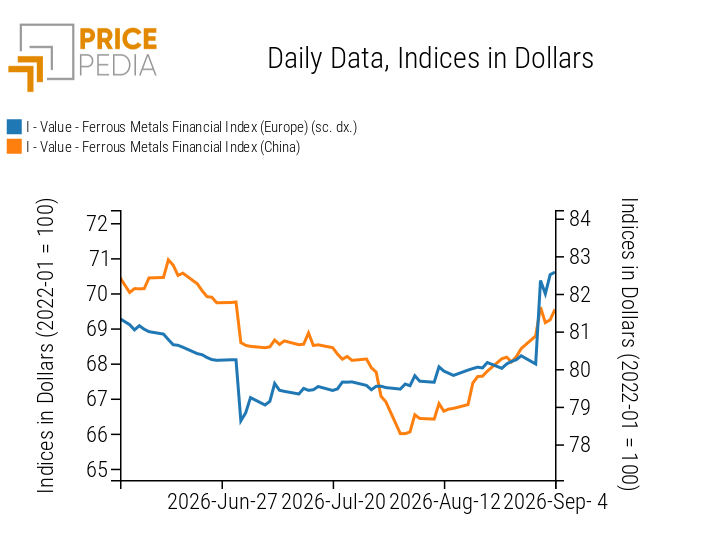
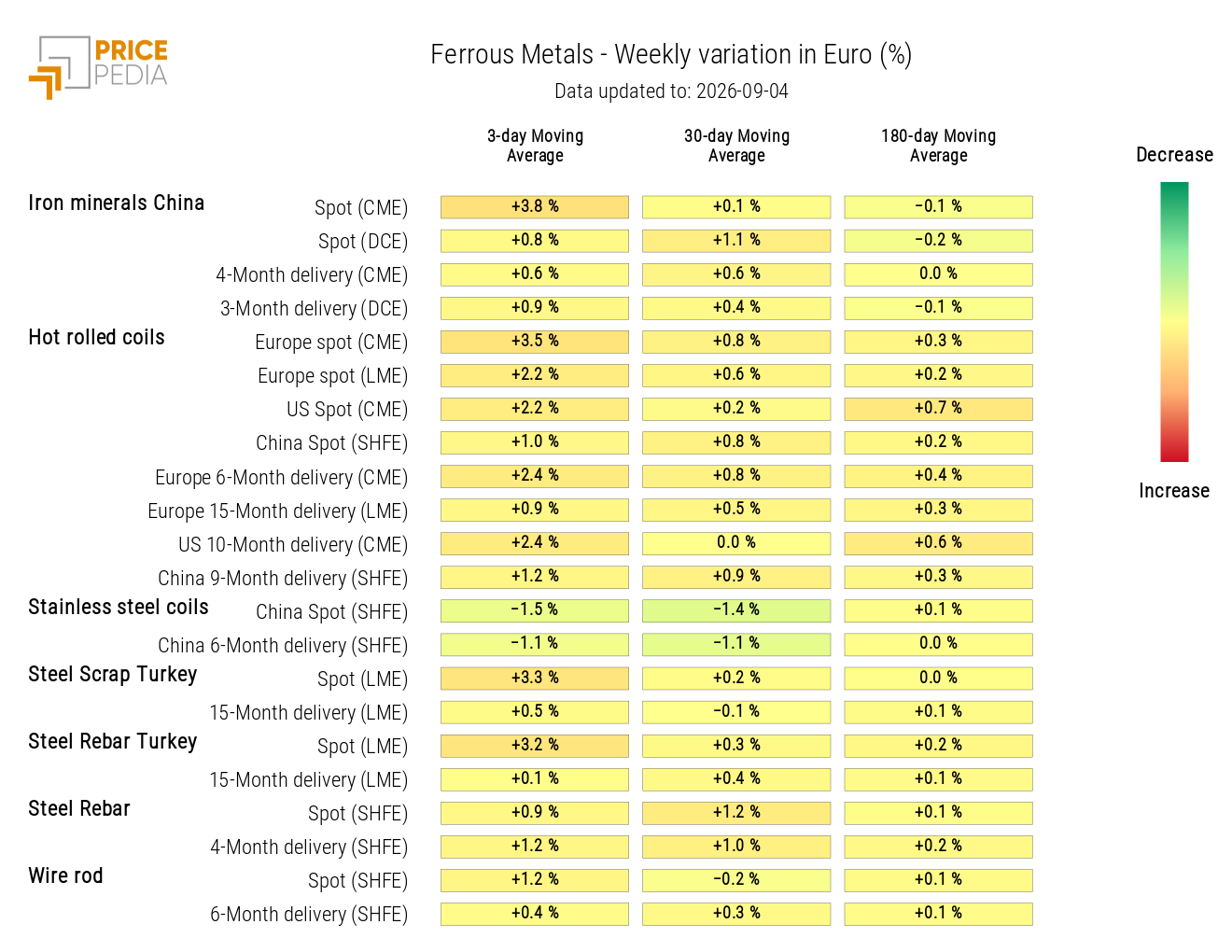
Among industrial metals, ferrous metals prices have recently increased, supported by expectations of a recovery in seasonal Chinese demand in September, the recent decline in steel production, and rising production costs.
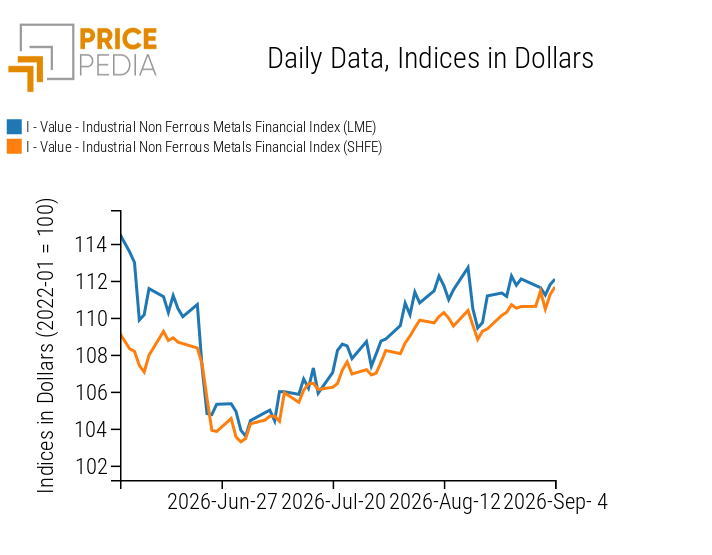
On the non-ferrous metals front, zinc and copper recorded the largest increases in August, supported by tensions in mining supply and the growing scarcity of concentrates. The increase in nickel and tin prices was instead restrained by the ample availability of Indonesian nickel and increased tin supply from Myanmar, Bolivia, and Congo.
As for aluminium, persistent supply-side tensions, also linked to the recent geopolitical escalations, were offset by weak demand, limiting the increase in prices, which nevertheless remain at elevated levels, close to $3,300/tonne.
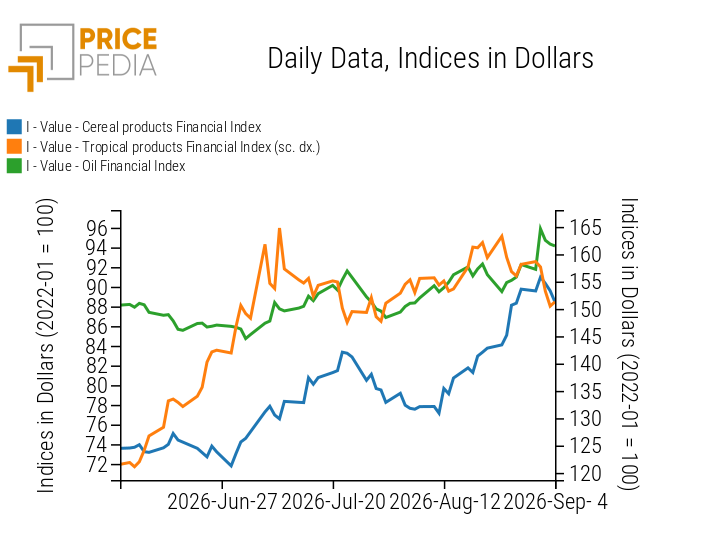
Over the past month, the food sector has recorded a particularly sharp increase in cereals, supported by new disruptions to Black Sea exports linked to the intensification of the conflict between Russia and Ukraine, compounded by the effects of unfavorable weather conditions on crops. Edible oil prices have also increased, mainly due to higher energy prices, which have strengthened demand for vegetable oils intended for biofuel production. In the last week, however, growth in tropical commodities has slowed, penalized by the decline in the price of coffee, attributable to excess supply on international markets.
NUMERICAL APPENDIX
ENERGY
The escalation of tensions in the Middle East has pushed energy prices higher, as highlighted by the PricePedia financial index of energy products.
PricePedia Financial Index of Energy Prices in Dollars
The energy heatmap highlights the strong increase in oil and natural gas prices.
HeatMap of Energy Prices in Euros
PLASTICS AND ELASTOMERS
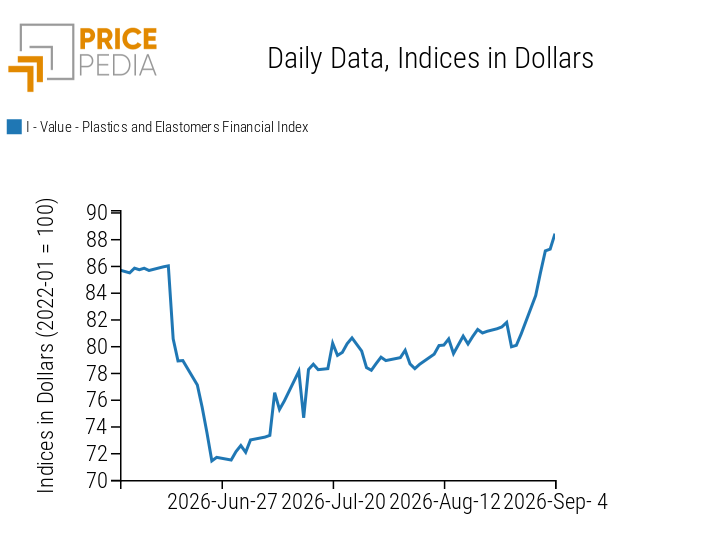
The financial index of plastics and elastomers prices signals a significant increase in prices, coinciding with the escalation of tensions in the Middle East.
PricePedia Financial Index of Plastics and Elastomers Prices in Dollars
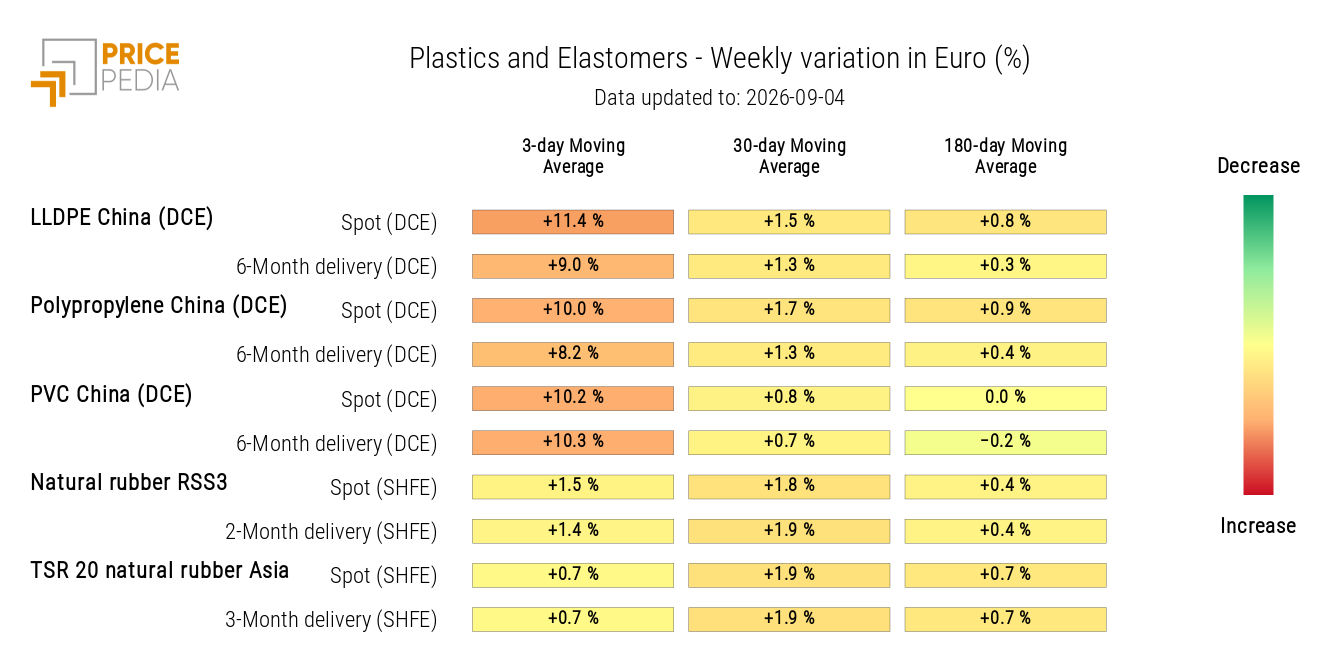
The heatmap of thermoplastics and elastomers indicates a sharp weekly increase in the 3-day moving average of Chinese thermoplastics prices.
HeatMap of Plastics and Elastomers Prices in Euros
PRECIOUS METALS
The financial index of precious metals is entering a new phase of price recovery.
PricePedia Financial Index of Precious Metals Prices in Dollars
The heatmap of precious metals indicates a weekly decline in the prices of gold, silver, and platinum.
HeatMap of Precious Metals Prices in Euros
FERROUS METALS
Both ferrous metals indices indicate a weekly recovery in prices.
PricePedia Financial Indices of Ferrous Metals Prices in Dollars
The heatmap analysis shows an increase in the prices of Chinese iron ore, hot-rolled coils, steel scrap, and Turkish steel rebar.
HeatMap of Ferrous Metals Prices in Euros
Do you want to stay up-to-date on commodity market trends?
Sign up for PricePedia newsletter: it's free!
INDUSTRIAL NON-FERROUS METALS
Net of fluctuations, the two non-ferrous metals indices show substantial weekly price stability.
PricePedia Financial Indices of Industrial Non-Ferrous Metals Prices in Dollars
FOOD
After the strong growth recorded in August, the financial index of cereals reversed its trend in the last week. The tropical commodities index recorded a decline, while the edible oils index posted a slight weekly increase.
PricePedia Financial Indices of Food Prices in Dollars
CEREALS
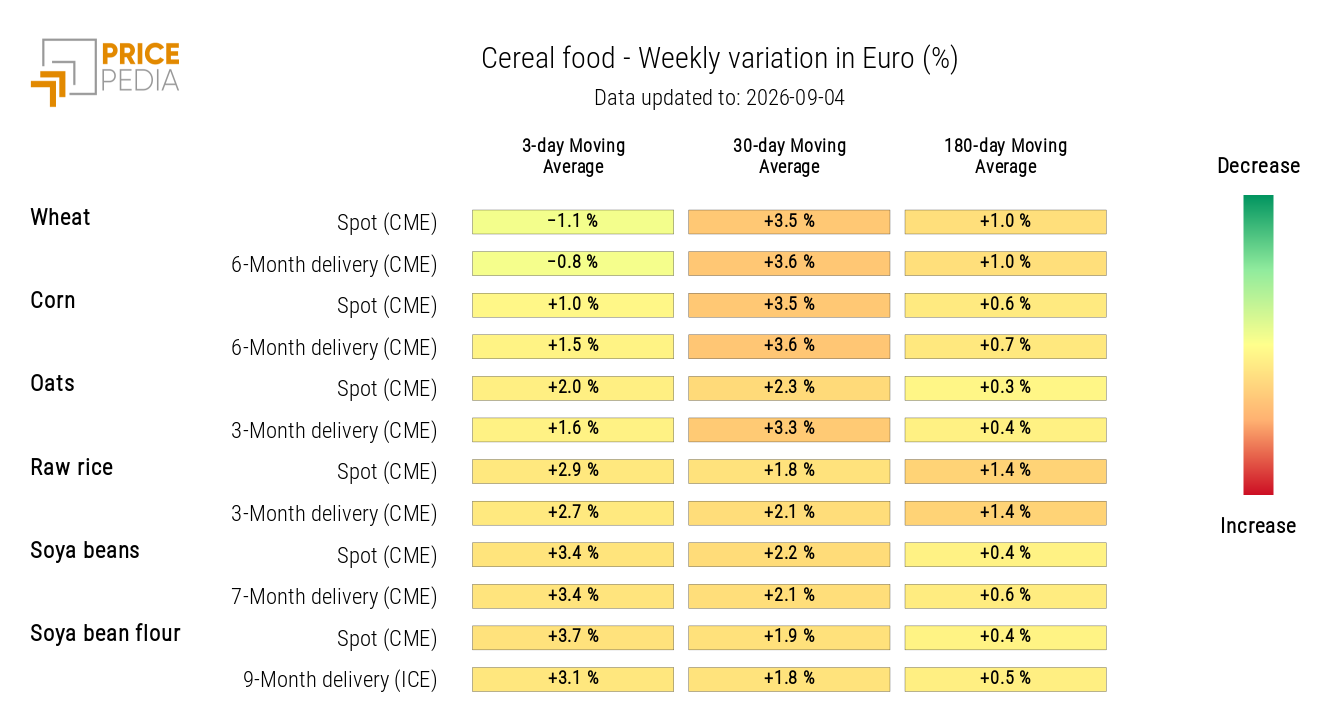
The cereal heatmap shows a generalized weekly increase in prices, with the exception of wheat, which recorded a slight decline.
HeatMap of Cereal Prices in Euros
TROPICAL COMMODITIES
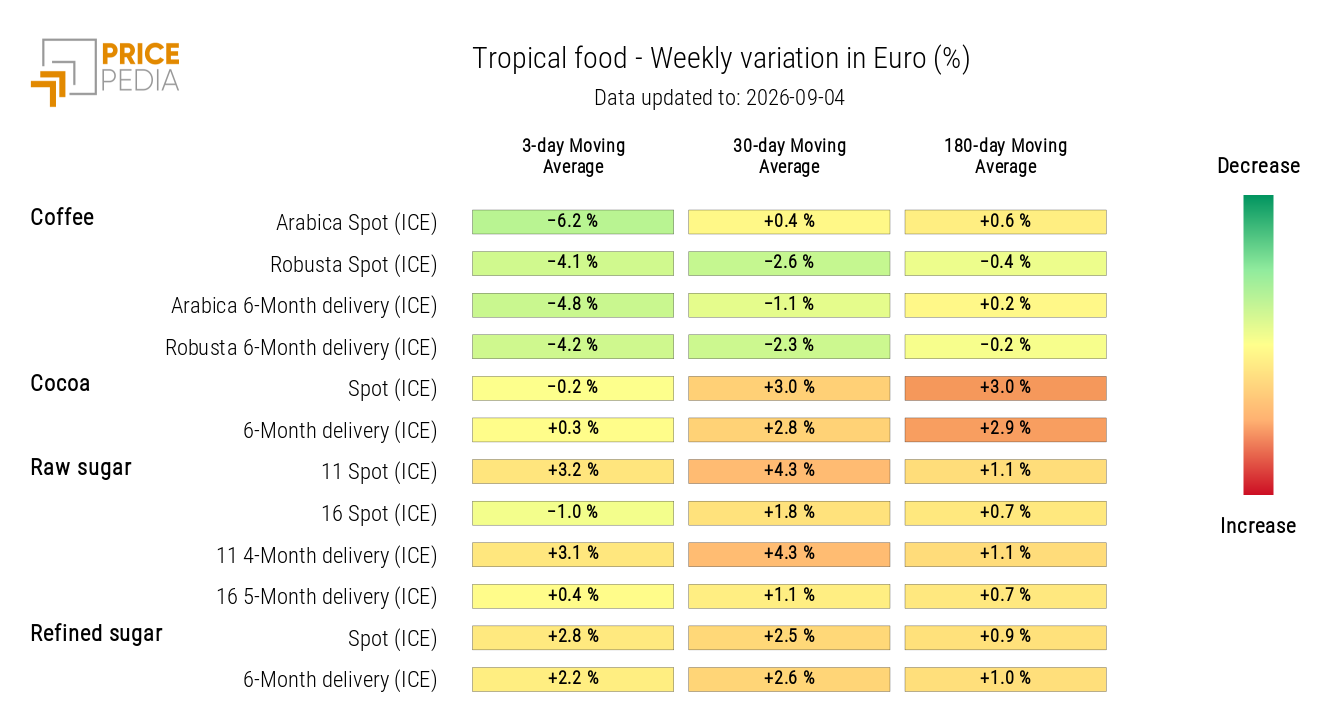
The tropical commodities heatmap indicates a weekly decline in coffee prices.
HeatMap of Tropical Food Prices in Euros
OILS
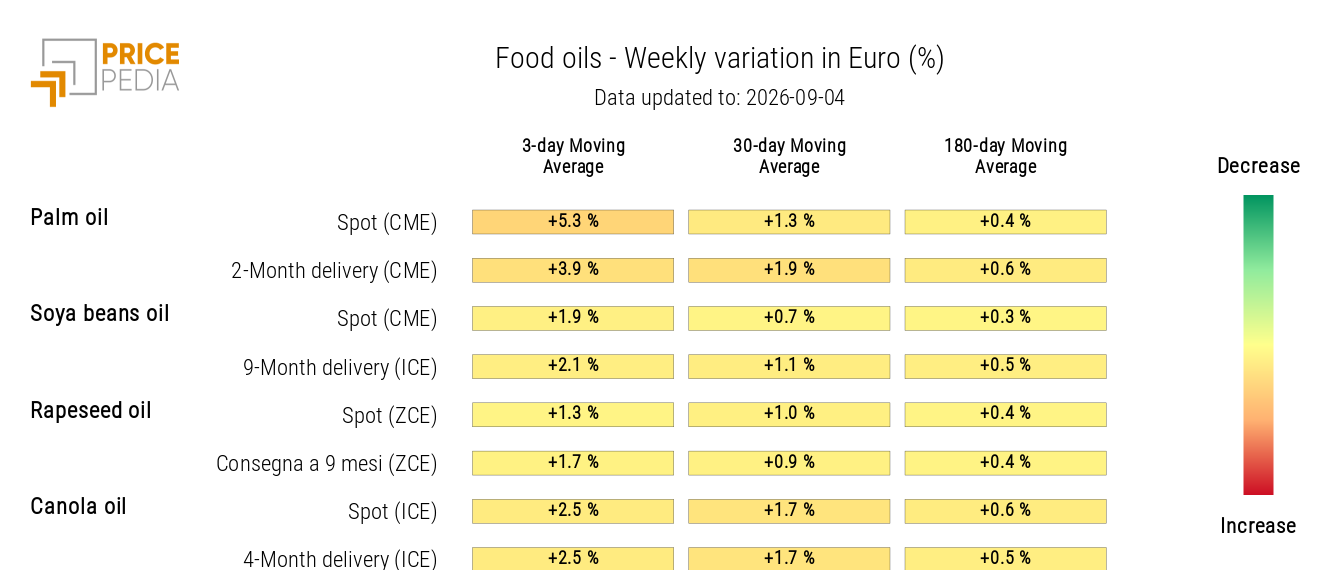
The edible oils heatmap shows a weekly increase in prices, with palm oil recording the sharpest increase.
HeatMap of Edible Oil Prices in Euros
You may be interested in:
Commodity markets dominated by supply uncertainties and inflationary pressures
Published by Luca Sazzini. .
Conjunctural Indicators Commodities Financial WeekThe EU is tightening sanctions against Russia, while the U.S. is considering further easing of restrictions [ Read all ]
Commodity prices between geopolitics and supply imbalances
Published by Luca Sazzini. .
Conjunctural Indicators Commodities Financial WeekWeak Chinese demand is pushing down prices for ferrous metals [ Read all ]
Expectations of tighter monetary policy are weighing on commodity markets
Published by Luca Sazzini. .
Conjunctural Indicators Commodities Financial WeekThe decline in prices is affecting most sectors [ Read all ]