Commodity markets dominated by supply uncertainties and inflationary pressures
The EU is tightening sanctions against Russia, while the U.S. is considering further easing of restrictions
Published by Luca Sazzini. .
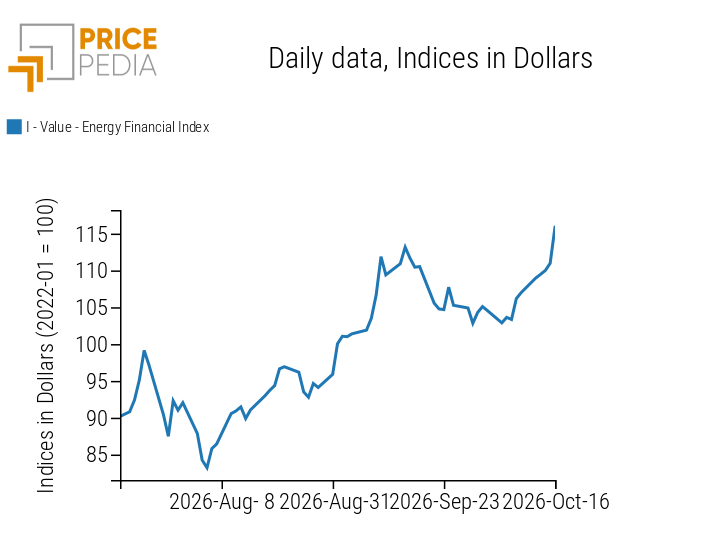
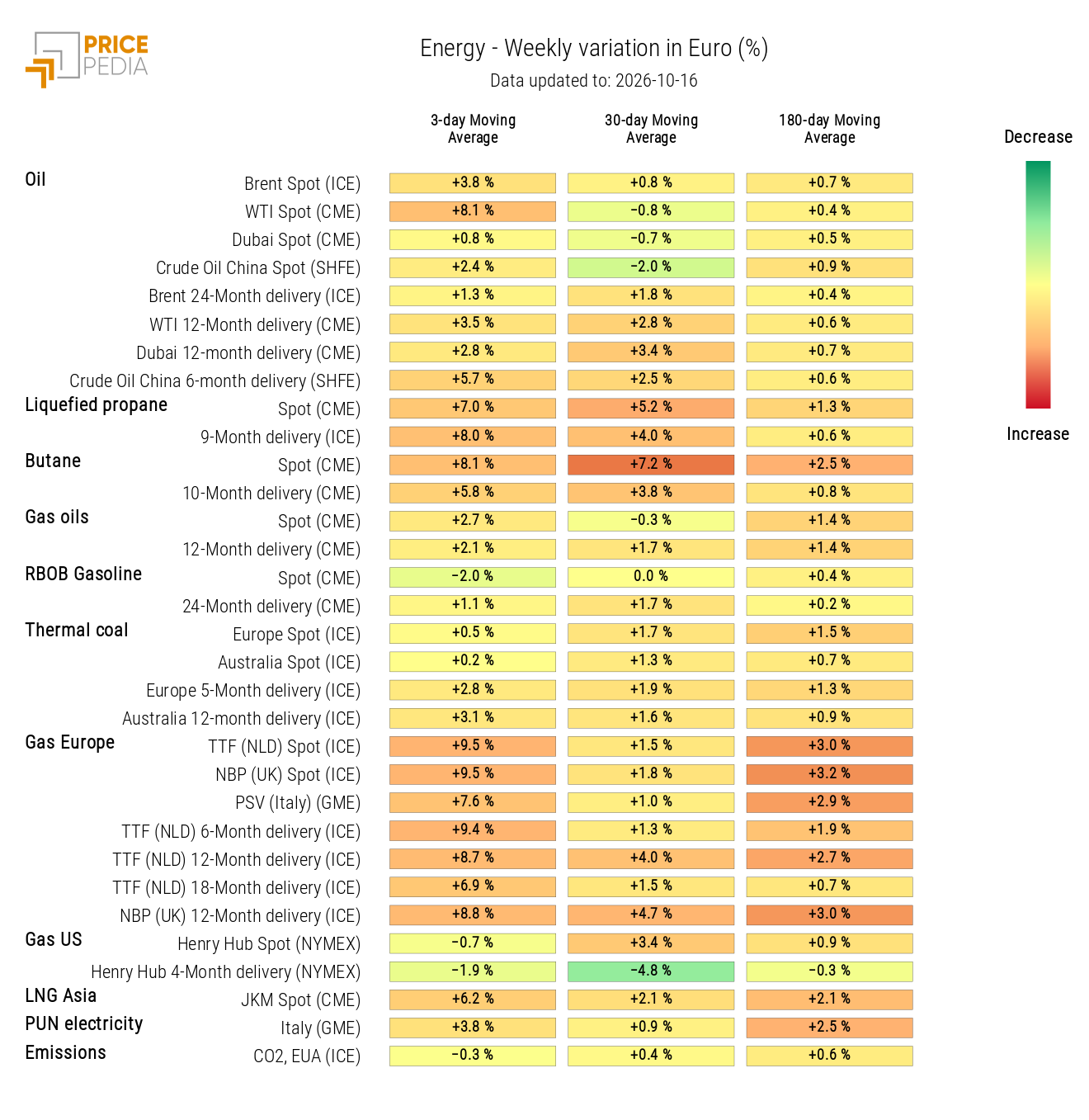
Conjunctural Indicators Commodities Financial WeekFollowing the production disruptions caused by hurricanes in the Gulf of Mexico last week, market attention in the energy sector has shifted to attacks on Russian and Ukrainian energy infrastructure, including the strike on Russia's Ryazan refinery, one of the country's major refining facilities. These tensions have been compounded by the European Union's new sanctions against Russia, which have targeted additional companies linked to the so-called shadow fleet,[1] further fuelling concerns about the continuity of supply. Taken together, these factors have led to a significant increase in Brent crude oil prices, prompting the IEA (International Energy Agency) to accelerate the release of strategic reserves at its 15 October meeting, with the aim of easing supply-side pressures.
The United States has also urged European countries to increase their releases of strategic diesel reserves, arguing that the planned volumes are insufficient. Washington is seeking to contain domestic fuel prices ahead of the midterm elections and is reportedly considering a further easing of sanctions on certain Russian shadow fleet tankers, following the temporary suspension of restrictions on Russian diesel last week.
The urgency of these measures reflects the sharp rise in diesel prices on the Chicago Mercantile Exchange (CME), which are approaching record highs, nearing $5 per gallon.
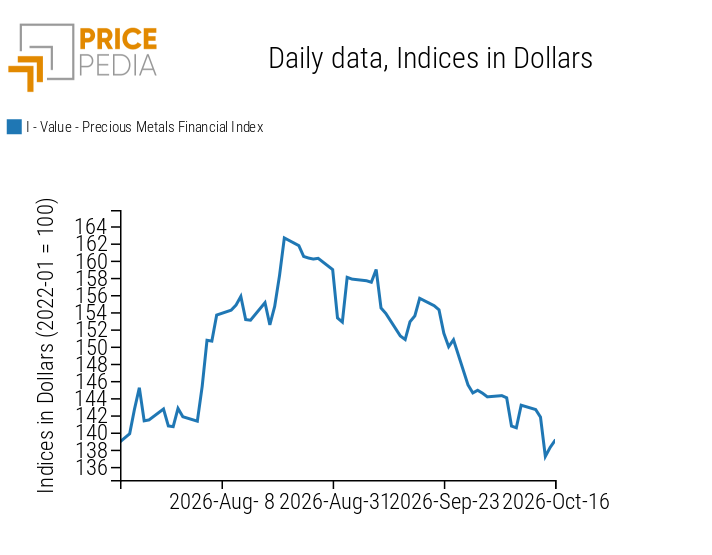
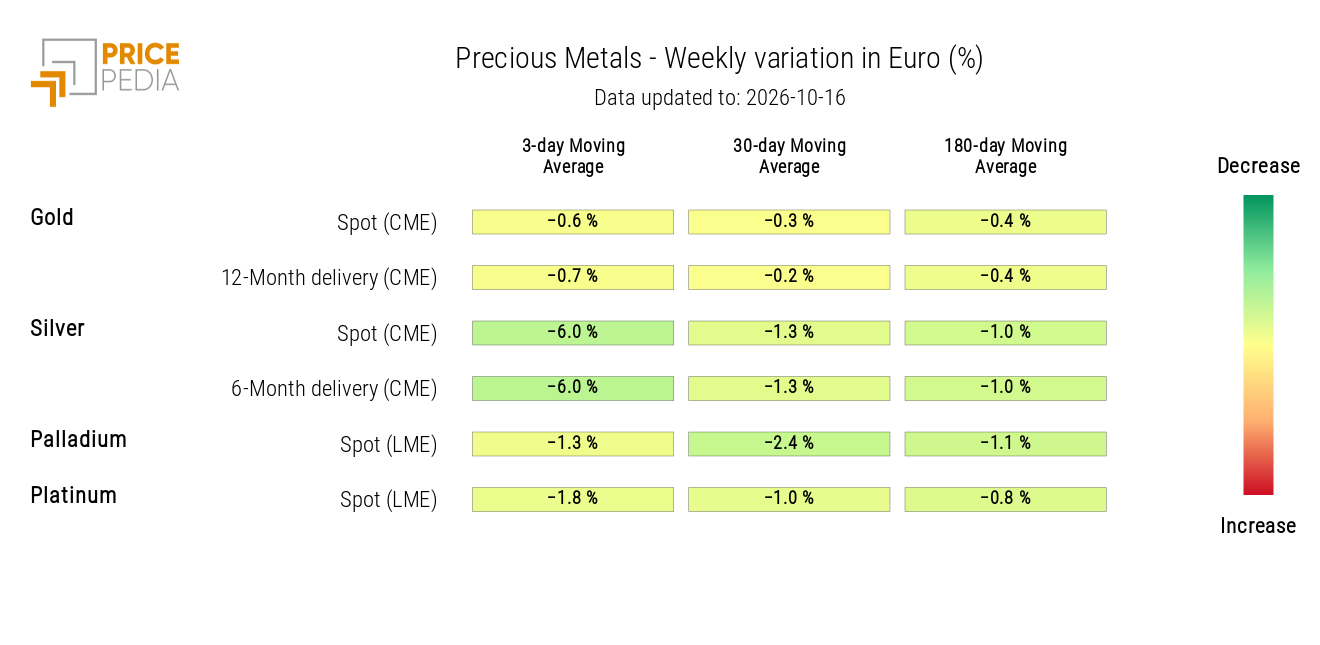
The precious metals sector continues to experience falling prices, with the decline accelerating following the release of new US inflation data that came in above expectations.
In September, consumer prices rose by 3.7% year on year, up from 3.4% in August, while core inflation, excluding food and energy, reached 2.6%.
These figures have strengthened expectations of a possible interest rate hike by the Federal Reserve as early as late October, increasing the opportunity cost of holding gold and silver compared with government bonds, whose yields tend to rise in a higher-interest-rate environment.
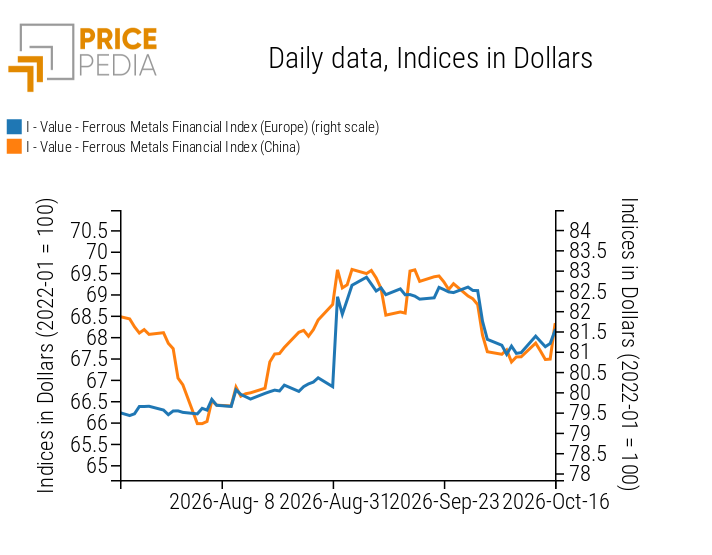
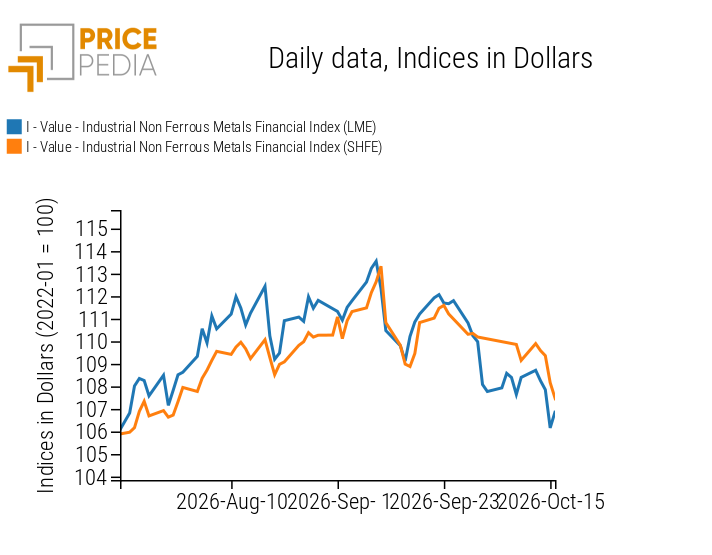
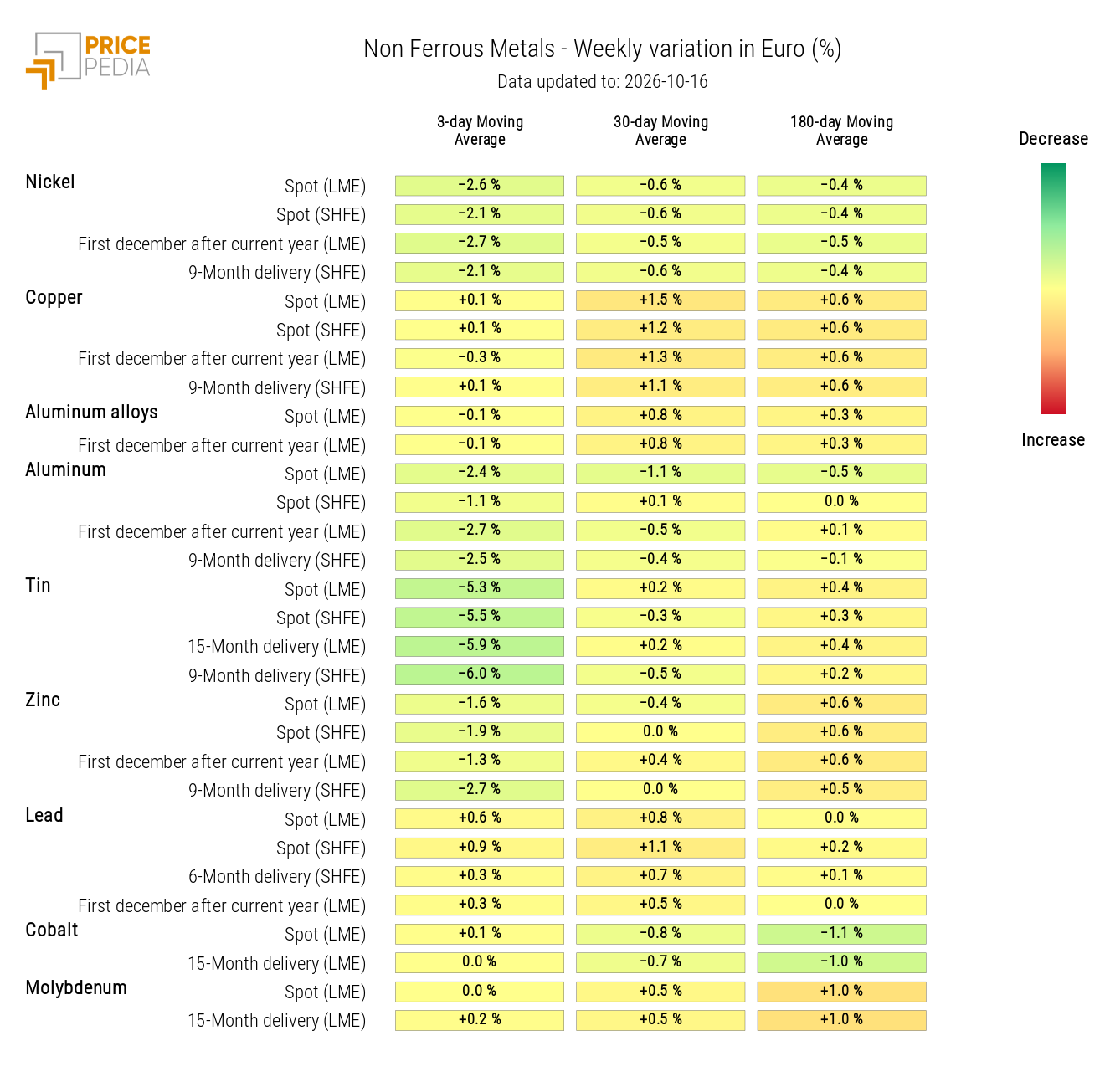
In the industrial metals sector, ferrous metals prices remain virtually unchanged, while non-ferrous metals prices are declining. The most significant decreases have affected tin, weighed down by sell-offs in technology stocks on financial markets, and nickel, which continues to be affected by oversupply.
By contrast, copper remains relatively stable, supported by demand linked to the twin green and digital transitions, the concentration of inventories in US warehouses, and recent operational disruptions at Chile's El Teniente mine, where a new accident has led to the suspension of activities in the affected areas.
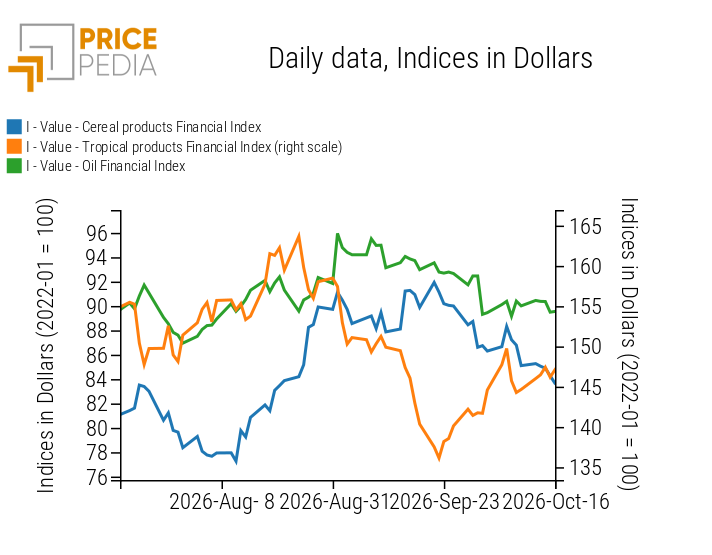
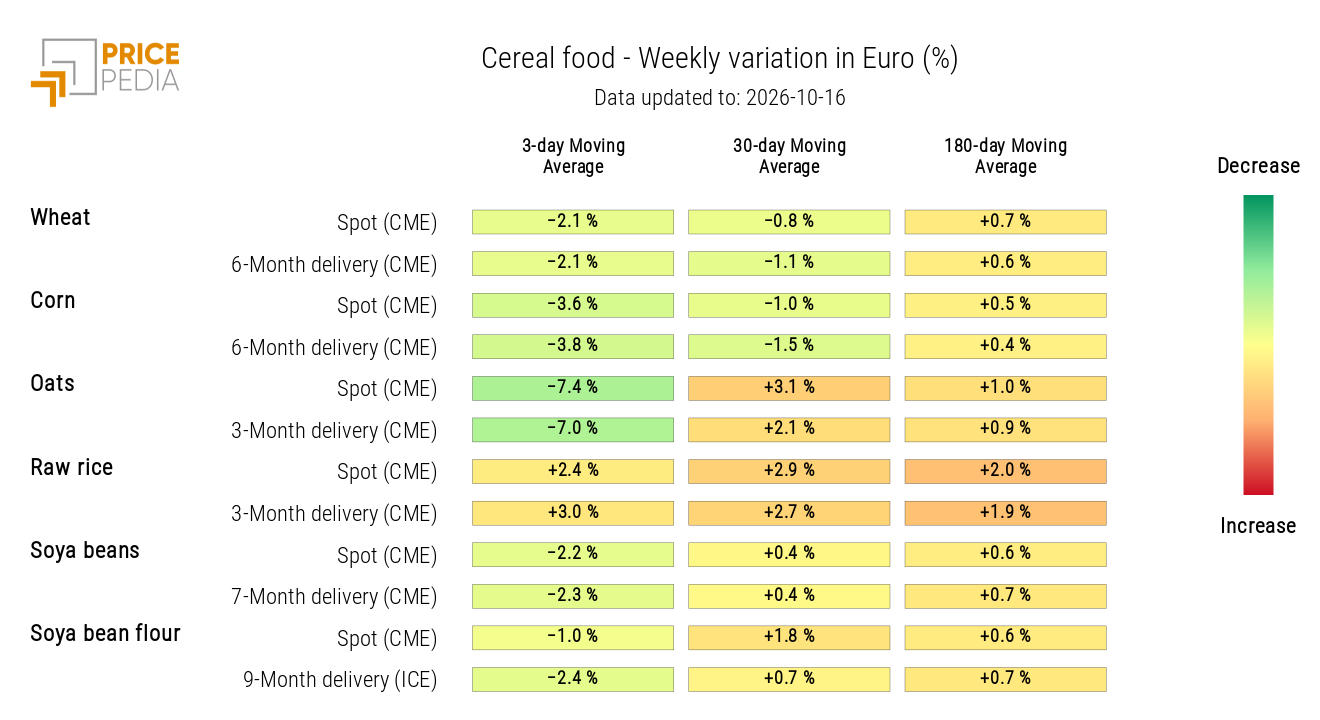
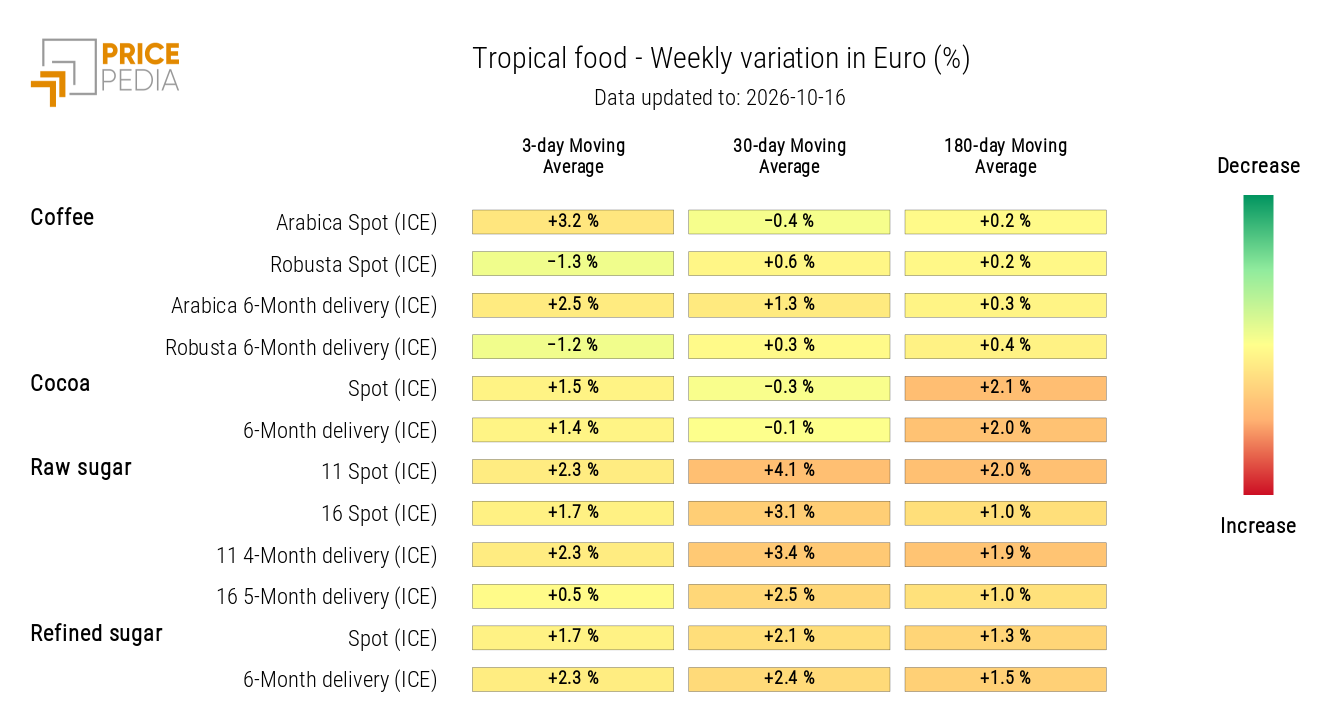
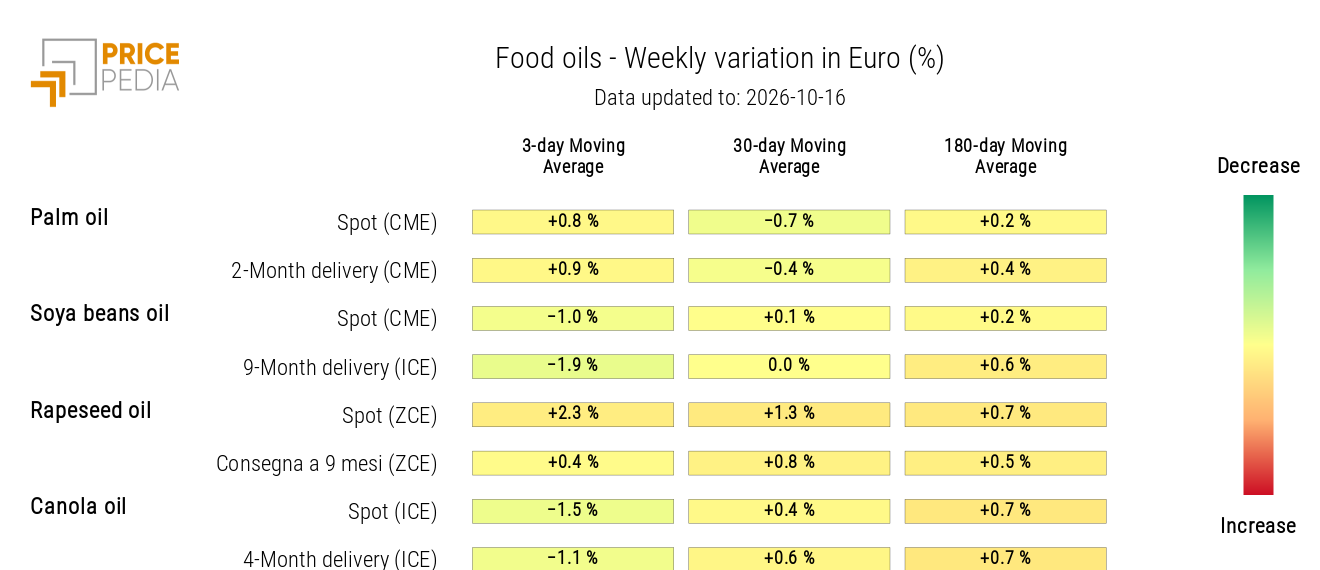
Among food commodities, prices of cereals have fallen across the board following more optimistic USDA crop forecasts. Tropical commodities have edged up slightly, while edible oils have remained broadly stable.
[1] A network of tankers flying foreign flags and characterised by opaque ownership structures, used to transport oil while circumventing international sanctions.
NUMERICAL APPENDIX
ENERGY
The PricePedia financial index for energy products has risen, driven by supply-side tensions.
PricePedia Financial Index of Energy Prices in US Dollars
The energy price heatmap shows increases in the prices of oil, propane, butane and natural gas.
Heatmap of Energy Prices in Euros
PRECIOUS METALS
The financial index for precious metals continues its downward trend.
PricePedia Financial Index of Precious Metals Prices in US Dollars
The precious metals heatmap shows a decline in silver prices.
Heatmap of Precious Metals Prices in Euros
FERROUS METALS
Ferrous metals indices show daily fluctuations that do not alter the underlying trend.
PricePedia Financial Indices of Ferrous Metals Prices in US Dollars
Do you want to stay up-to-date on commodity market trends?
Sign up for PricePedia newsletter: it's free!
INDUSTRIAL NON-FERROUS METALS
Non-ferrous metals indices are undergoing a downward correction.
PricePedia Financial Indices of Industrial Non-Ferrous Metals Prices in US Dollars
The non-ferrous metals heatmap shows a decline in tin and nickel prices.
Heatmap of Non-Ferrous Metals Prices in Euros
FOOD COMMODITIES
Despite weekly fluctuations, the three financial indices for food commodities remain broadly stable.
PricePedia Financial Indices of Food Commodity Prices in US Dollars
CEREALS
With the exception of rough rice, the cereals heatmap shows a widespread decline in prices.
Heatmap of Cereal Prices in Euros
TROPICAL COMMODITIES
The tropical commodities heatmap shows weekly increases in arabica coffee, cocoa and sugar prices.
Heatmap of Tropical Food Commodity Prices in Euros
OILS
The edible oils heatmap shows an increase in rapeseed oil prices, alongside a decline in canola oil prices.
Heatmap of Edible Oil Prices in Euros
You may be interested in:

Commodity prices between geopolitics and supply imbalances
Published by Luca Sazzini. .
Conjunctural Indicators Commodities Financial WeekWeak Chinese demand is pushing down prices for ferrous metals [ Read all ]

Expectations of tighter monetary policy are weighing on commodity markets
Published by Luca Sazzini. .
Conjunctural Indicators Commodities Financial WeekThe decline in prices is affecting most sectors [ Read all ]

Commodity markets between supply risks and geopolitical uncertainty
Published by Luca Sazzini. .
Conjunctural Indicators Commodities Financial WeekThe strength of the U.S. economy is bolstering expectations of a more restrictive monetary policy [ Read all ]