Commodity prices fall as tensions ease, but risks remain high
Geopolitical uncertainty continues to fuel market volatility
Published by Luca Sazzini. .
Conjunctural Indicators Commodities Financial Week
Since the beginning of the conflict, the oil financial markets have ceased to follow market fundamentals, reflecting almost exclusively geopolitical developments in the Persian Gulf.
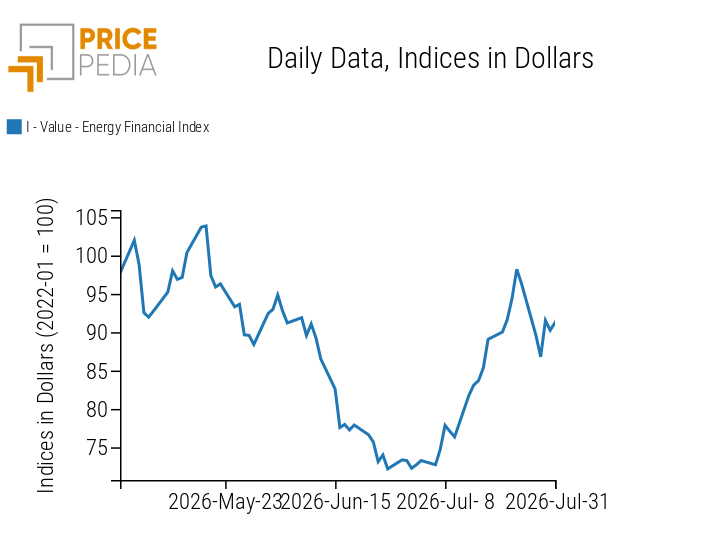
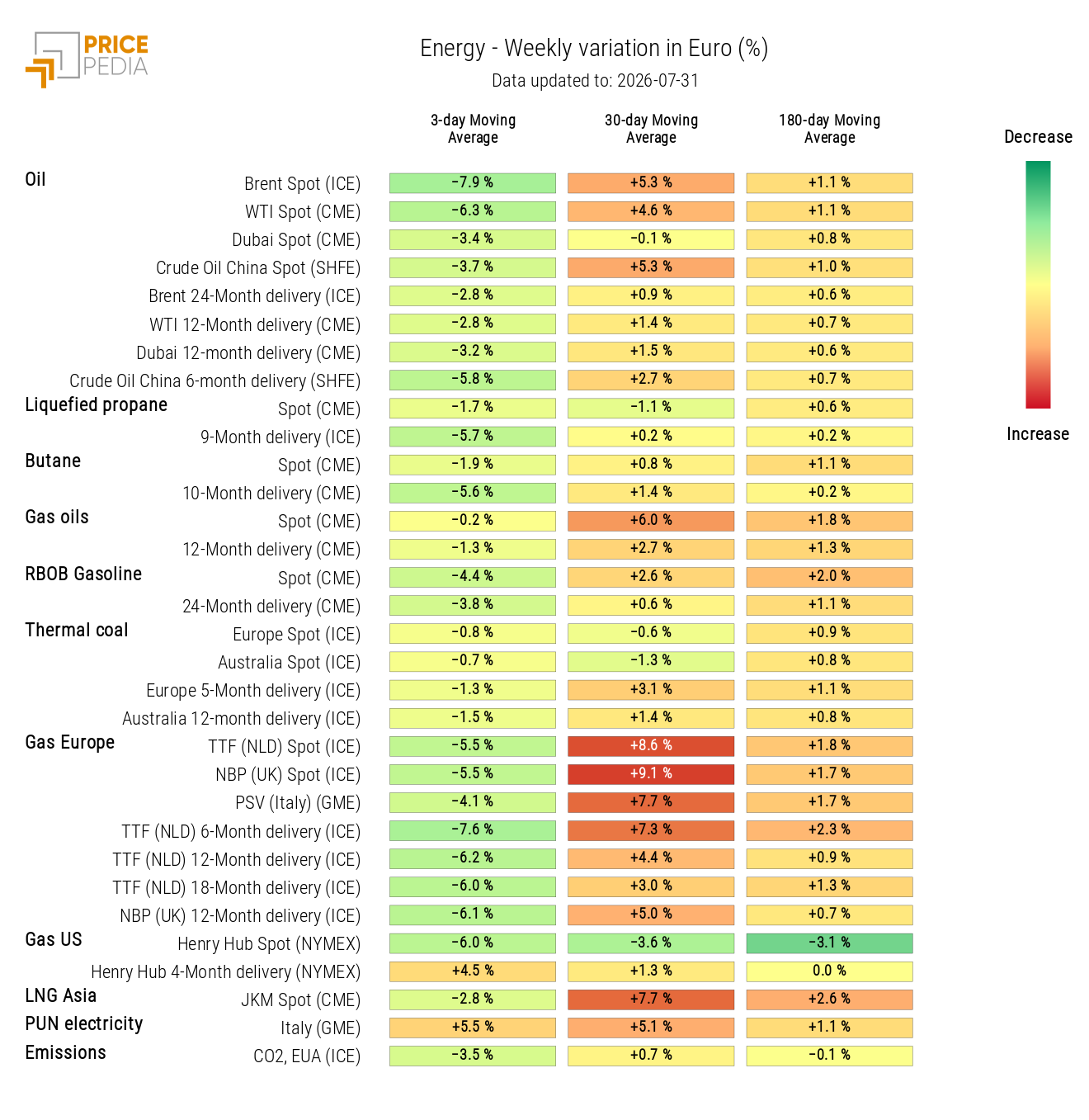
News of a possible easing of tensions between the United States and Iran triggered a correction in Brent prices, which fell by 9% during the trading session on Monday, July 27, compared with their closing levels on Friday, July 24. The same pattern was observed across other energy markets, with TTF natural gas prices declining by more than 8% on Monday, July 27.
Price movements during the rest of the week closely mirrored the evolution of the geopolitical situation, with energy prices ending the week lower despite the first signs of a partial resumption of commercial traffic through the Strait of Hormuz.
However, even if a new peace agreement were reached and the Strait of Hormuz were fully reopened, tensions in the oil market would be unlikely to ease in the short term, given the fragility of any potential agreement and the persistent risk of renewed escalation, as demonstrated by developments over recent weeks. In addition, Houthi attacks against Saudi Arabia continue to pose a threat to the region's energy infrastructure and to Saudi exports transiting through the Bab el-Mandeb Strait.
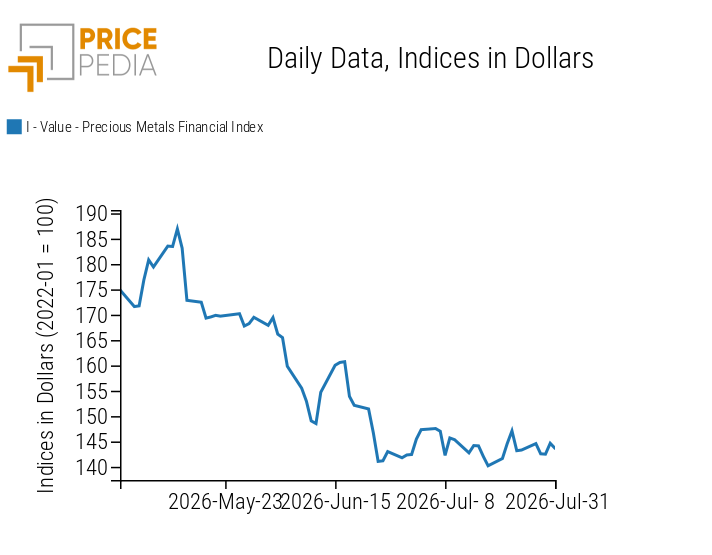
Financial prices for precious metals remained broadly stable throughout the week, with only slight fluctuations moving in the opposite direction to energy prices.
The Federal Reserve meeting had no significant impact on prices, as the market had already priced in both the decision to keep interest rates unchanged and the possibility of a non-unanimous vote. Neither the confirmation of the Federal Reserve's cautious stance nor the three votes in favor of a 25-basis-point rate hike came as a surprise to financial market participants.
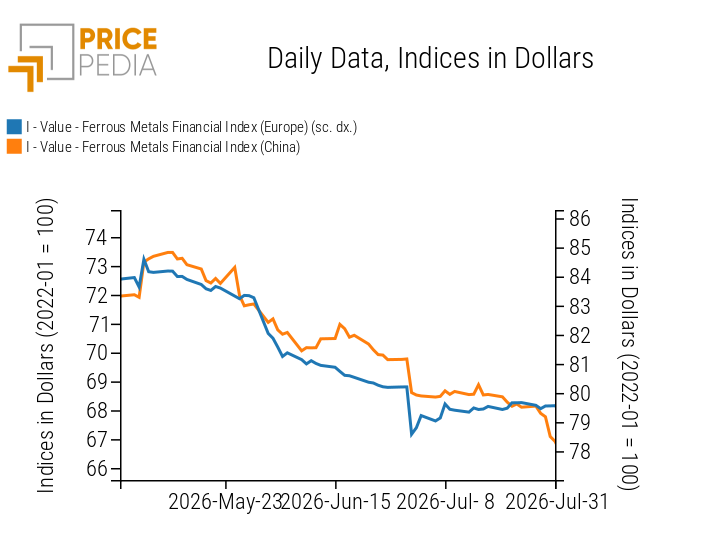
The industrial metals sector also experienced broadly stable weekly price dynamics in U.S. dollar terms, both in the ferrous and non-ferrous segments. The main price changes occurred in the Chinese ferrous metals market, which recorded an overall decline driven primarily by lower prices for iron ore and steel rebar.
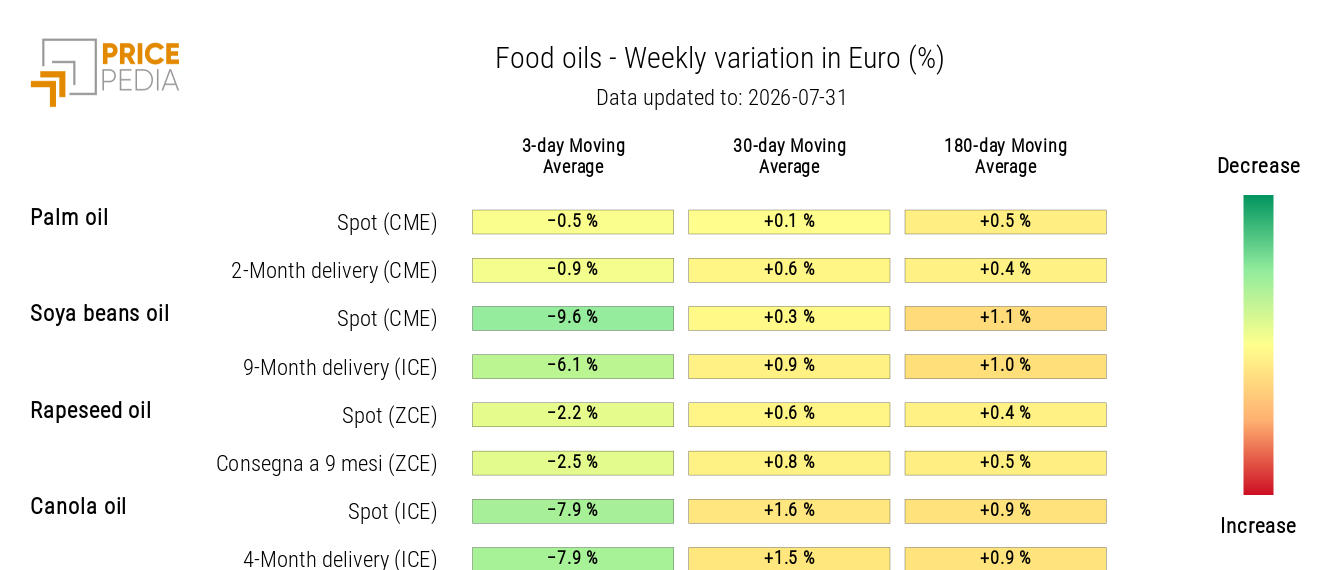
Among food commodities, prices declined broadly across the grains and edible oils segments. The decrease in cereal prices was mainly driven by expectations of continued abundant global supply, supported by favorable crop conditions, with a high share of crops rated in good or excellent condition. Edible oils, on the other hand, were affected by the correction in energy prices, which reduced demand for vegetable oils used in biofuel production.
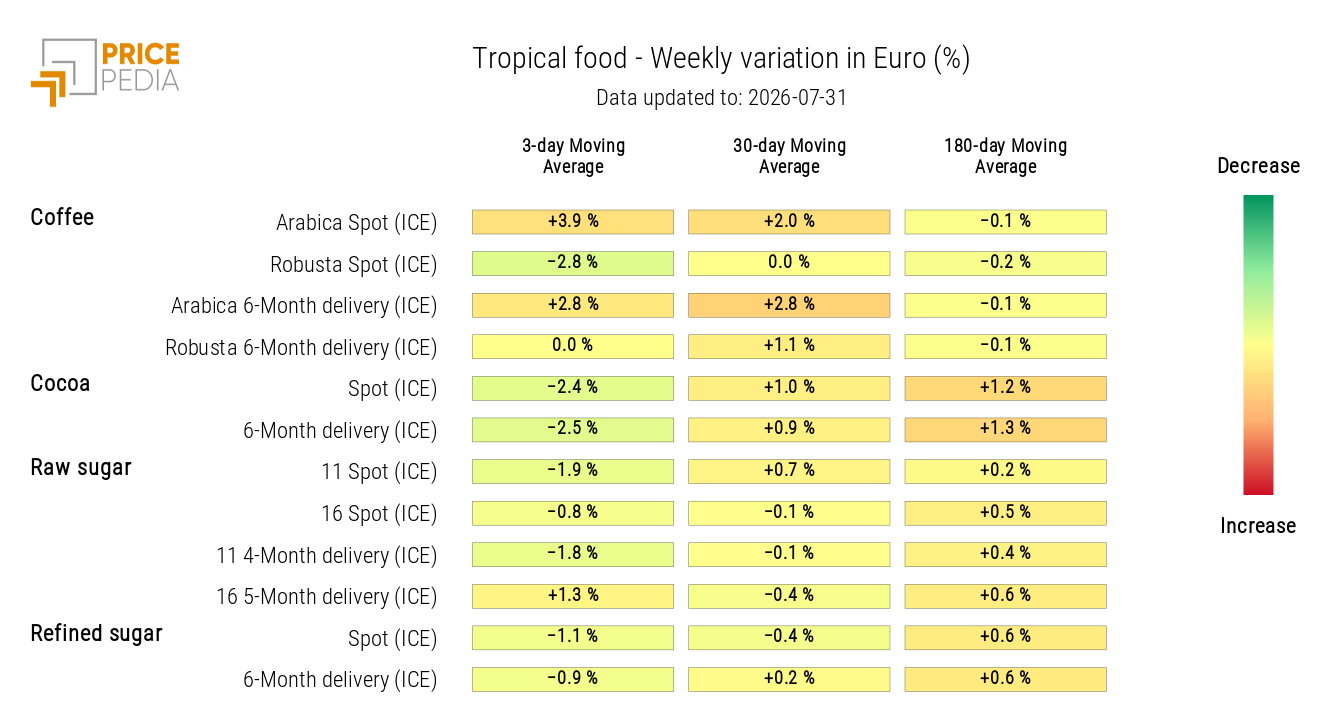
Within the tropical products category, cocoa prices continued to decline thanks to improving weather conditions in West Africa, which eased concerns about supply ahead of the main harvest. By contrast, Arabica coffee prices continued to rise, supported by limited short-term availability and delays in the Brazilian harvest. Although global production is expected to reach a new record in the 2026/27 season, immediately available supply remains constrained, resulting in a pronounced backwardation in the Arabica coffee market.
NUMERICAL APPENDIX
ENERGY
The PricePedia financial index for energy products recorded a decline following the easing of geopolitical tensions between the United States and Iran.
PricePedia Financial Index of Energy Prices in U.S. Dollars
The energy heatmap highlights a weekly decline in oil and natural gas prices.
Heatmap of Energy Prices in Euros
PRECIOUS METALS
The precious metals financial index shows slight fluctuations that do not alter its overall price trend.
PricePedia Financial Index of Precious Metals Prices in U.S. Dollars
FERROUS METALS
The financial index for Chinese ferrous metals continued its downward trend, while the index for European products remained stable.
PricePedia Financial Indices of Ferrous Metals Prices in U.S. Dollars
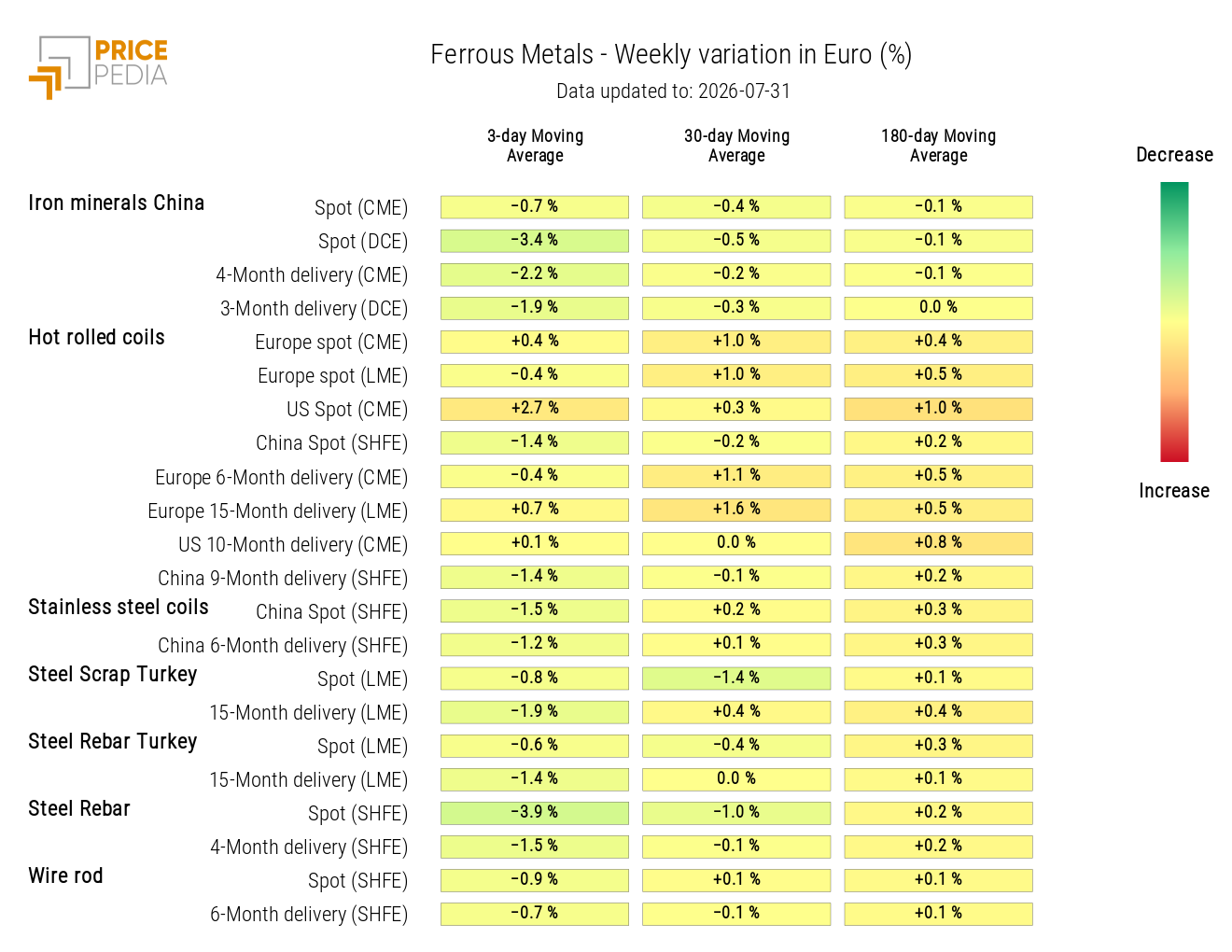
The heatmap analysis highlights a weekly decline in Chinese iron ore and steel rebar prices, while U.S. coil prices increased.
Heatmap of Ferrous Metals Prices in Euros
Do you want to stay up-to-date on commodity market trends?
Sign up for PricePedia newsletter: it's free!
INDUSTRIAL NON-FERROUS METALS
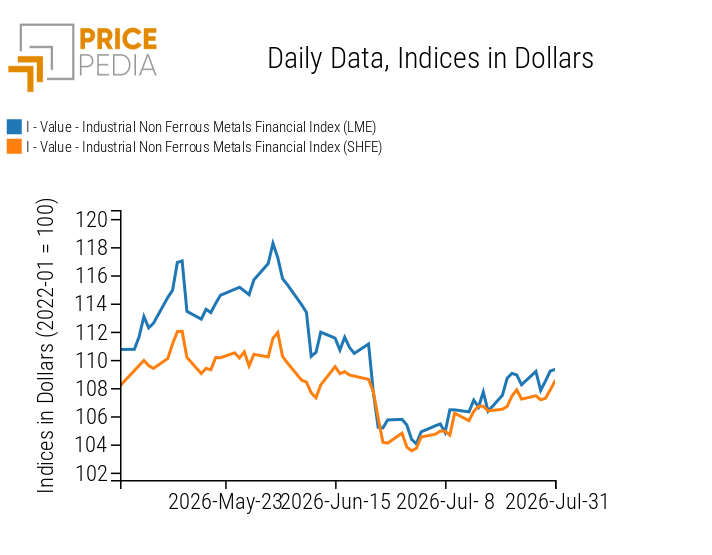
The two financial indices for non-ferrous metals continued to move sideways.
PricePedia Financial Indices of Industrial Non-Ferrous Metals Prices in U.S. Dollars
FOOD COMMODITIES
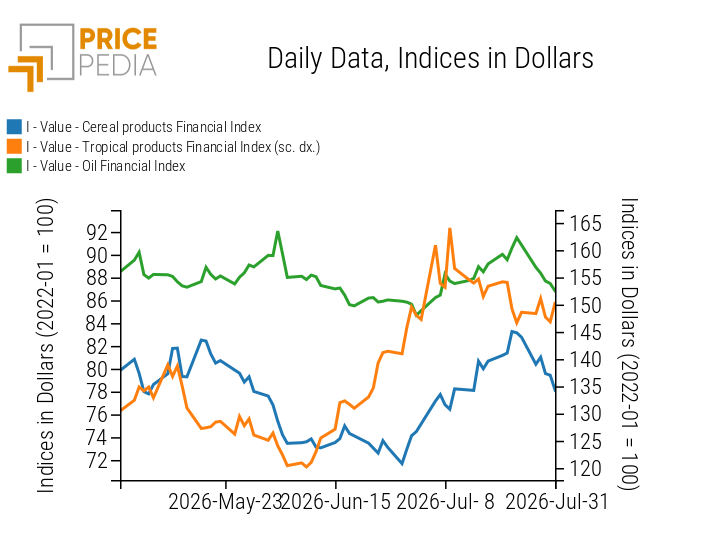
The financial indices for grains and edible oils recorded price declines, while the tropical products index followed a broadly sideways weekly trend.
PricePedia Financial Indices of Food Commodity Prices in U.S. Dollars
CEREALS
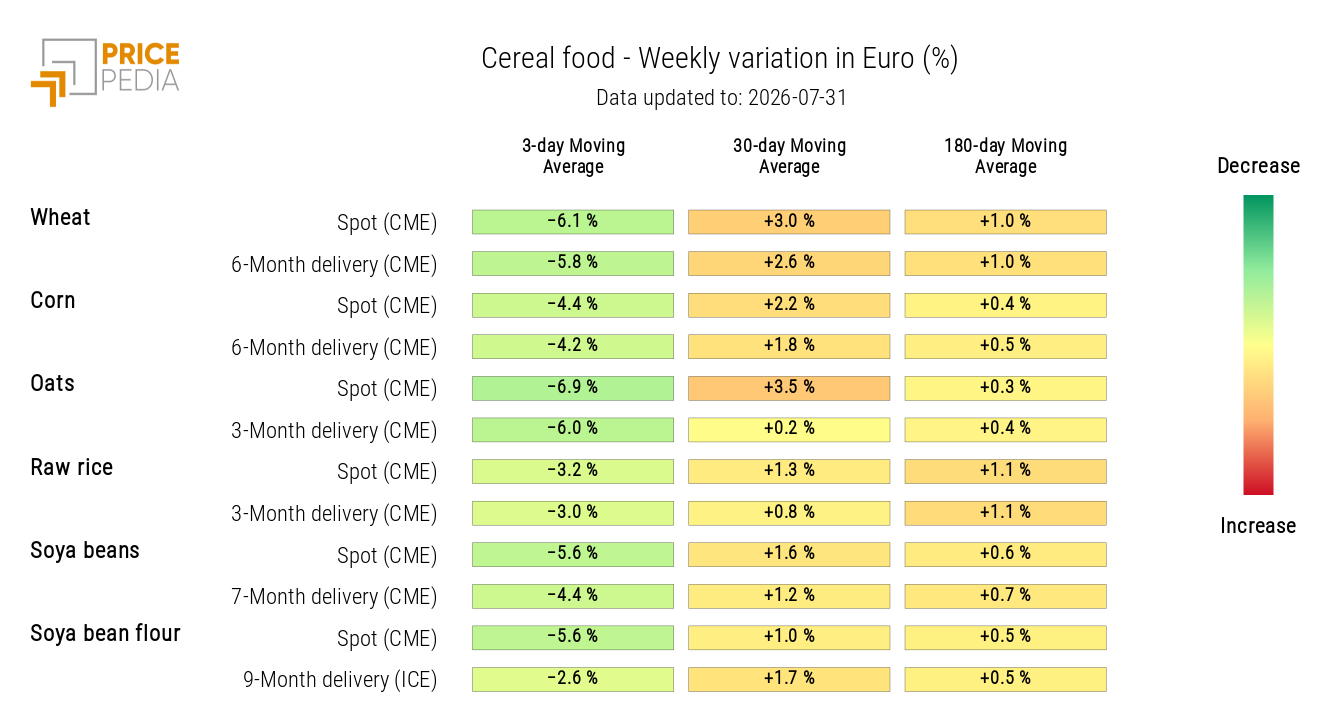
The cereals heatmap shows a broad-based decline in prices.
Heatmap of Cereal Prices in Euros
TROPICAL PRODUCTS
The tropical products heatmap shows lower prices for Robusta coffee and cocoa, while Arabica coffee prices increased.
Heatmap of Tropical Food Commodity Prices in Euros
EDIBLE OILS
The edible oils heatmap highlights a particularly sharp decline in soybean oil and canola oil prices.
Heatmap of Edible Oil Prices in Euros
You may be interested in:

From Hormuz to Bab el-Mandeb, tensions are rising over energy commodity prices
Published by Luca Sazzini. .
Conjunctural Indicators Commodities Financial WeekIncreased supply is driving down cobalt prices [ Read all ]

China economic update July 2026
Published by Luca Sazzini. .
Conjunctural Indicators Global Economic TrendsThe temporary decline in energy prices halts the rise in Chinese commodity prices [ Read all ]

Geopolitical tensions and tight supply are supporting commodity markets
Published by Luca Sazzini. .
Conjunctural Indicators Commodities Financial WeekSupply risks are driving up prices for energy, metals, and cereals [ Read all ]