From Hormuz to Bab el-Mandeb, tensions are rising over energy commodity prices
Increased supply is driving down cobalt prices
Published by Luca Sazzini. .
Conjunctural Indicators Commodities Financial WeekThis week, geopolitical tensions continued to intensify, with several attacks on oil tankers in the Strait of Hormuz fueling concerns over the security of crude oil flows. The Iran-backed Houthis have also taken control of the port of Mocha and seized the island of Mayun, strengthening their position at the entrance to Bab el-Mandeb.
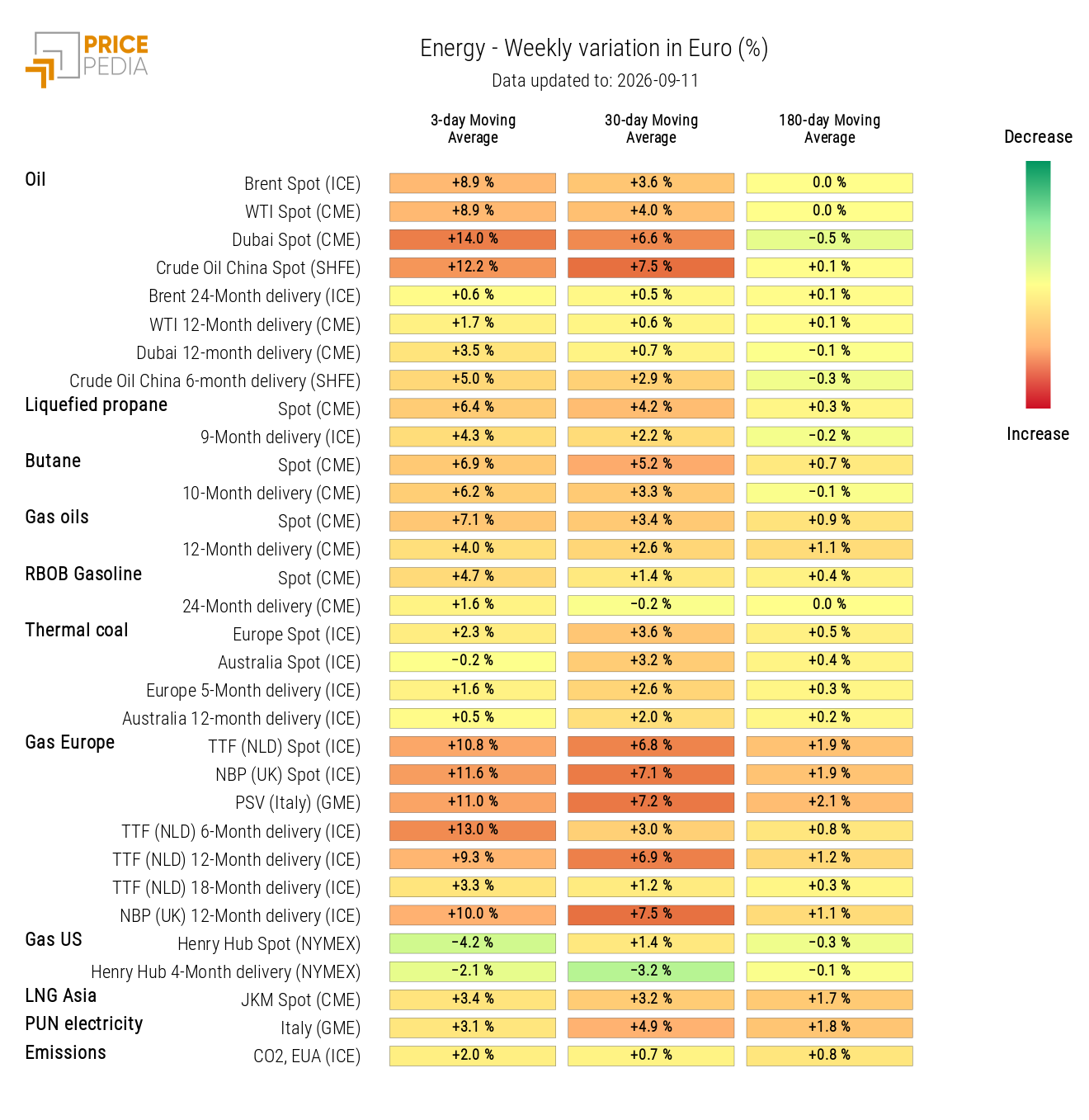
The main concern is that they could extend their control over the strait, one of the world's main energy chokepoints and a key route for Saudi Arabia's crude oil exports. The increase in geopolitical risk has widened the risk premium in oil markets, bringing Brent close to the $110/barrel threshold during the week.
Increases were even more pronounced in the European natural gas market, with TTF reaching €82/MWh, its highest level since December 2022. The attacks by Ukrainian drones on several gas processing facilities in Russia's Yamal-Nenets region contributed to the increase in prices.
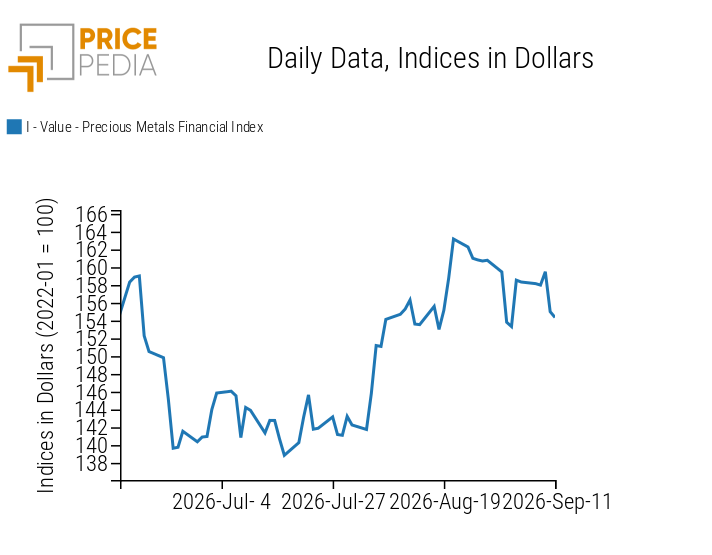
The precious metals sector recorded a decline in prices following the European Central Bank (ECB) meeting.
The decline in safe-haven assets was not so much attributable to the 25-basis-point rate hike, which had already been priced in by the market, as to the uncertainty that emerged over the future course of monetary policy. The ECB revised its inflation forecasts upwards, leaving the possibility of further rate hikes open. If energy inflation linked to tensions in the Middle East were to persist, the ECB could be forced to maintain a more restrictive monetary policy or raise rates further. Conversely, a rapid easing of energy prices would reduce the need for further rate hikes and could make another monetary tightening excessively restrictive given economic conditions.
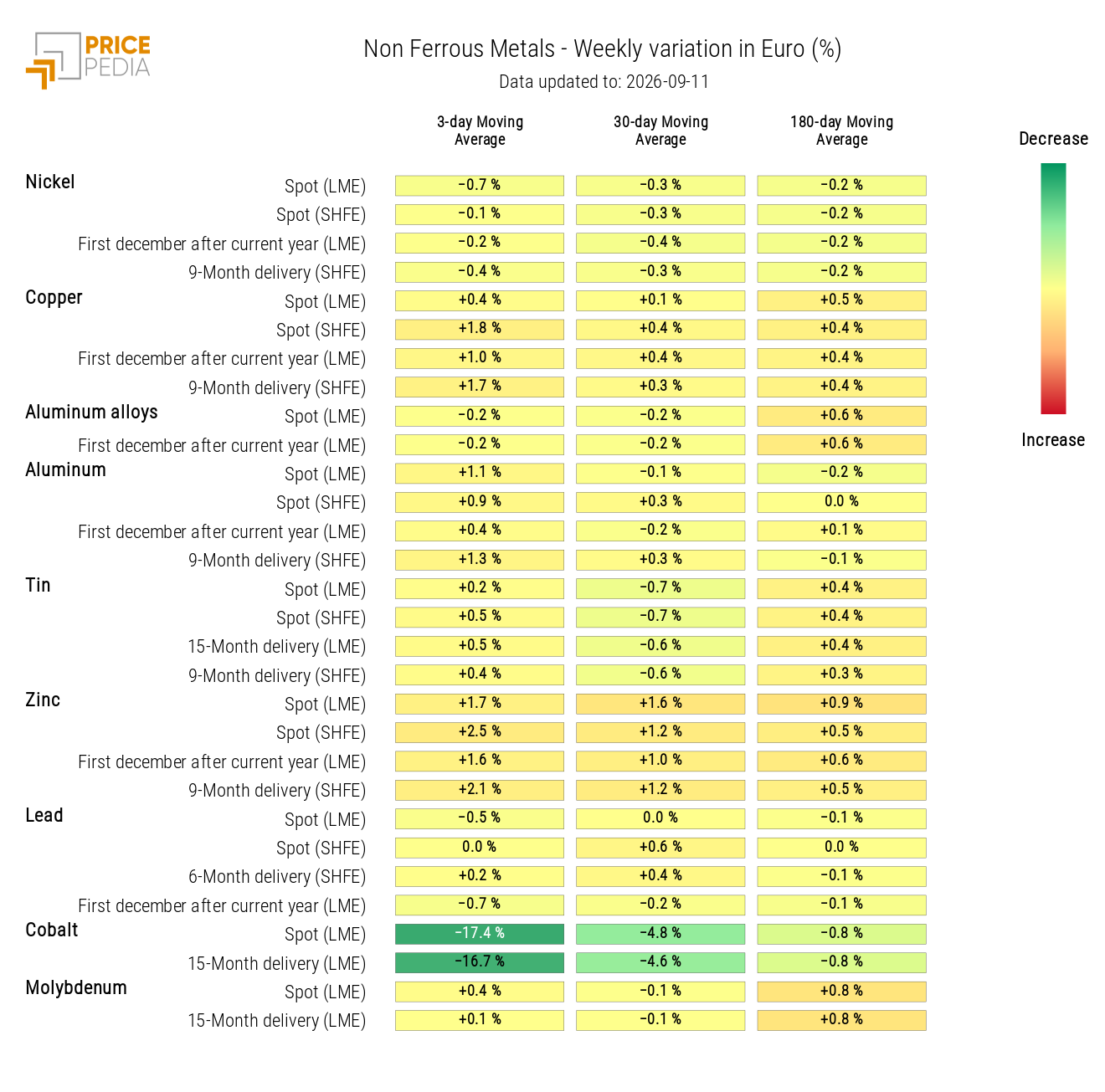
The ferrous metals sector followed a decline in prices over the course of the week, while non-ferrous metals, after an initial increase, recorded a marked decline in recent days. Among industrial metals, the sharpest decline concerned cobalt. The quota system introduced by the Democratic Republic of the Congo is recording lower-than-expected utilization, while exports from ASM (Artisanal and Small-scale Mining) mines increased in the first half of 2026. These factors have reduced concerns over metal scarcity, leading to an almost 13% weekly correction in the price of cobalt on the London Metal Exchange (LME).
The copper market recorded an overall decline in prices, despite reaching new intraday all-time highs on the LME during the week. The decline was driven both by expectations of a more restrictive monetary policy by the ECB and by uncertainty over the United States' decision regarding tariffs on refined copper imports.
The reduction in the risk premium related to US tariffs priced into the market led to an almost 5% decline in the price of copper on the Chicago Mercantile Exchange (CME) on Thursday alone.
NUMERICAL APPENDIX
ENERGY
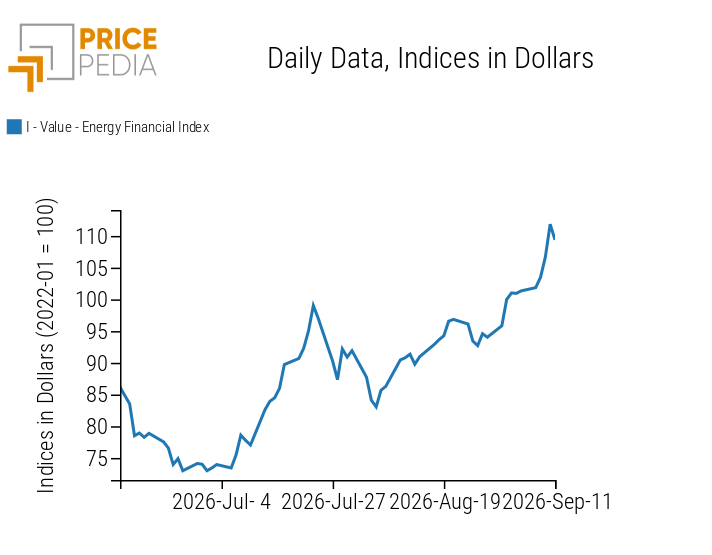
The escalation of tensions in the Middle East continues to drive the increase in the prices of the PricePedia financial index of energy products.
PricePedia Financial Index of energy prices in dollars
The energy heatmap highlights the strong increase in oil and natural gas prices.
HeatMap of energy prices in euros
PLASTICS AND ELASTOMERS
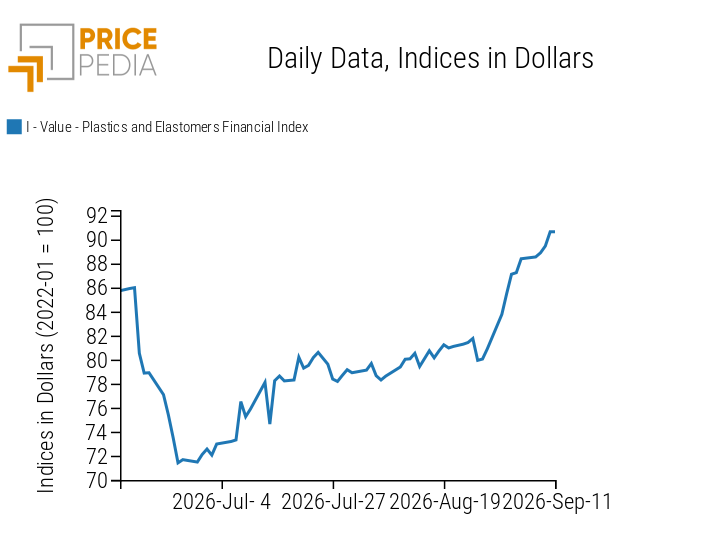
The financial index of plastics and elastomer prices continues its upward trend, in line with the trend in energy prices.
PricePedia Financial Index of plastics and elastomer prices in dollars
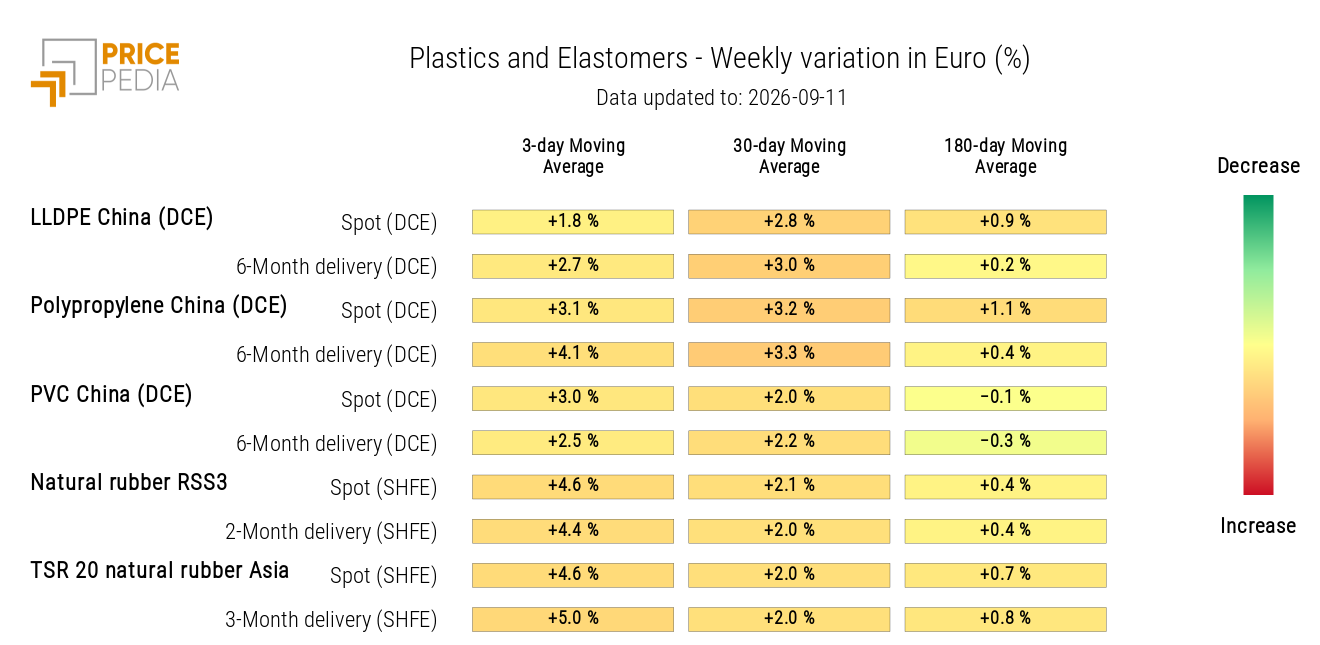
The heatmap of thermoplastics and elastomers shows a generalized increase in prices.
HeatMap of plastics and elastomer prices in euros
PRECIOUS METALS
The financial index of precious metals declined following the ECB meeting.
PricePedia Financial Index of precious metal prices in dollars
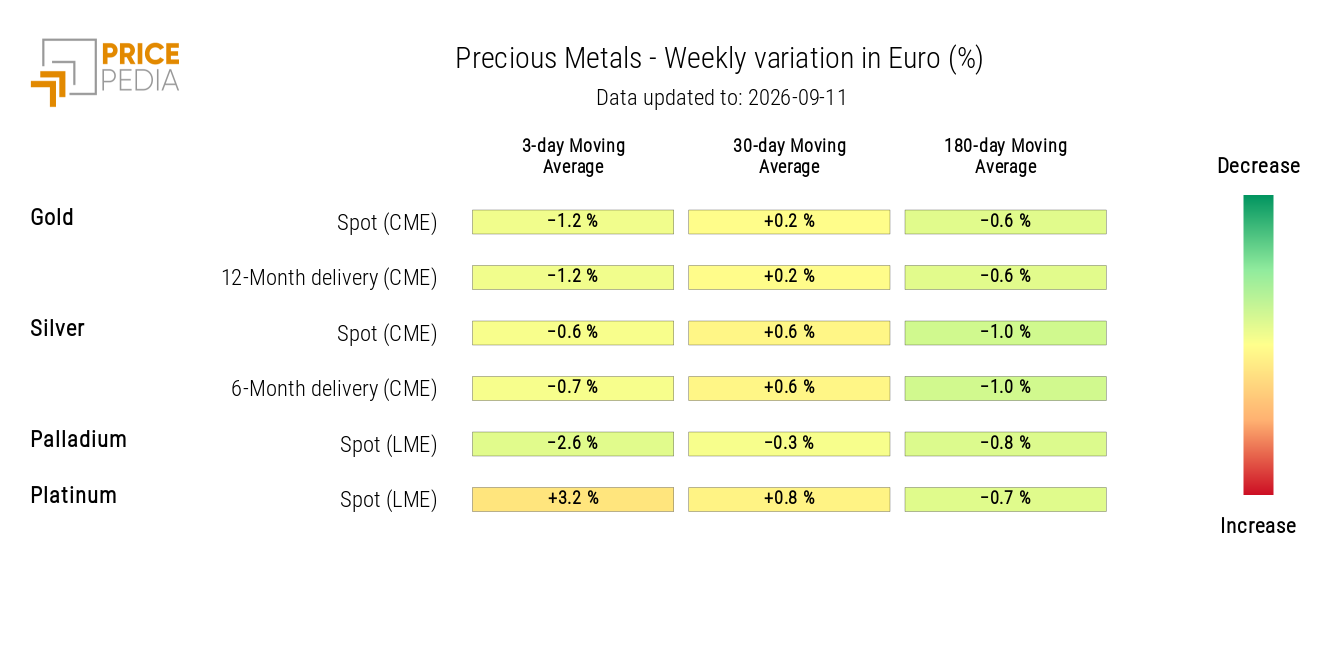
The precious metals heatmap shows a weekly decline in palladium, gold and silver prices, while platinum prices increased.
HeatMap of precious metal prices in euros
FERROUS METALS
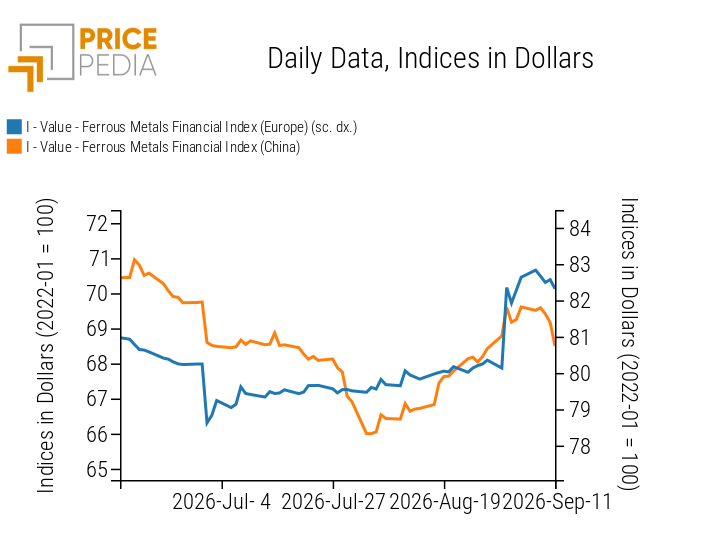
The ferrous metals indices show a decline in prices in both the European and Chinese markets.
PricePedia Financial Indices of ferrous metal prices in dollars
Do you want to stay up-to-date on commodity market trends?
Sign up for PricePedia newsletter: it's free!
INDUSTRIAL NON-FERROUS METALS
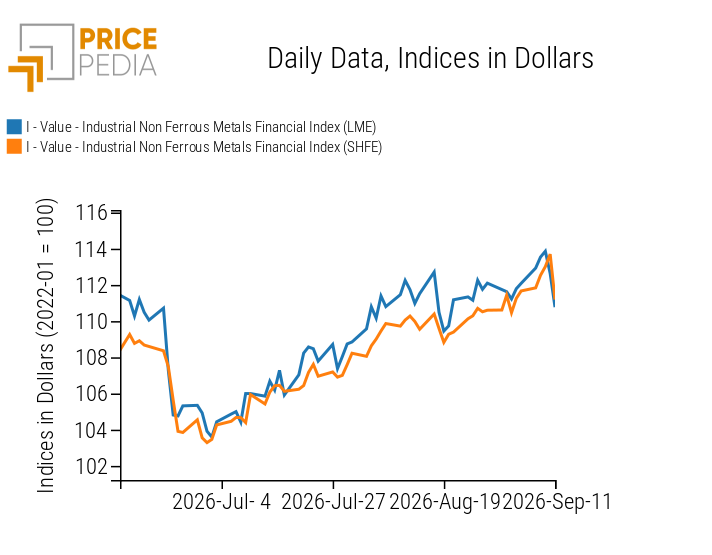
In recent days, the financial market indices of non-ferrous metals have reversed their upward trend.
PricePedia Financial Indices of industrial non-ferrous metal prices in dollars
The non-ferrous metals heatmap highlights the significant weekly correction in cobalt prices.
HeatMap of non-ferrous metal prices in euros
FOOD
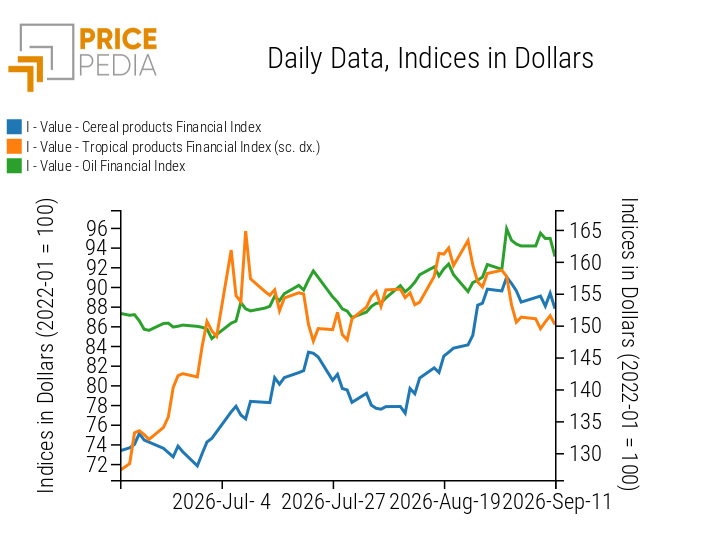
The three food indices show a mostly sideways weekly trend.
PricePedia Financial Indices of food prices in dollars
CEREALS
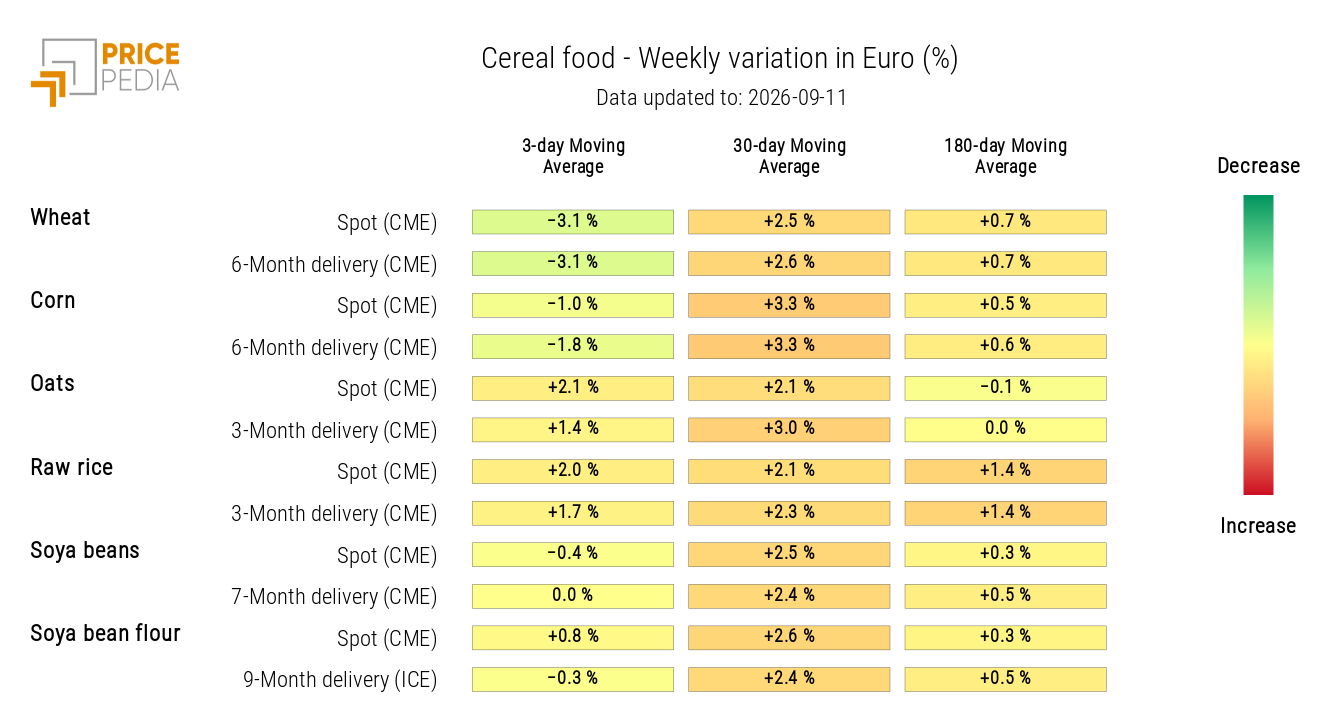
The cereals heatmap shows a decline in wheat prices.
HeatMap of cereal prices in euros
TROPICALS
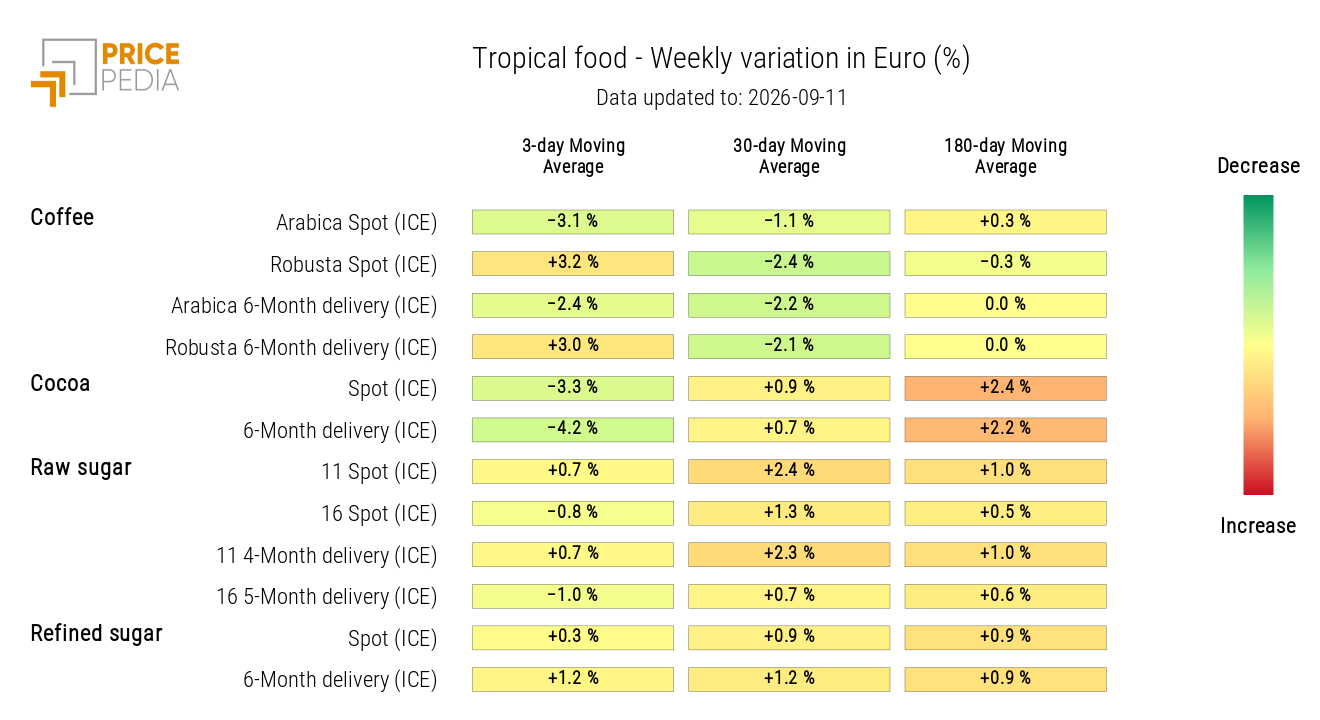
The tropicals heatmap shows a decline in Arabica coffee and cocoa prices, while sugar and Robusta coffee prices increased.
HeatMap of tropical food prices in euros
You may be interested in:

China economic update July 2026
Published by Luca Sazzini. .
Conjunctural Indicators Global Economic TrendsThe temporary decline in energy prices halts the rise in Chinese commodity prices [ Read all ]

Geopolitical tensions and tight supply are supporting commodity markets
Published by Luca Sazzini. .
Conjunctural Indicators Commodities Financial WeekSupply risks are driving up prices for energy, metals, and cereals [ Read all ]

Commodity prices fall as tensions ease, but risks remain high
Published by Luca Sazzini. .
Conjunctural Indicators Commodities Financial WeekGeopolitical uncertainty continues to fuel market volatility [ Read all ]