Commodity prices driven by speculation surrounding peace talks
Spot commodity prices reflect long-term fundamentals less and less
Published by Luca Sazzini. .
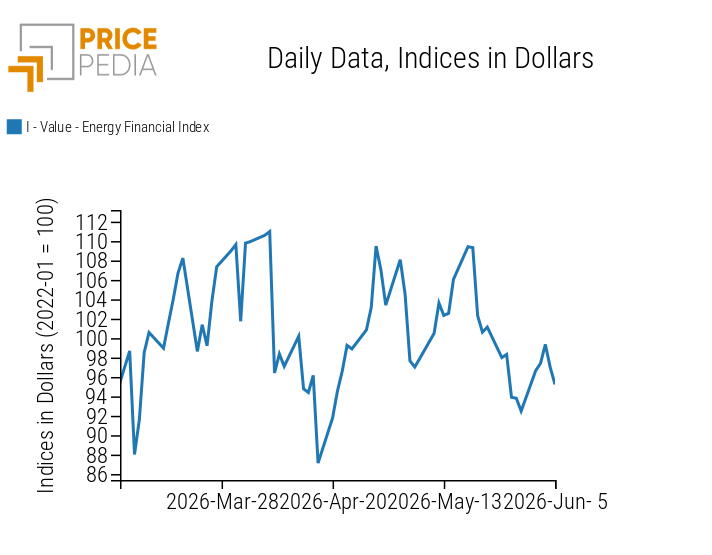
Conjunctural Indicators Commodities Financial WeekSince the outbreak of the war in the Persian Gulf, prices of financial commodities, particularly those in the energy sector, remain primarily driven by the evolution of geopolitical dynamics. The price of oil, after rising from 70 to nearly 120 dollars per barrel, has begun to fluctuate weekly between 90 and 110 dollars depending on the latest news regarding peace negotiations.
Financial markets, while showing increasing skepticism toward the often contradictory statements of the Trump administration, continue to speculate on the probabilities associated with different geopolitical scenarios. This dynamic is significantly reflected in the price performance of oil and its derivatives, which remain strongly influenced by statements related to peace negotiations, despite the ongoing diplomatic stalemate.
An additional factor reinforcing the link between energy commodity trends and geopolitical news is the progressive depletion of oil inventories, which have now fallen to relatively low levels. If in the early stages of the conflict the oil market was characterized by a significant supply surplus, the persistence of supply disruptions has altered the sector’s fundamentals. Even in the event of a reopening of the Strait of Hormuz, it is plausible that in the short term inventories will continue to decline, as the restoration of production and logistics flows will require non-negligible technical time.
Signals of tension also come from refined product markets, where Russia is considering banning exports of diesel, after already suspending exports of jet fuel until the end of November, following the recent wave of Ukrainian drone attacks on energy infrastructure.
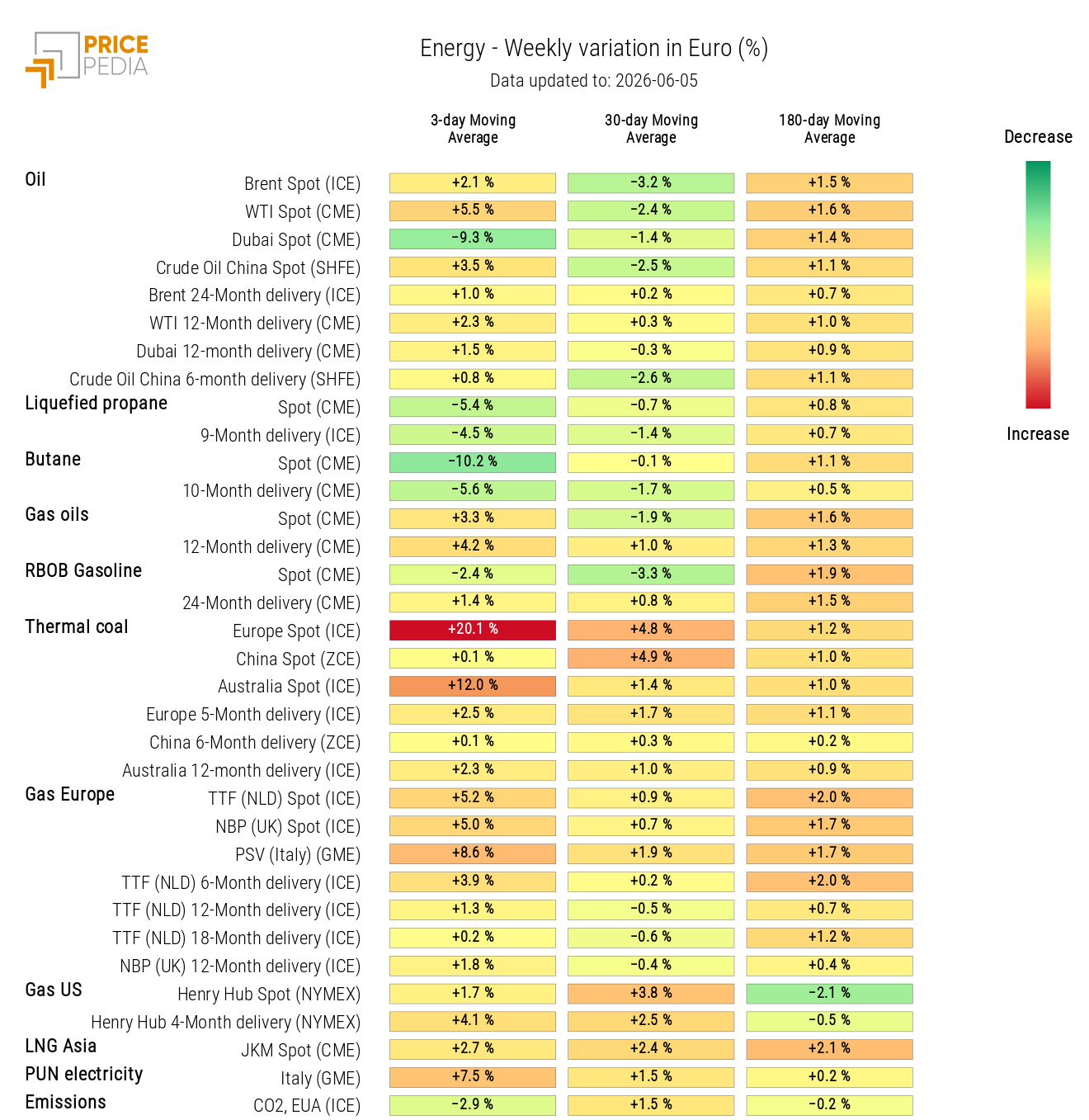
In the European natural gas market, inventories have returned to above 40% of storage capacity, although they remain well below the five-year average. Currently, the strong backwardation characterizing the European natural gas market provides little incentive for operators to build stocks ahead of the winter months: spot prices of Dutch TTF are in fact about 30% higher than one-year futures contracts.
In this context, the Dutch government has approved a subsidy of nearly 1 billion euros in favor of EBN Capital, a state-owned energy company, with the aim of encouraging storage replenishment.
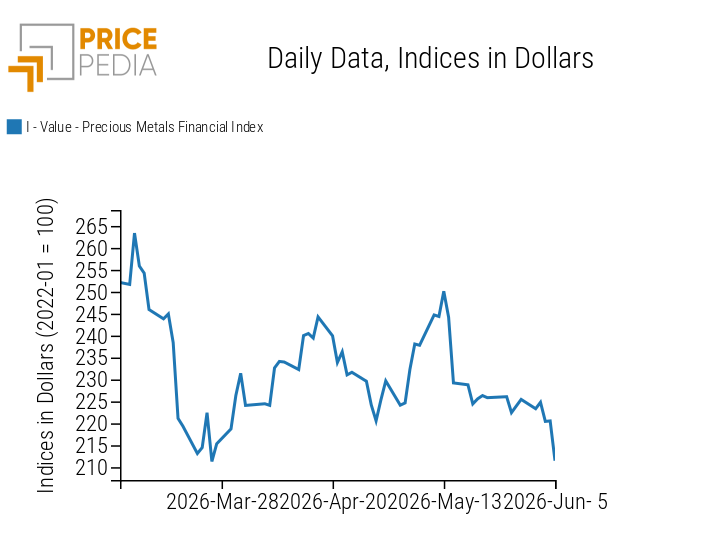
Prices of precious metals continue to follow a corrective trend, pricing in the expectation that Western central banks will keep interest rates at elevated levels for an extended period in an effort to counter energy-driven inflationary pressures. This downward dynamic was further amplified at the weekly close following the publication of the U.S. employment report, which showed a significantly stronger-than-expected labor market. This data further reduced the likelihood of an imminent rate cut by the Federal Reserve, as a resilient labor market reinforces the central bank’s stance of prioritizing the fight against inflation over monetary easing.
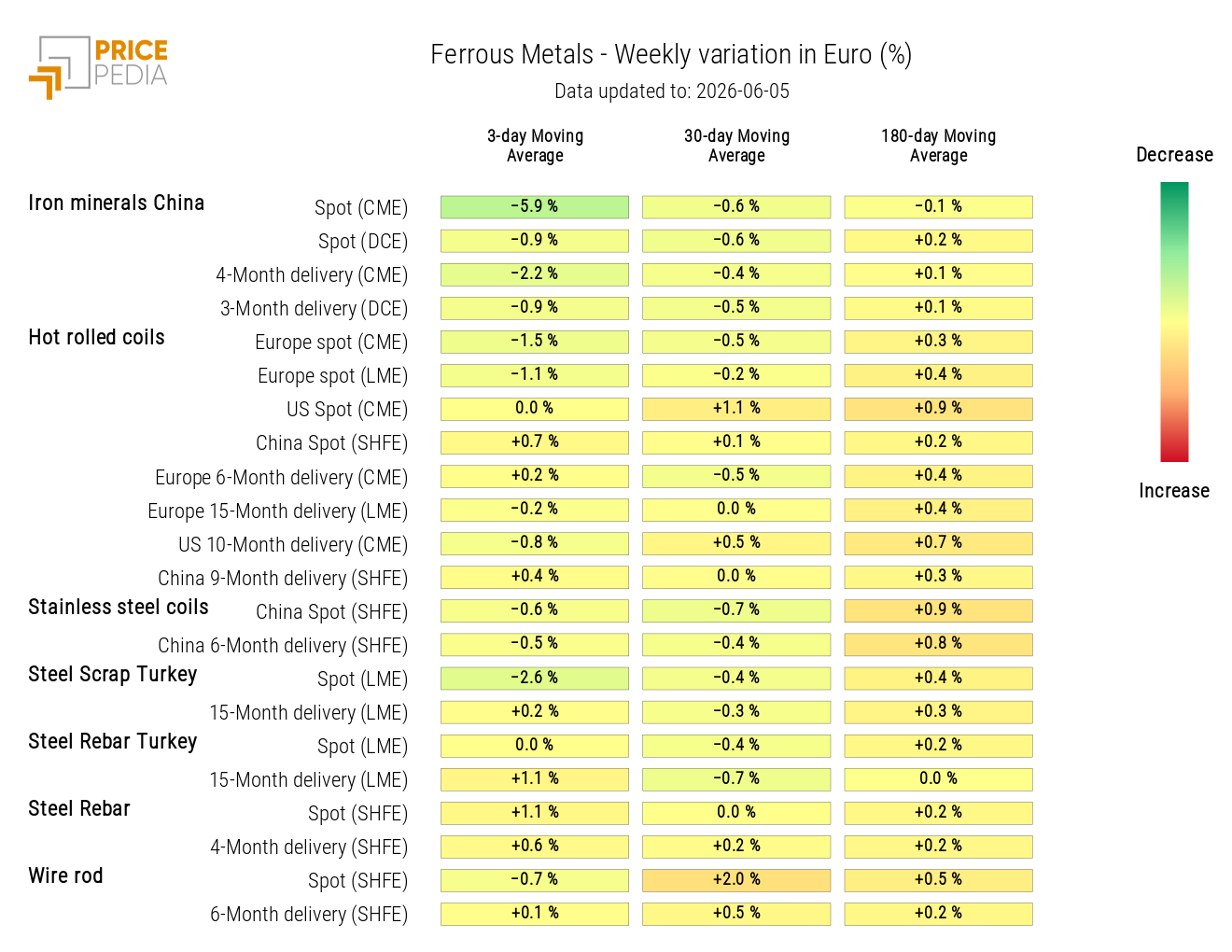
In the industrial metals sector, a general decline in prices is observed for both ferrous and non-ferrous metals. Among ferrous metals, the most notable contraction concerns iron ore, driven by the current oversupply in the Chinese market.
For non-ferrous metals, an anomaly is observed in the financial markets of aluminum, where recently price levels at the Chicago Mercantile Exchange (CME) have been increasingly higher than those at the London Metal Exchange (LME) and, in particular, the Shanghai Futures Exchange (SHFE). The latter, although the only one of the three markets to incorporate taxation effects into pricing, shows the lowest price levels, reflecting the current oversupply in the Chinese market.
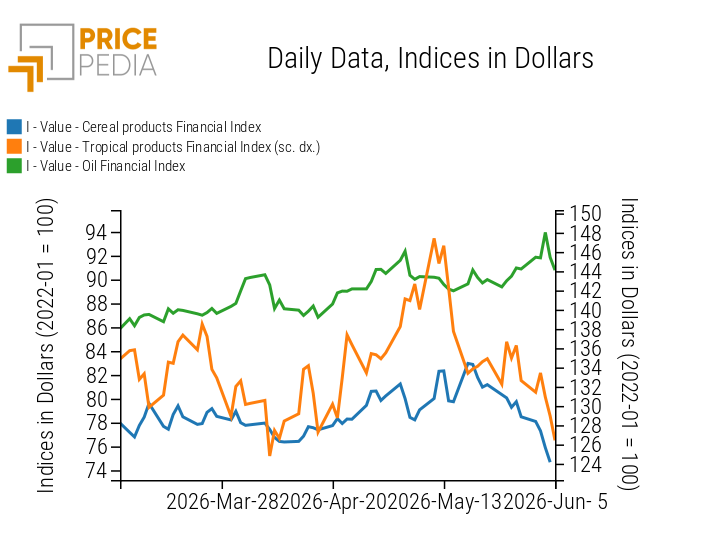
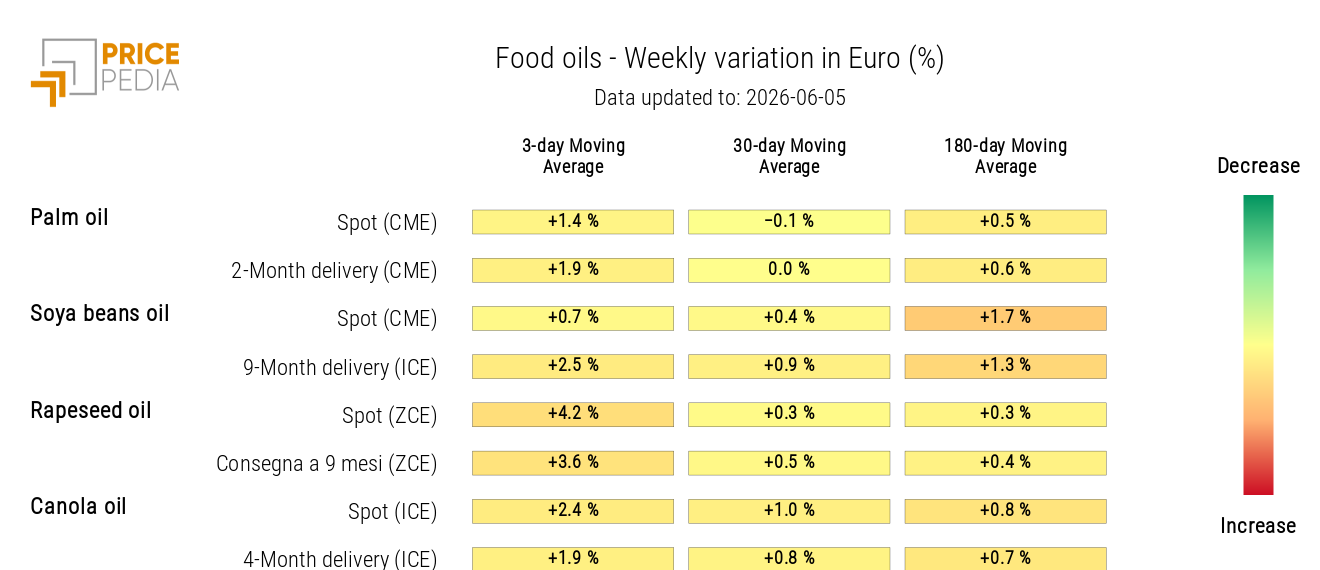
In the food commodities segment, a general decline in prices is observed, less pronounced for oils, which at the beginning of the week benefited from the rise in energy commodities.
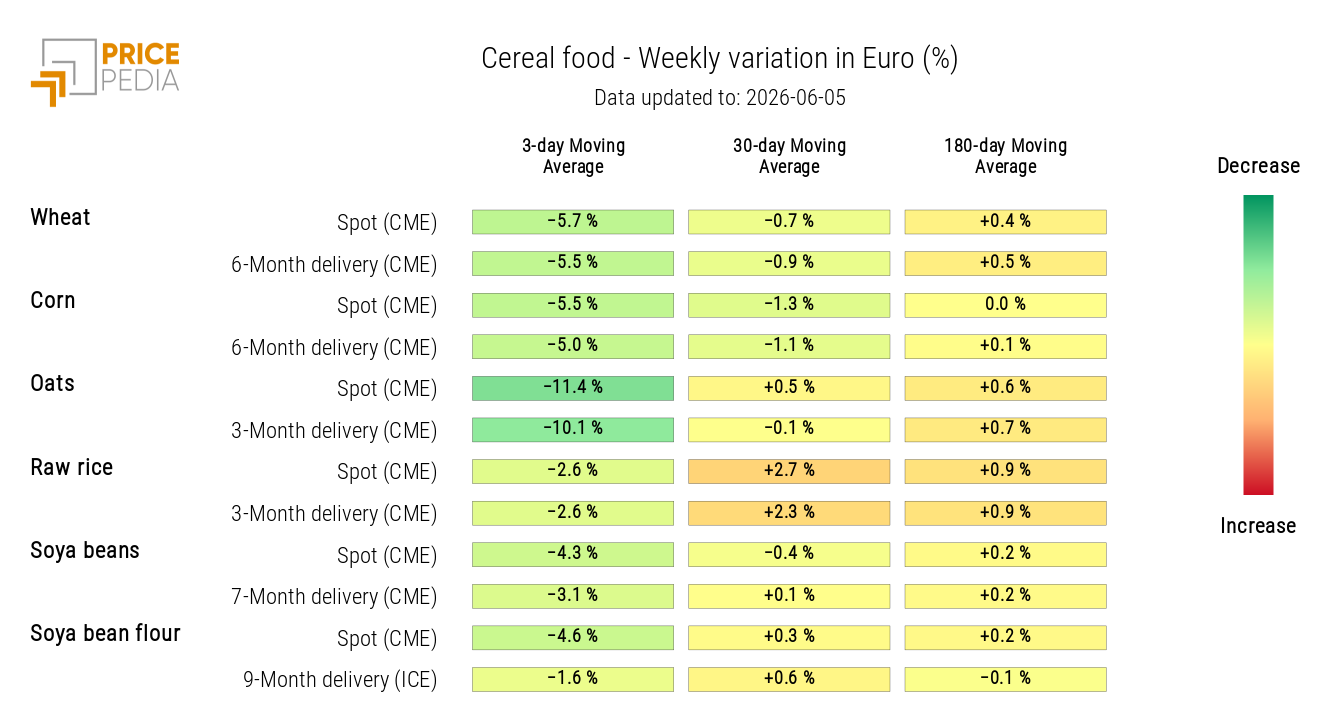
The sharpest declines are recorded in cereals, attributable to weather forecasts of persistent rainfall, which are expected to support soil moisture levels and reduce the risk of drought.
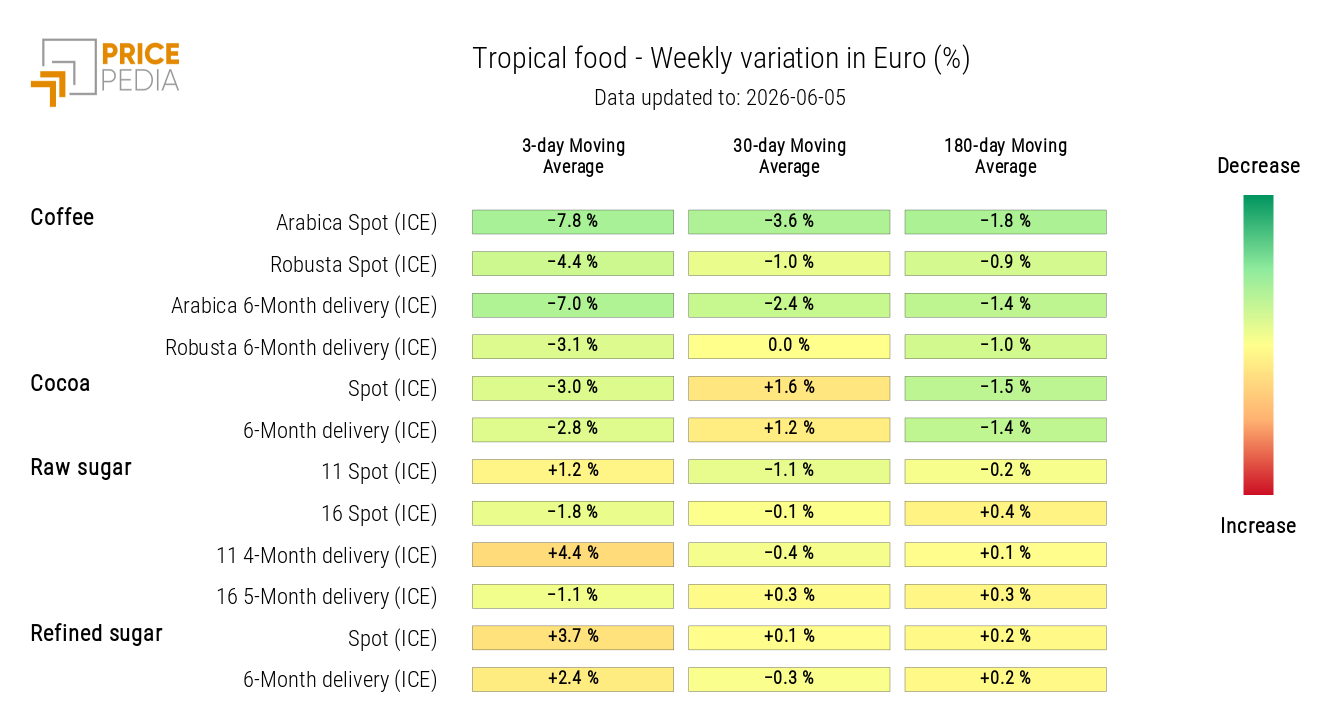
Among tropical commodities, a significant downward correction is observed in coffee, supported by expectations of a favorable harvest in the upcoming season, particularly in Brazil.
NUMERICAL APPENDIX
ENERGY
The PricePedia financial index of energy products records continuous changes in direction, depending on the resurgence or easing of geopolitical tensions between the United States and Iran.
PricePedia Financial Index of energy prices in dollars
The energy heatmap highlights a weekly rebound in coal and oil prices.
HeatMap of energy prices in euros
PRECIOUS METALS
The financial index of precious metals records a weekly decline in prices, attributed to expectations of restrictive monetary policies by central banks.
PricePedia Financial Index of precious metals prices in dollars
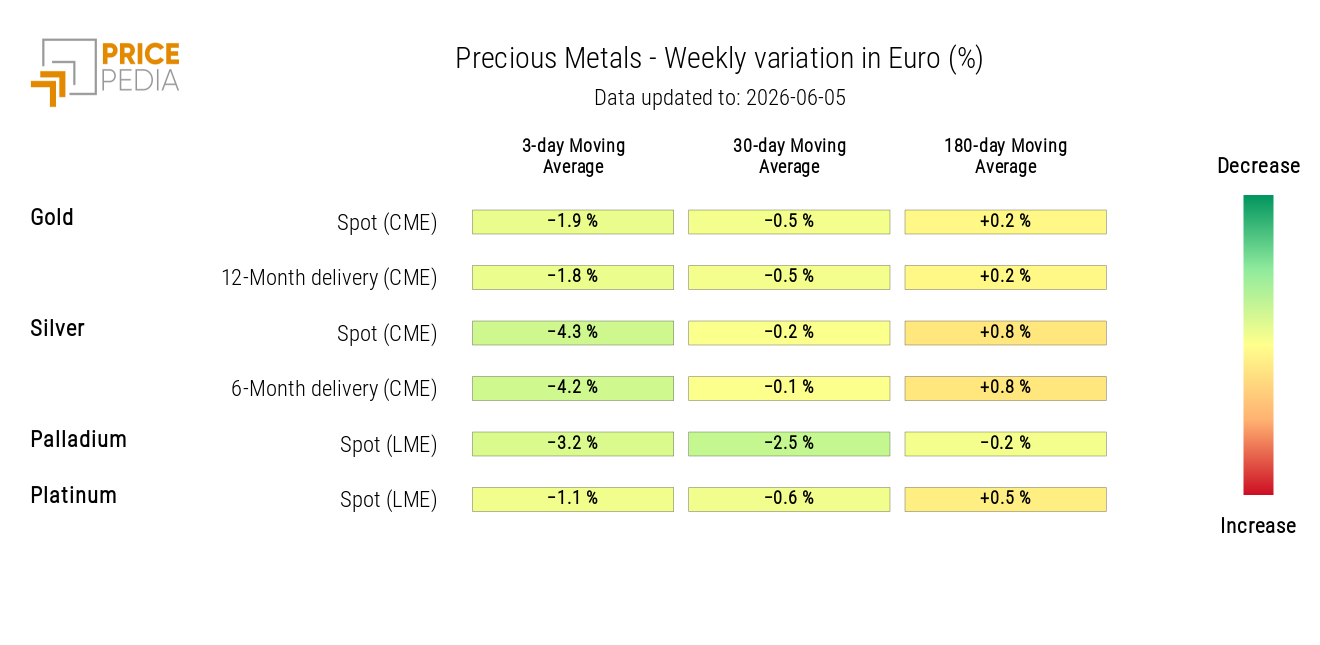
Heatmap analysis shows a decline in precious metals prices, more pronounced for silver and palladium.
HeatMap of precious metals prices in euros
FERROUS METALS
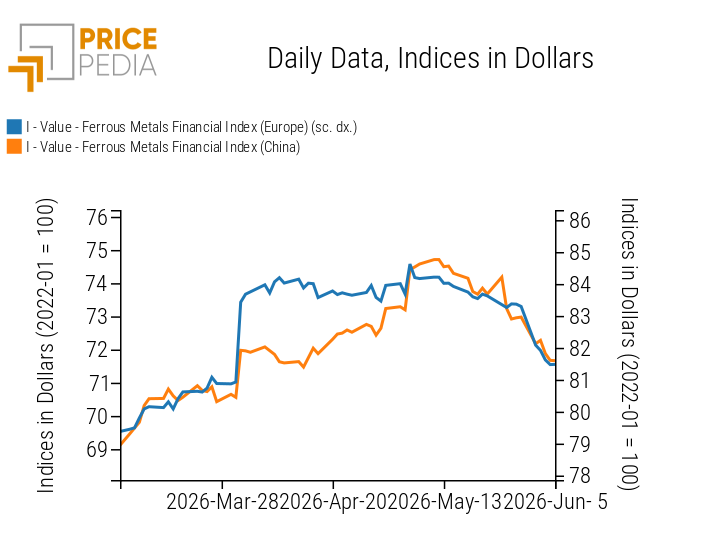
The financial indices of ferrous metals both signal a weekly decline in prices.
PricePedia Financial Indices of ferrous metals prices in dollars
Heatmap analysis shows a weekly decline in iron ore and Turkish steel scrap prices.
HeatMap of ferrous metals prices in euros
Do you want to stay up-to-date on commodity market trends?
Sign up for PricePedia newsletter: it's free!
NON-FERROUS INDUSTRIAL METALS
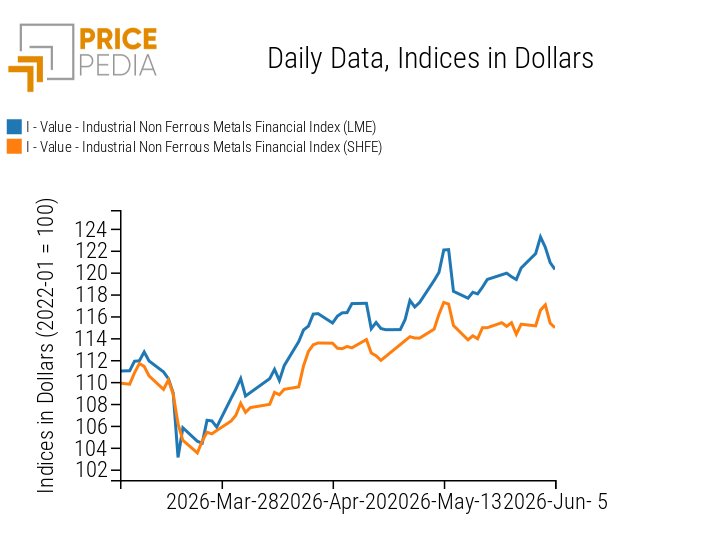
The two non-ferrous metals indices interrupt their upward trend, posting a weekly decline.
PricePedia Financial Indices of non-ferrous industrial metals prices in dollars
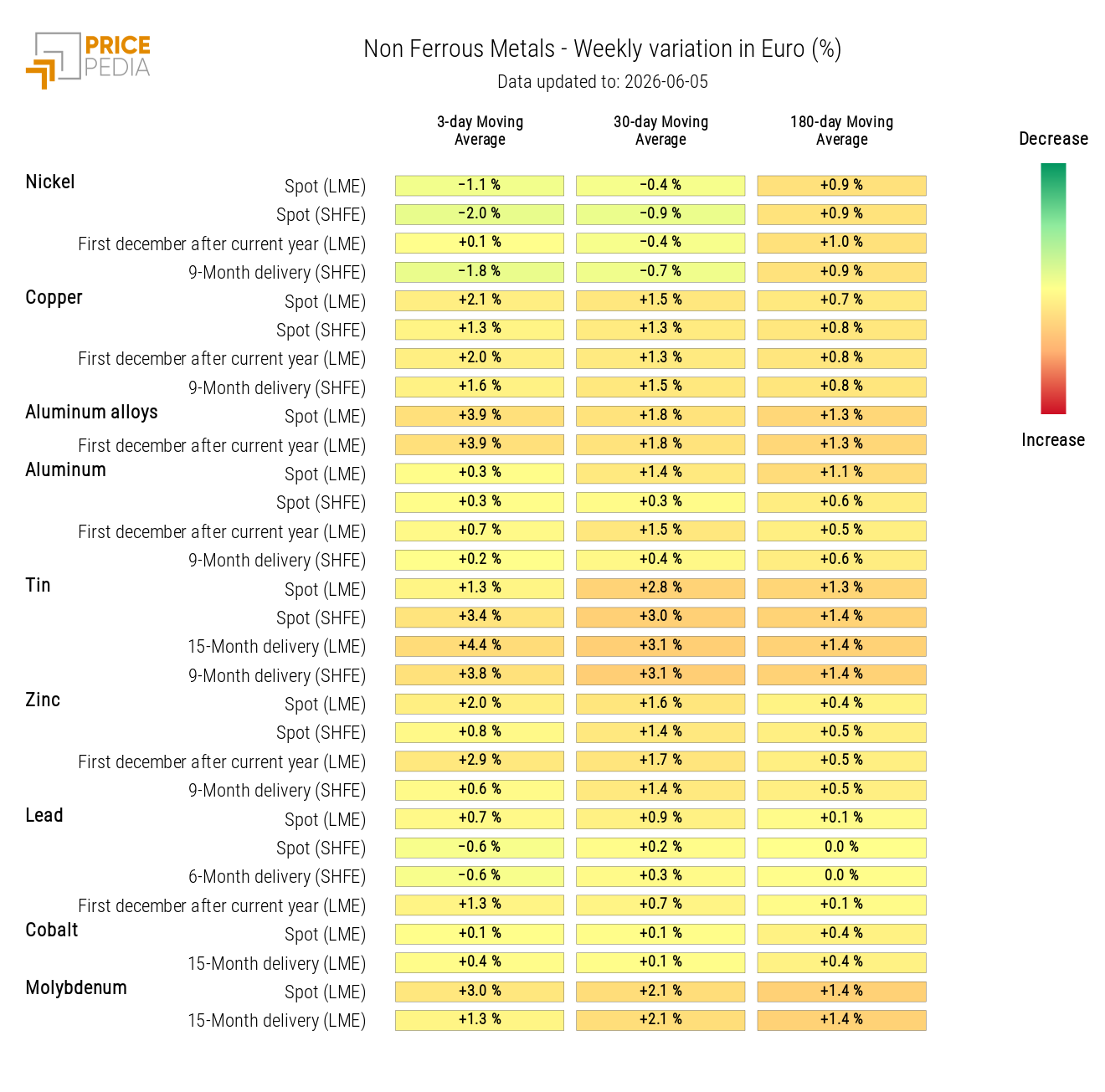
Heatmap analysis of non-ferrous metals shows a weekly increase in the 3-day moving average of prices for aluminum alloys, tin, and copper, while nickel shows a decline.
HeatMap of non-ferrous metals prices in euros
FOOD
Overall, all three financial indices of food products show a decline in prices, net of weekly fluctuations.
PricePedia Financial Indices of food prices in dollars
CEREALS
The cereal heatmap shows a general decline in prices.
HeatMap of cereal prices in euros
TROPICALS
The tropicals heatmap shows a decline in coffee prices.
HeatMap of tropical food prices in euros
OILS
The oil heatmap shows a slight weekly increase in the 3-day moving average of rapeseed oil and canola oil prices.
HeatMap of food oil prices in euros
You may be interested in:

Commodity markets dominated by supply uncertainties and inflationary pressures
Published by Luca Sazzini. .
Conjunctural Indicators Commodities Financial WeekThe EU is tightening sanctions against Russia, while the U.S. is considering further easing of restrictions [ Read all ]

Commodity prices between geopolitics and supply imbalances
Published by Luca Sazzini. .
Conjunctural Indicators Commodities Financial WeekWeak Chinese demand is pushing down prices for ferrous metals [ Read all ]

Expectations of tighter monetary policy are weighing on commodity markets
Published by Luca Sazzini. .
Conjunctural Indicators Commodities Financial WeekThe decline in prices is affecting most sectors [ Read all ]