Commodity prices are falling amid tight monetary policies and expectations of a de-escalation in geopolitical tensions
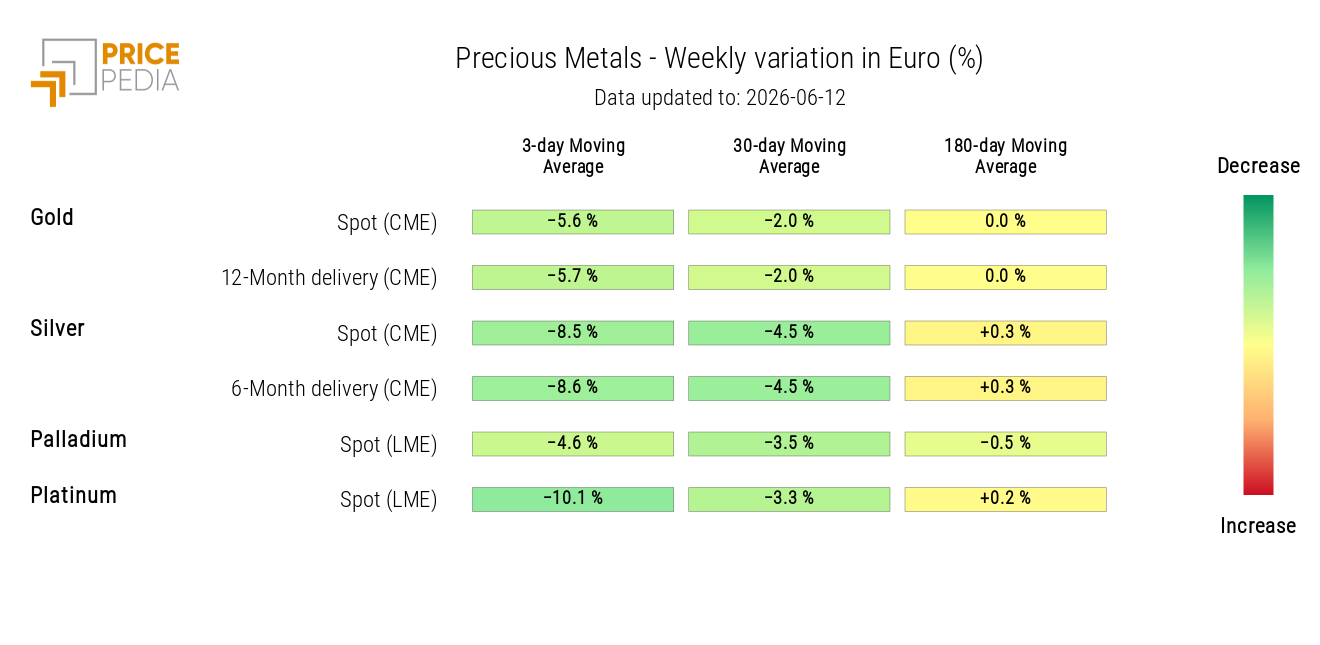
High U.S. inflation and rising European interest rates are pushing down the prices of gold and silver
Published by Luca Sazzini. .
Conjunctural Indicators Commodities Financial WeekThis week the financial commodity markets were characterized by a broad-based decline in prices.
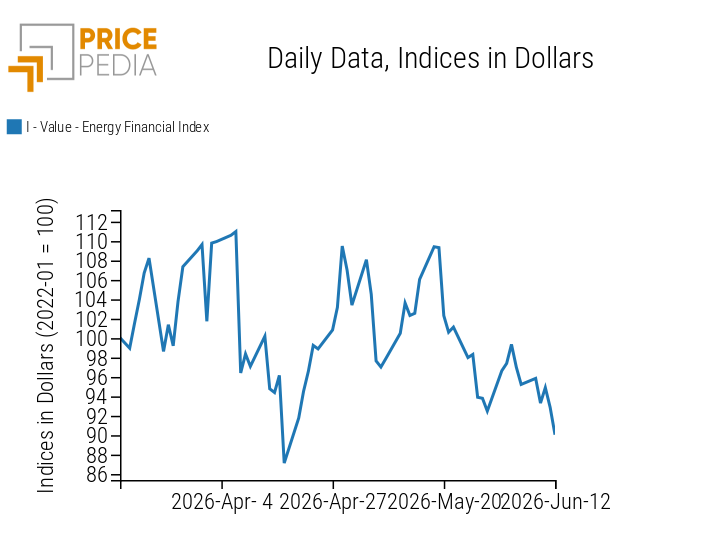
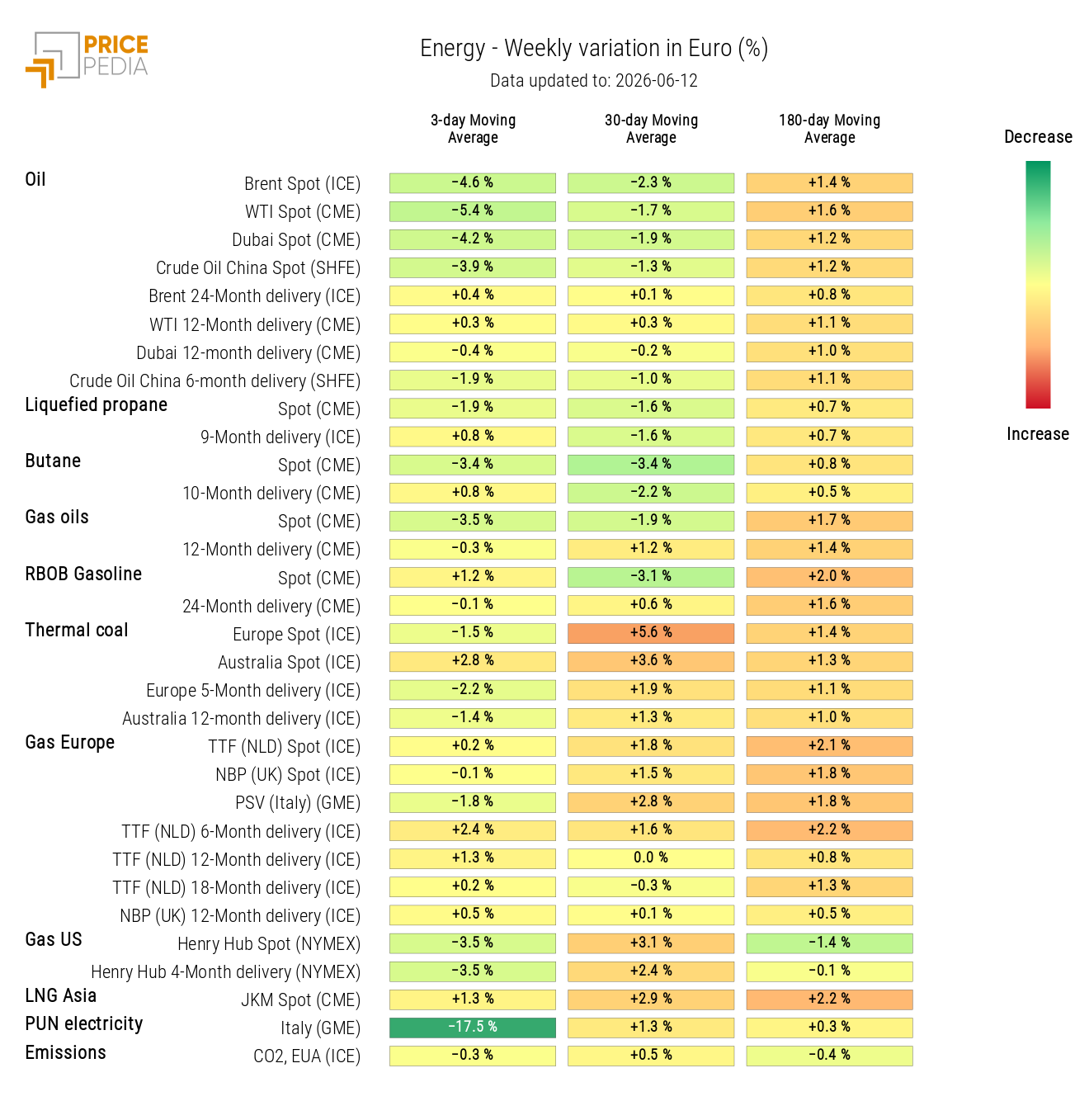
Prices of Brent crude oil, despite persistent tensions and clashes between the United States and Iran, recorded a weekly drop, closing below the $90/barrel threshold, driven by growing expectations of a possible de-escalation agreement and the prospect of a full reopening of the Strait of Hormuz.
In the precious metals market, the downward phase in prices intensified further following new U.S. inflation data, which confirmed a significant increase in prices, particularly energy prices. The May Consumer Price Index in the United States, on a year-over-year basis, rose from 3.8% to 4.2%, reaching a level more than double the Federal Reserve’s target (2%). The core figure, excluding energy and food, stood at 2.9% year-on-year, slightly up from 2.8% in April.
Although both figures were in line with analysts’ expectations, they confirm a phase of inflationary pressure that reduces the likelihood of an imminent return to expansionary monetary policies by the Federal Reserve, especially in light of positive U.S. labor market data released last Friday, which surprised financial markets on the upside. As a result, U.S. Treasury yields rose, increasing the opportunity cost of holding precious metals which, unlike government bonds, do not generate coupon flows linked to interest rates.
An additional factor contributing to the decline in safe-haven asset prices was the 25 basis point interest rate hike by the European Central Bank, decided at the meeting on Thursday, April 11, aimed at countering persistent inflationary pressures, particularly those linked to energy prices. The ECB has in fact revised upward its annual inflation projections, which currently stand at 3% for 2026, 2.3% for 2027, and 2% for 2028.
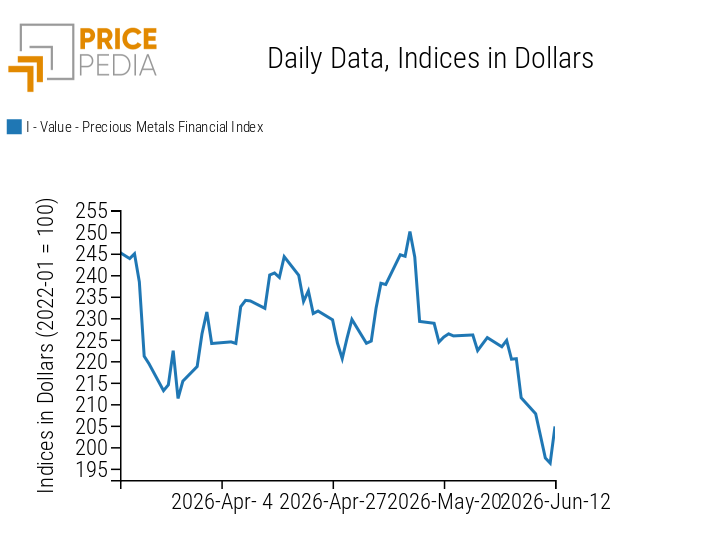
The combination of these events exerted significant pressure on the prices of gold and silver, which partially recovered on Friday thanks to further developments in negotiations, fueling expectations of a near-term reopening of the Strait of Hormuz. Overall, gold closed Friday’s session at $4,215/oz, while silver stood at $67.9/oz.
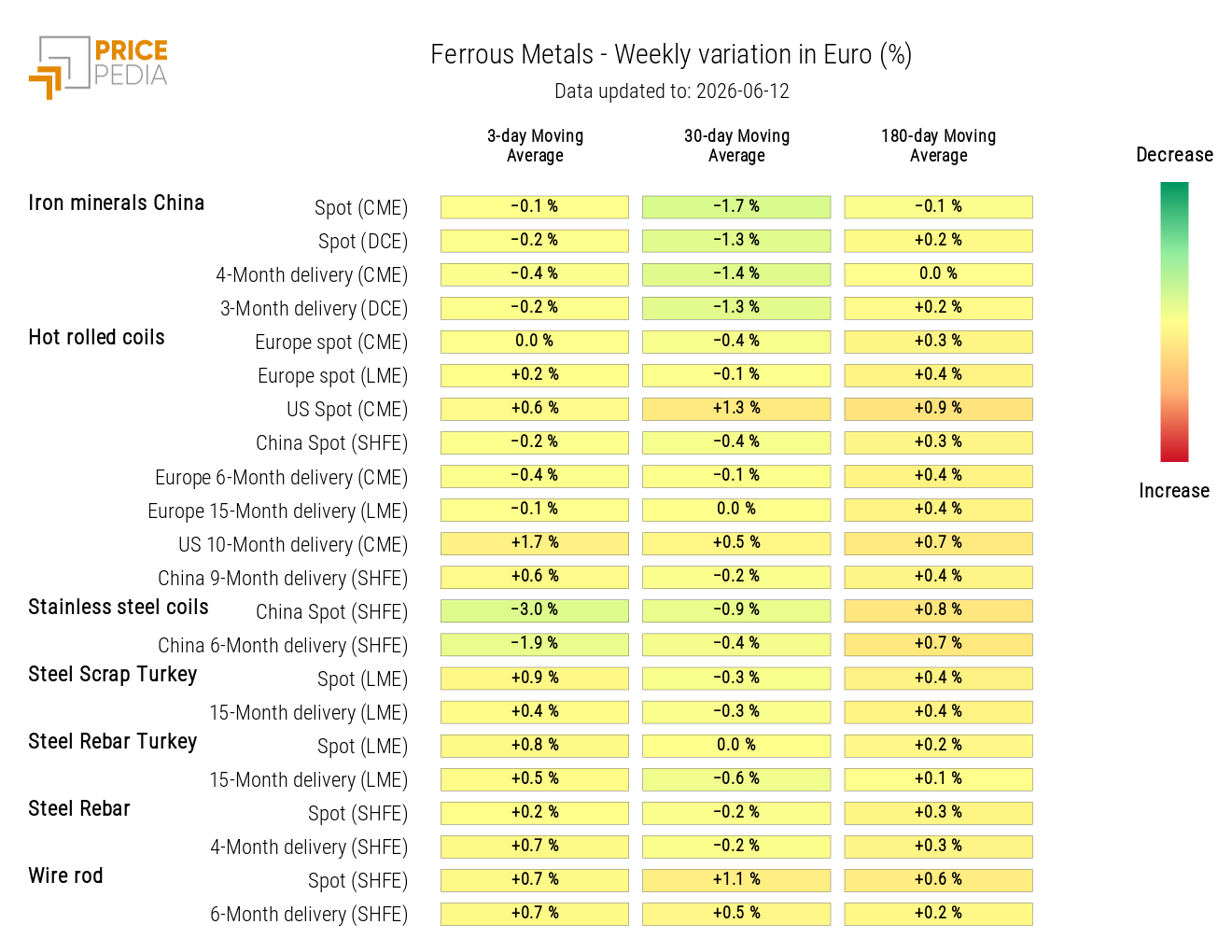
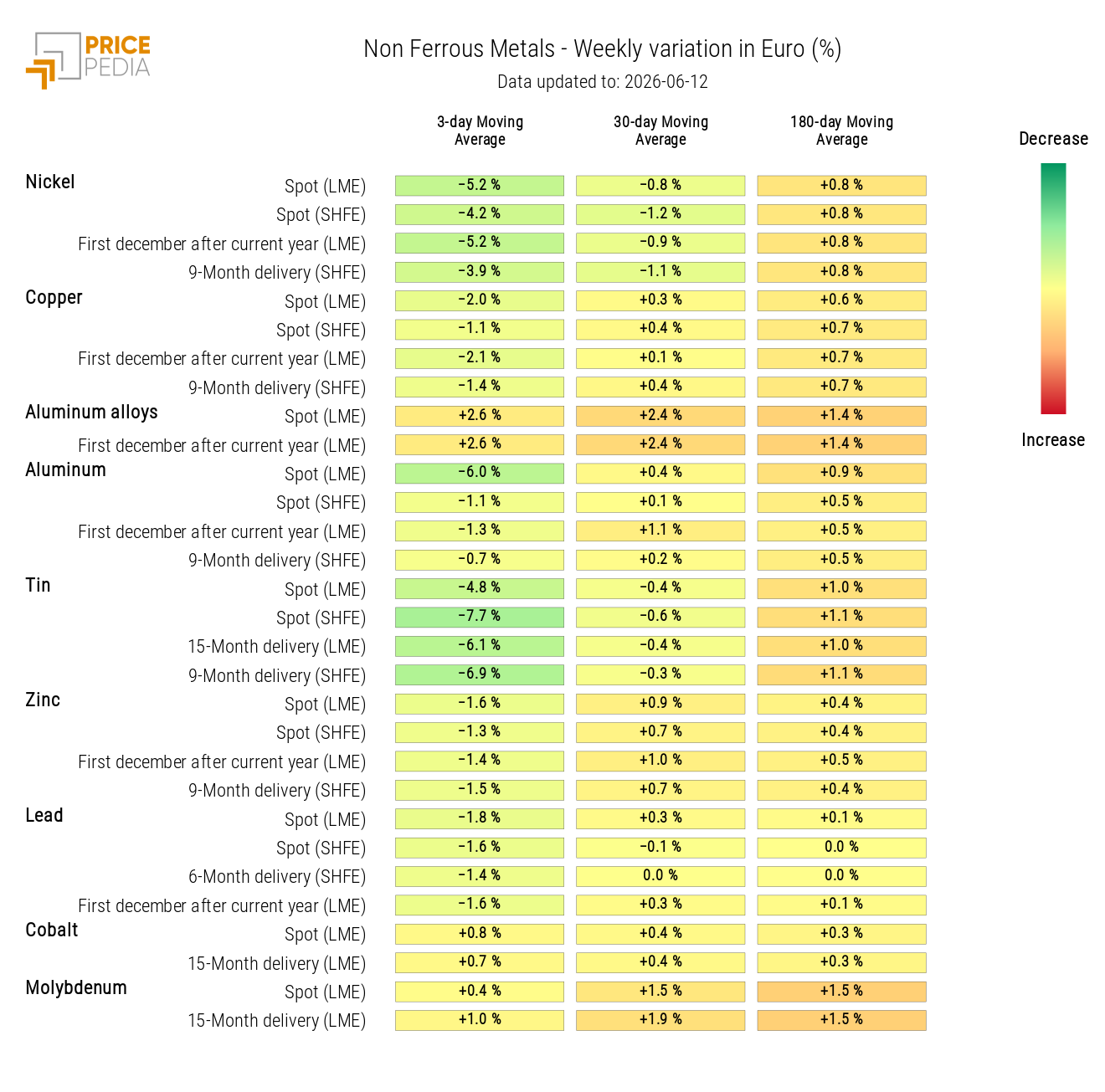
Expectations of a prolonged period of high interest rates, combined with the weekly strengthening of the U.S. dollar, also weighed on the performance of industrial metals, both ferrous and non-ferrous. Among ferrous metals, Chinese prices of stainless steel coils declined, while among non-ferrous metals declines were observed in tin and nickel, two metals that since the beginning of the year have been strongly influenced by speculative dynamics. A further significant contraction concerned LME aluminum prices, which fell by more than 5%, returning below Shanghai quotations once again.
In contrast, CME aluminum prices showed greater resilience, remaining above SHFE levels, which, unlike other markets, also incorporate VAT and other taxes.
In the food commodities segment, a rebound in tropical commodities was recorded, driven by a weekly recovery in coffee prices, alongside a decline in cereals and vegetable oils.
NUMERICAL APPENDIX
ENERGY
Net of fluctuations, the PricePedia financial index of energy products shows a weekly decline in prices.
PricePedia Financial Index of energy prices in US dollars
The energy heatmap shows a weekly decline in oil prices.
HeatMap of energy prices in euros
PRECIOUS METALS
The financial index of precious metals deepens its price correction phase, recording a partial rebound over the weekend.
PricePedia Financial Index of precious metals prices in US dollars
The heatmap analysis shows a broad-based decline in precious metals financial prices, more pronounced for platinum and silver.
HeatMap of precious metals prices in euros
FERROUS METALS
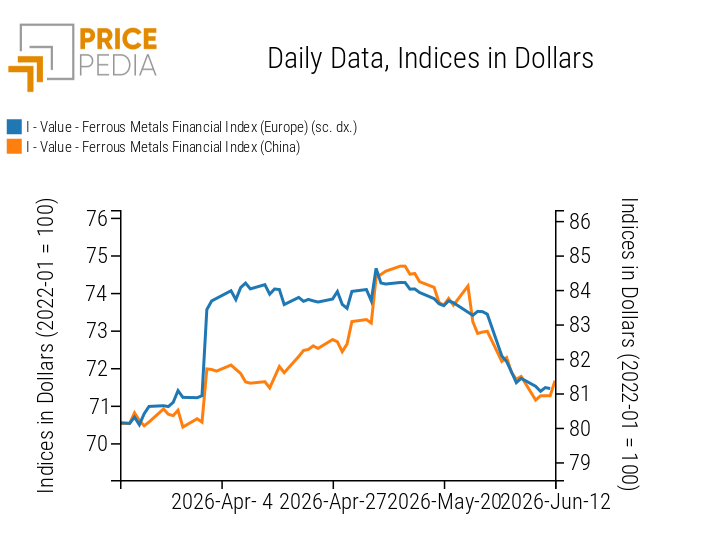
Both financial indices of ferrous metals show a slight weekly decline in prices.
PricePedia Financial Indices of ferrous metals prices in US dollars
The heatmap analysis highlights a weekly decline in Chinese stainless steel coil prices.
HeatMap of ferrous metals prices in euros
Do you want to stay up-to-date on commodity market trends?
Sign up for PricePedia newsletter: it's free!
INDUSTRIAL NON-FERROUS METALS
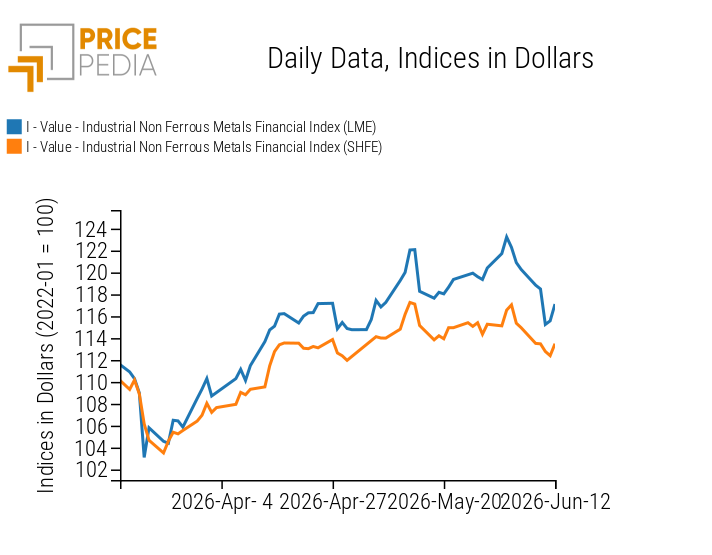
The two non-ferrous metal indices follow a weekly downward price trend.
PricePedia Financial Indices of industrial non-ferrous metals prices in US dollars
The non-ferrous heatmap analysis highlights declining prices for aluminum, tin, and nickel.
HeatMap of non-ferrous metals prices in euros
FOOD COMMODITIES
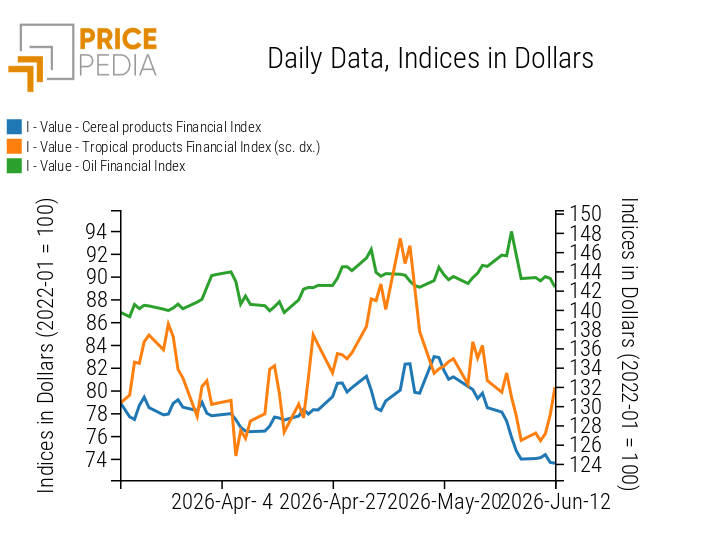
In the food commodities market, a weekly recovery in tropical commodities is recorded, along with a slight decline in grain and vegetable oil indices.
PricePedia Financial Indices of food commodity prices in US dollars
CEREALS
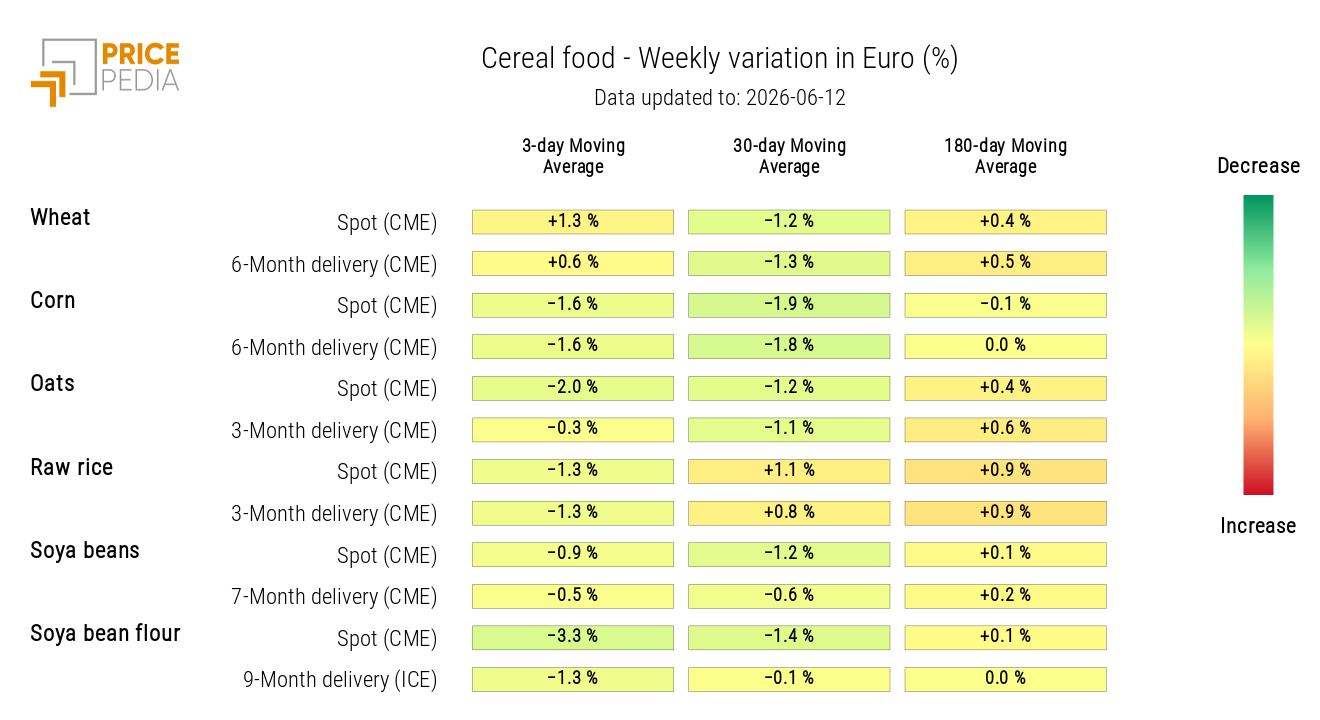
The cereal heatmap shows a decline in soybean meal prices.
HeatMap of cereal prices in euros
TROPICALS
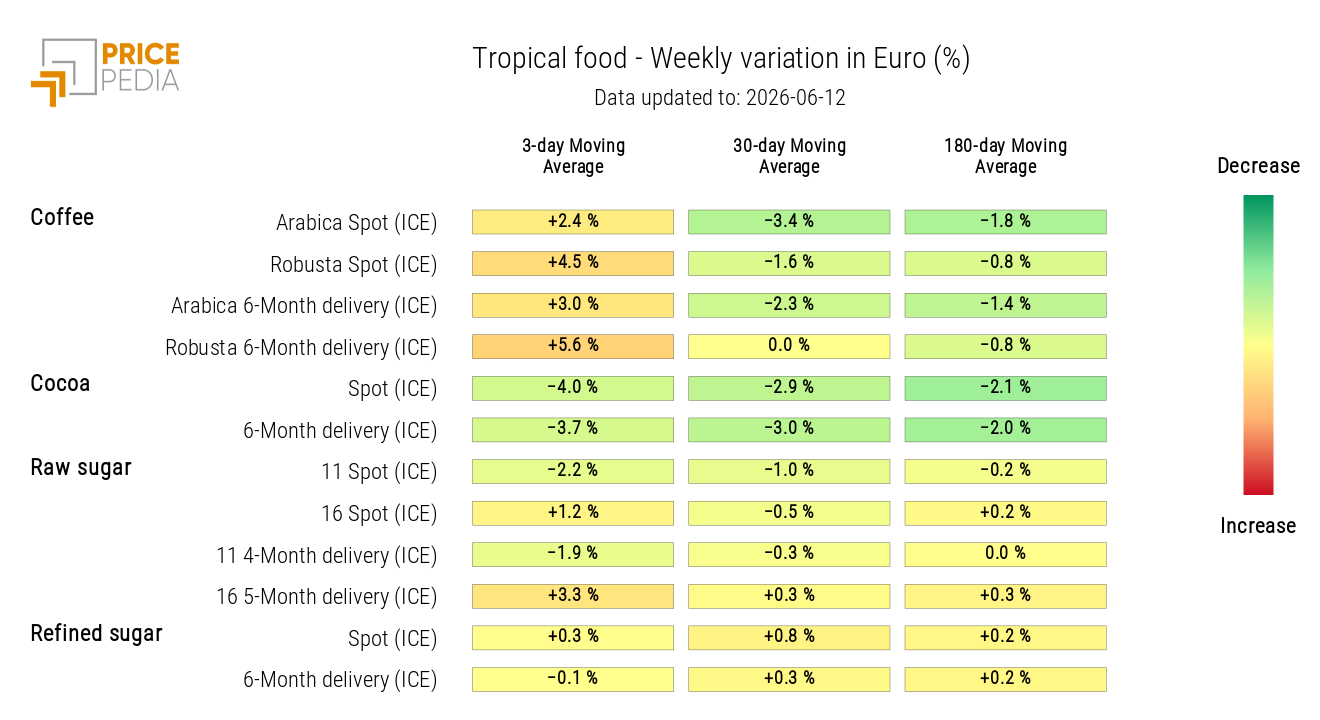
The tropical heatmap highlights a weekly recovery in coffee prices and a decline in cocoa prices.
HeatMap of tropical food commodity prices in euros
OILS
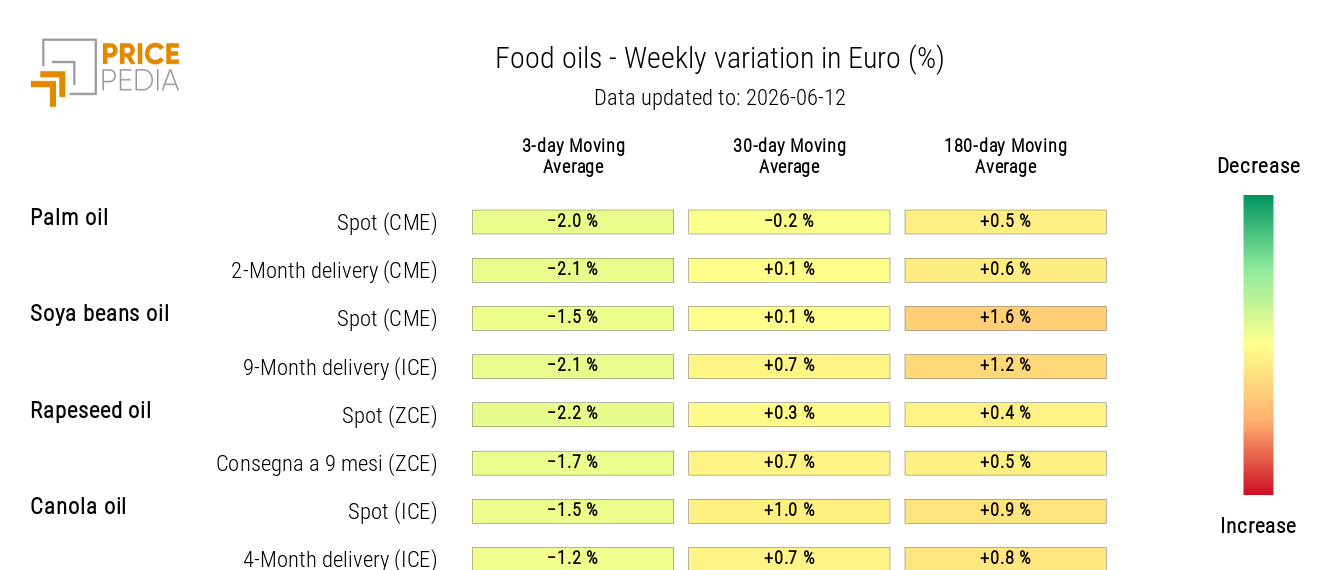
The heatmap analysis highlights weekly declines in vegetable oil prices.
HeatMap of food oil prices in euros
You may be interested in:

Commodity prices between geopolitics and supply imbalances
Published by Luca Sazzini. .
Conjunctural Indicators Commodities Financial WeekWeak Chinese demand is pushing down prices for ferrous metals [ Read all ]

Expectations of tighter monetary policy are weighing on commodity markets
Published by Luca Sazzini. .
Conjunctural Indicators Commodities Financial WeekThe decline in prices is affecting most sectors [ Read all ]

Commodity markets between supply risks and geopolitical uncertainty
Published by Luca Sazzini. .
Conjunctural Indicators Commodities Financial WeekThe strength of the U.S. economy is bolstering expectations of a more restrictive monetary policy [ Read all ]