The latest escalation in the Middle East is reigniting tensions in the commodity markets
Russia imposes a temporary ban on diesel exports in July
Published by Luca Sazzini. .
Conjunctural Indicators Commodities Financial Week
After the de-escalation phase that followed the signing of the memorandum of understanding between the United States and Iran, geopolitical tensions in the Middle East intensified again during the past week, reigniting market concerns over the security of global energy supplies.
Iranian attacks on three commercial vessels in the Strait of Hormuz, including a LNG carrier and an oil tanker, triggered a new escalation in tensions, to which the United States responded with further strikes against Iranian targets. President Trump also stated that he considers the ceasefire with Tehran to be over, revoking the temporary license previously granted for the sale of Iranian oil and threatening to restore the blockade of the country's ports.
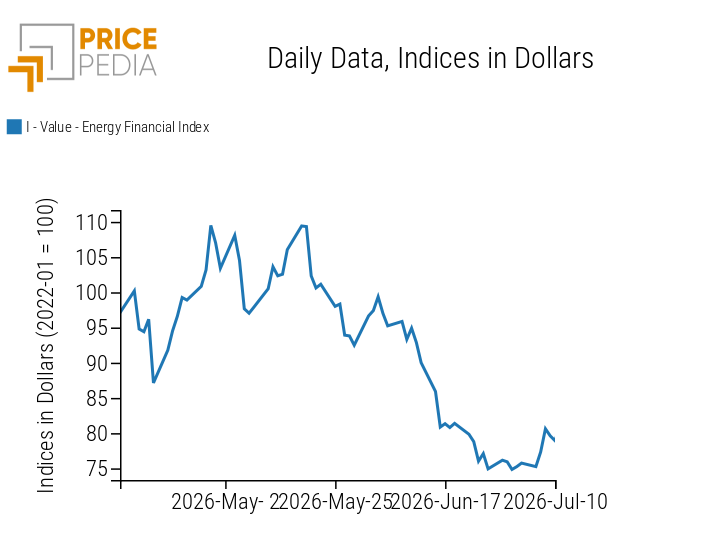
The threats of a closure of the Strait of Hormuz by Iran have almost completely paralyzed traffic in the area, resulting in a renewed increase in the geopolitical risk premium on energy markets and a rebound in energy financial prices.
During the week, Brent crude oil prices returned to levels close to 80 $/barrel, while European TTF natural gas prices reached 50 euros/MWh. The European gas market continues to show several signs of tension, mainly related to:
- the still limited level of storage inventories;
- the start of the storage injection season;
- stronger competition with Asian markets for LNG supplies.
In the distillates market, Russia’s announcement of a temporary ban on diesel exports until the end of July led to an increase of more than 8% in CME diesel prices on the day of the announcement. The decision comes amid growing fuel shortages in the Russian domestic market, caused by continued Ukrainian drone attacks against the country's refining infrastructure.
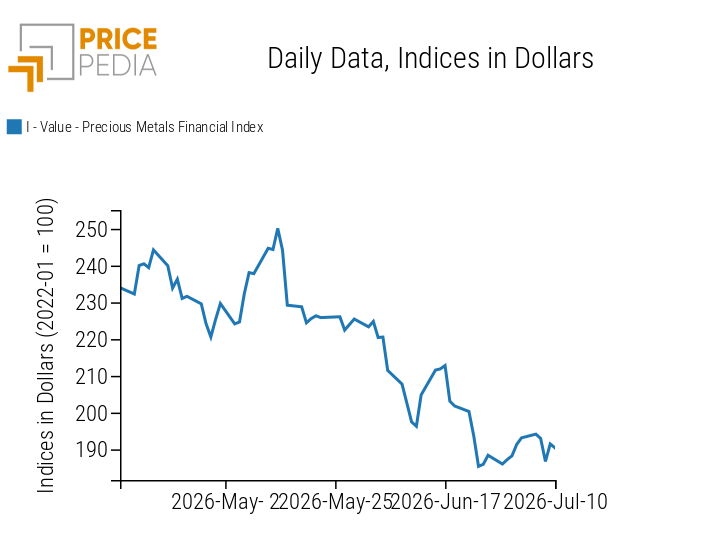
The precious metals sector continues to show a strong negative correlation with the energy sector, supported by concerns that a prolonged increase in energy prices could fuel inflation and slow down the process of interest rate reductions by central banks. Daily fluctuations in major safe-haven assets, such as gold and silver, have in fact moved in the opposite direction compared with oil prices.
However, the structural factors supporting gold demand remain solid: in June, the People's Bank of China increased its gold reserves for the twentieth consecutive month, recording the largest monthly purchase since October 2023. These factors are expected to continue supporting the long-term upward trend in gold prices, although in the short term prices may remain highly volatile due to inflation concerns.
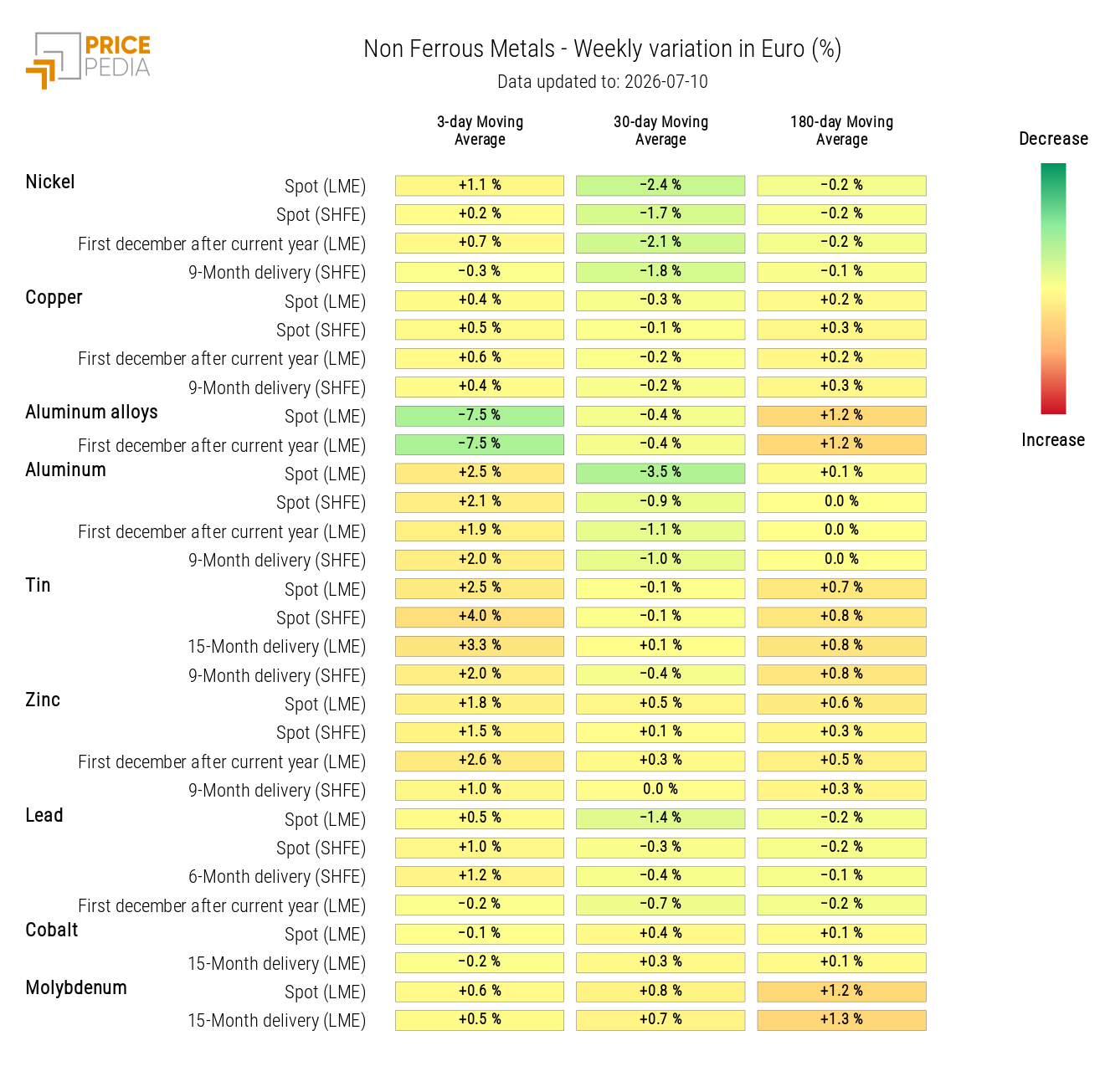
Among industrial metals, a partial recovery in aluminium prices was recorded, with prices on the London Metal Exchange closing the week at around 3150 $/tonne. Although the increase in Chinese production and the progress announced by Emirates Global Aluminium (EGA) in restoring operations at the Al Taweelah complex have reduced concerns about severe supply disruptions, aluminium remains the industrial metal most exposed to geopolitical developments in the Middle East. Around 10% of global primary aluminium production is concentrated in the Persian Gulf countries, making the market particularly sensitive to any tensions that could compromise supply continuity.
Further price increases in the non-ferrous metals market involved tin and zinc, supported by persistent supply-side tightness.
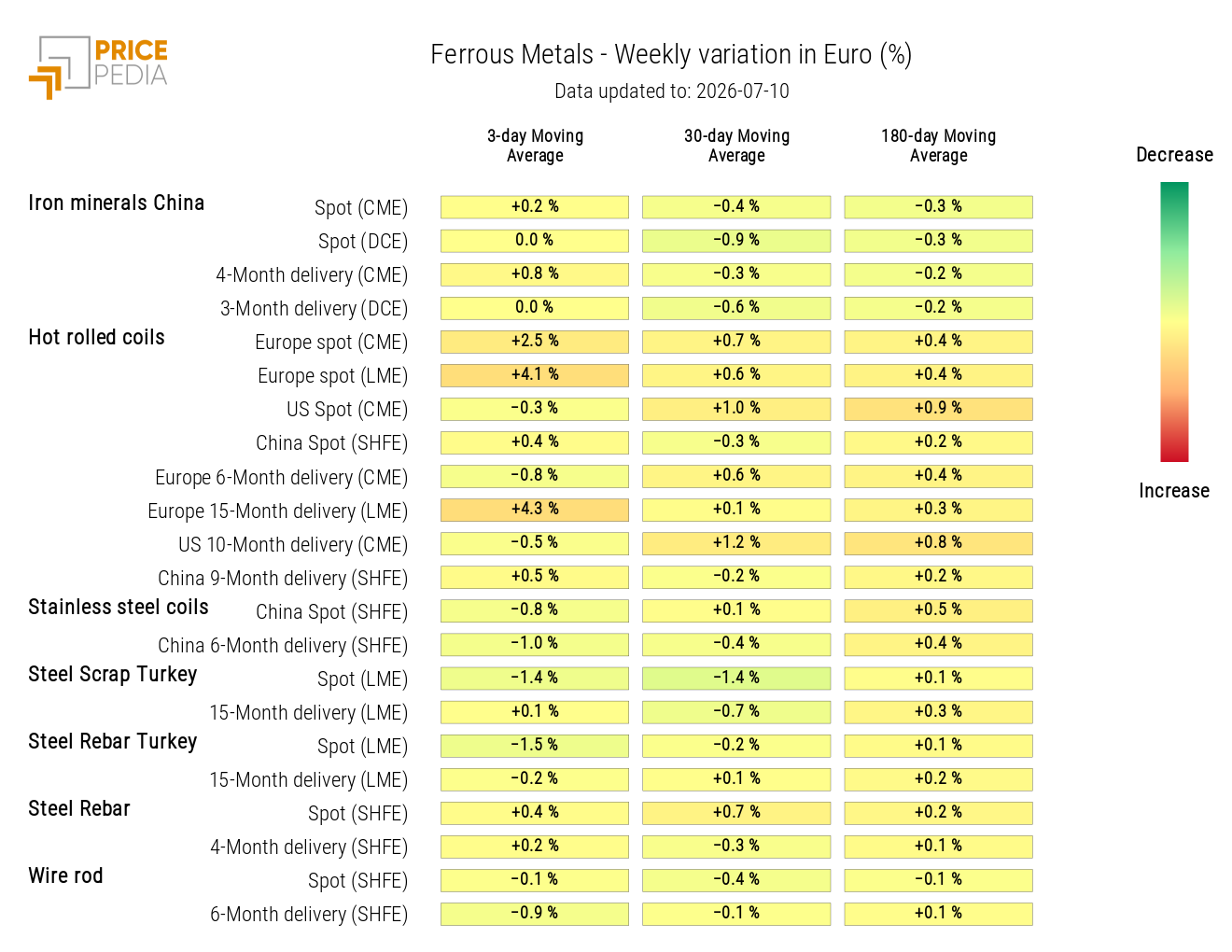
In the ferrous metals sector, European hot-rolled coils prices increased, supported by the entry into force of the new European safeguard measures on steel imports, which will reduce duty-free import volumes and double the tariff applied to out-of-quota imports.
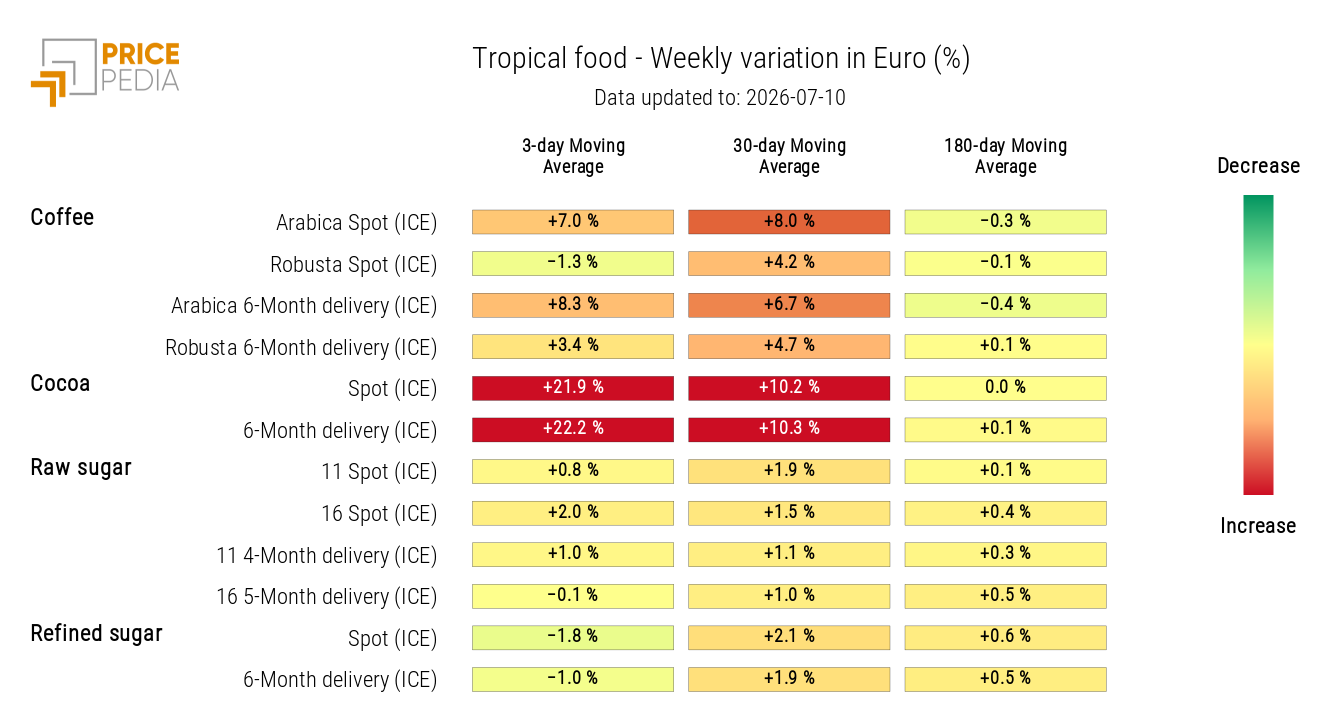
Regarding agricultural commodities, broad-based price increases were recorded for cereals, tropical commodities, and edible oils. The most significant changes concerned tropical commodities, driven by the increase in cocoa and coffee prices: the former due to concerns over excessive rainfall in Côte d’Ivoire and Ghana, the latter due to uncertainty surrounding production prospects and the risk of adverse weather conditions associated with a possible return of El Niño.
NUMERICAL APPENDIX
ENERGY
The PricePedia financial index of energy products recorded a recovery in prices, reflecting the renewed geopolitical risk premium that emerged following the latest attacks between the United States and Iran.
PricePedia Financial Index of energy prices in dollars
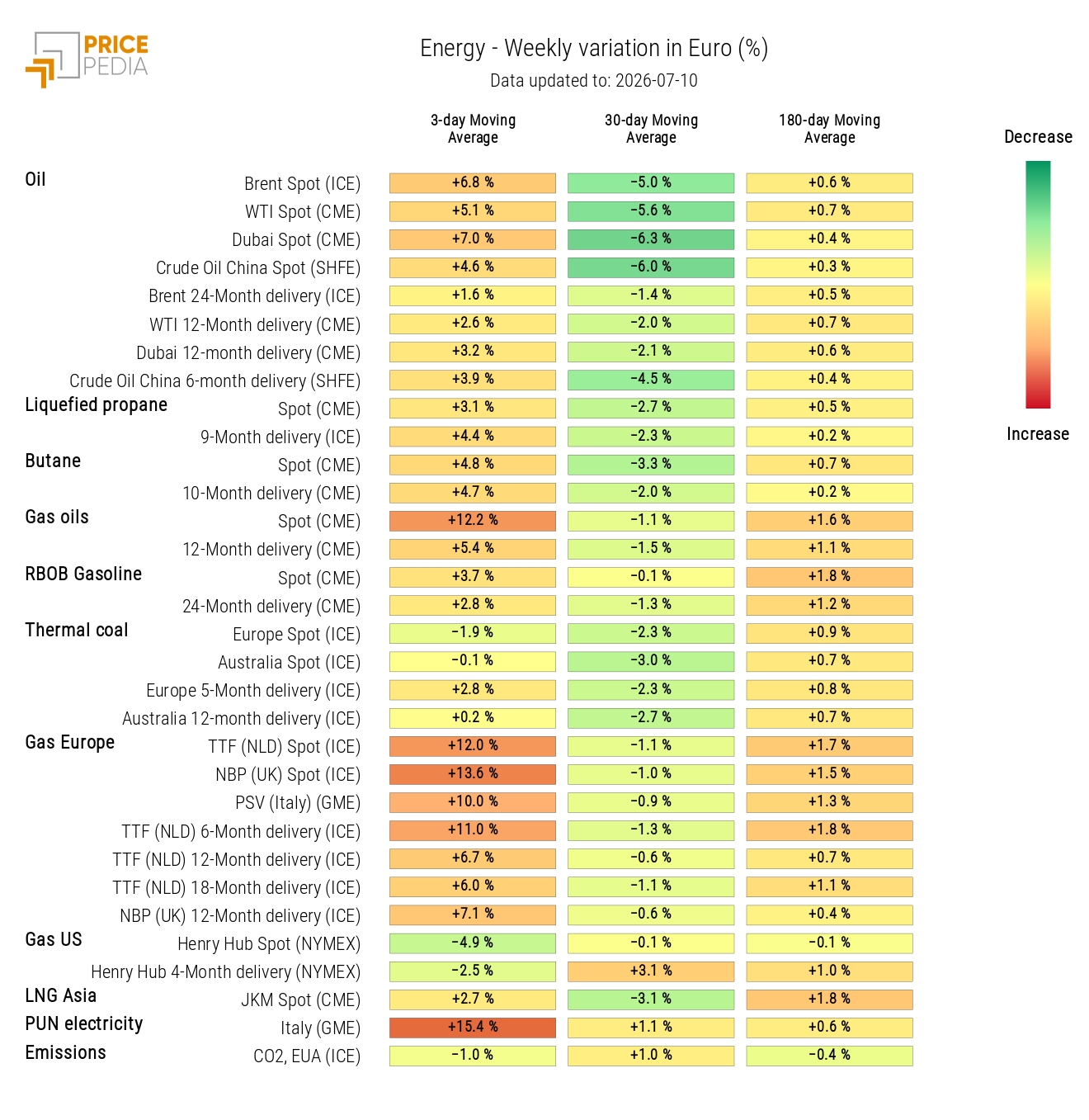
The energy heatmap highlights an increase in energy prices for oil, distillates, and natural gas.
HeatMap of energy prices in euros
PRECIOUS METALS
The financial index of precious metals continues to follow an opposite trend compared with energy prices.
PricePedia Financial Index of precious metals prices in dollars
FERROUS METALS
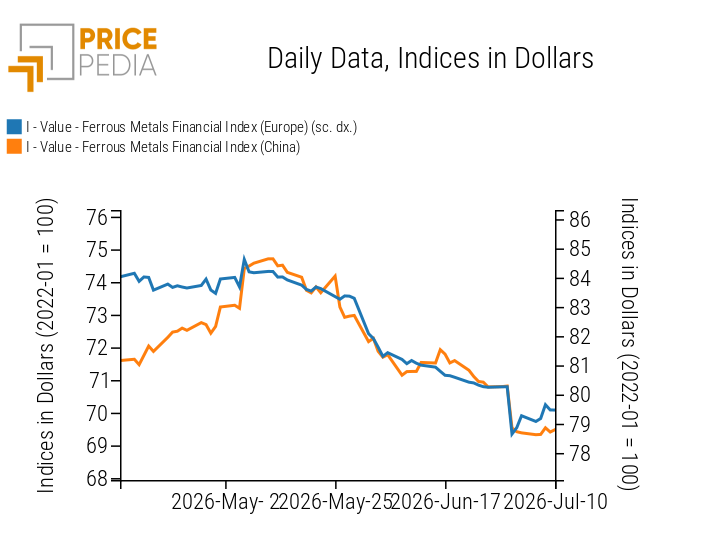
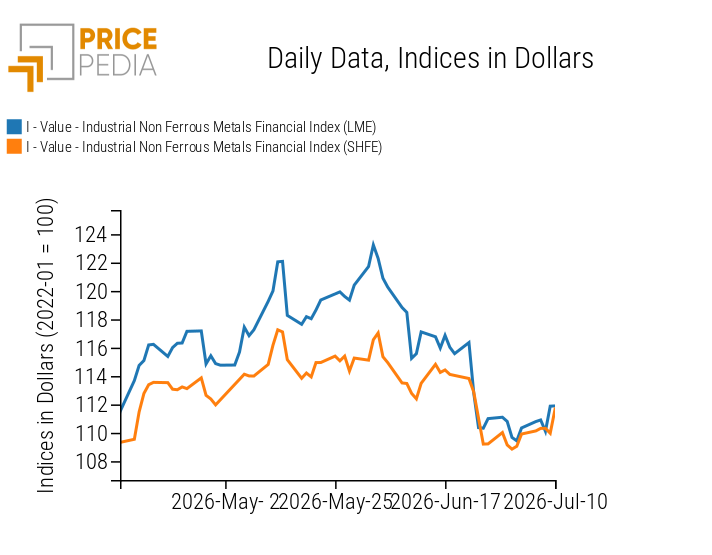
The two financial indices of ferrous metals both show a predominantly sideways weekly price trend.
PricePedia Financial Indices of ferrous metals prices in dollars
The analysis of the ferrous metals heatmap highlights a weekly increase in European hot-rolled coil prices.
HeatMap of ferrous metals prices in euros
Do you want to stay up-to-date on commodity market trends?
Sign up for PricePedia newsletter: it's free!
INDUSTRIAL NON-FERROUS METALS
The financial indices of non-ferrous metals recorded a slight weekly increase in prices.
PricePedia Financial Indices of industrial non-ferrous metals prices in dollars
The analysis of the non-ferrous metals heatmap highlights a weekly increase in the prices of aluminium, tin, and nickel.
HeatMap of non-ferrous metals prices in euros
FOOD
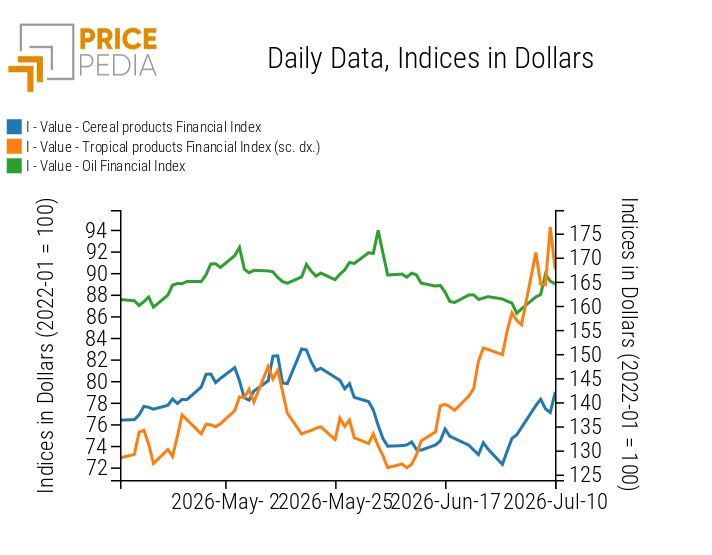
The three food indices recorded an increase in prices.
PricePedia Financial Indices of food prices in dollars
CEREALS
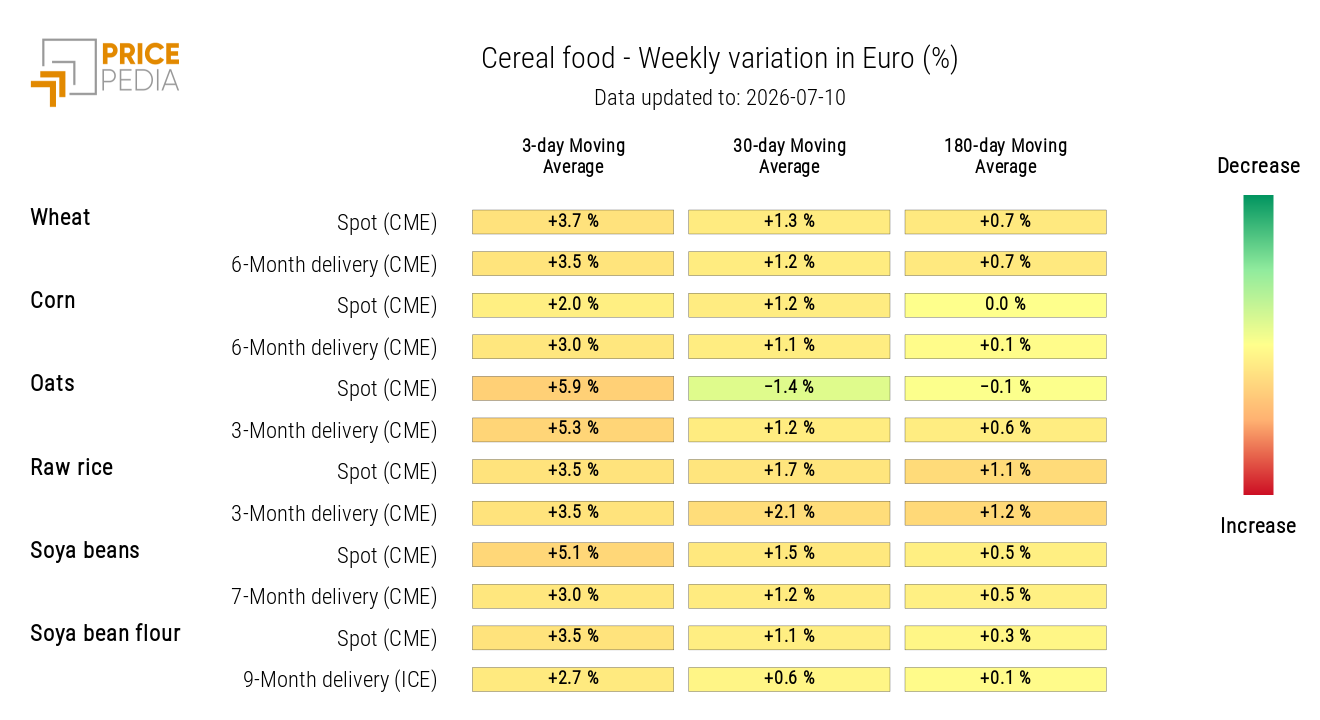
The cereals heatmap highlights a broad-based increase in prices, attributable to adverse weather conditions in the United States, characterised by high temperatures and the risk of water stress in the main production areas.
HeatMap of cereal prices in euros
TROPICAL COMMODITIES
The tropical commodities heatmap highlights significant weekly increases in cocoa and coffee prices.
HeatMap of tropical food prices in euros
OILS
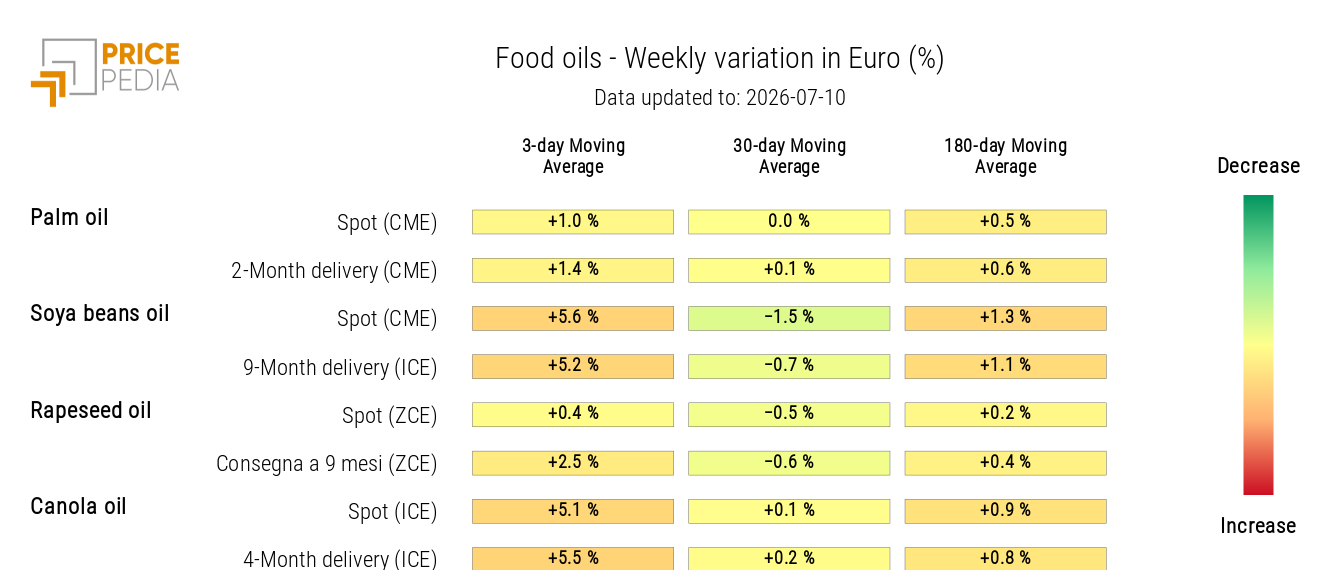
The heatmap analysis shows a weekly increase in soya beans and canola oil prices, supported by stronger demand for biofuel production, in a context characterised by the renewed increase in energy prices.
HeatMap of edible oil prices in euros
You may be interested in:
Commodity prices fall as tensions ease, but risks remain high
Published by Luca Sazzini. .
Conjunctural Indicators Commodities Financial WeekGeopolitical uncertainty continues to fuel market volatility [ Read all ]

China economic update June 2026
Published by Luca Sazzini. .
Conjunctural Indicators Global Economic TrendsGeopolitical easing moderates the growth of Chinese commodity FOB prices [ Read all ]
Commodity prices driven by the risk of the conflict escalating
Published by Luca Sazzini. .
Conjunctural Indicators Commodities Financial WeekHouthi attacks in the Red Sea are increasing the risk of disruptions to energy supplies [ Read all ]