Downward pressure on the financial markets for commodities
What factors are driving commodity price trends?
Published by Luca Sazzini. .
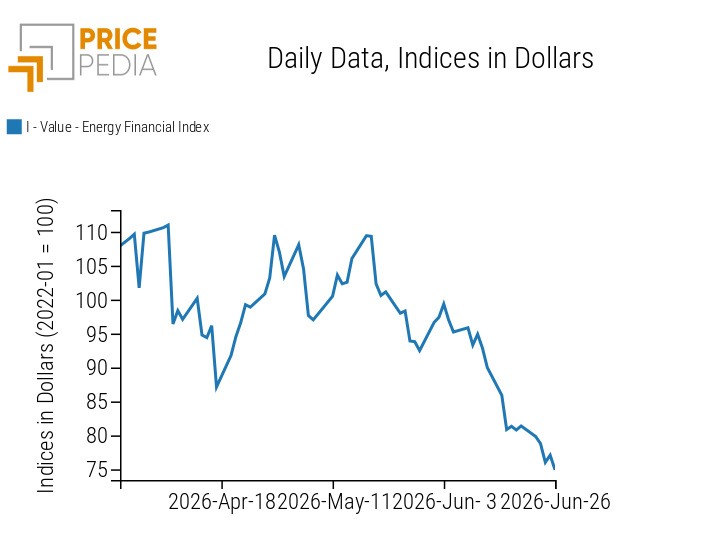
Conjunctural Indicators Commodities Financial WeekIn the oil financial markets, the downward phase in prices continues, intensifying following the official signing of the memorandum of understanding between the United States and Iran. The gradual resumption of oil flows through the Strait of Hormuz, together with the 60-day temporary license granted by the United States to Iran to resume crude oil exports, is exerting downward pressure on the energy sector.
Financial prices of Brent, the main global benchmark, have returned to $72 per barrel, in line with pre-conflict average levels. This trend reflects market operators’ expectations, who are already pricing in the hypothesis of a rapid normalization of oil flows through the Strait of Hormuz, despite remaining risks linked to a possible resurgence of hostilities.
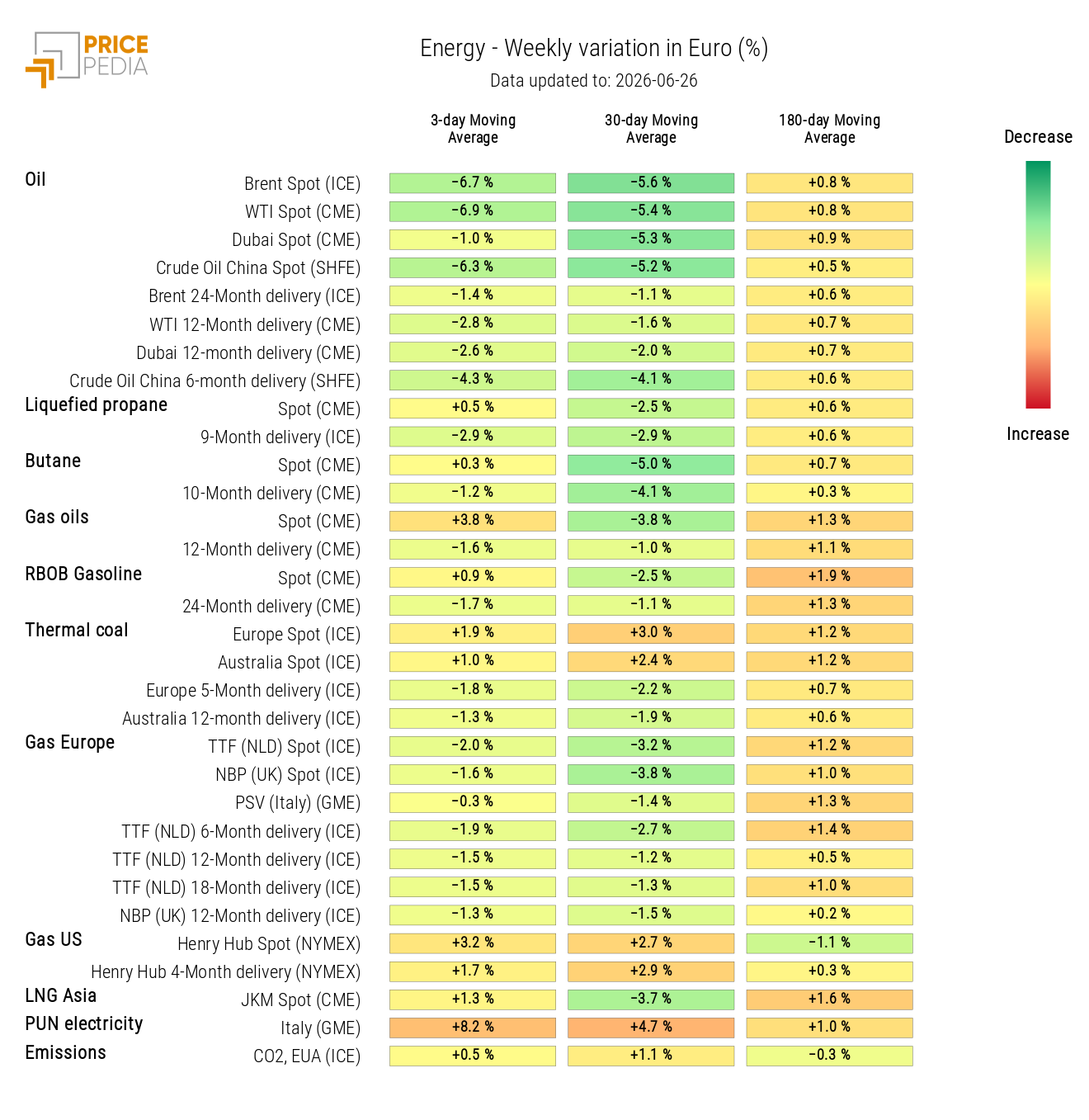
Downward pressure has also spread to financial prices of petroleum-derived products, with the exception of diesel, which recorded a weekly increase due to growing concerns over a possible Russian export ban on this product.
The European natural gas market is also following a downward price trend due to the reopening of the Strait of Hormuz, although with less intensity than observed in oil.
High temperatures expected in the coming days are set to increase gas demand, used to meet higher electricity needs related to cooling. In France, heatwaves are already forcing nuclear power plants to reduce output due to cooling system constraints, thereby increasing reliance on gas-fired thermal generation.
Overall, these factors, combined with the current relatively low level of European inventories, will provide some support to gas prices, offsetting the downward pressure resulting from the end of the conflict and the reopening of the Strait of Hormuz.
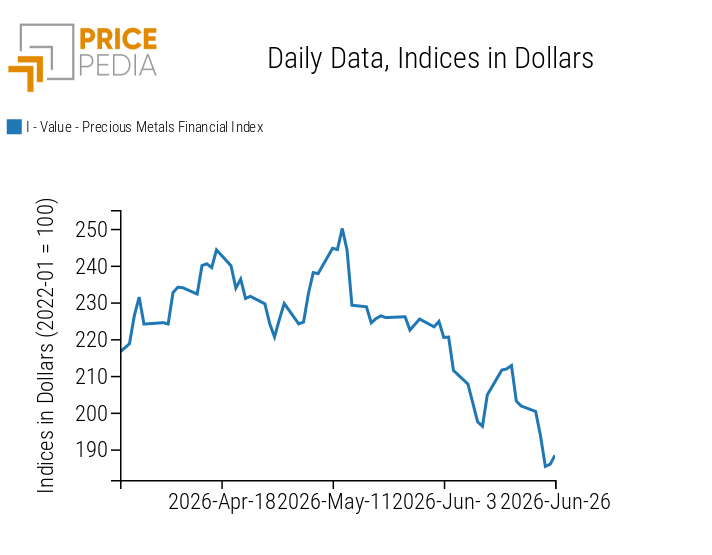
The precious metals sector continues its price decline, driven by expectations of restrictive monetary policies by central banks, which reduce the attractiveness of safe-haven assets. Even the gradual easing of the energy crisis does not appear sufficient to support a recovery in these assets, which remain weighed down by interest rates expected to stay high for an extended period.
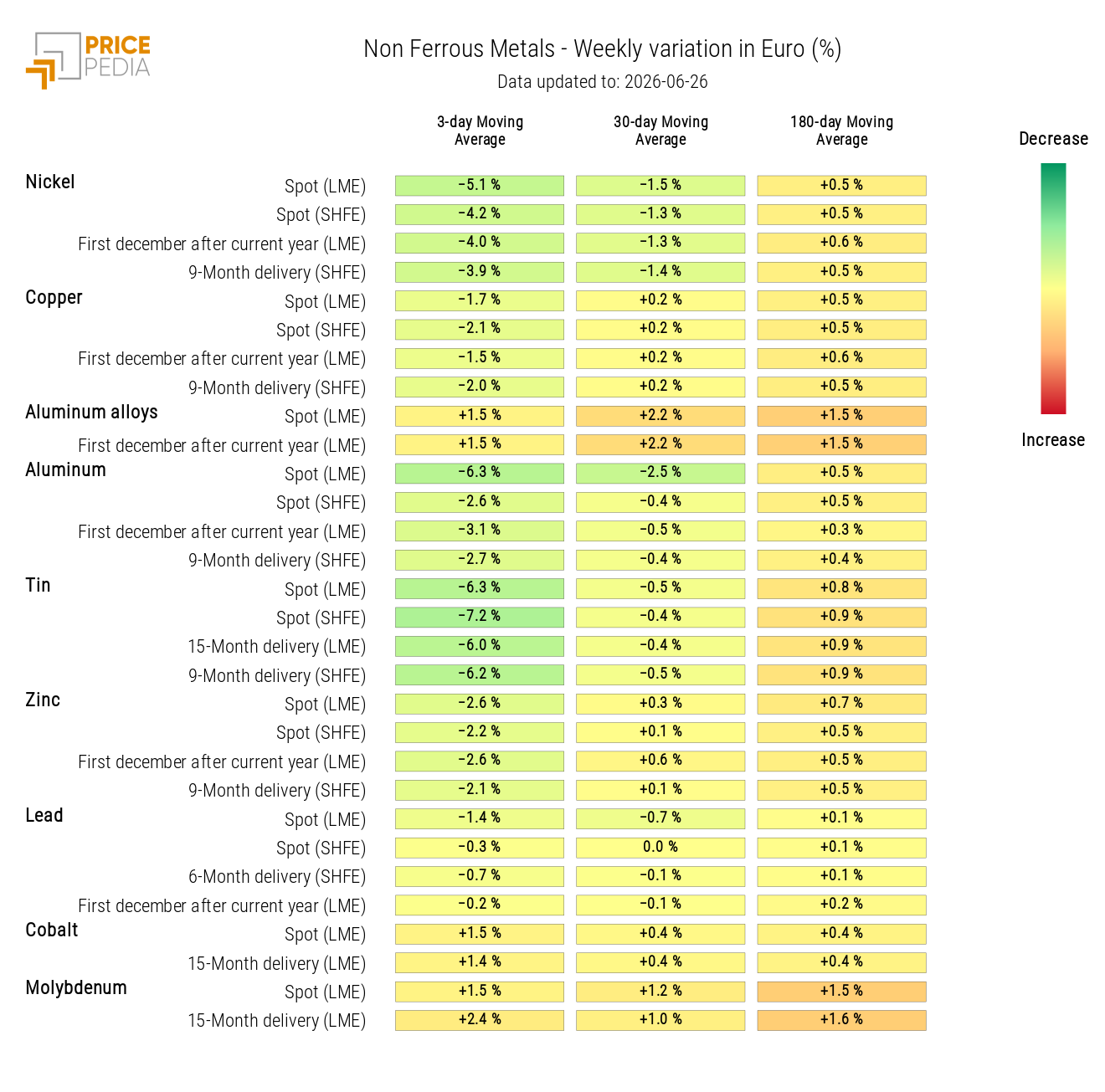
Prices of industrial metals are also declining on a weekly basis, both in the ferrous and non-ferrous segments, due to a stronger dollar and persistent weakness in Chinese demand. The most significant weekly changes concern non-ferrous metals, including a sharp drop in aluminium prices, linked to easing supply tensions from Gulf countries, and tin, recently affected by strong speculative dynamics. A notable decline is also observed in nickel, pressured by expectations of increased Indonesian supply in the second half of the year.
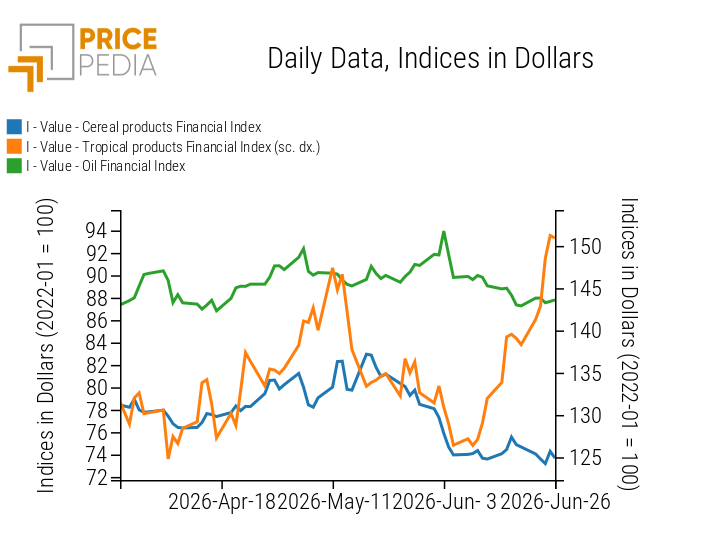
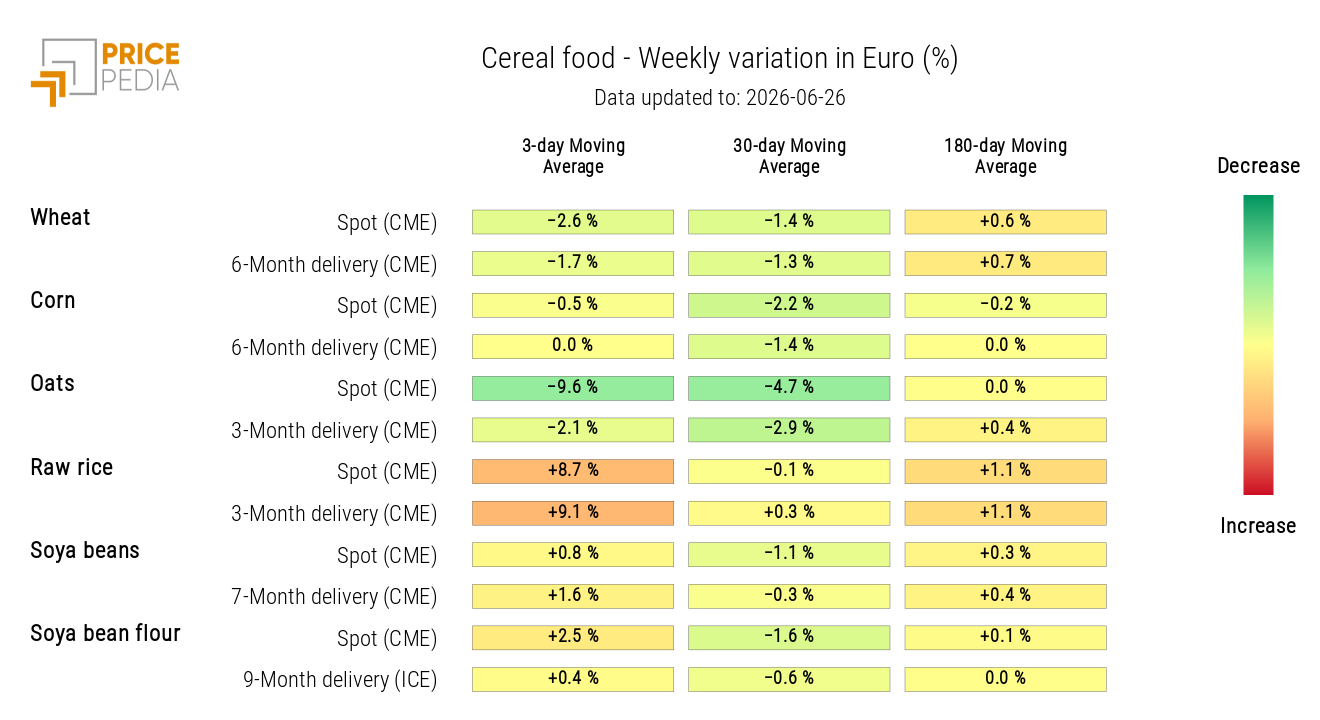
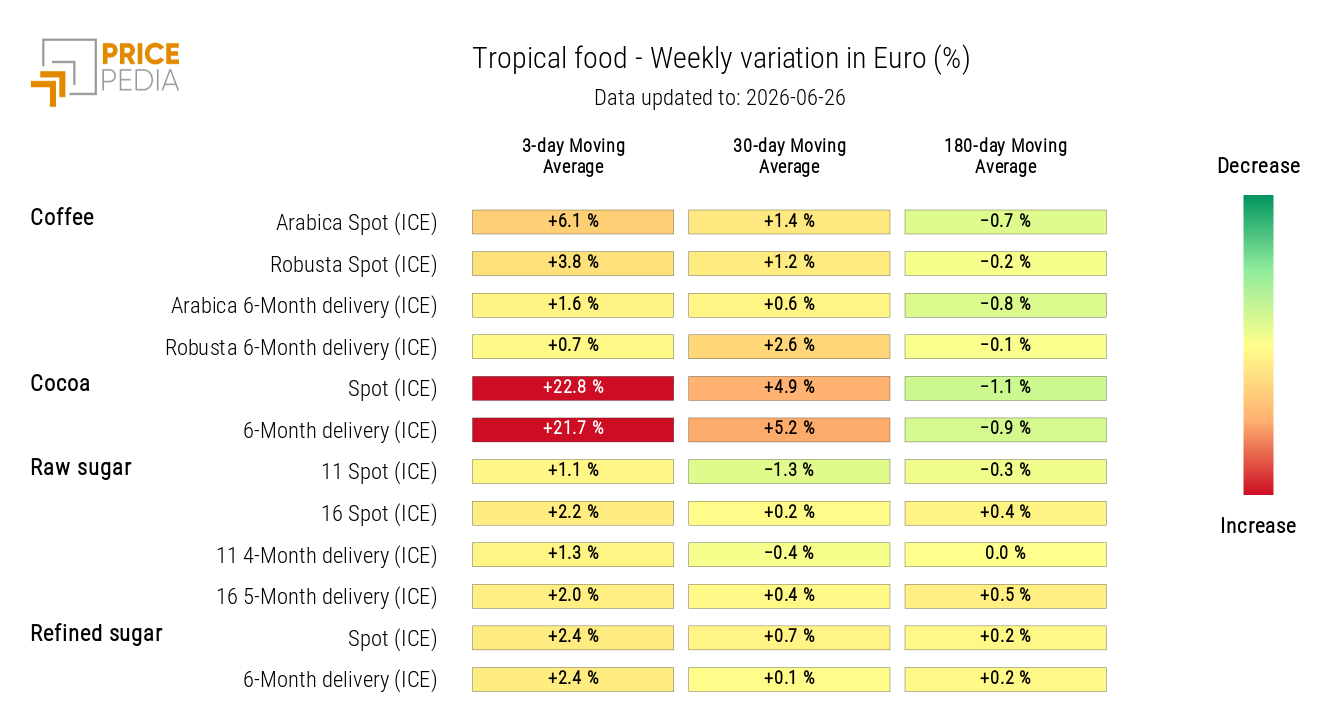
Among food commodities, there is a significant increase in tropical products, driven by the positive trend in cocoa, and a decrease in cereals, particularly pronounced in the case of oats.
NUMERICAL APPENDIX
ENERGY
The PricePedia financial index of energy products continues its downward trend, supported by positive developments in relations between the United States and Iran.
PricePedia Financial Index of energy prices in US dollars
The energy heatmap highlights a decline in oil prices, alongside an increase in diesel prices.
HeatMap of energy prices in euros
PLASTICS AND ELASTOMERS
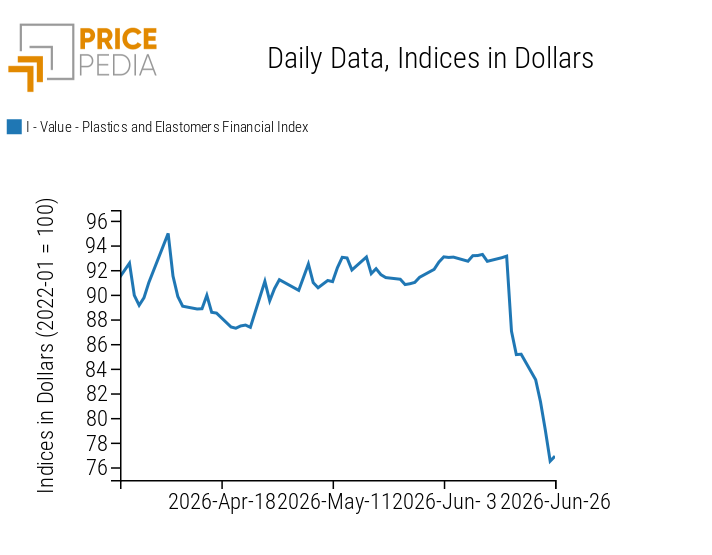
The financial index of plastics and elastomers prices records a sharp decline, in line with what has occurred in the oil market.
PricePedia Financial Index of plastics and elastomers prices in US dollars
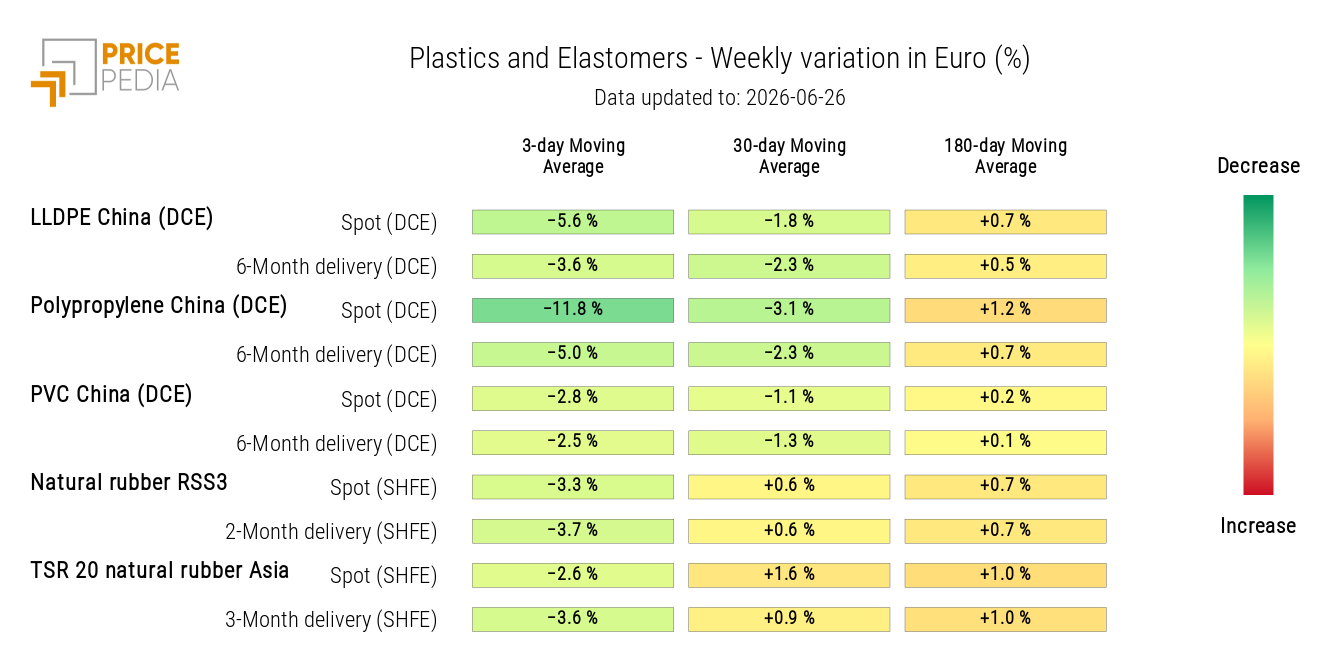
The heatmap analysis highlights a clear reduction in Chinese prices of thermoplastics and elastomers.
HeatMap of plastics and elastomers prices in euros
PRECIOUS METALS
The financial index of precious metals continues its price correction phase, driven by expectations of restrictive monetary policies by central banks.
PricePedia Financial Index of precious metals prices in US dollars
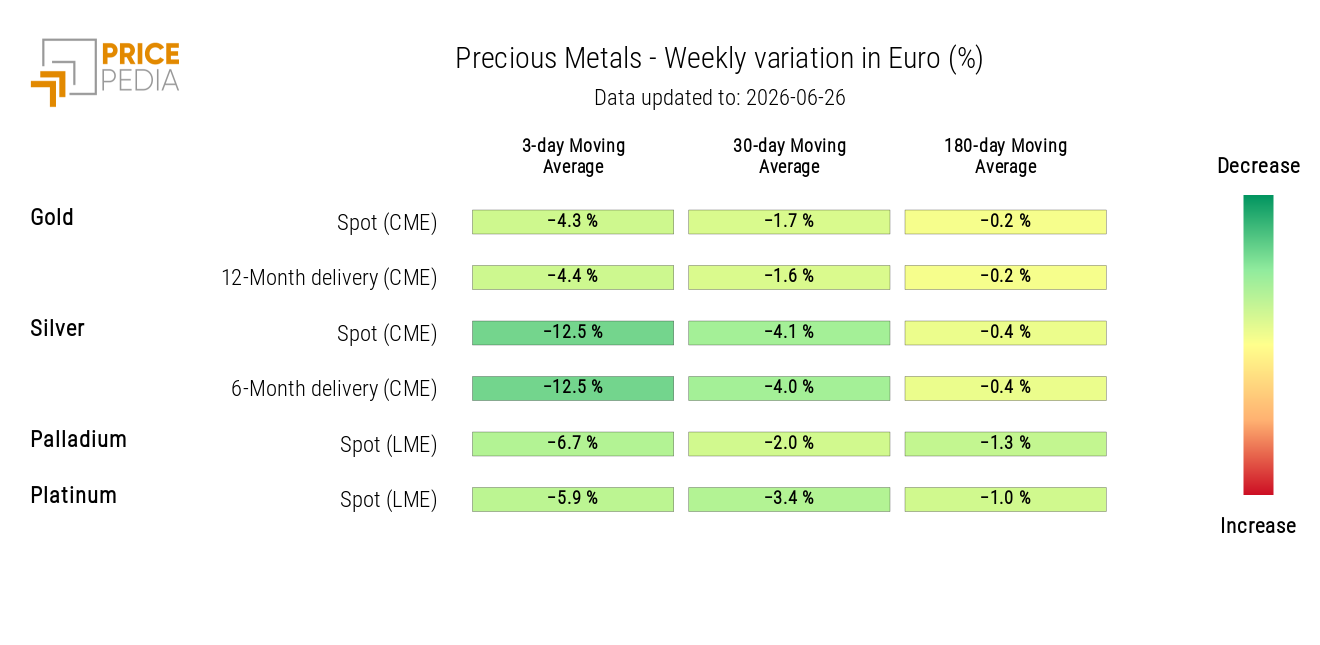
The heatmap analysis shows a general decline in precious metals financial prices, more pronounced for silver and platinum.
HeatMap of precious metals prices in euros
FERROUS
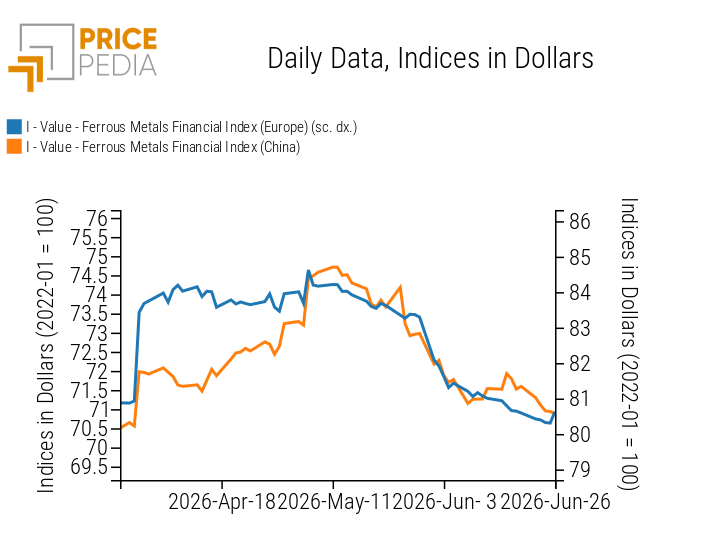
Both financial indices of ferrous metals remain characterized by a downward price trend.
PricePedia Financial Indices of ferrous metals prices in US dollars
Do you want to stay up-to-date on commodity market trends?
Sign up for PricePedia newsletter: it's free!
NON-FERROUS INDUSTRIAL METALS
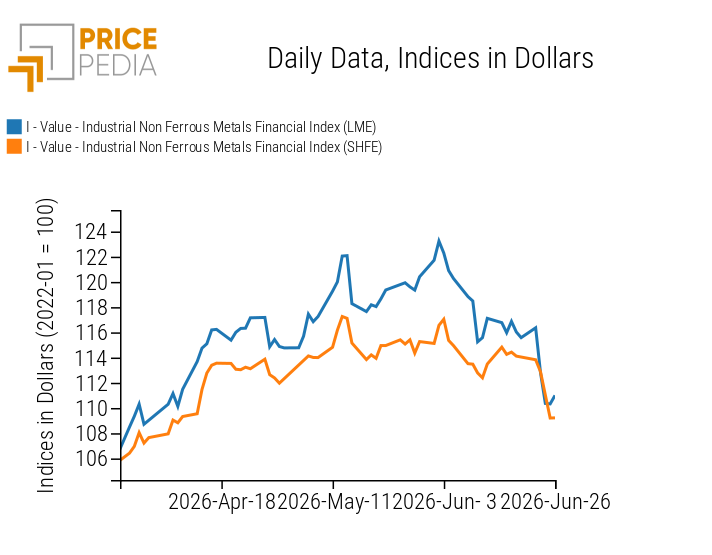
The financial indices of non-ferrous metals record a strong weekly decline in prices.
PricePedia Financial Indices of non-ferrous industrial metals prices in US dollars
The heatmap analysis of non-ferrous metals highlights a decline in prices of nickel, aluminium, and tin.
HeatMap of non-ferrous metals prices in euros
FOOD COMMODITIES
In the food commodities market, there is a significant increase in tropical products, a decline in cereals, and relative stability in vegetable oils.
PricePedia Financial Indices of food commodity prices in US dollars
CEREALS
The cereals heatmap shows a decline in oat prices and an increase in raw rice prices.
HeatMap of cereal prices in euros
TROPICAL COMMODITIES
The tropical commodities heatmap highlights significant increases in cocoa and coffee prices.
HeatMap of tropical food commodity prices in euros
OILS
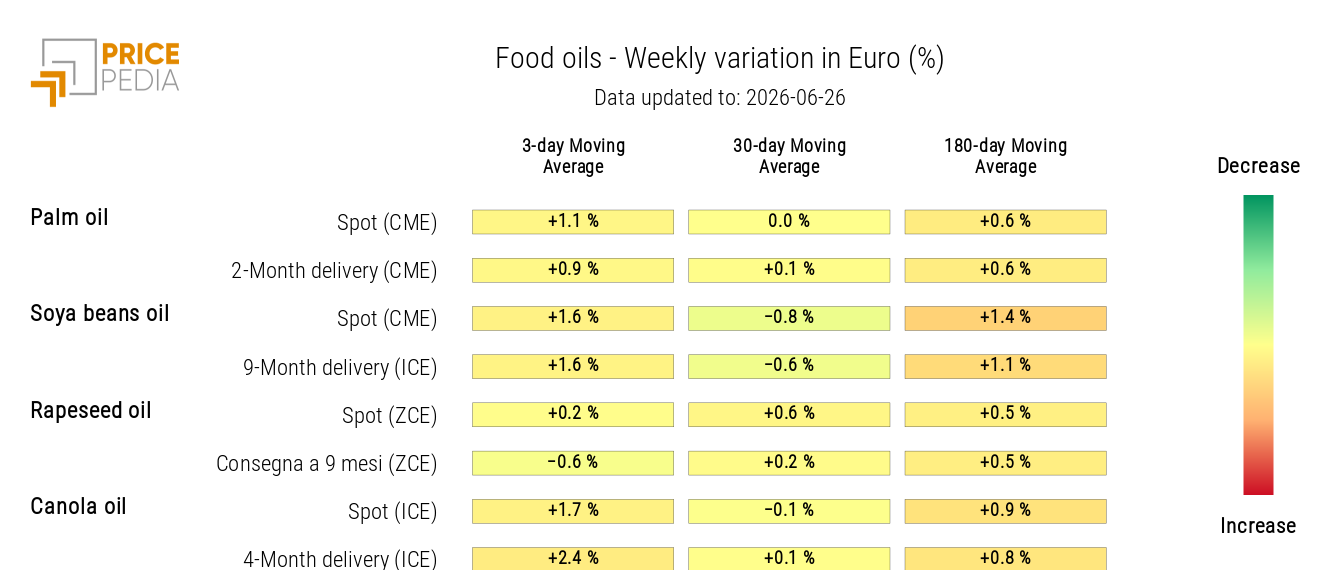
The heatmap analysis shows a slight weekly increase in soybean oil and canola oil prices.
HeatMap of food oil prices in euros
You may be interested in:

Commodity markets between supply risks and geopolitical uncertainty
Published by Luca Sazzini. .
Conjunctural Indicators Commodities Financial WeekThe strength of the U.S. economy is bolstering expectations of a more restrictive monetary policy [ Read all ]

China economic update August 2026
Published by Luca Sazzini. .
Conjunctural Indicators Global Economic TrendsIncreased competitive pressure is driving down the prices of Chinese commodities [ Read all ]

Uncertainty in the commodity markets remains high
Published by Luca Sazzini. .
Conjunctural Indicators Commodities Financial WeekCommodity prices show divergent trends [ Read all ]