Reaction of the commodities markets to the peace agreement between the United States and Iran
Is the energy crisis truly over, or will structural vulnerabilities persist?
Published by Luca Sazzini. .
Conjunctural Indicators Commodities Financial WeekThe United States and Iran have officially signed a peace agreement providing for the immediate and permanent cessation of military operations on all fronts, including Lebanon. The agreement foresees the end of the U.S. naval blockade and the complete withdrawal of military forces within 30 days, while Iran commits to reopening the Strait of Hormuz and completing its demining in the same period.
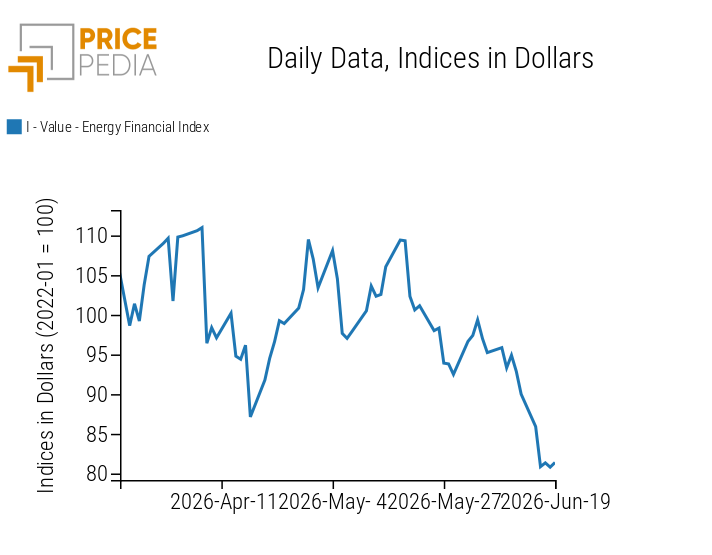
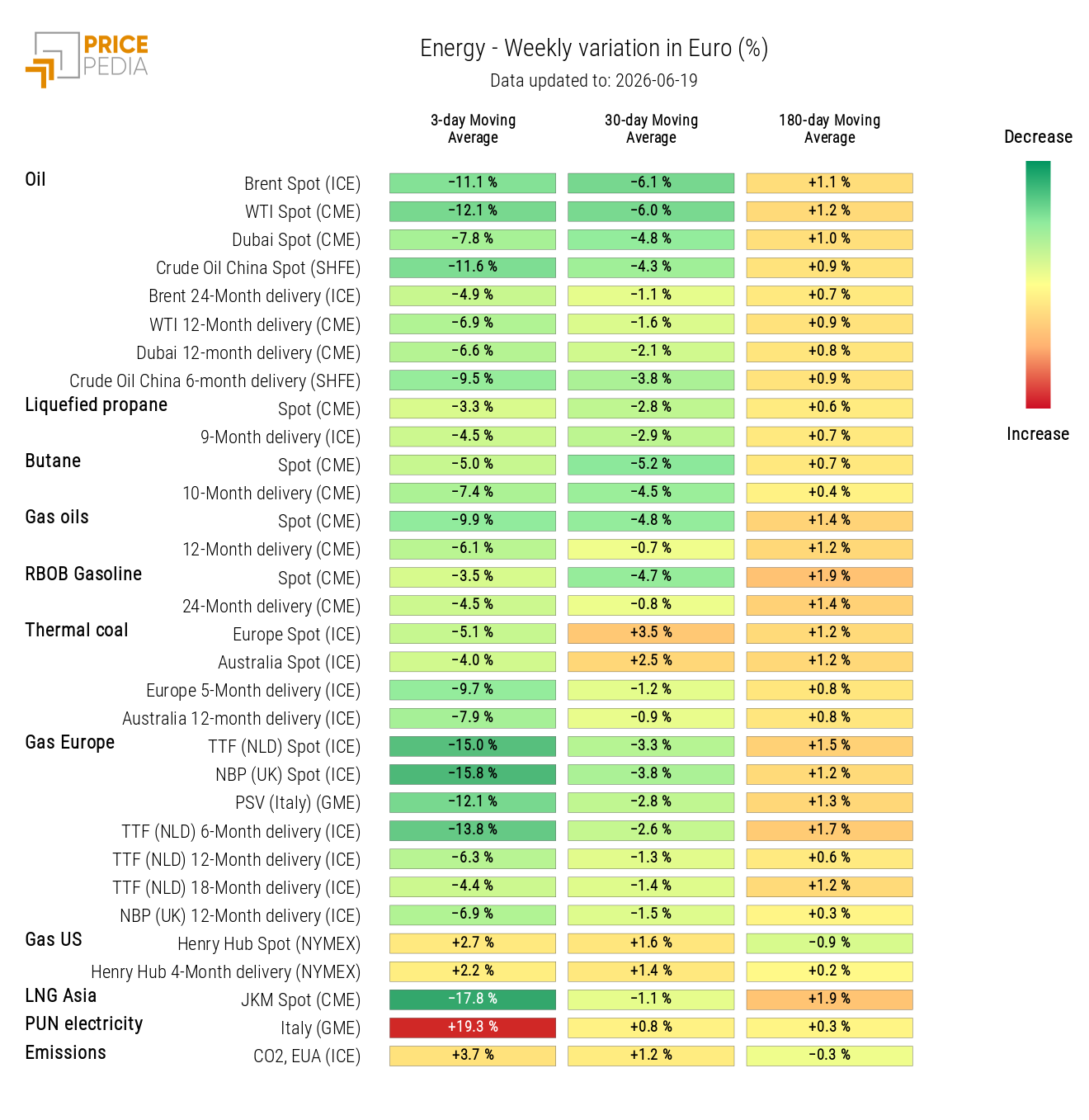
The effects of the agreement on financial commodity markets were immediate: Brent and WTI prices fell below $80/barrel, moving closer to futures prices at longer maturities. Although these new levels are significantly lower than the $120/barrel peaks reached during the conflict, they remain about $10/barrel higher than the February 2026 average, the last month before the outbreak of the war in Iran.
In the short term, oil prices will continue to be supported by demand linked to the replenishment of national stocks, with the U.S. strategic reserve reaching its lowest levels since 1983. In the long term, however, fundamentals remain bearish: supply is expected to recover, while demand should weaken due to the energy transition.
The European natural gas market has also experienced a sharp price decline, with the Dutch TTF benchmark falling back to levels close to €40/MWh. Here too, however, prices will remain supported in the short term by the gradual rebuilding of European storage levels, which are still significantly below the five-year average.
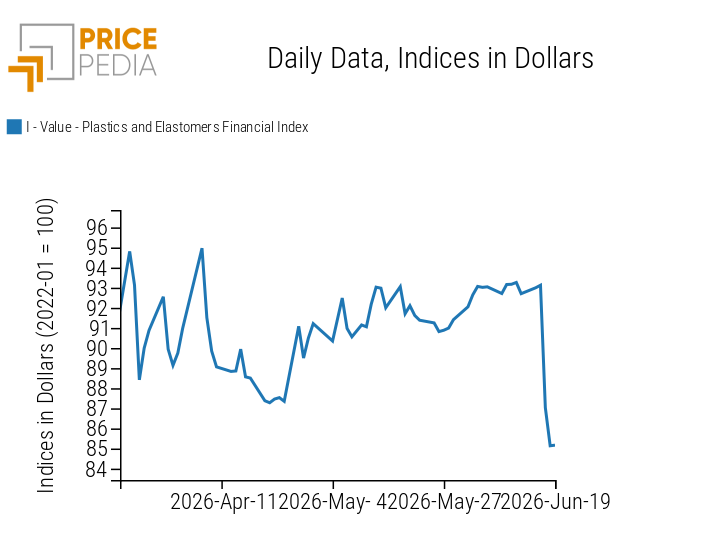
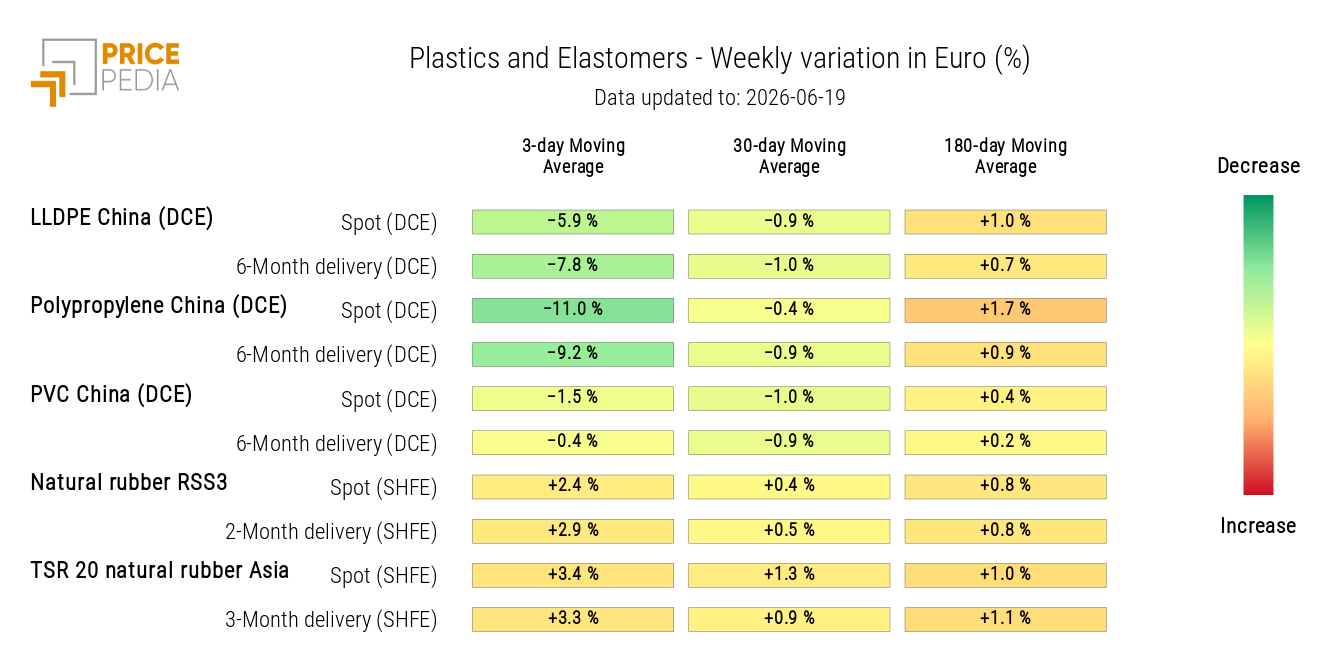
The decline in oil and gas prices has immediately fed through to petrochemical prices, with a strong reduction in polyethylene and polypropylene prices quoted on the Chinese Dalian Commodity Exchange (DCE).
Prices of precious metals have been influenced by opposing factors, increasing volatility over the past few days. Geopolitical de-escalation initially supported a rebound in safe-haven assets, which was later reversed following the Federal Reserve’s monetary policy meeting on Thursday, June 18. Nearly half of committee members expect at least one interest rate hike by the end of the year, increasing the opportunity cost of holding precious metals compared to government bonds.
On Thursday alone, both gold and silver recorded daily declines of -2% and -5% respectively, erasing previous gains linked to the end of the conflict in Iran.
The industrial metals sector remained broadly stable on a weekly basis, both in ferrous and non-ferrous segments, although significant price fluctuations were observed in certain metal categories.
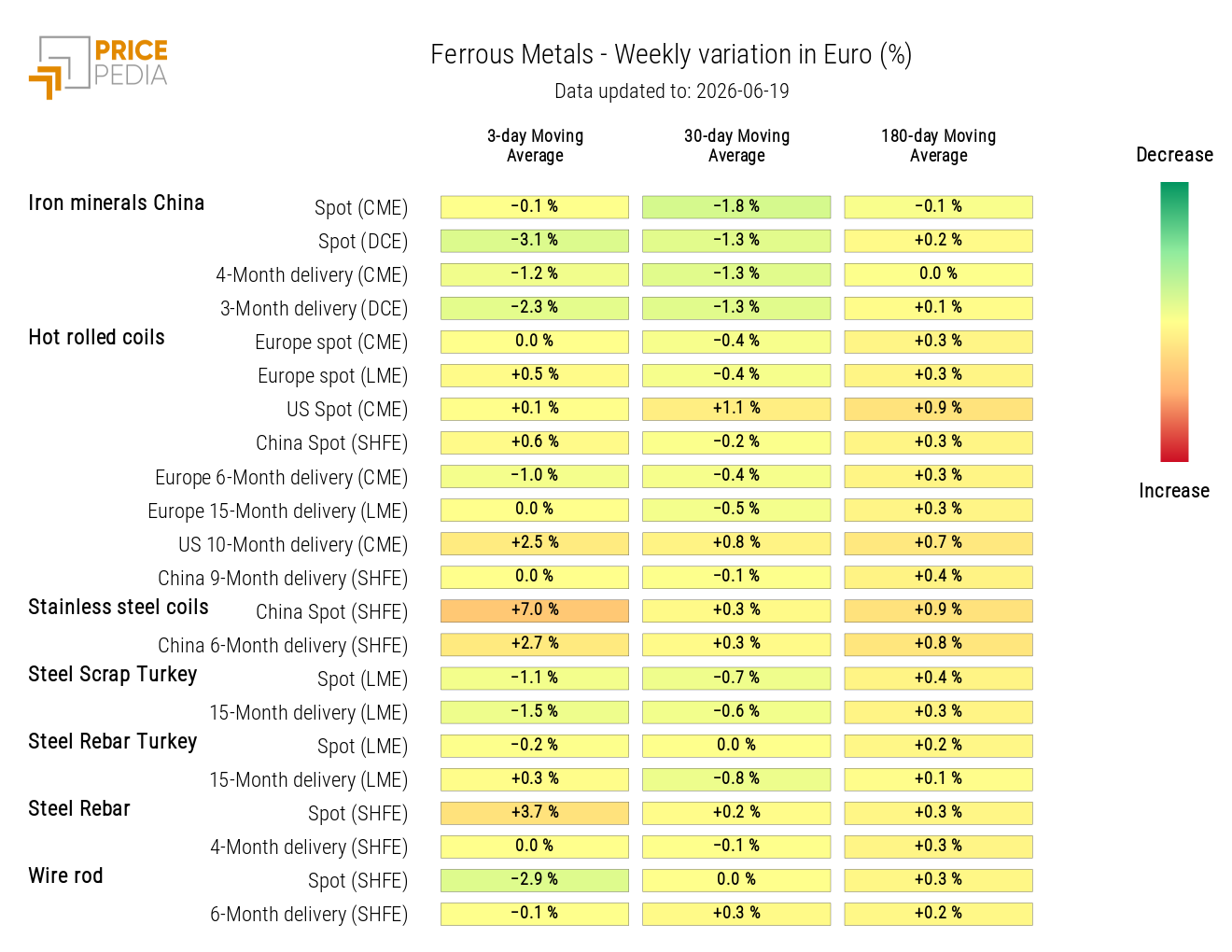
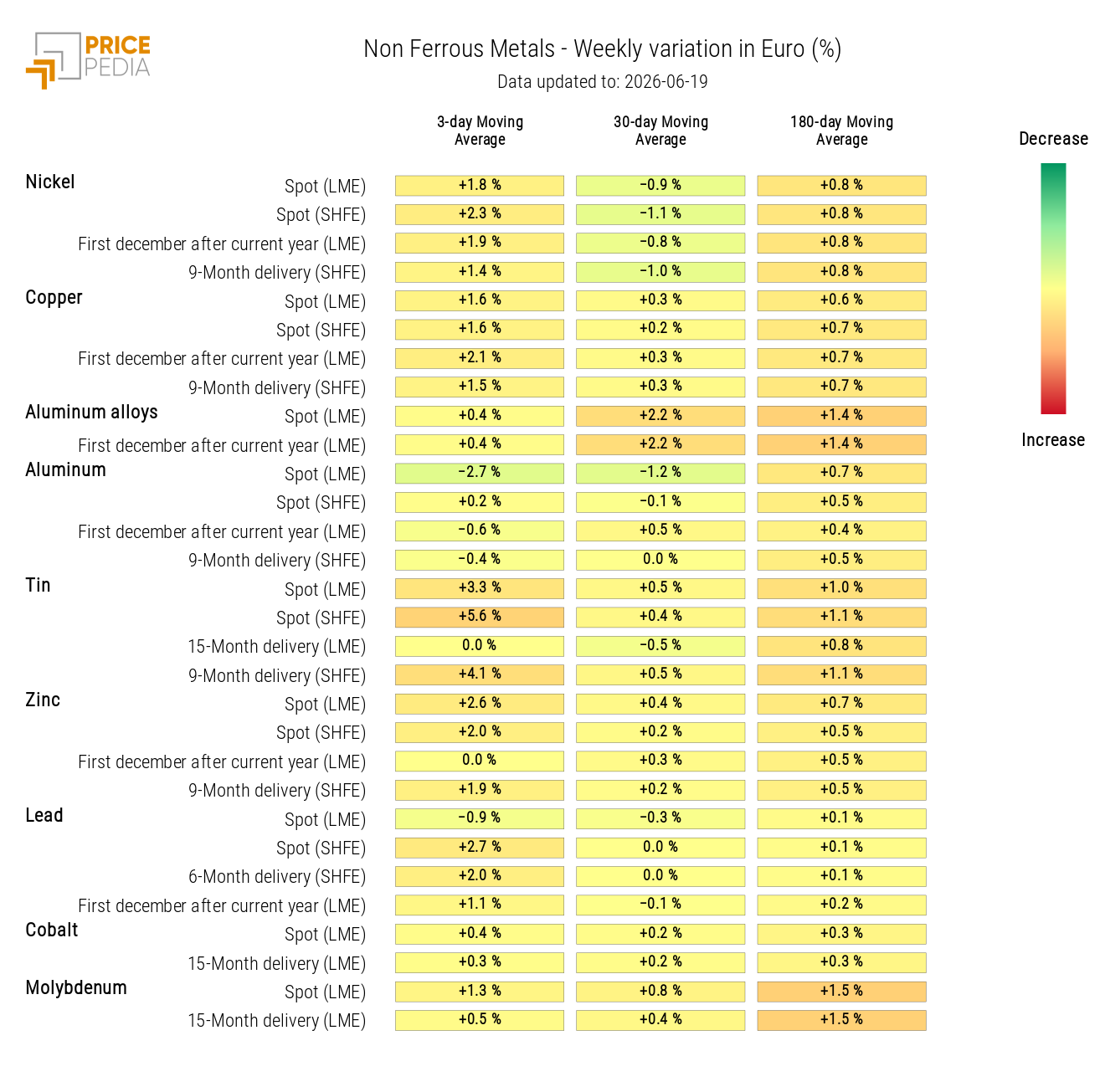
Among ferrous metals, there was an increase in prices of Chinese stainless steel coils and Turkish steel rebar, while among non-ferrous metals there was a rebound in tin prices and a decline in aluminum prices.
On the London Metal Exchange, the main benchmark market for non-ferrous metals, aluminum prices returned to $3,400/ton, about $400/ton lower than early June levels, but still about $400/ton higher than the February 2026 average.
The resumption of aluminum shipments through the Strait of Hormuz will gradually help normalize trade flows, exerting downward pressure on prices. However, the aluminum market remains particularly complex: damage to production facilities is hampering a rapid recovery of production capacity in the Gulf countries.
In this phase characterized by a structural supply deficit, China is set to play an increasingly important role, thanks to its current domestic supply surplus, which can partially help fill the global gap and exert further downward pressure on international prices.
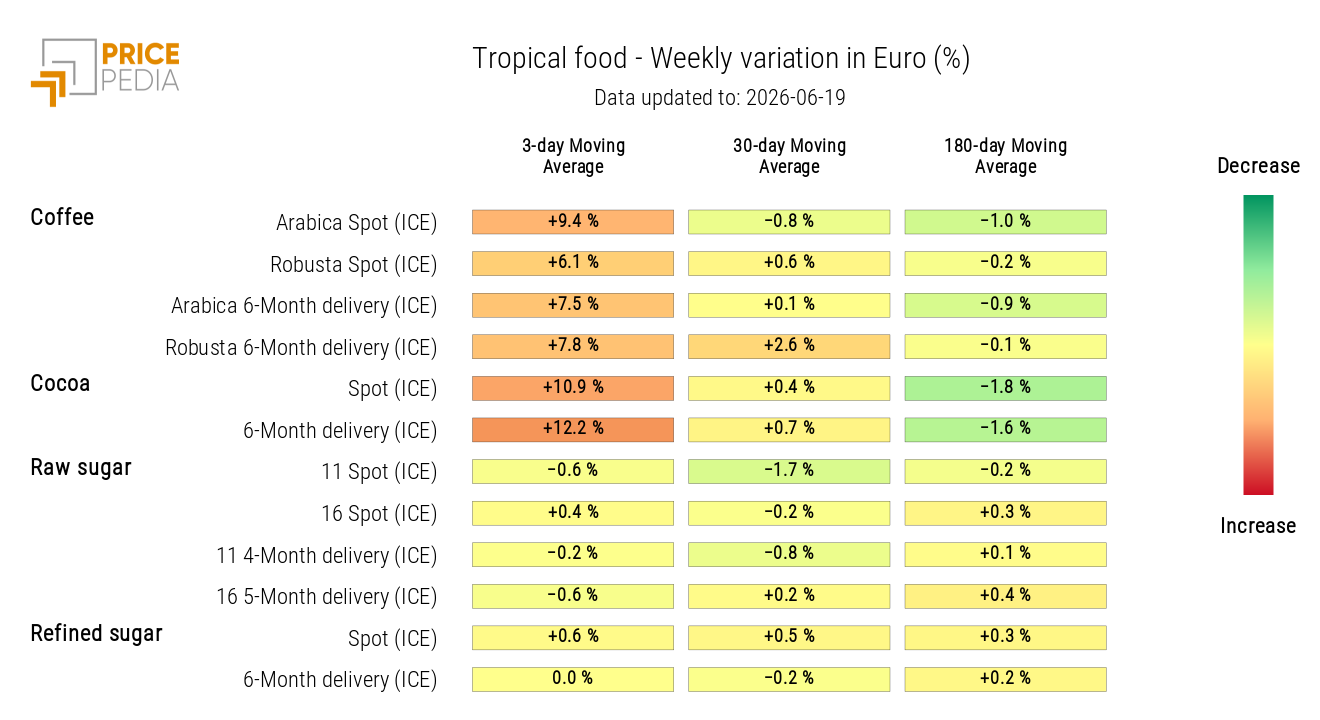
In the food commodity sector, tropical products recorded a weekly increase, driven by coffee and cocoa prices. Coffee growth is attributed to adverse weather conditions in Brazilian producing areas, while cocoa increases are supported by expectations of stronger coordination among major producers, Ghana and Côte d’Ivoire, aimed at supporting selling prices and increasing export revenues.
NUMERICAL APPENDIX
ENERGY
The PricePedia financial index of energy products shows a sharp price correction following the peace agreement between the United States and Iran.
PricePedia Financial Index of energy prices in dollars
The energy heatmap turns green, highlighting the overall decline in energy prices.
HeatMap of energy prices in euros
PLASTICS AND ELASTOMERS
The financial index of plastics and elastomers prices has recorded a strong decline in recent days, in line with the reduction in oil and gas prices.
PricePedia Financial Index of plastics and elastomers prices in dollars
The heatmap analysis highlights a sharp decline in Linear Low-Density Polyethylene (LLDPE) and especially polypropylene prices quoted on the Chinese Dalian Commodity Exchange (DCE).
HeatMap of plastics and elastomers prices in euros
FERROUS METALS
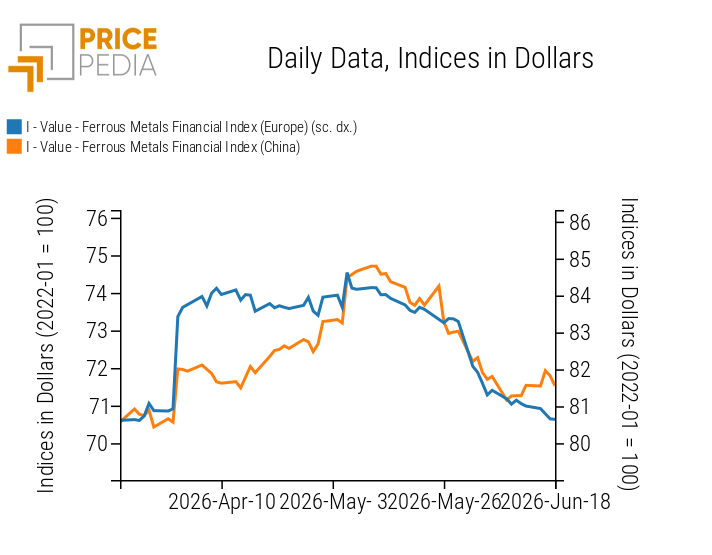
The European ferrous metals index continues its downward phase, while the Chinese index shows fluctuations that do not change overall price levels.
PricePedia Financial Indices of ferrous metals prices in dollars
Heatmap analysis shows a weekly recovery in Chinese stainless steel coil prices and an increase in Turkish steel rebar prices.
HeatMap of ferrous metals prices in euros
Do you want to stay up-to-date on commodity market trends?
Sign up for PricePedia newsletter: it's free!
NON-FERROUS INDUSTRIAL METALS
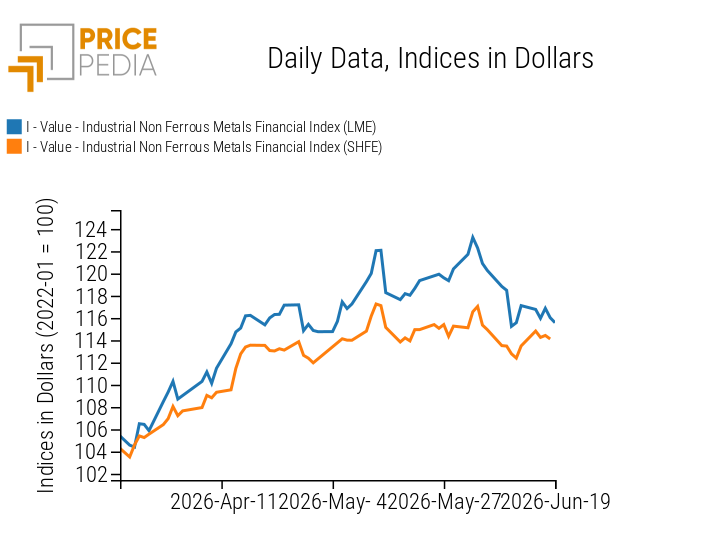
Apart from fluctuations, the two non-ferrous metals indices show a mostly sideways weekly trend.
PricePedia Financial Indices of industrial non-ferrous metals prices in dollars
Heatmap analysis of non-ferrous metals highlights a decline in aluminum prices, alongside an increase in tin prices.
HeatMap of non-ferrous metals prices in euros
FOOD
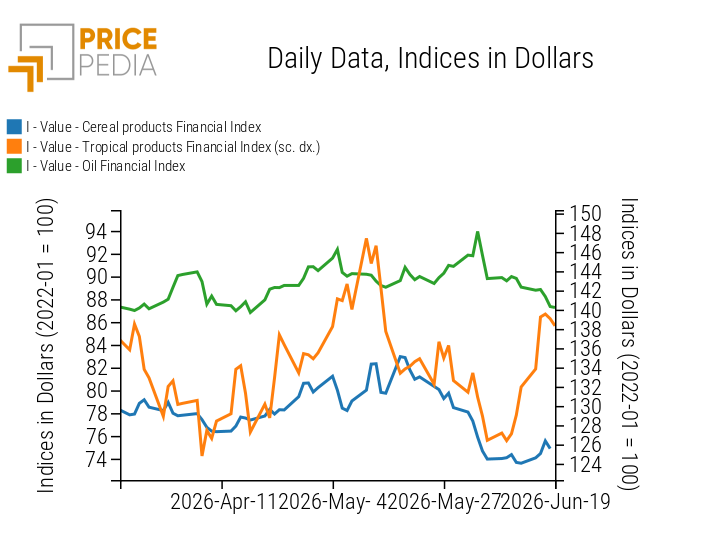
In the food commodities market, there is a weekly rebound in tropical products, a decline in oils, and relative stability in cereals.
PricePedia Financial Indices of food prices in dollars
CEREALS
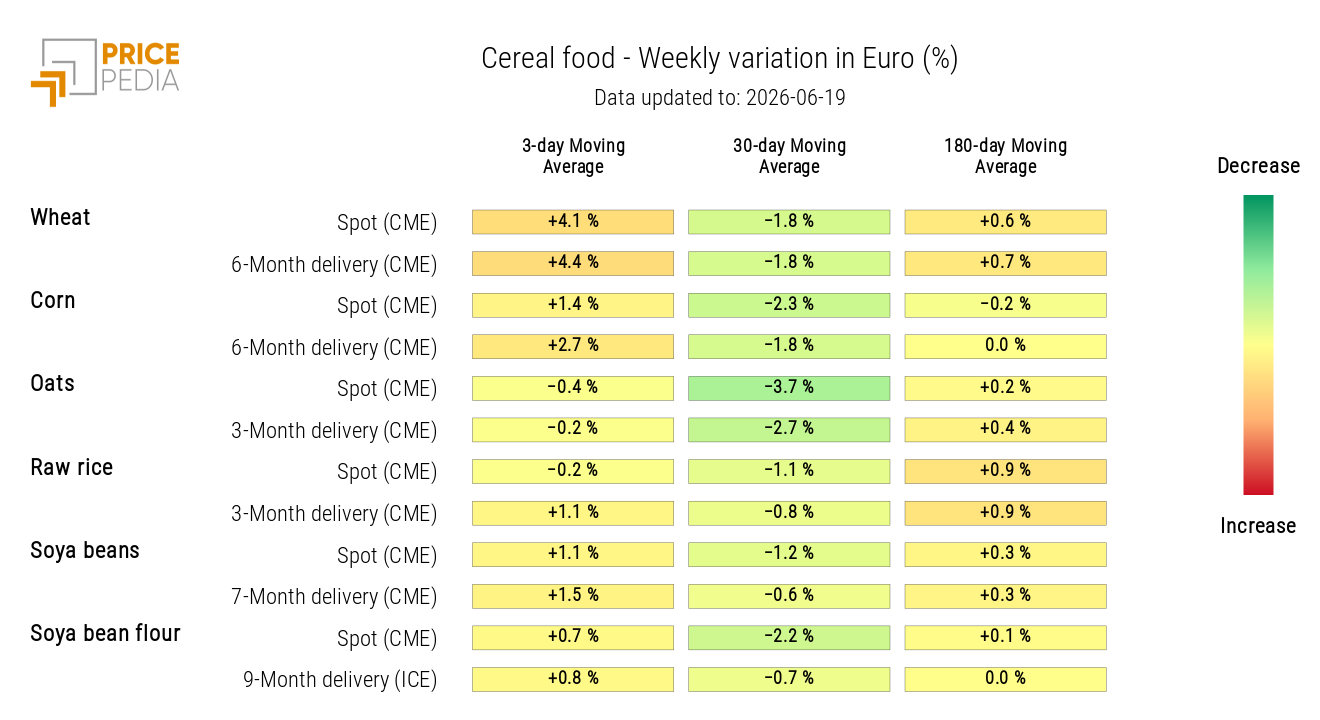
The cereals heatmap shows an increase in wheat prices and a slight decline in oat prices.
HeatMap of cereal prices in euros
TROPICAL PRODUCTS
The tropical heatmap highlights weekly increases in coffee and cocoa prices.
HeatMap of tropical food prices in euros
OILS
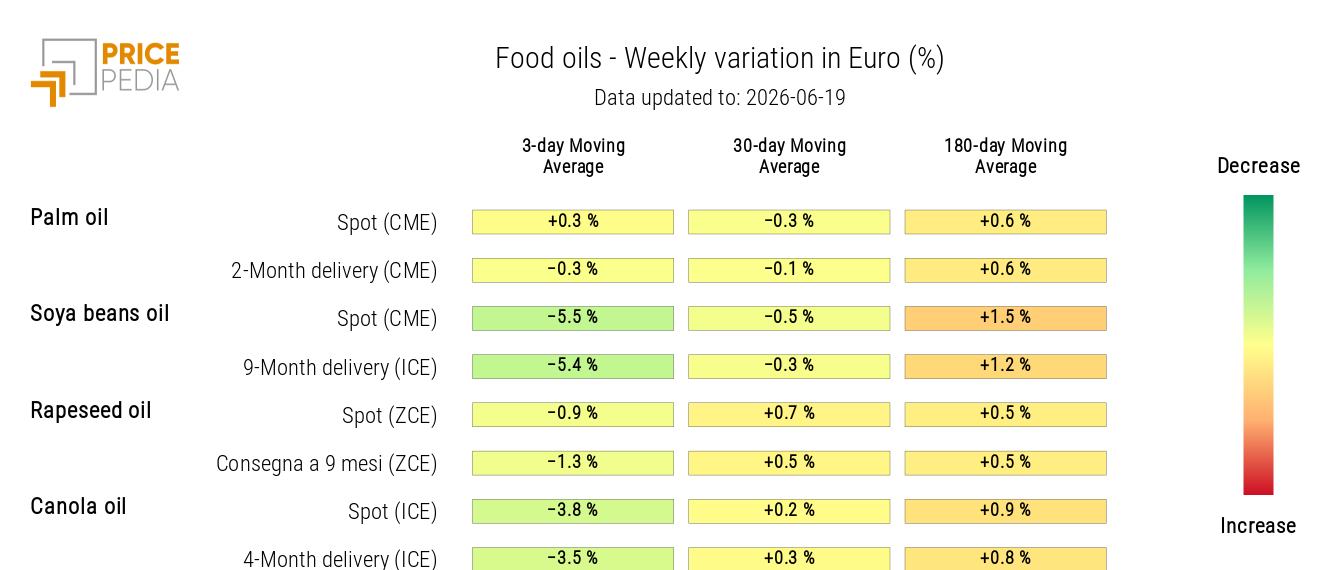
Heatmap analysis shows a weekly decline in soybean oil and canola oil prices.
HeatMap of edible oil prices in euros
You may be interested in:

From Hormuz to Bab el-Mandeb, tensions are rising over energy commodity prices
Published by Luca Sazzini. .
Conjunctural Indicators Commodities Financial WeekIncreased supply is driving down cobalt prices [ Read all ]

China economic update July 2026
Published by Luca Sazzini. .
Conjunctural Indicators Global Economic TrendsThe temporary decline in energy prices halts the rise in Chinese commodity prices [ Read all ]

Geopolitical tensions and tight supply are supporting commodity markets
Published by Luca Sazzini. .
Conjunctural Indicators Commodities Financial WeekSupply risks are driving up prices for energy, metals, and cereals [ Read all ]