Geopolitical developments continue to be the focus of attention in the global commodities markets
The divergence in financial commodity prices continues
Published by Luca Sazzini. .
Conjunctural Indicators Commodities Financial WeekThe United States and Iran have reached a preliminary agreement on a peace memorandum that provides for a 60-day extension of the ceasefire. During the truce, Iran will clear the Strait of Hormuz of mines within 30 days and fully reopen navigation, restoring free and unrestricted maritime transit, similar to the period before the conflict.
Iran will also commit not to develop nuclear weapons, and negotiations on the Iranian nuclear program will be launched, with the aim of limiting uranium enrichment and ensuring oversight of stockpiles by the International Atomic Energy Agency (IAEA).
For their part, the United States will withdraw its military forces from areas closest to Iran, lift the naval blockade on Iranian ports, and begin a gradual release of part of the Iranian assets currently frozen.
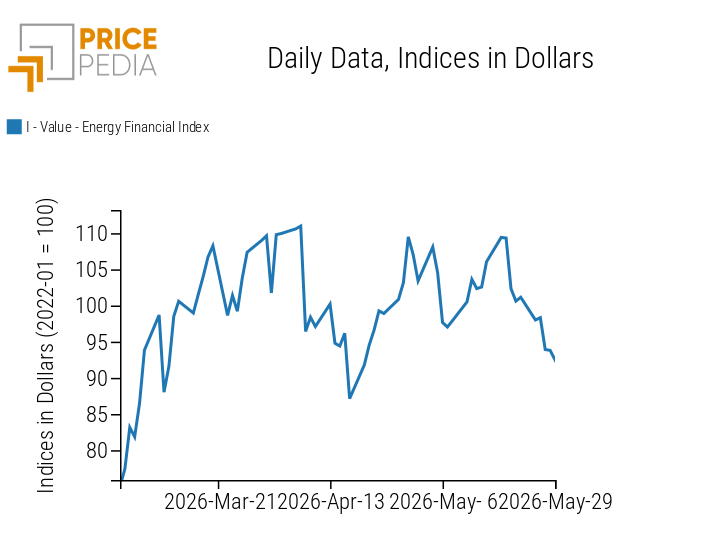
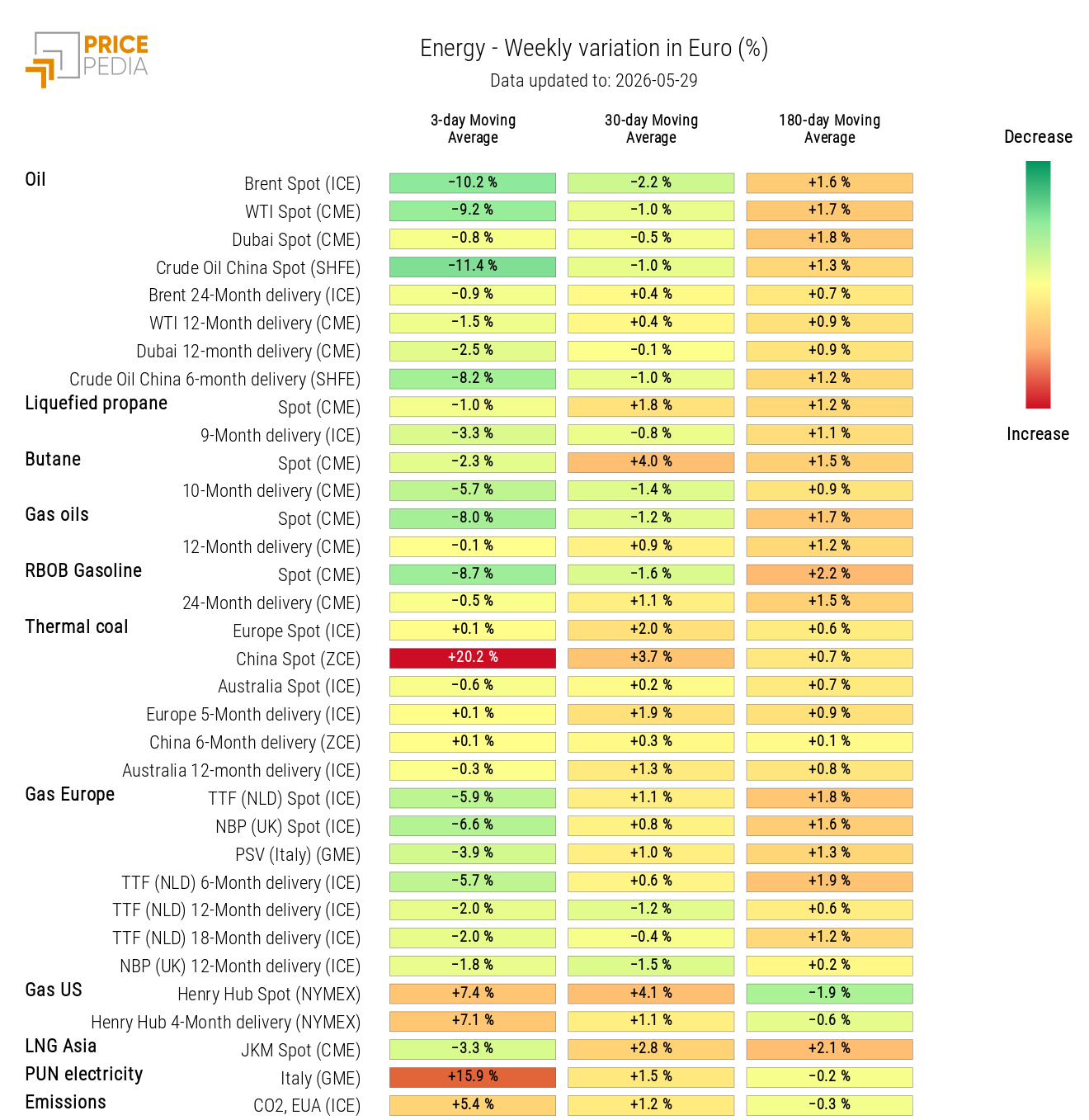
Financial markets in energy commodities have reacted with optimism to the news, with the price of Brent oil moving back toward $90 per barrel, despite significant uncertainty remaining. At present, the memorandum has not yet been officially approved, and the ceasefire has already been compromised by several violations.
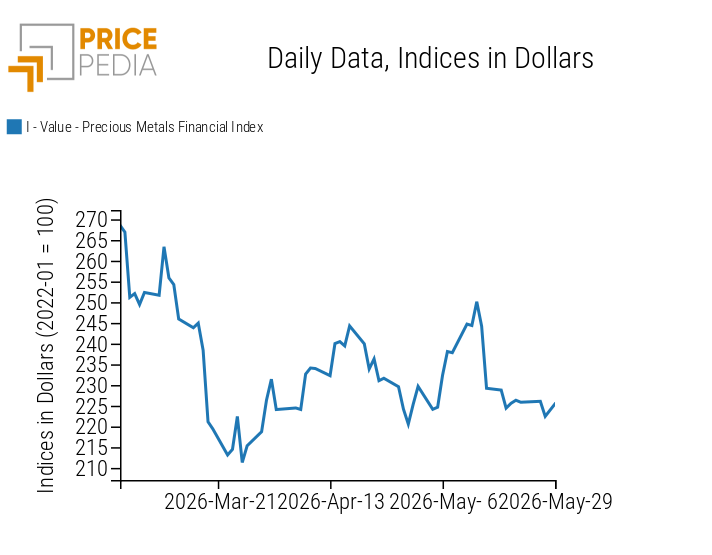
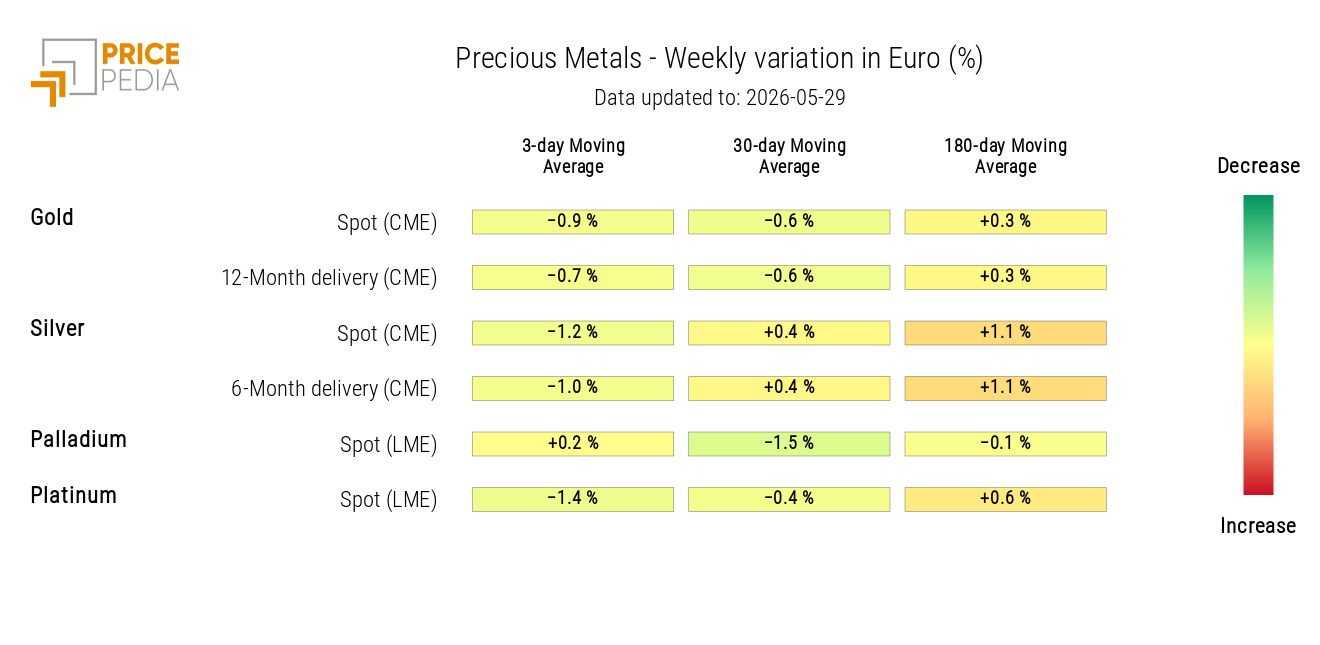
Financial prices of precious metals continue their correction phase, driven by expectations of restrictive monetary policies, recording only a slight rebound following the agreement. Inflation remains high both in the United States and in Europe, and in the short term there are no signs of a slowdown in price growth dynamics.
Concerns related to inflationary pressures are significantly affecting the performance of precious metals, with gold having fallen by -15% since the beginning of the conflict, interrupting the previous rally.
The industrial metals sector continues to be characterized by a price growth trend, supported both by the energy transition and increased defense spending. Over the past week, a slight decline in ferrous metal prices was observed, more pronounced in the Chinese market, while non-ferrous metals remained relatively stable.
The performance of non-ferrous metals was mainly supported by rising prices of aluminum, both in alloy and raw metal form, and tin. The increase in aluminum is attributed to reports of possible Chinese export restrictions linked to growing risks to China’s bauxite supply from Guinea.
The rise in tin is instead due to supply-side tensions in Indonesia and Myanmar, as well as strong demand from the soldering sector for the electronics industry, itself supported by the development of infrastructure for AI-related data centers.
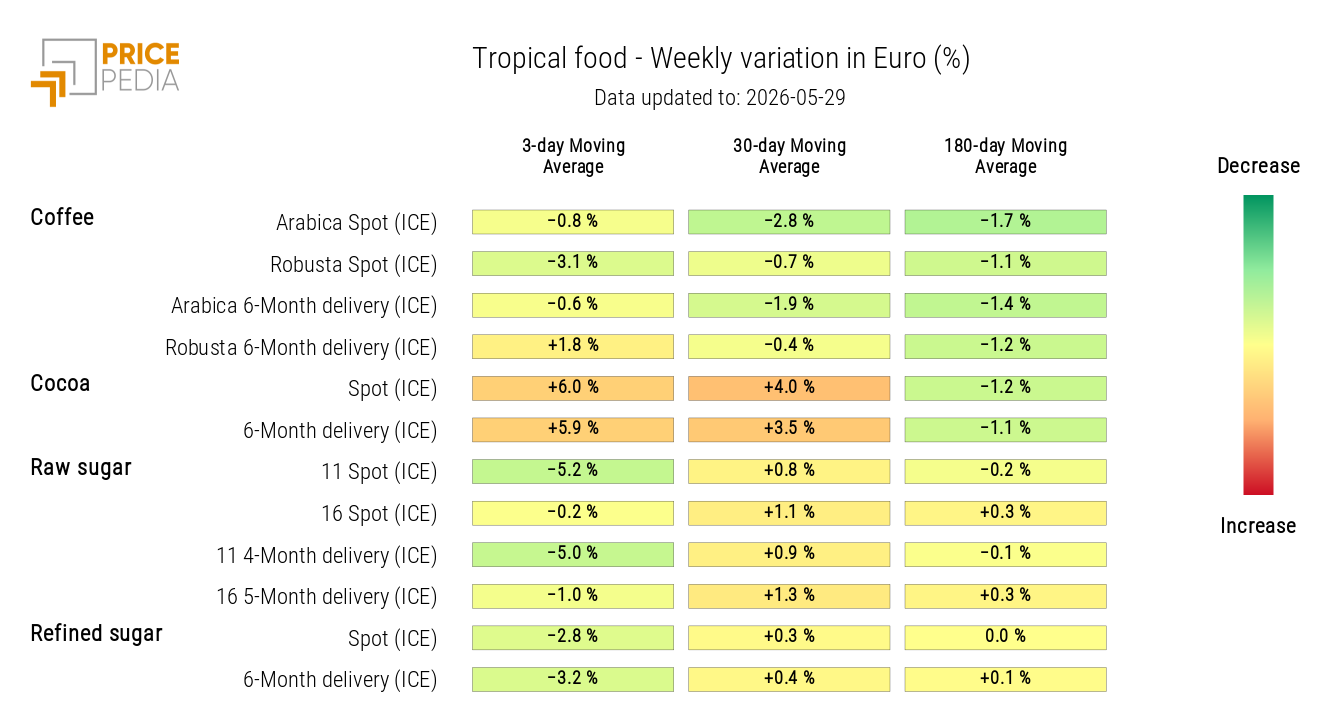
In the food sector, there was a weekly increase in prices of oils, a slight decline for cereals, and strong contrasting fluctuations for tropical commodities, which remain the most volatile. In particular, there was a significant rebound in cocoa prices, caused by rising risks linked to a possible El Niño phenomenon and the spread of black pod disease, a fungal infection affecting cocoa plants.
NUMERICAL APPENDIX
ENERGY
The PricePedia financial index of energy products shows a decline in prices following the possible ceasefire agreement between the United States and Iran.
PricePedia Financial Index of energy prices in US dollars
The energy heatmap highlights a strong weekly decline in petroleum product prices.
HeatMap of energy prices in euros
PRECIOUS METALS
The financial index of precious metals continues its downward trend in prices, driven by expectations of restrictive monetary policies.
PricePedia Financial Index of precious metals prices in US dollars
Analysis of the heatmap shows a slight general decline in precious metals prices.
HeatMap of precious metals prices in euros
FERROUS METALS
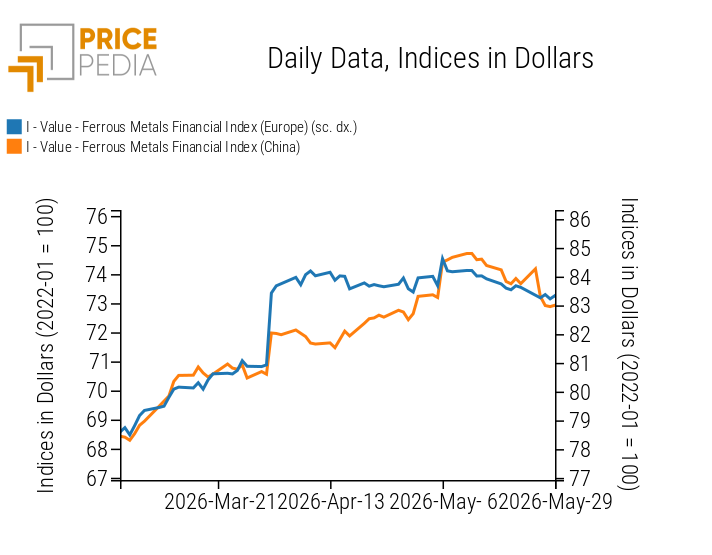
Financial indices of ferrous metals show a weekly decline in prices, more pronounced in the Chinese market.
PricePedia Financial Indices of ferrous metals prices in US dollars
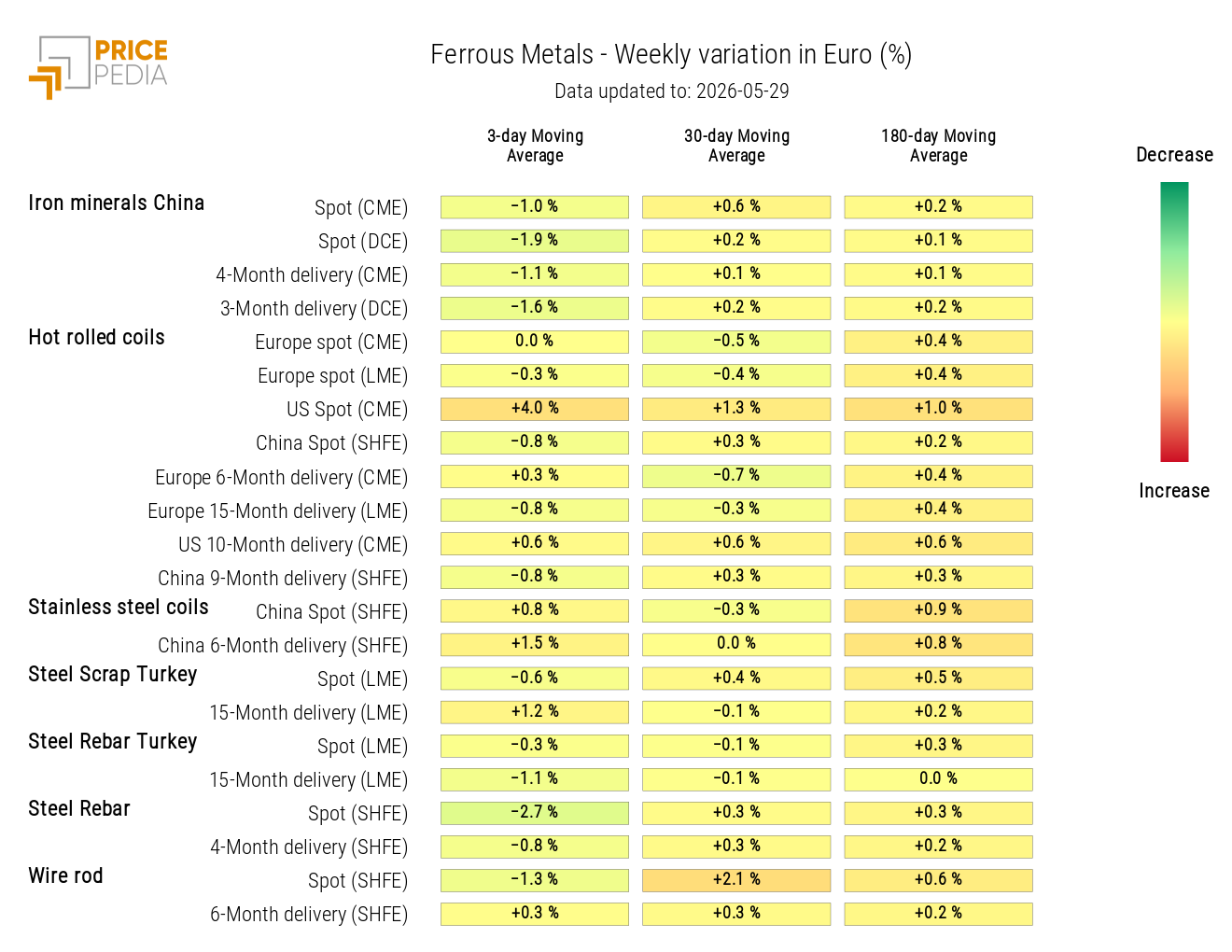
Heatmap analysis shows a weekly increase in the three-day moving average of the US hot-rolled coil continuous index, alongside a decline in Chinese iron ore and steel rebar prices.
HeatMap of ferrous metal prices in euros
Do you want to stay up-to-date on commodity market trends?
Sign up for PricePedia newsletter: it's free!
NON-FERROUS INDUSTRIAL METALS
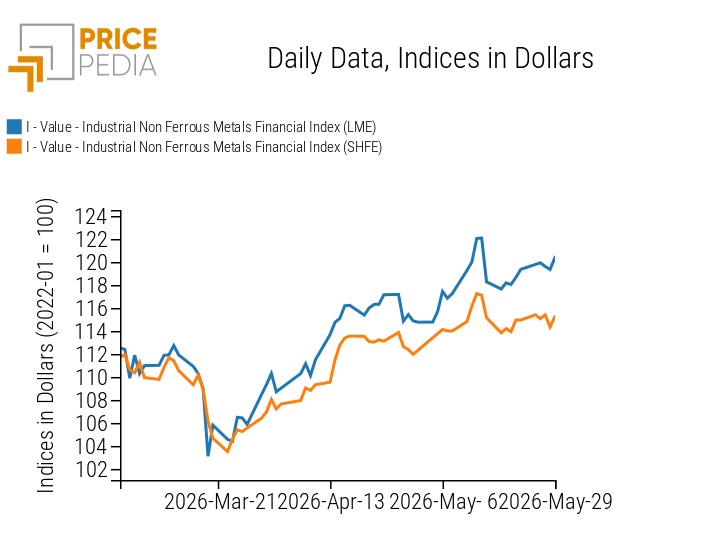
The two non-ferrous metals indices show weekly fluctuations that do not alter their long-term trend.
PricePedia Financial Indices of non-ferrous industrial metals prices in US dollars
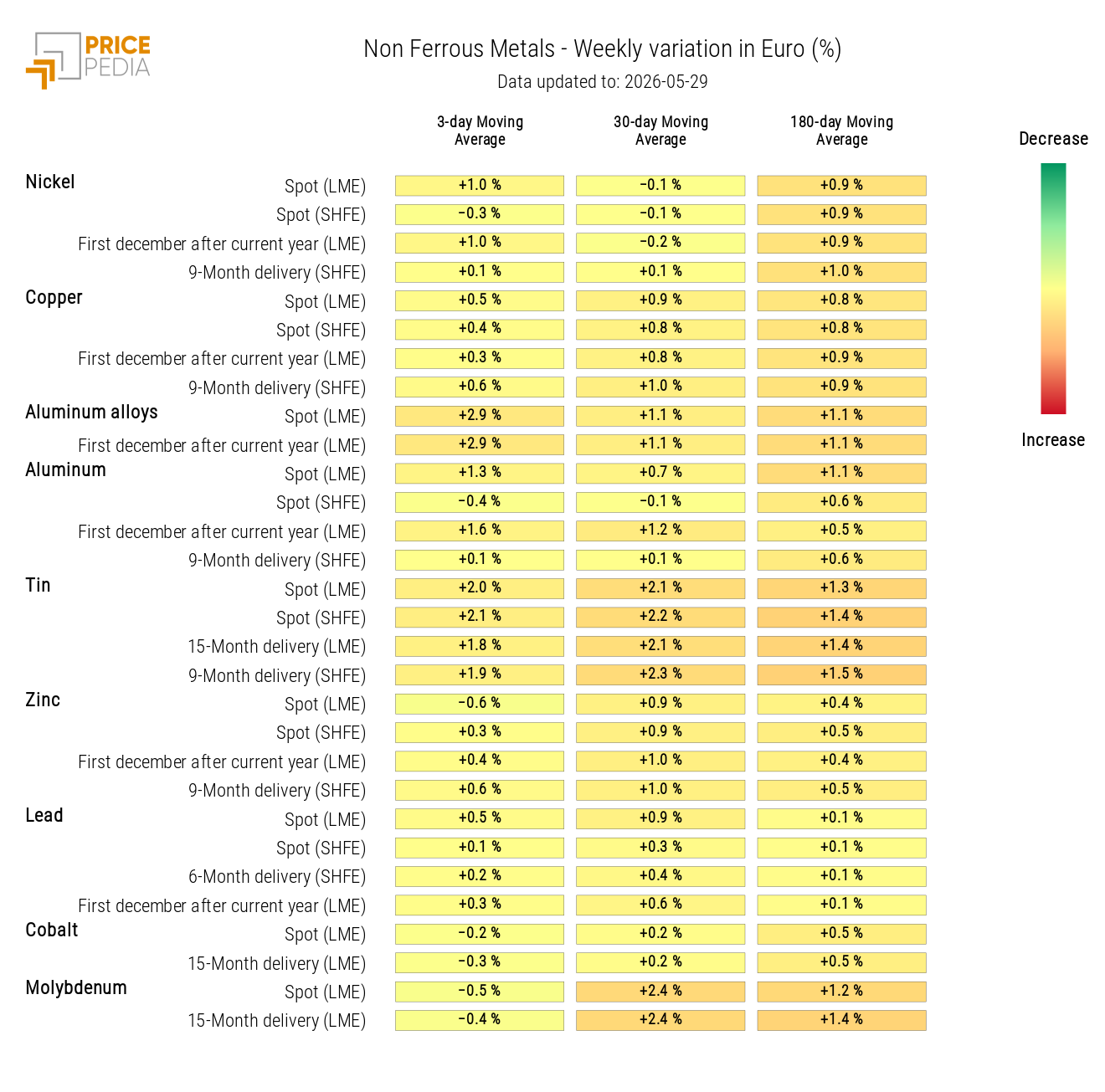
Heatmap analysis of non-ferrous metals shows an increase in prices of aluminum alloys and tin.
HeatMap of non-ferrous metal prices in euros
FOOD
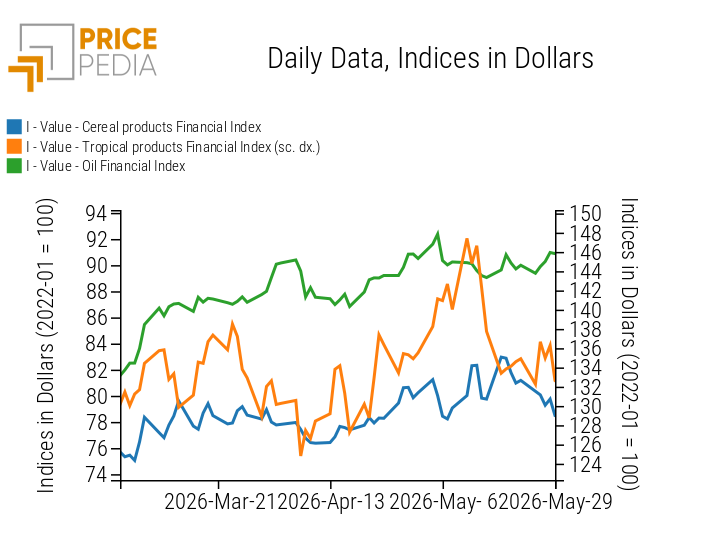
Aside from price fluctuations, the cereals index shows a decline in prices, while the oils index shows a slight increase.
PricePedia Financial Indices of food prices in US dollars
CEREALS
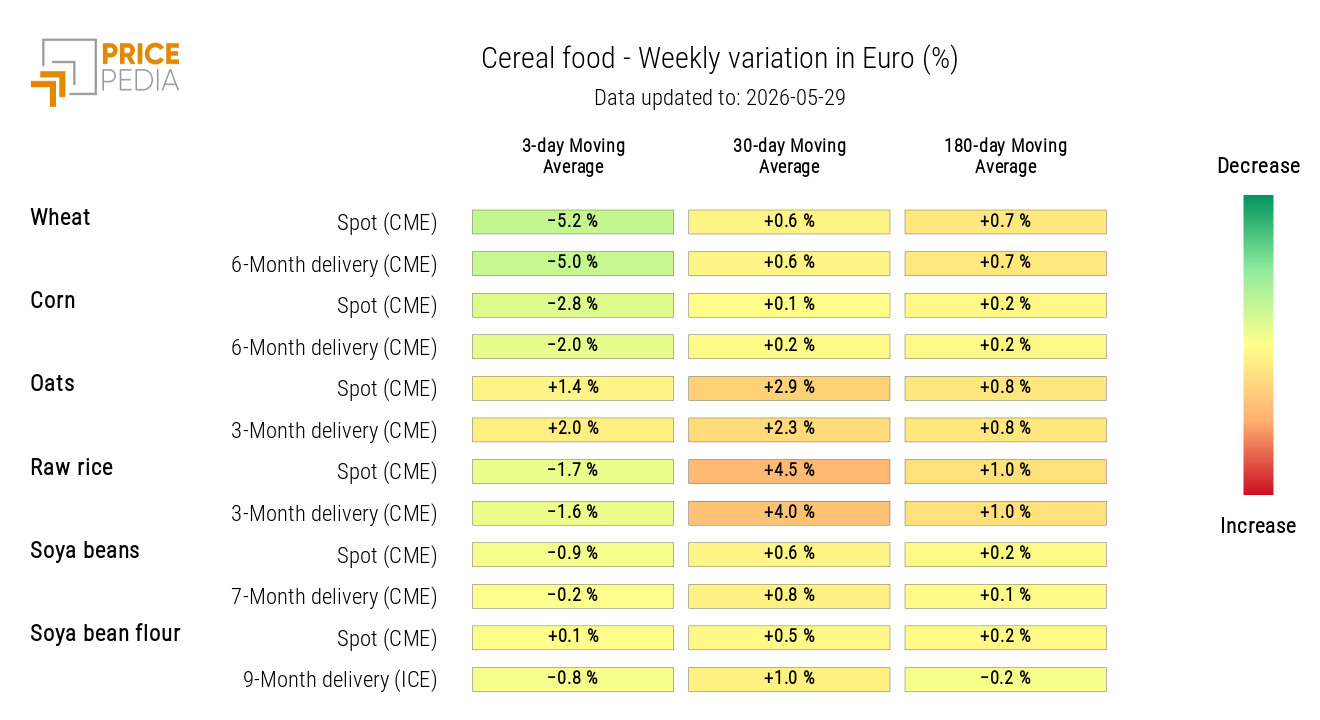
The cereals heatmap shows a decline in wheat and corn prices, while oat prices are increasing.
HeatMap of cereal prices in euros
TROPICAL COMMODITIES
The tropical commodities heatmap shows a weekly rebound in cocoa prices and a decline in sugar prices.
HeatMap of tropical food prices in euros
OILS
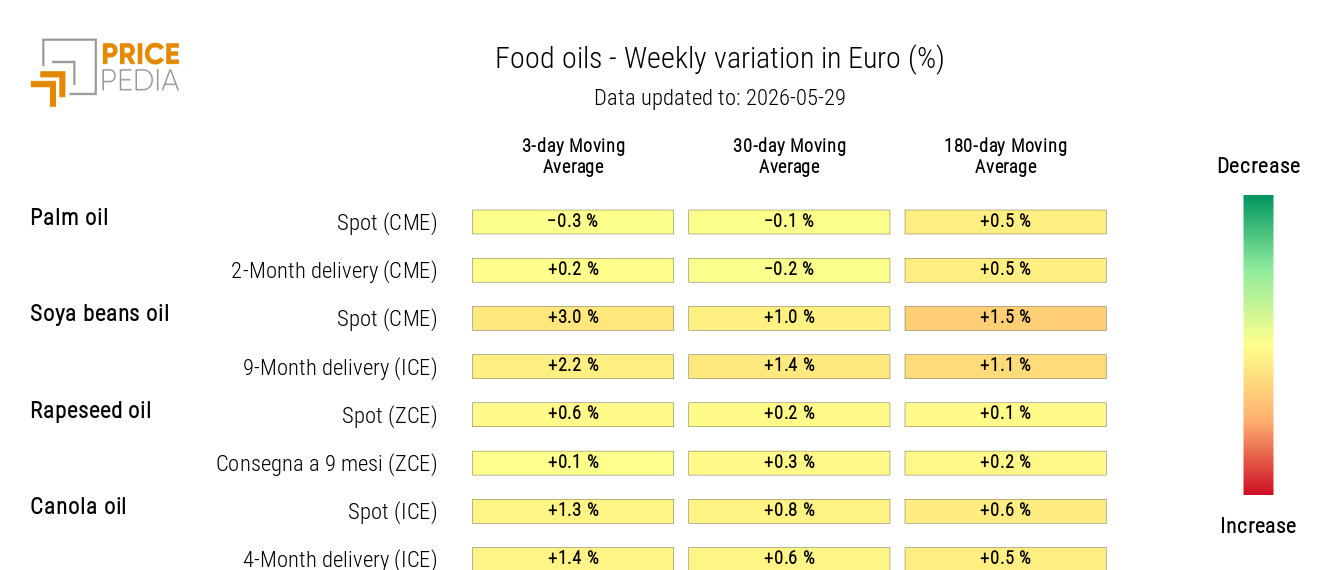
The oils heatmap shows a slight increase in soybean oil and canola oil prices.
HeatMap of edible oil prices in euros
You may be interested in:

Commodity prices between geopolitics and supply imbalances
Published by Luca Sazzini. .
Conjunctural Indicators Commodities Financial WeekWeak Chinese demand is pushing down prices for ferrous metals [ Read all ]

Expectations of tighter monetary policy are weighing on commodity markets
Published by Luca Sazzini. .
Conjunctural Indicators Commodities Financial WeekThe decline in prices is affecting most sectors [ Read all ]

Commodity markets between supply risks and geopolitical uncertainty
Published by Luca Sazzini. .
Conjunctural Indicators Commodities Financial WeekThe strength of the U.S. economy is bolstering expectations of a more restrictive monetary policy [ Read all ]