What factors are influencing commodity prices in the financial markets?
Aluminum and zinc: LME prices exceed SHFE prices
Published by Luca Sazzini. .
Conjunctural Indicators Commodities Financial WeekIn recent months, financial commodity prices have been following increasingly heterogeneous dynamics.
The energy sector continues to be characterized by high volatility, strongly influenced by developments in the geopolitical context, which confirms itself as the main driver of price dynamics in the short term. This week as well, in fact, the rebound in oil prices has been supported by the intensification of geopolitical tensions, following the rejection by the United States of the Iranian peace proposal.
The longer the closure of the Strait of Hormuz persists, the greater the likelihood that energy prices will remain at relatively high levels. The Executive Director of the International Energy Agency (IEA) has described the current energy crisis as the most severe ever recorded in history.
Despite these tensions, financial markets continue to price in a underlying bearish trend for oil prices, driven by expectations of a reduction in future demand and the possibility of a resolution of the conflict in Iran by the summer. As of today, Brent futures at 1 year are trading around $80 per barrel: although still above the February spot price of $70 per barrel, they are nonetheless 25% lower than current levels.
The precious metals market is increasingly diverging from the trend in energy commodities. Since the outbreak of the war in the Persian Gulf, the correlation between PricePedia indices for energy and precious metals has become strongly negative, standing at -0.78 on a theoretical maximum of 1. This dynamic reflects financial market concerns about an acceleration in energy-driven inflation, which could prompt central banks to adopt more restrictive monetary policies to contain its effects. In April, in fact, the annual inflation rate in the United States and the euro area rose to 3.8% and 3%, respectively, increasing from the previous month and significantly above the 2% target.
If this trend continues, central banks may further postpone the next interest rate cut, while increasing the likelihood of potential rate hikes. Such a scenario would reduce the attractiveness of traditional safe-haven assets compared to government bonds, which, in addition to being considered safe instruments, offer higher yields as interest rates rise.
In the coming months, however, precious metals are expected to maintain an upward trend, supported by expectations of still-strong gold demand from central banks.
The industrial metals sector continues its upward price trend, both for ferrous and non-ferrous metals, driven mainly by expectations of demand growth linked to the energy transition and rearmament.
In the non-ferrous segment, the price dynamics have been further strengthened by recent mining supply disruptions for several metals and by the growing increase in demand linked to the development of infrastructure required for artificial intelligence data centers.
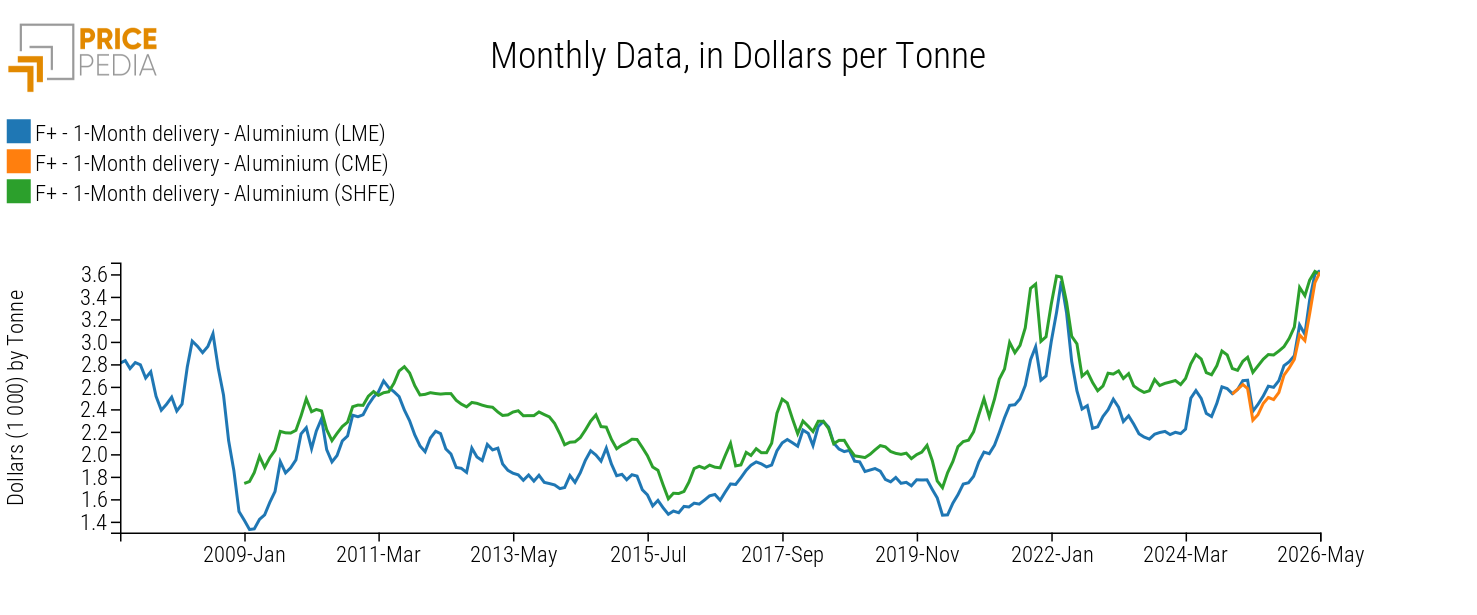
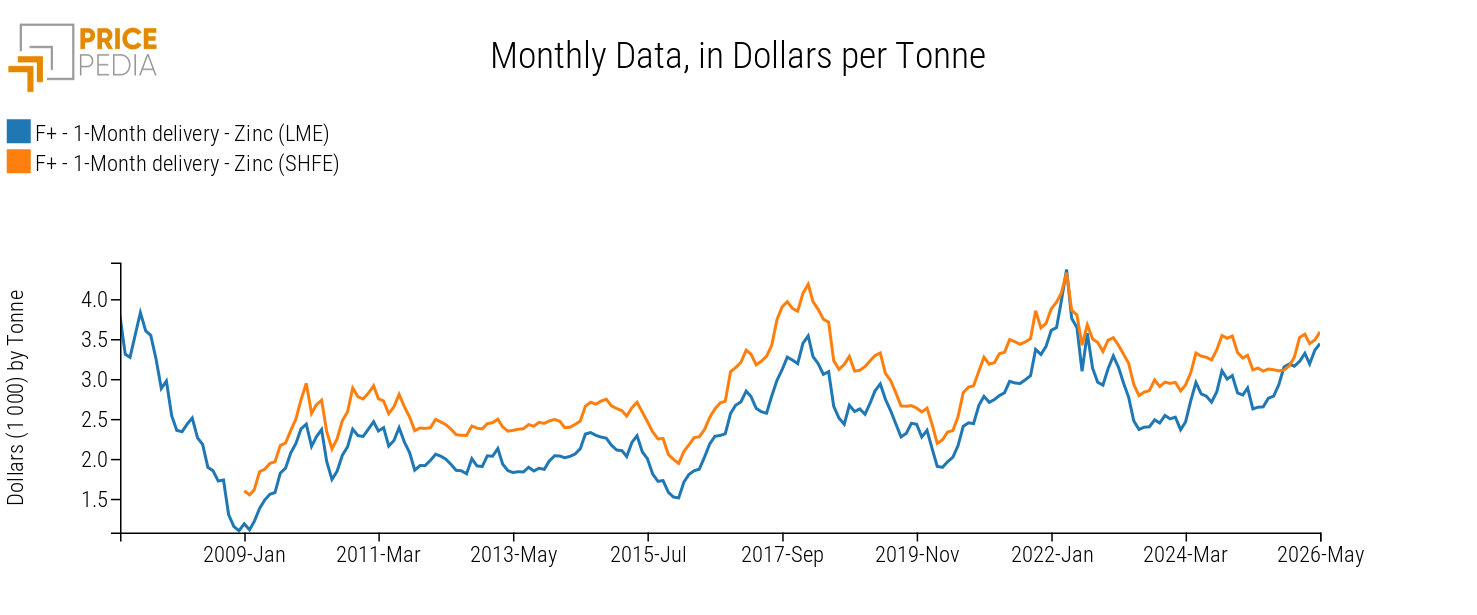
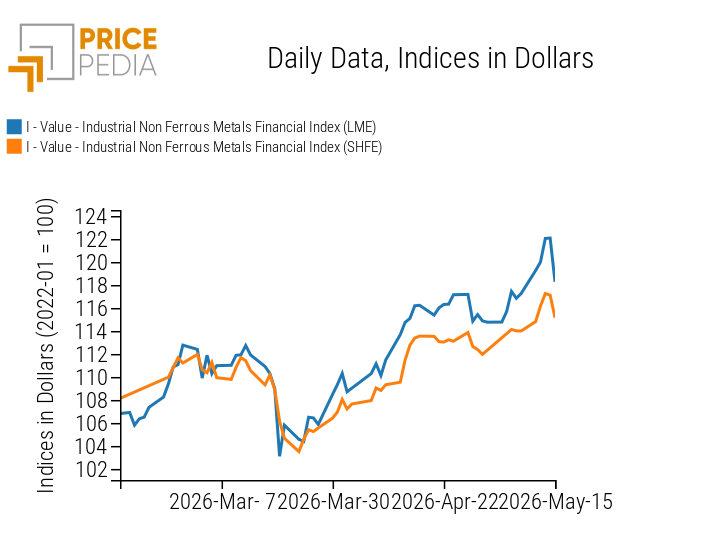
An interesting development emerging in the price dynamics of some non-ferrous metals is the growing divergence between London Metal Exchange (LME) quotations and those of the Shanghai Futures Exchange (SHFE). In recent periods, in fact, aluminum and zinc prices on the LME have exceeded those quoted in Shanghai, even though the latter include VAT and other taxes. This apparent anomaly reflects both differences in inventory levels and the different nature of the reference markets. The LME is a global benchmark, currently characterized by limited physical inventory availability of aluminum and zinc, while the SHFE is a local market, with delivery limited to China, currently characterized by high inventory levels due to excess supply in the regional market.
In the case of aluminum, the supply shortage in the LME market is also affecting quotations on the Chicago Mercantile Exchange (CME). Unlike the Shanghai contract, the CME contract provides for global delivery and is therefore more closely aligned with the international benchmark represented by the LME[1].
The following charts show the comparison between the financial prices of aluminum and zinc across different markets.
| Comparison of financial prices of aluminum | Comparison of financial prices of zinc |
|
|
As shown in the chart analysis, aluminum and zinc prices quoted on the Shanghai exchange have, in almost all cases, remained at levels consistently higher than the corresponding LME quotations. In the case of aluminum, the only exceptions occurred in 2011, 2018, 2022, and in the current phase, characterized by a reduced availability of stocks in LME warehouses. As for zinc, LME prices reached levels comparable to SHFE prices only in 2022 and in the most recent period.
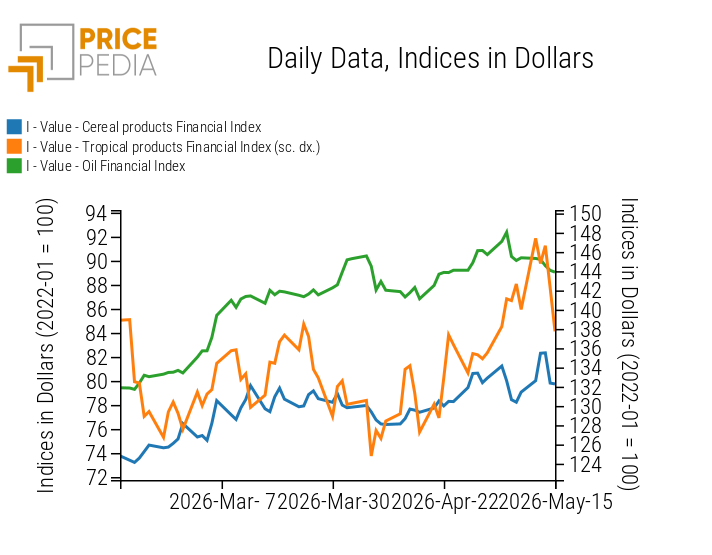
In the food market, financial prices of oils, despite a slight decline this week, remain supported by energy price trends, due to their role as substitute products in biodiesel production. Prices of grains and tropical commodities, on the other hand, are entirely linked to weather forecasts that could affect harvests in the coming seasons.
[1] See: Key attributes of the physically deliverable CME Aluminum futures contract.
NUMERICAL APPENDIX
ENERGY
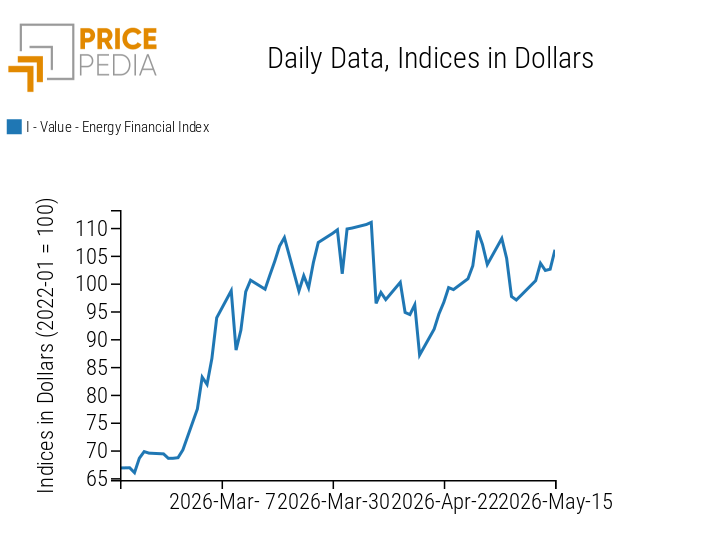
In recent periods, the PricePedia financial index of energy products has recorded continuous changes in direction, depending on the resurgence or easing of geopolitical tensions between the United States and Iran.
PricePedia Financial Index of energy prices in US dollars
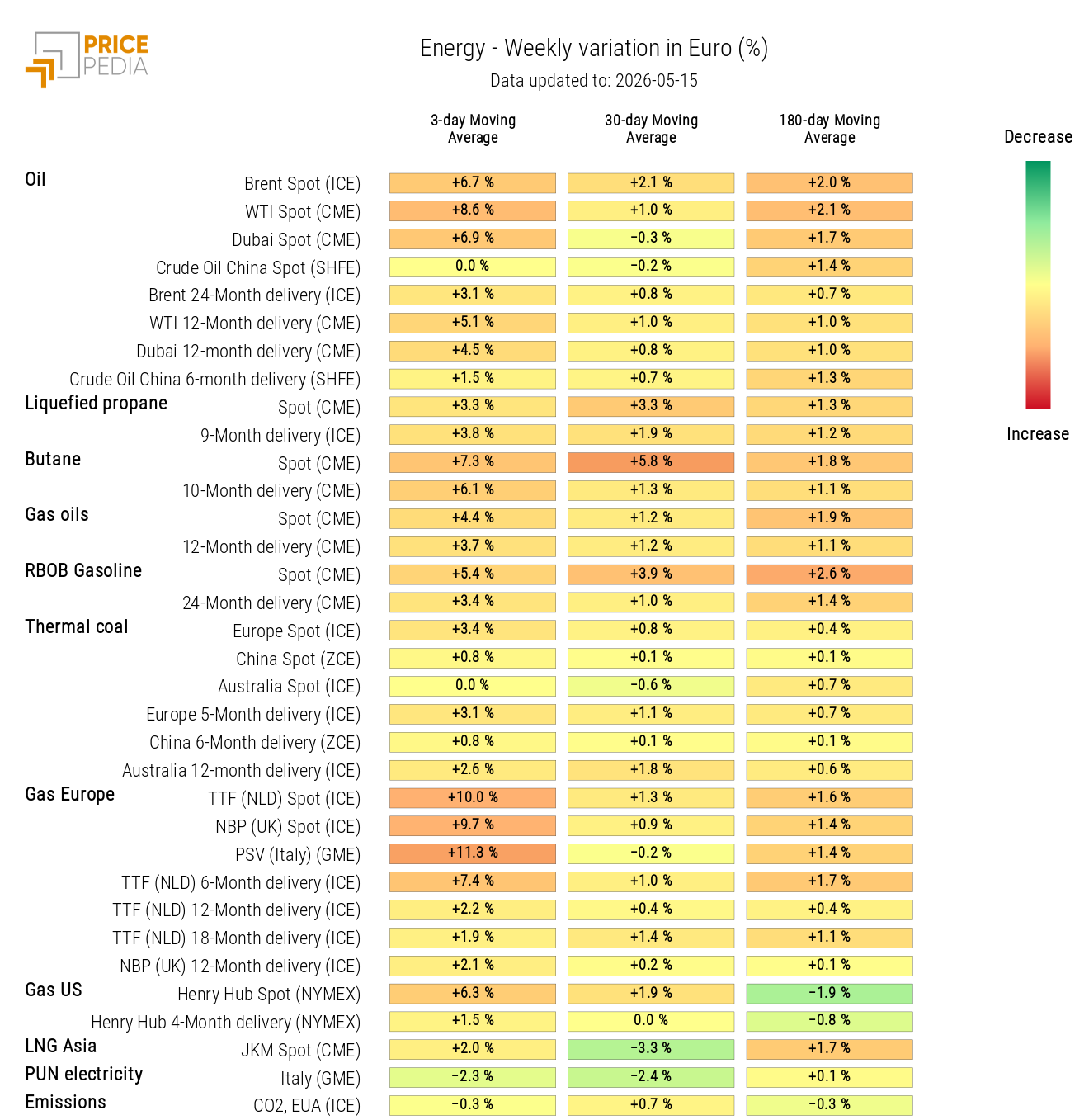
The energy heatmap shows a generalized weekly increase in prices, more pronounced for natural gas and oil.
HeatMap of energy prices in euros
PRECIOUS METALS
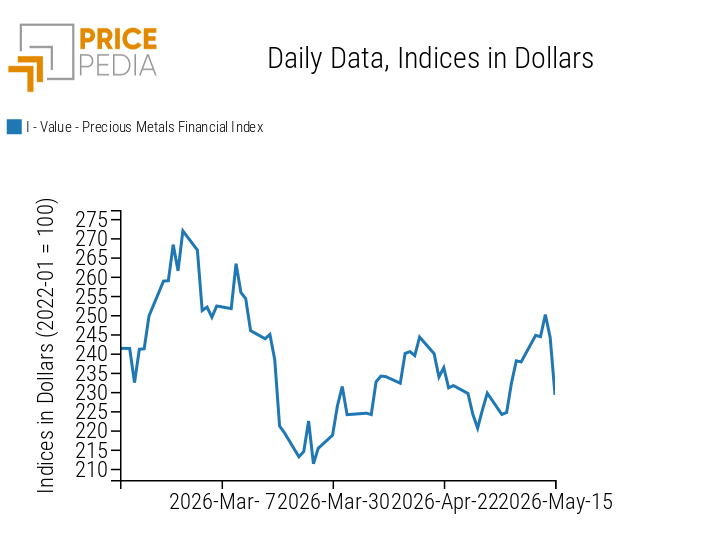
The precious metals financial index closed the week lower due to higher-than-expected US inflation growth.
PricePedia Financial Index of precious metal prices in US dollars
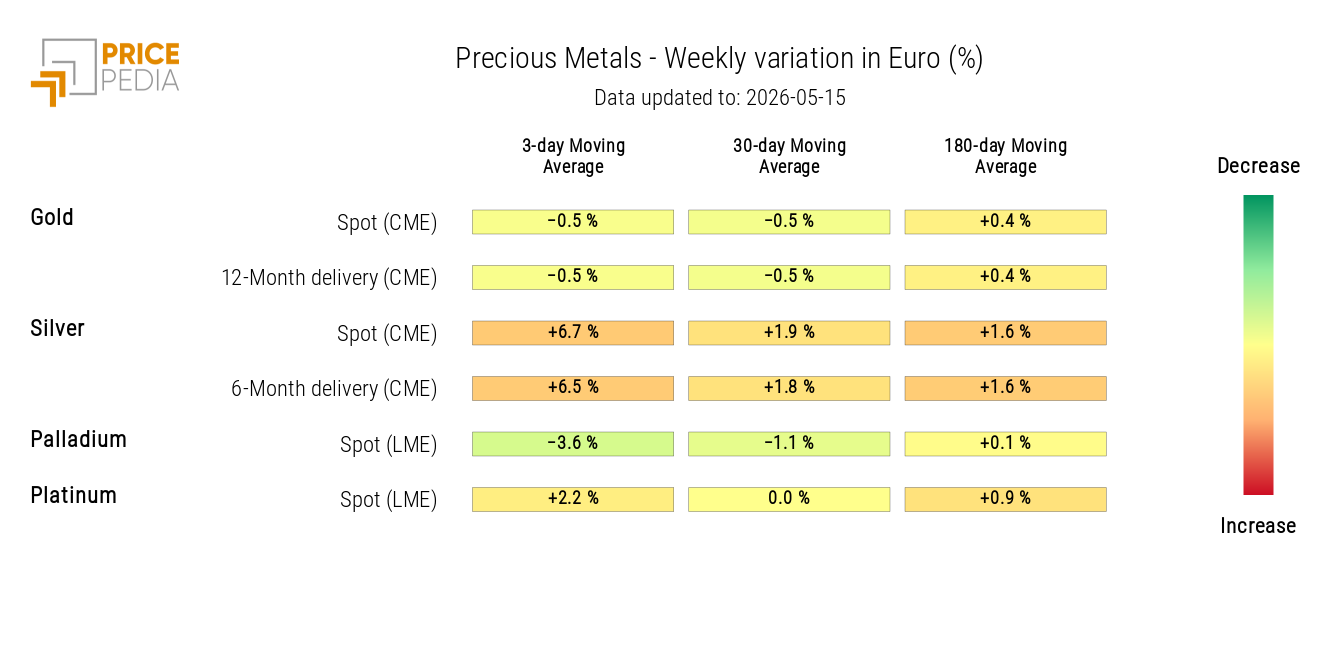
From the heatmap analysis, a weekly increase in the 3-day moving average of silver prices emerges, alongside a drop in palladium prices.
HeatMap of precious metal prices in euros
FERROUS METALS
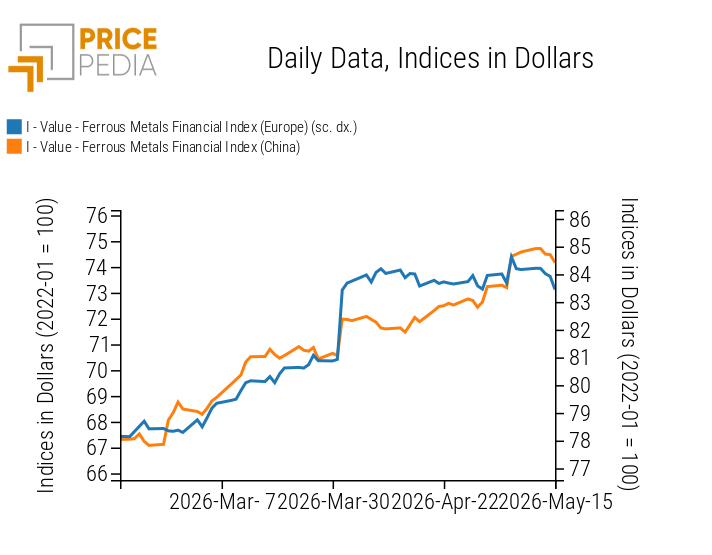
Despite a slight weekly decline, both financial indices of ferrous metals continue to be supported by an upward price trend.
PricePedia Financial Indices of ferrous metal prices in US dollars
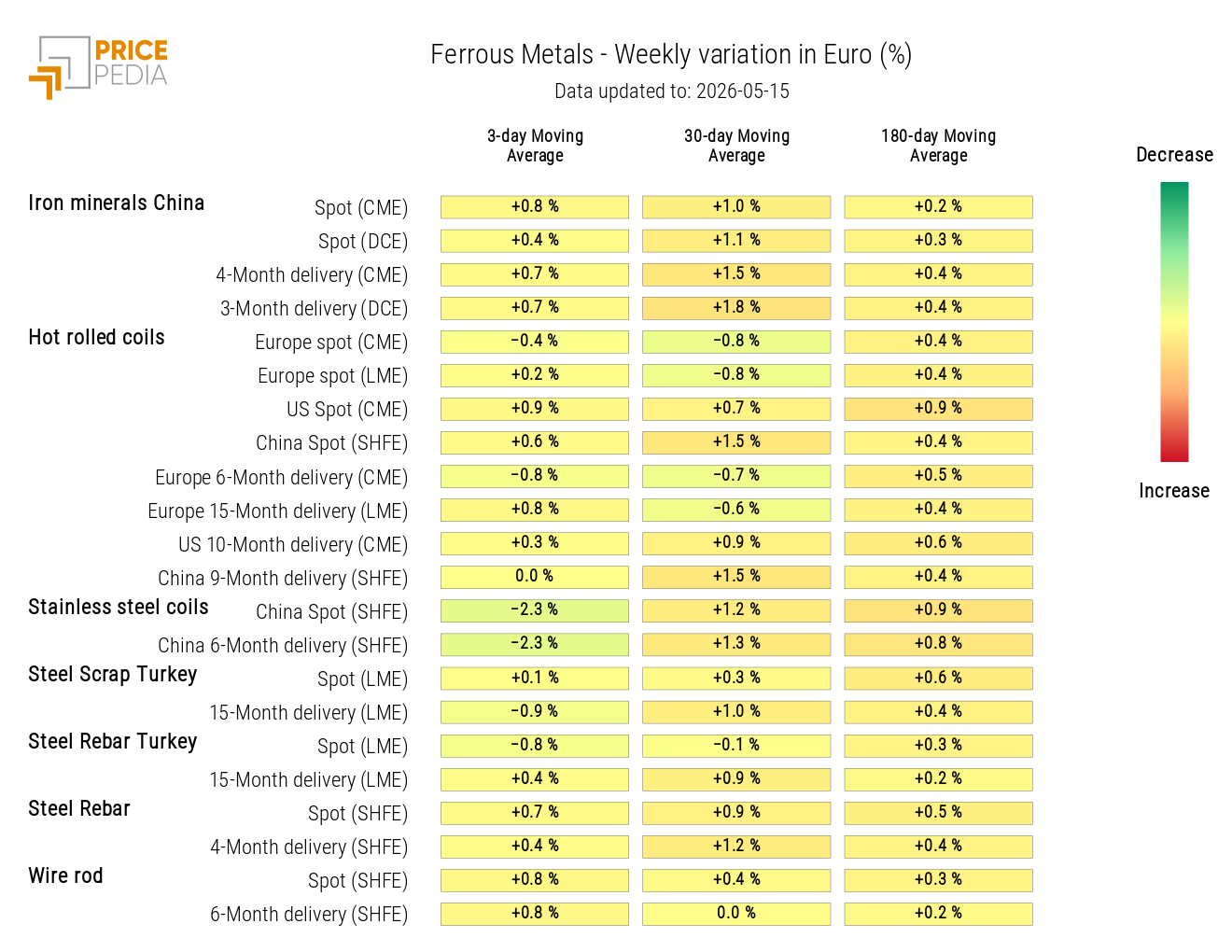
Heatmap analysis shows a weekly decline in stainless steel coil prices.
HeatMap of ferrous metal prices in euros
Do you want to stay up-to-date on commodity market trends?
Sign up for PricePedia newsletter: it's free!
NON-FERROUS INDUSTRIAL METALS
The two financial indices, LME and SHFE, have been increasingly diverging recently, due to the greater scarcity of aluminum and zinc inventories in the LME market.
PricePedia Financial Indices of non-ferrous industrial metal prices in US dollars
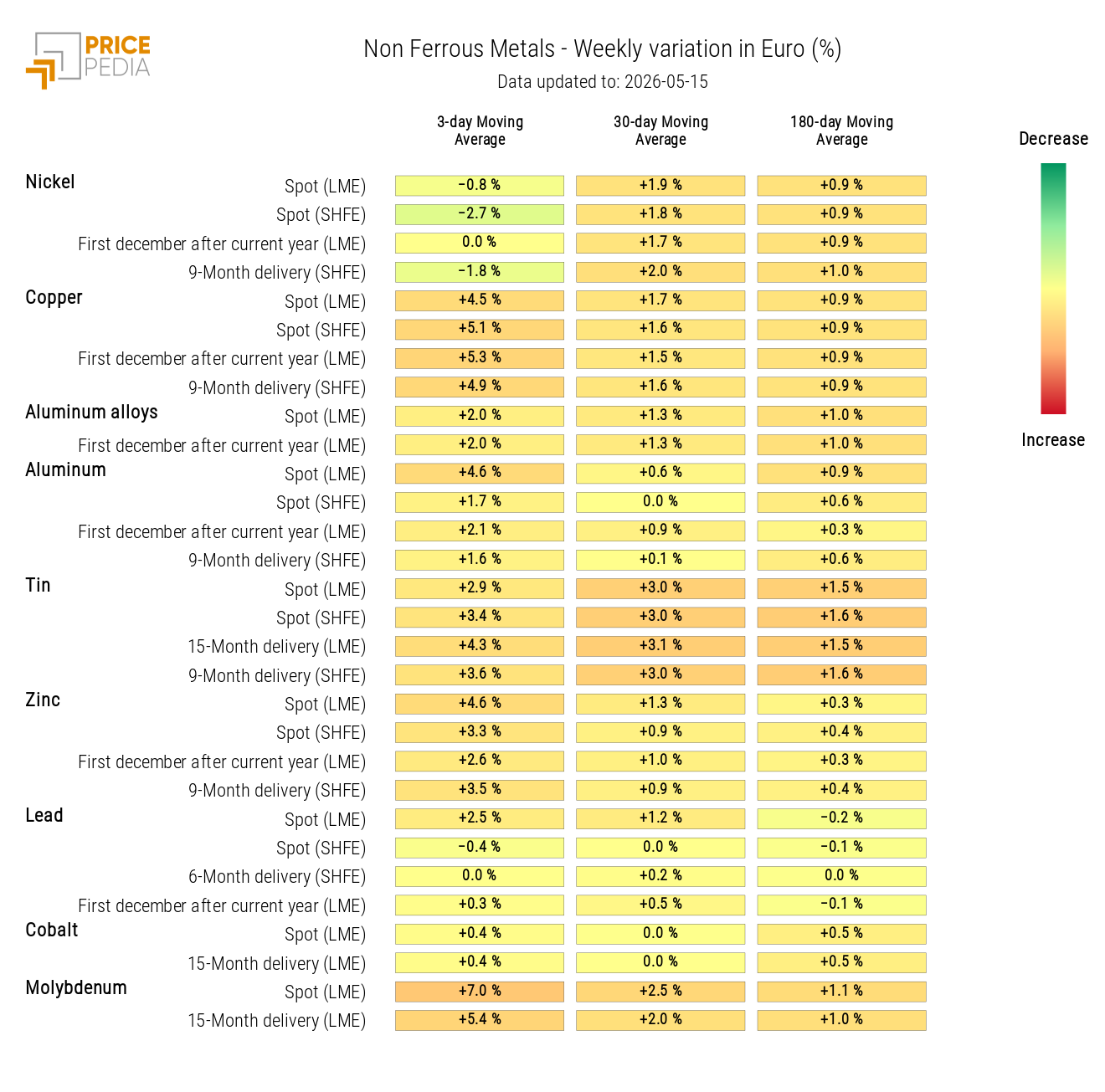
Heatmap analysis of non-ferrous metals shows a generalized increase in prices.
HeatMap of non-ferrous metal prices in euros
FOOD COMMODITIES
Over the past week, the three financial indices for food commodities have shown mixed price dynamics, mainly influenced by weather forecasts.
PricePedia Financial Indices of food commodity prices in US dollars
CEREALS
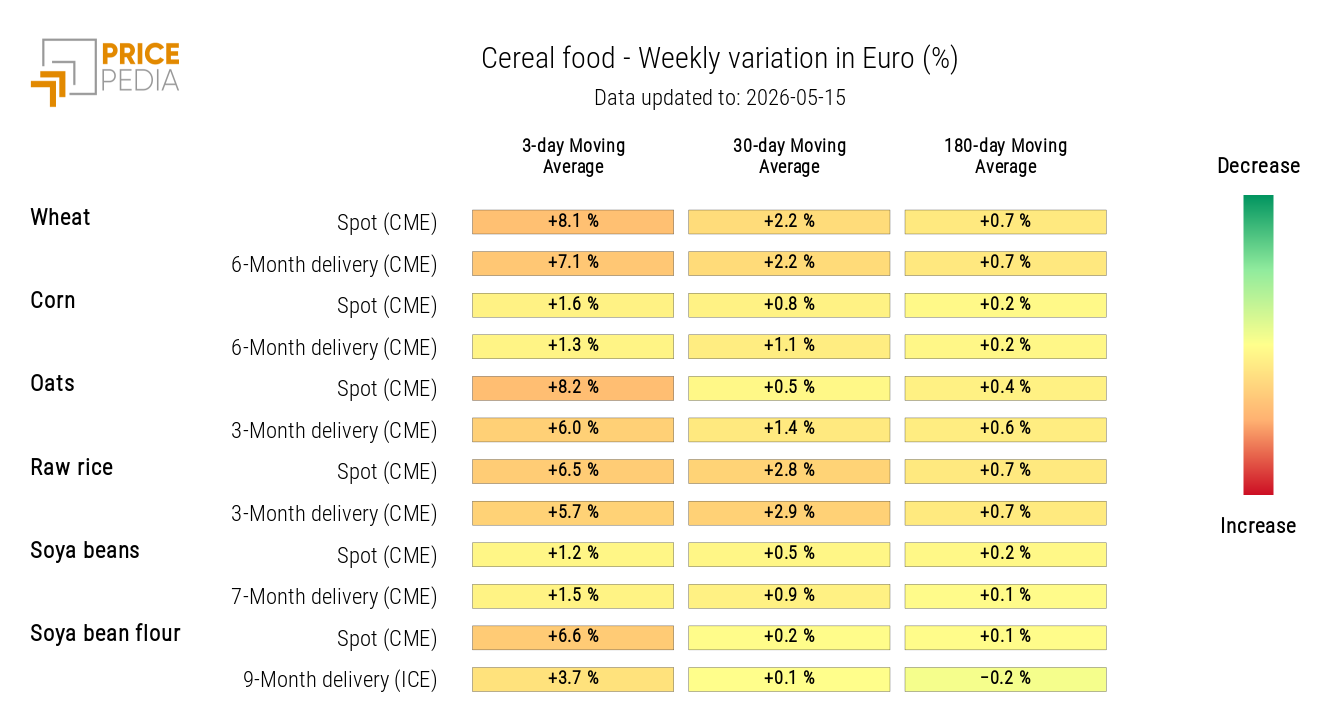
The cereals heatmap shows a generalized weekly increase in prices.
HeatMap of cereal prices in euros
TROPICAL COMMODITIES
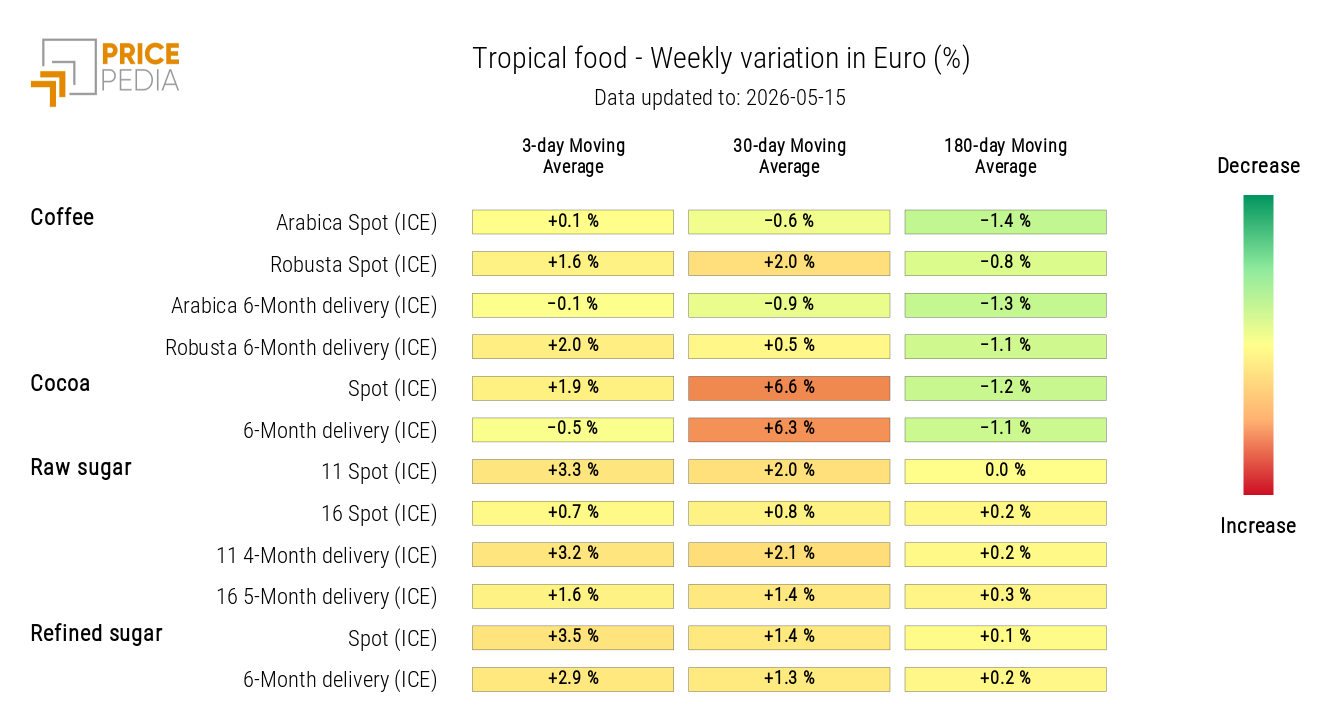
The tropical commodities heatmap shows a weekly increase in the moving average of sugar prices, supported by the recovery in energy markets.
HeatMap of tropical food commodity prices in euros
You may be interested in:

Commodity markets between supply risks and geopolitical uncertainty
Published by Luca Sazzini. .
Conjunctural Indicators Commodities Financial WeekThe strength of the U.S. economy is bolstering expectations of a more restrictive monetary policy [ Read all ]

China economic update August 2026
Published by Luca Sazzini. .
Conjunctural Indicators Global Economic TrendsIncreased competitive pressure is driving down the prices of Chinese commodities [ Read all ]

Uncertainty in the commodity markets remains high
Published by Luca Sazzini. .
Conjunctural Indicators Commodities Financial WeekCommodity prices show divergent trends [ Read all ]