Commodity markets under pressure amid geopolitical risks and trade uncertainties
Financial prices of metals resume their upward trend
Published by Luca Sazzini. .
Conjunctural Indicators Commodities Financial WeekThis week in Geneva, the United States and Iran continued the third round of nuclear talks, with both sides reporting significant progress and expressing their intention to continue negotiations next week in Vienna. However, no nuclear agreement has yet been reached, and the United States continues to strengthen its military presence in the Middle East. This climate of tension is keeping oil spot prices elevated despite bearish fundamentals.
In the event of a positive outcome in negotiations between the United States and Iran, financial operators expect a significant price correction, as prices currently remain supported almost exclusively by geopolitical risk. The market is in fact characterized by a significant supply surplus, which could even widen, as some OPEC members appear willing to increase production starting in April. Meanwhile, data released by the Energy Information Administration (EIA) show a further increase in U.S. oil inventories, intensifying downward pressure on prices.
Despite these factors, Brent recorded a weekly price increase, driven on Friday by further threats from Trump regarding a possible military attack on Iran.
The main risk for the market remains a supply disruption: a potential U.S. intervention could compromise crude flows from the region, calling into question the current oversupply scenario characterizing the market.
High geopolitical risk is also supporting the financial prices of precious metals, which this week followed gains driven by increased uncertainty surrounding U.S. tariffs. After the U.S. Supreme Court declared the global tariffs introduced through the International Emergency Economic Powers Act unlawful, the Trump administration implemented a new temporary 10% tariff on imports for a period of 150 days, invoking Section 122 of the Trade Act of 1974. It also announced its intention to raise the rate to 15%, the maximum level allowed under U.S. law. Meanwhile, the administration is evaluating additional legal and trade instruments to preserve its current protectionist stance. This uncertainty regarding the evolution of U.S. trade policy supported increases in gold and silver prices, which during the week exceeded $5,200 and $90 per ounce respectively.
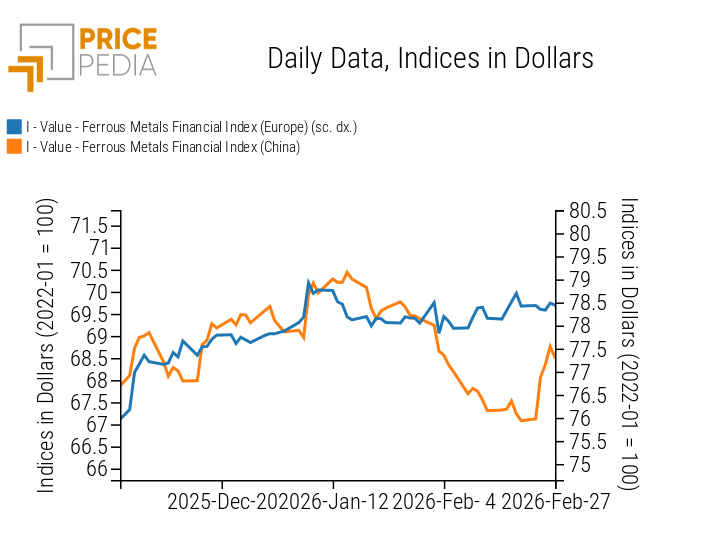
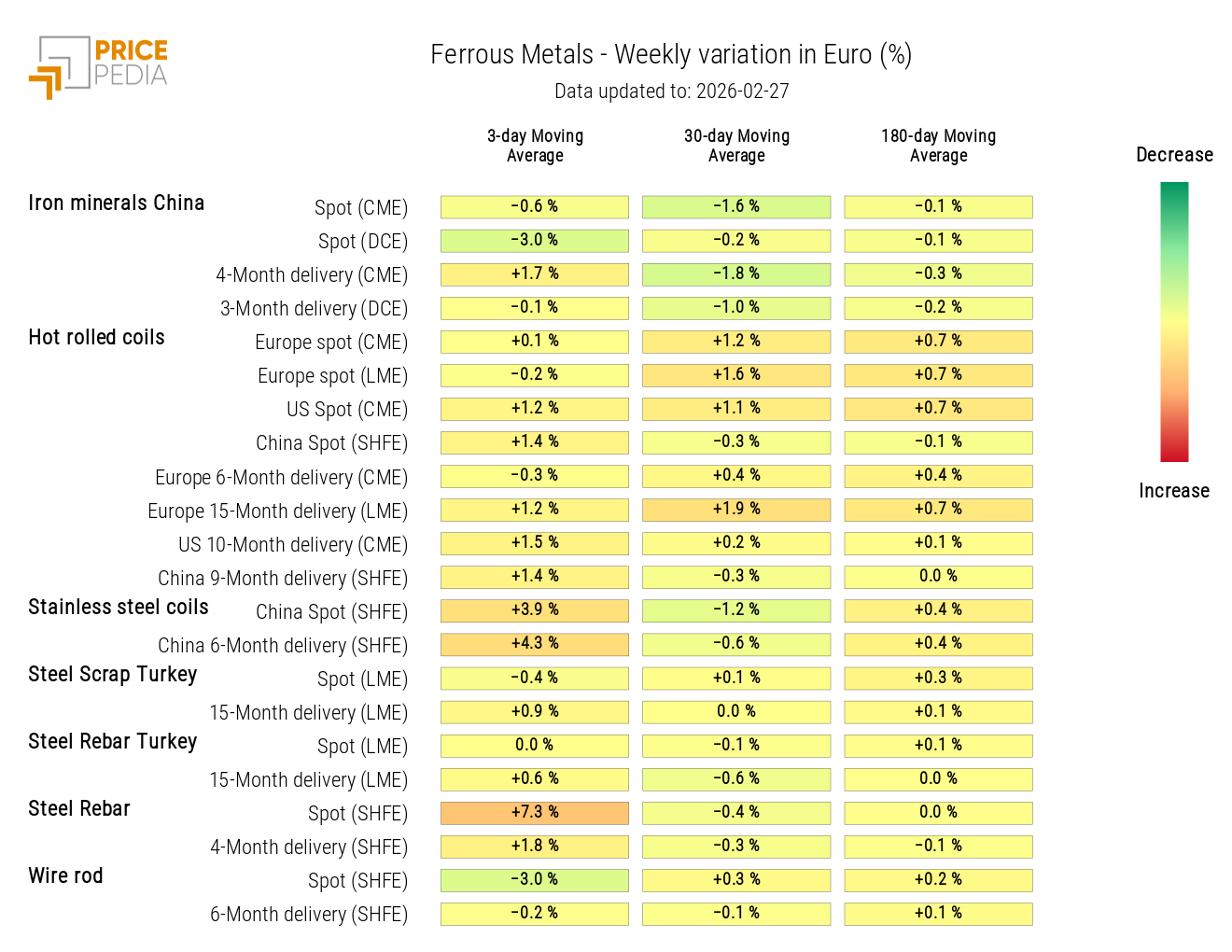
Financial prices of industrial metals also recorded significant increases, although for reasons different from those affecting precious metals. In the ferrous metals segment, increases were mainly concentrated in Chinese markets, while European prices remained relatively stable.
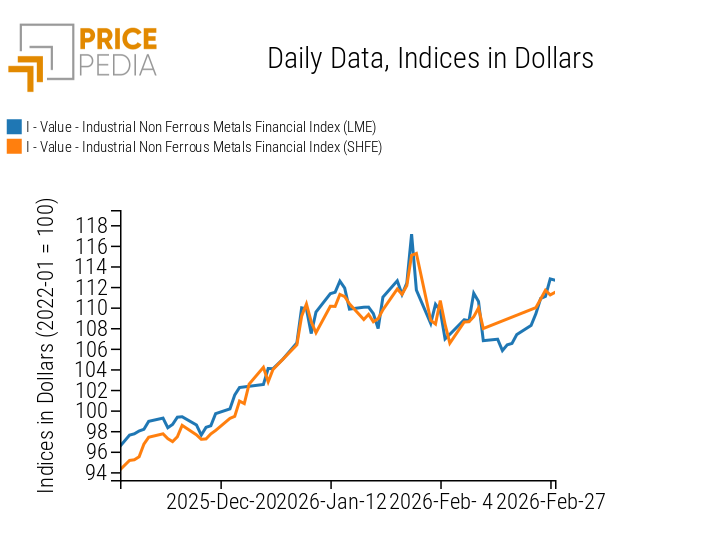
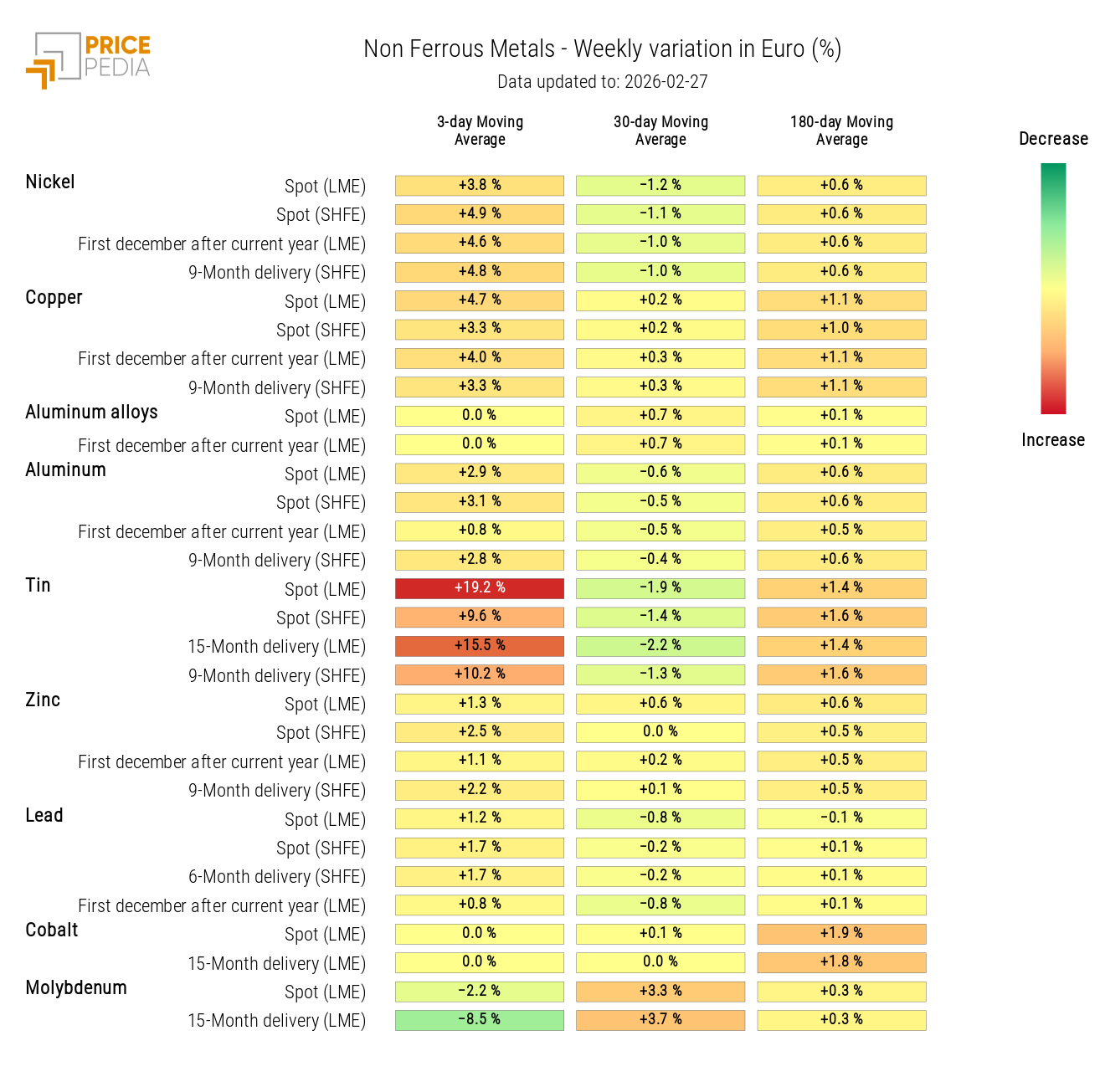
Among non-ferrous metals, generalized price increases were observed, with LME copper rising again above $13,000 per tonne, supported by stronger Chinese demand. The most pronounced increase, however, concerned tin, which on the London Metal Exchange reached new all-time highs above $57,000 per tonne, marking a gain of over 25% compared with last Friday’s close.
EU Debate on the ETS
This week, the debate on the EU Emissions Trading System (ETS) intensified, with ministers from several member states calling for changes to the system to safeguard European competitiveness, emphasizing that “decarbonization should not occur through deindustrialization.”
Key requests include greater carbon price stability, more generous free allowance allocation mechanisms, and tools supporting green investment.
The European Commission plans to propose reforms by the third quarter of 2026, but until then the political and media debate is expected to remain heated. Member states’ positions remain highly divided: some, such as Italy and Germany, are pushing for substantial changes, while others, such as Sweden, defend the current ETS structure as an effective tool to support the energy transition.
NUMERICAL APPENDIX
ENERGY
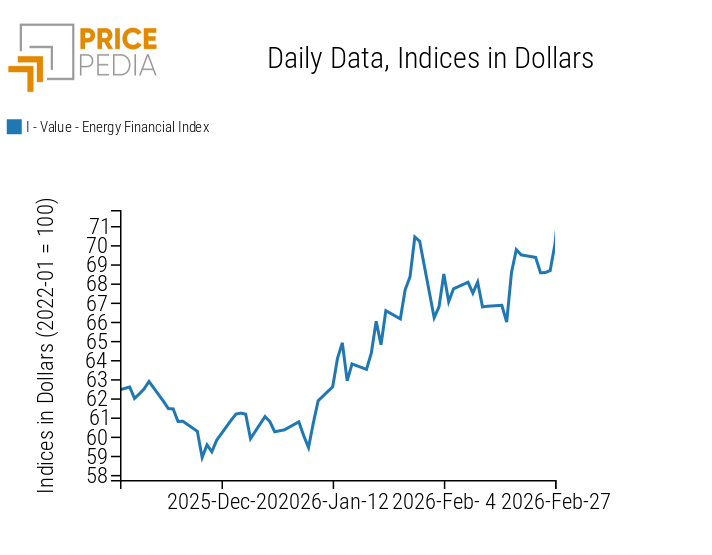
The PricePedia financial energy index recorded weekly growth due to further threats by Trump regarding a possible attack on Iran.
PricePedia Financial Index of Energy Prices in Dollars
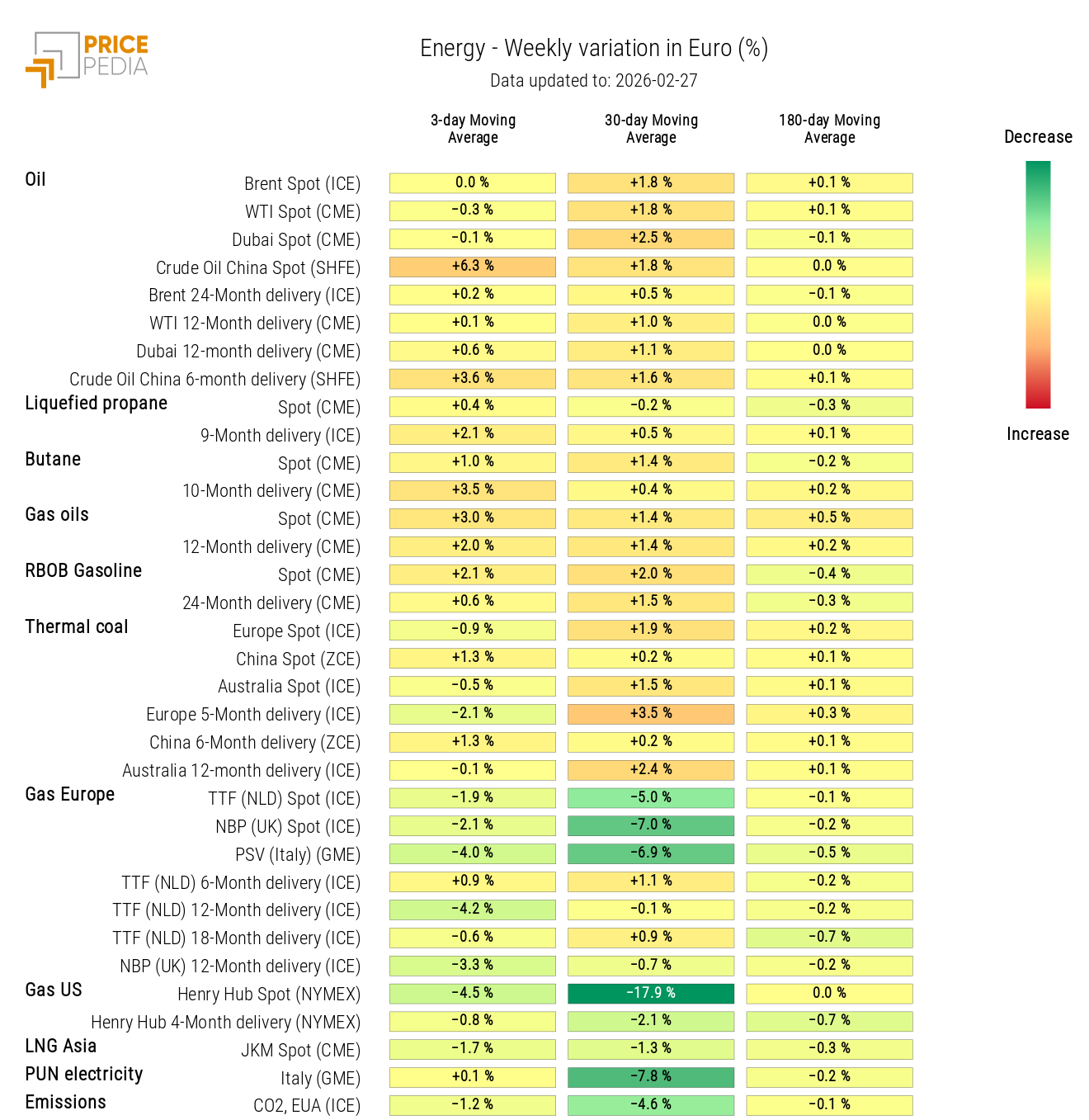
Analysis of the energy heatmap shows a decline in the financial prices of Italian PSV natural gas and U.S. Henry Hub gas.
Energy Price HeatMap in Euros
PRECIOUS METALS
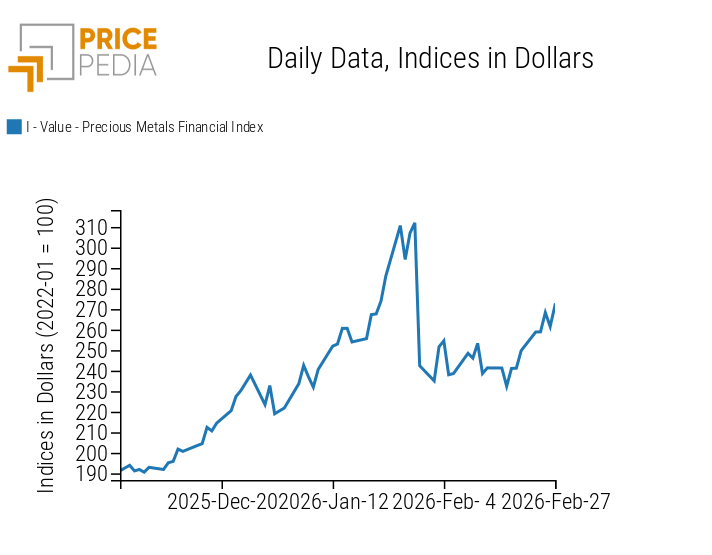
The precious metals financial index signals a weekly price increase, driven by renewed uncertainty over U.S. trade policy and rising geopolitical tensions with Iran.
PricePedia Financial Index of Precious Metals Prices in Dollars
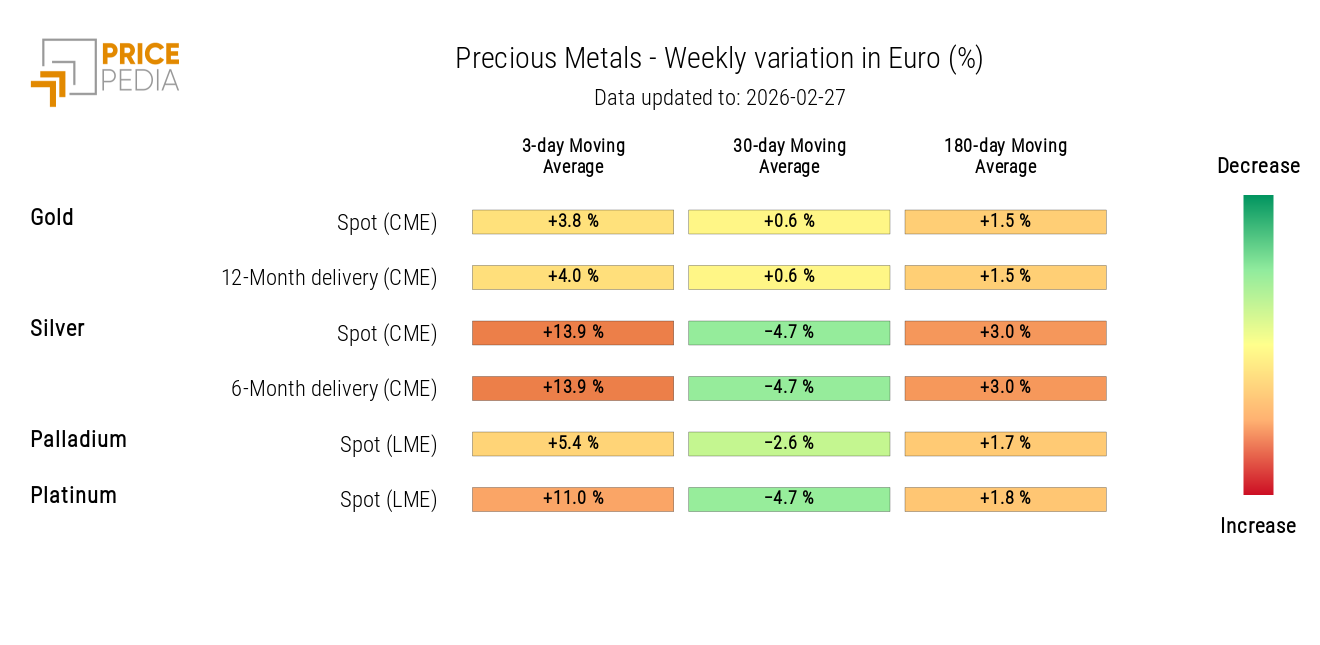
The precious metals heatmap highlights a generalized increase in prices, especially for silver.
Precious Metals Price HeatMap in Euros
FERROUS METALS
While the European ferrous financial index remained stable, the Chinese index signals a marked price recovery.
PricePedia Financial Indices of Ferrous Metals Prices in Dollars
Heatmap analysis shows rising Chinese prices for steel rebars and stainless steel coils.
Ferrous Metals Price HeatMap in Euros
Do you want to stay up-to-date on commodity market trends?
Sign up for PricePedia newsletter: it's free!
INDUSTRIAL NON-FERROUS METALS
Both financial indices of non-ferrous metals resumed their upward trend.
PricePedia Financial Indices of Industrial Non-Ferrous Metals Prices in Dollars
Heatmap analysis highlights price increases for tin, copper, and nickel.
Non-Ferrous Metals Price HeatMap in Euros
FOOD COMMODITIES
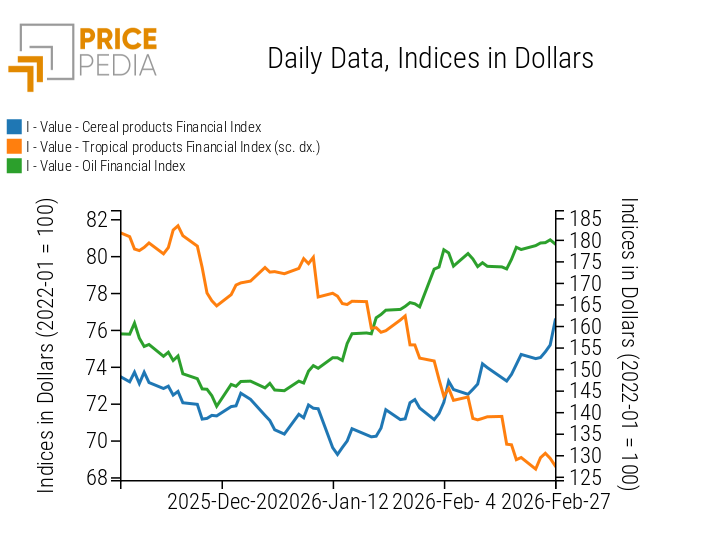
Despite fluctuations, grain and edible oil indices recorded weekly increases, while the tropical products index remained stable.
PricePedia Financial Indices of Food Commodity Prices in Dollars
CEREALS
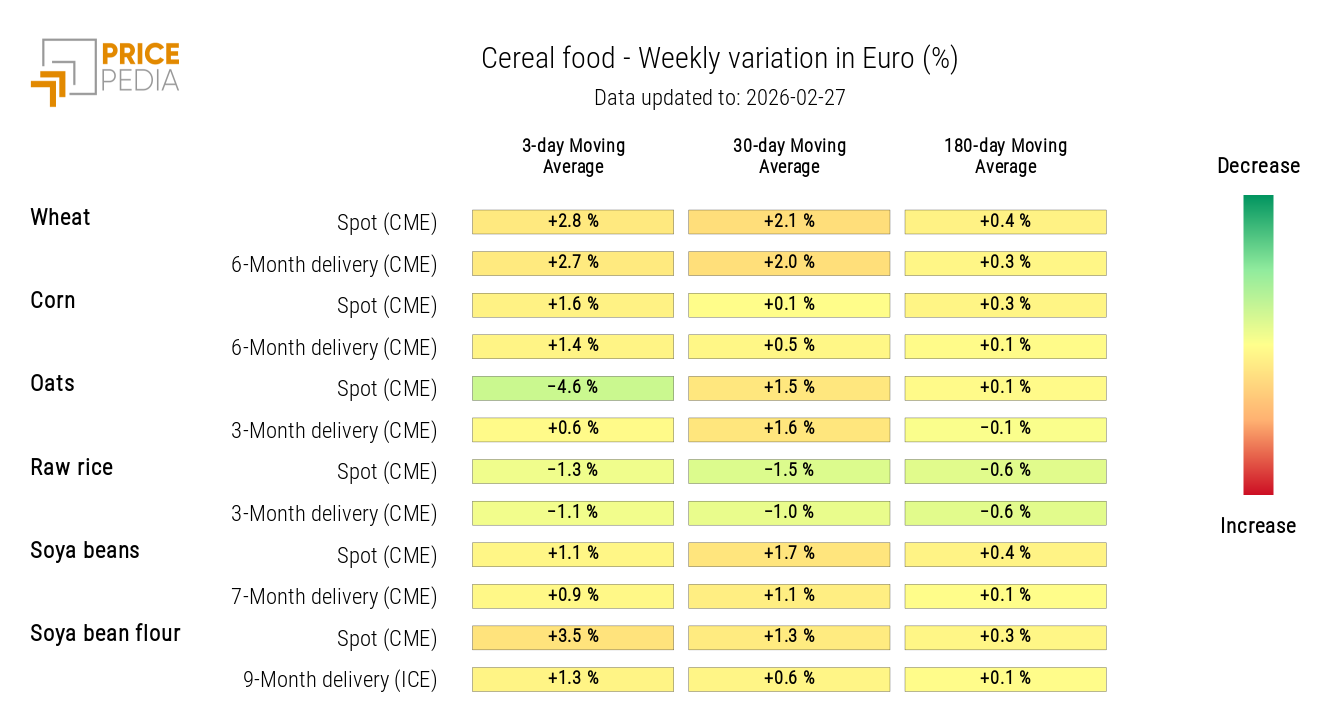
The cereals heatmap shows a weekly increase in the 3-day moving average prices of soybean meal and wheat, while oat prices declined.
Cereal Prices HeatMap in Euros
TROPICAL PRODUCTS
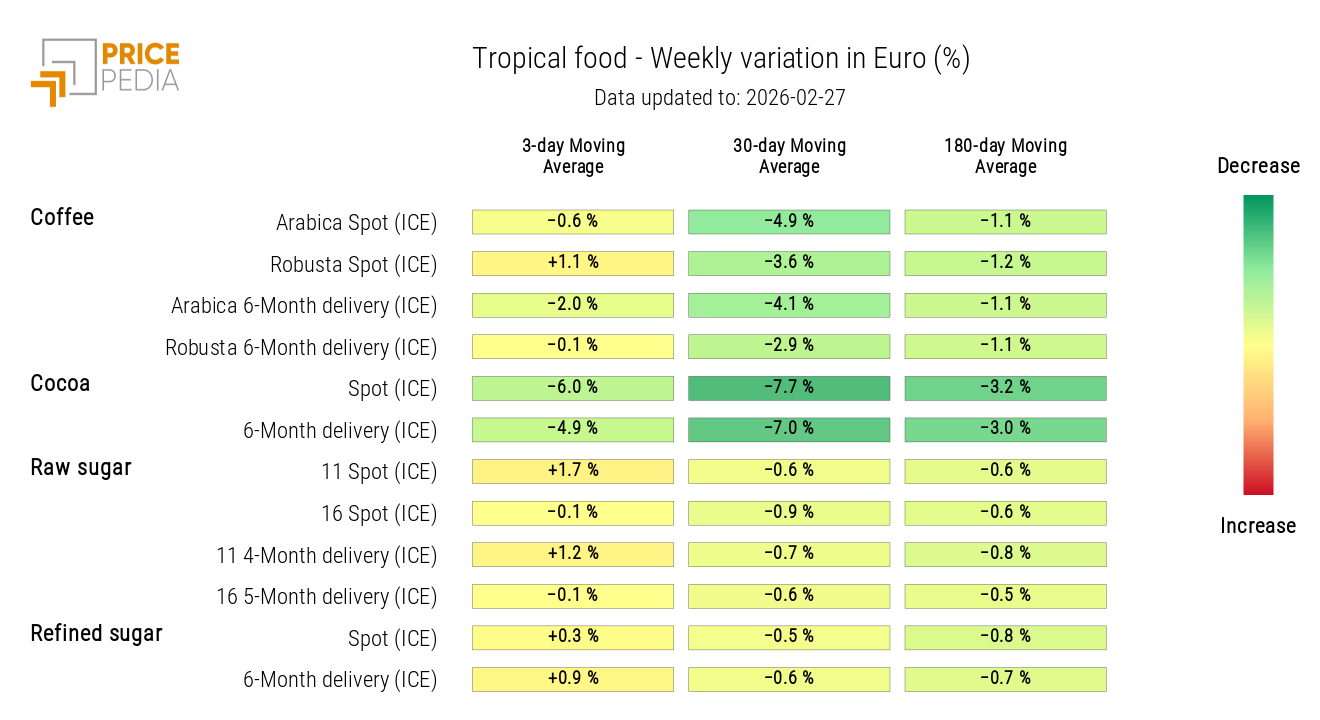
The tropical products heatmap signals a further significant decline in cocoa prices.
Tropical Food Prices HeatMap in Euros
OILS
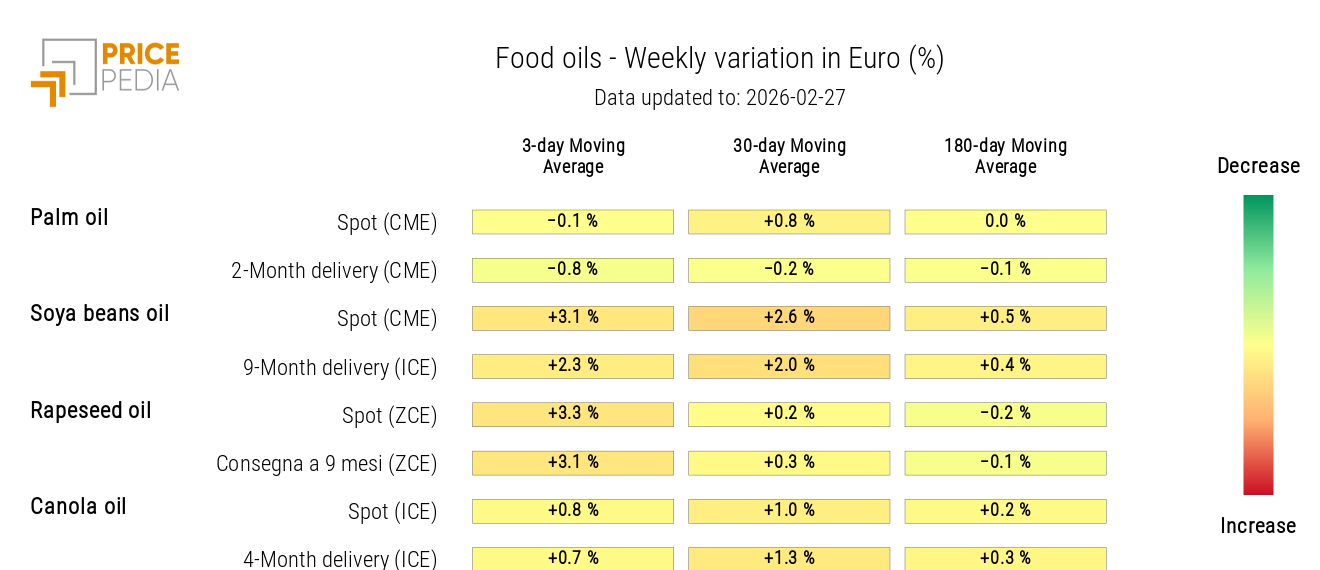
The edible oils heatmap highlights rising prices for soybean oil and rapeseed oil.
Edible Oils Price HeatMap in Euros
You may be interested in:
Commodity prices amid geopolitical uncertainty and prospects for US tariff revisions
Published by Luca Sazzini. .
Conjunctural Indicators Commodities Financial WeekThe Supreme Court declares the Trump administration's global tariffs unlawful [ Read all ]
Commodity prices amid geopolitical tensions, inventory changes, and uncertainty over US tariffs
Published by Luca Sazzini. .
Conjunctural Indicators Commodities Financial WeekTrump considers reducing US tariffs on steel and aluminum [ Read all ]
Bearish week for commodities amid speculative liquidations and a strengthening dollar
Published by Luca Sazzini. .
Conjunctural Indicators Commodities Financial WeekProfit-taking in the industrial metals market after the collapse of precious metals [ Read all ]