Commodity prices tied to negotiations with Iran
Trade tensions between the United States and Europe are flaring up again
Published by Luca Sazzini. .
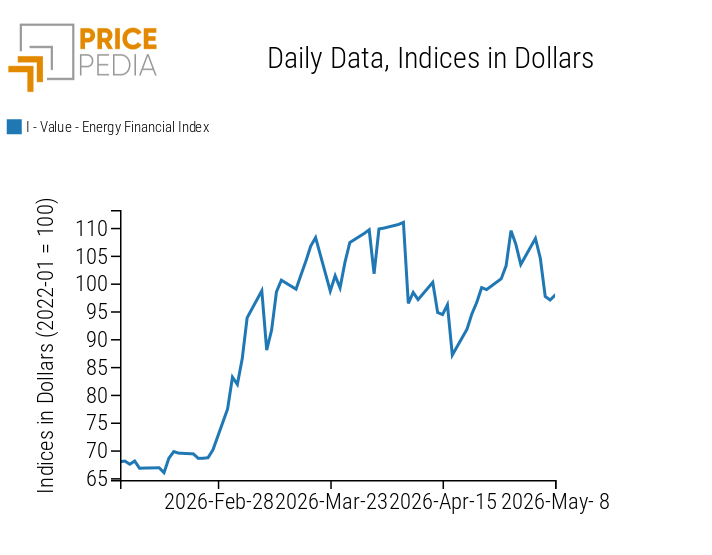
Conjunctural Indicators Commodities Financial WeekMore than two months after the outbreak of the conflict in Iran and the closure of the Strait of Hormuz, commodity financial markets remain driven almost exclusively by developments in the peace negotiations between the United States and Iran. The energy markets continue to be the most exposed to geopolitical escalation, with oil and natural gas prices still experiencing significant volatility.
After opening the week higher, supported by announcements of U.S. attacks and the launch of Trump’s “Project Freedom”, a U.S. military initiative aimed at escorting commercial vessels out of the Strait of Hormuz, oil and natural gas prices subsequently reversed course. The change in direction was driven by expectations of a possible rapid de-escalation of the conflict and the suspension of the U.S. project in favor of renewed negotiations with Tehran.
The peace proposal put forward by the United States consists of a brief memorandum which, if accepted by Iran, would lead to a gradual reopening of shipping routes through the Strait of Hormuz and the lifting of U.S. restrictions on access to Iranian ports. In this context, Brent and TTF prices declined during the week, before rising again as tensions resurfaced following new clashes between U.S. and Iranian forces. Brent thus moved back above the $100/barrel threshold after closing Thursday’s session at $85/barrel.
The price dynamics of energy commodities tend to spill over into other sectors of the commodity market, particularly metals.
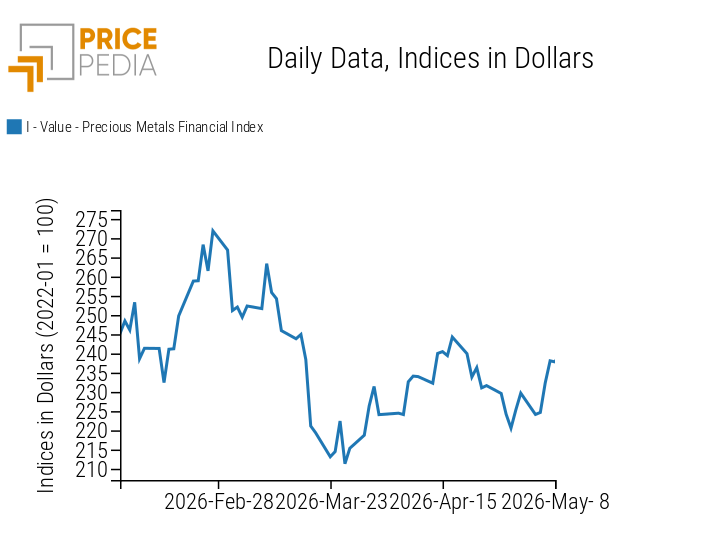
Precious metals are especially sensitive to changes in central bank monetary policies, which are in turn influenced by inflationary pressures stemming from energy costs. Safe-haven assets posted weekly gains, supported by the decline in energy commodity prices amid the de-escalation of geopolitical tensions. The increase was also driven by the continued rise in gold purchases by the People’s Bank of China, which continued through April. Persistent demand from central banks continues to support market sentiment, although some buyers, including the Central Bank of Turkey, have recently sold gold to support the stability of their domestic currencies.
Industrial metals also recorded weekly price increases, both among ferrous and non-ferrous metals. In the ferrous market, Chinese prices for iron ore and hot-rolled coils moved higher. Among non-ferrous metals, the most pronounced increase was seen in tin, supported by supply-side tensions in Indonesia and Myanmar and growing demand for soldering materials in the electronics sector, particularly driven by the expansion of data center infrastructure linked to artificial intelligence.
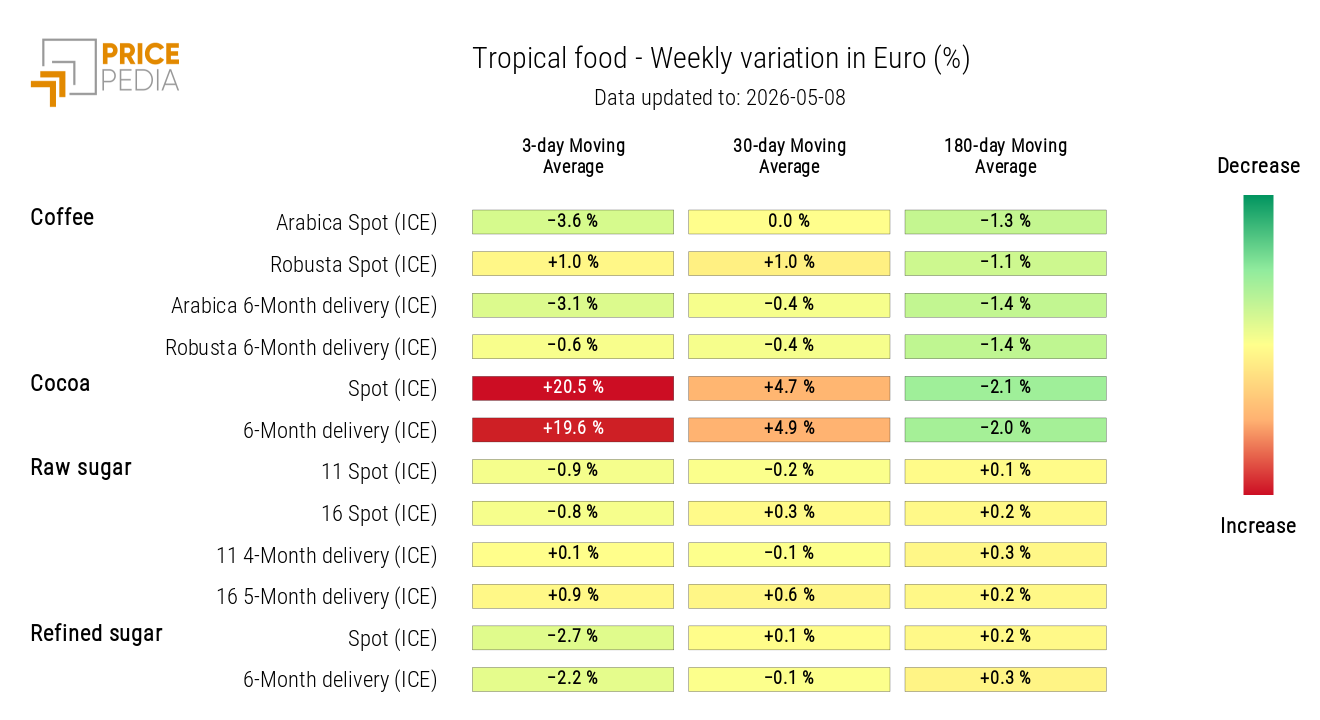
In the tropical commodities segment, cocoa prices posted a sharp increase due to growing concerns over supply risks for the upcoming season. Initial indications for the 2026/27 crop point to below-average pod development, suggesting a slower start to the main harvest, expected to begin in October.
Market tensions are being further exacerbated by the possible return of a stronger El Niño, which could bring hotter and drier conditions to key producing regions, including Ecuador and Indonesia, increasing production risks. The same climate concerns also worsened expectations for future rough rice supply, supporting higher prices over the course of the week.
With the exception of cocoa and rice, most other food commodities showed sideways or downward price trends on a weekly basis.
Renewed Tensions Over U.S. Tariffs on European Car Imports
The Trump administration has reignited trade tensions with Europe by announcing an increase in tariffs on European cars imported into the United States from 15% to 25%. Washington accuses the European Union of failing to fully comply with the trade agreement reached last July regarding the reduction of industrial tariffs.
The agreement provided for a 15% ceiling on U.S. tariffs on most European products, including automobiles, while the EU committed to gradually eliminating tariffs on U.S. industrial goods and opening preferential quotas for selected American agricultural and fishery products. According to Washington, Brussels failed to meet the agreed timetable for approving and implementing the measures set out in the deal. In particular, the White House claims that the European Parliament slowed the ratification of the rules needed to reduce tariffs on U.S. industrial products and grant the promised trade concessions.
The decision prompted an immediate response from the European Commission, which rejected the accusations and reiterated that implementation of the agreement was already underway. Brussels also warned that the Union would respond with equivalent measures should the new tariffs come into force.
To avoid escalation, the parties ultimately reached a new compromise: the United States temporarily suspended the increase to 25%, keeping tariffs at 15% for the time being, while the EU accelerated approval of the measures envisaged under the agreement. Despite the compromise, the deterioration in diplomatic relations between the United States and the European Union is becoming increasingly evident.
NUMERICAL APPENDIX
ENERGY
The PricePedia financial index for energy products continues to change direction in response to the intensification or easing of geopolitical tensions between the United States and Iran.
PricePedia Financial Index of Energy Prices in U.S. Dollars
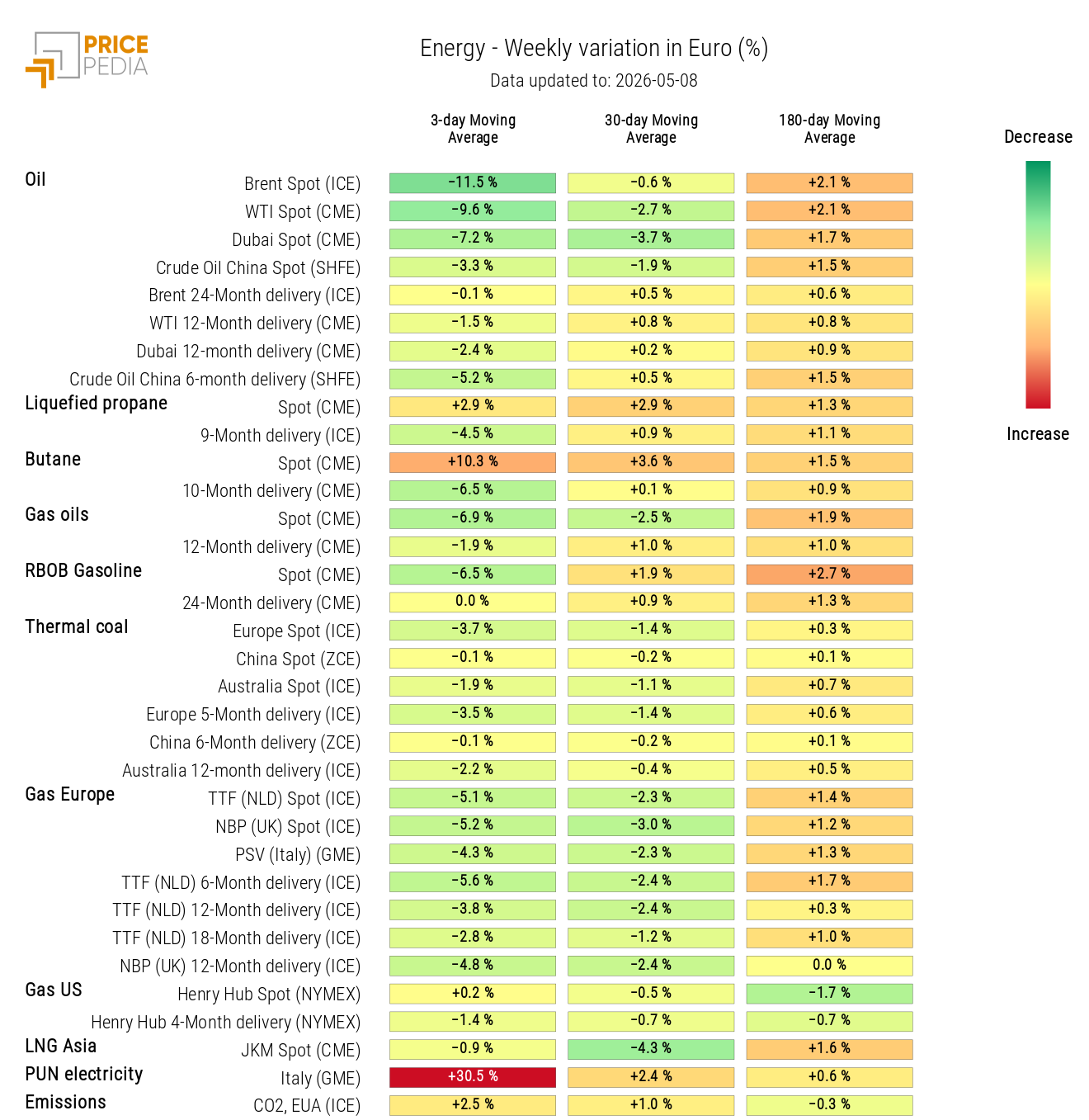
The energy heatmap highlights a weekly decline in the 3-day moving average of oil prices, alongside an increase in the corresponding average for butane.
Heatmap of Energy Prices in Euros
PRECIOUS METALS
The financial index for precious metals shows a recovery in safe-haven asset prices.
PricePedia Financial Index of Precious Metals Prices in U.S. Dollars
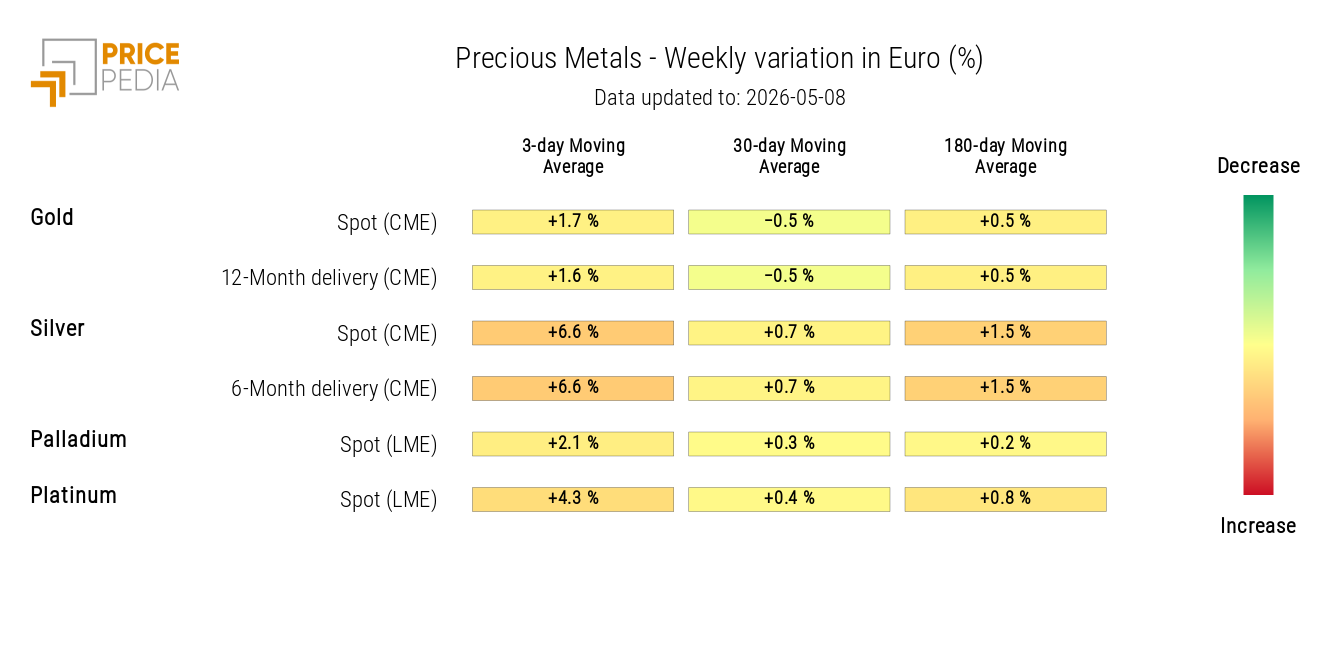
The heatmap analysis shows a broad-based increase in precious metals prices.
Heatmap of Precious Metals Prices in Euros
FERROUS METALS
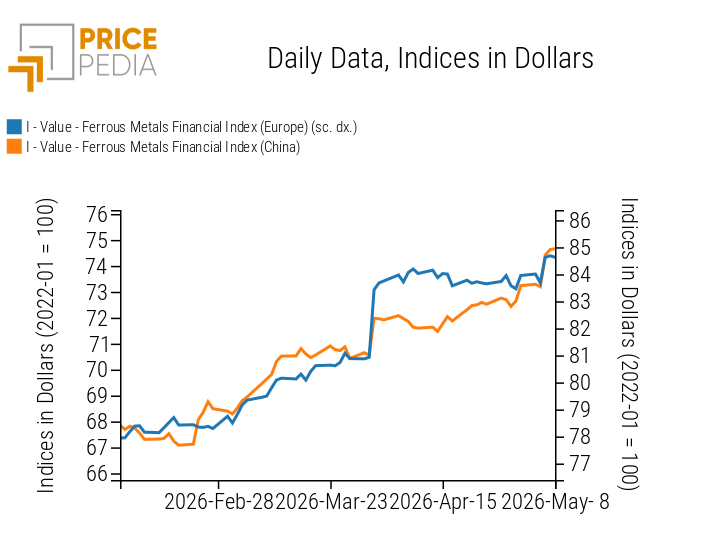
Both ferrous metals financial indices continue their upward price trend.
PricePedia Financial Indices of Ferrous Metals Prices in U.S. Dollars
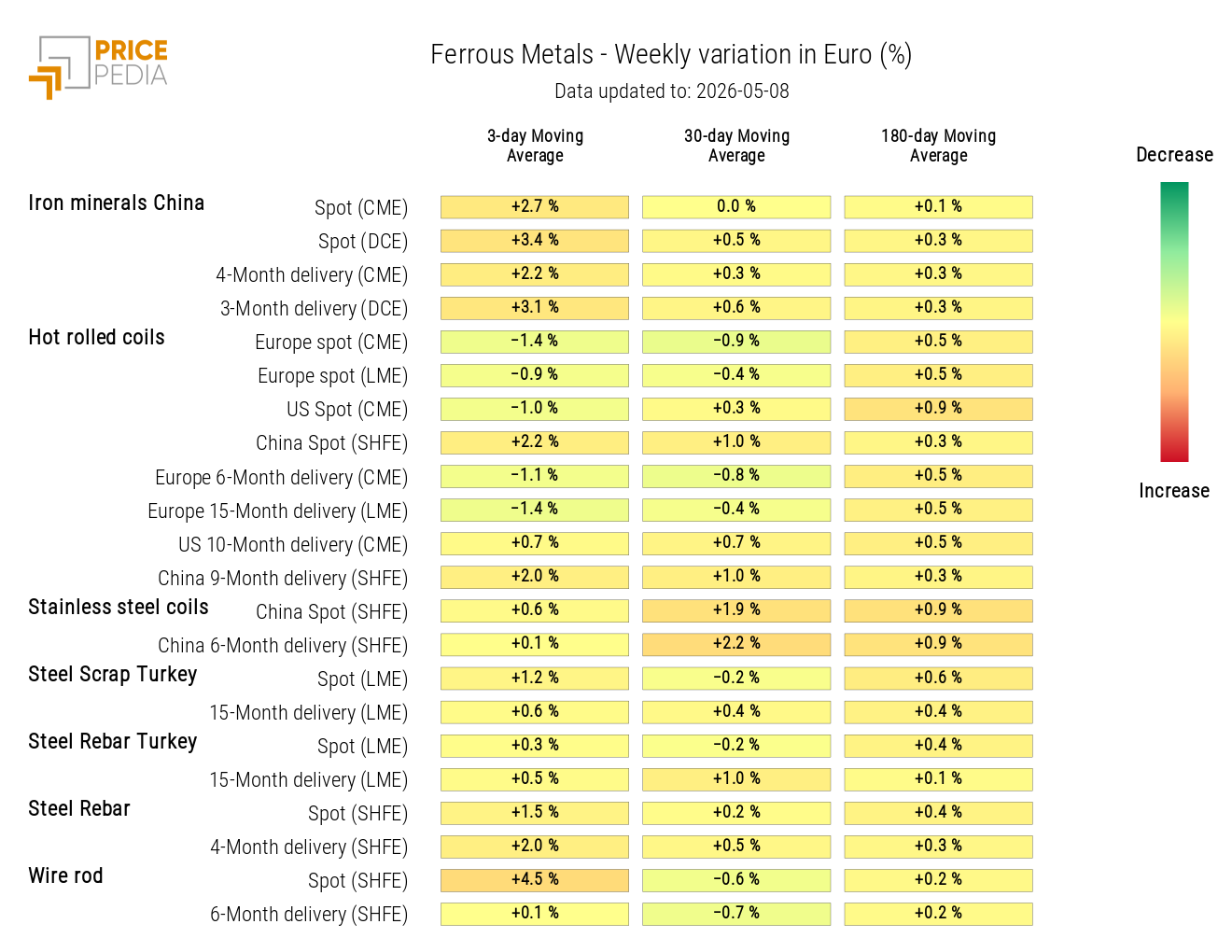
The heatmap analysis highlights an increase in Chinese iron ore prices.
Heatmap of Ferrous Metals Prices in Euros
Do you want to stay up-to-date on commodity market trends?
Sign up for PricePedia newsletter: it's free!
INDUSTRIAL NON-FERROUS METALS
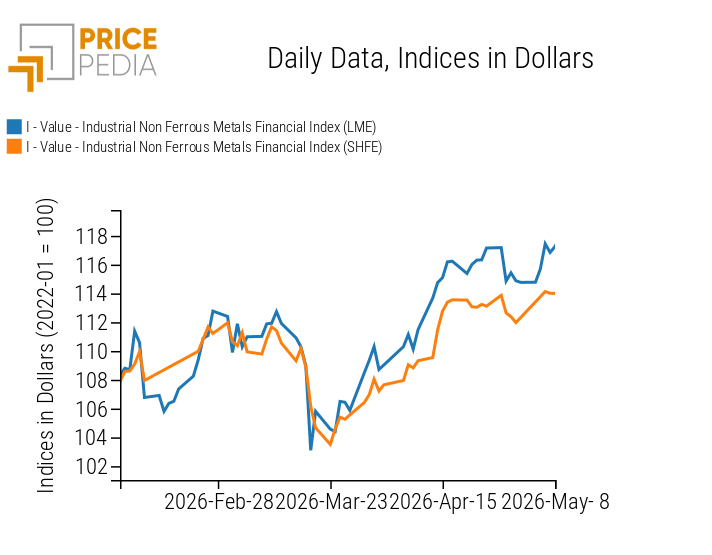
Non-ferrous metals posted higher prices on both the LME and SHFE exchanges.
PricePedia Financial Indices of Industrial Non-Ferrous Metals Prices in U.S. Dollars
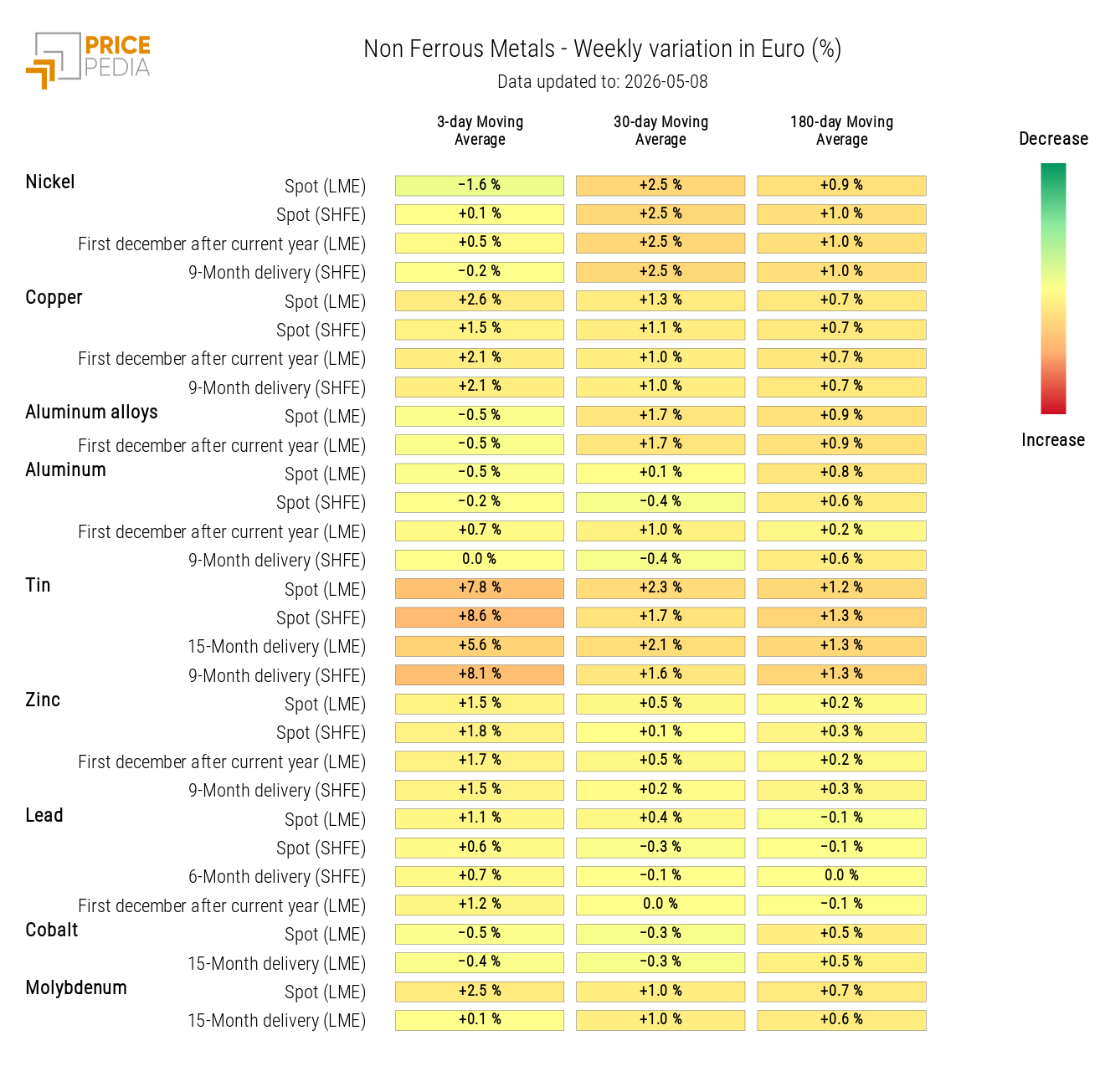
The non-ferrous heatmap highlights a sharp increase in tin prices.
Heatmap of Non-Ferrous Metals Prices in Euros
FOOD COMMODITIES
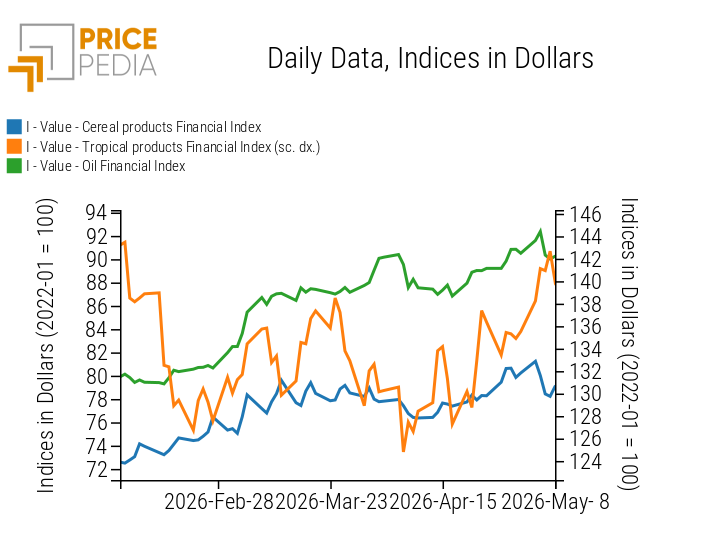
The financial index for tropical products continued to rise, while the indices for grains and edible oils declined on a weekly basis.
PricePedia Financial Indices of Food Commodity Prices in U.S. Dollars
CEREALS
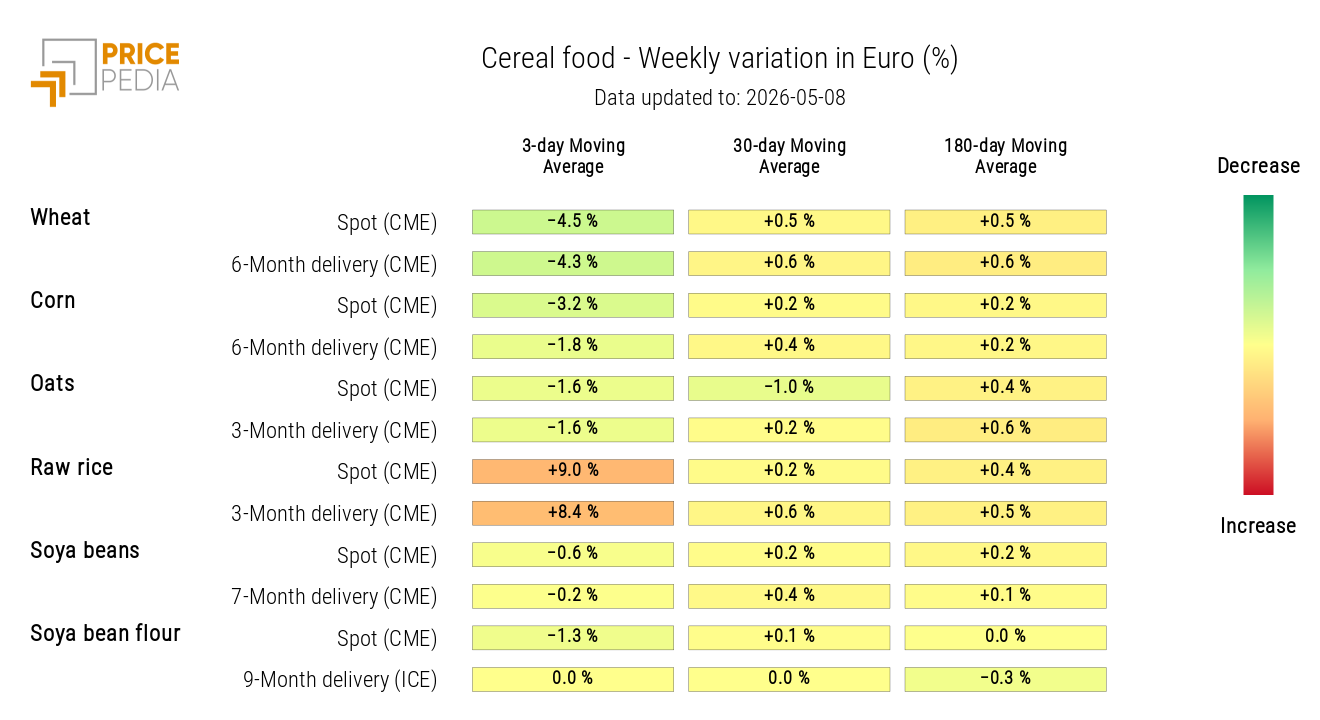
The cereals heatmap shows an increase in rough rice prices, alongside a decline in wheat prices.
Heatmap of Cereal Prices in Euros
TROPICAL PRODUCTS
The tropical products heatmap highlights the strong weekly increase in cocoa prices.
Heatmap of Tropical Food Commodity Prices in Euros
You may be interested in:

China economic update March 2026
Published by Luca Sazzini. .
Conjunctural Indicators Global Economic TrendsAnalysis of the impact of the war in Iran on Chinese commodity prices [ Read all ]

Tension returns to the energy markets following the renewed closure of the Strait of Hormuz
Published by Luca Sazzini. .
Conjunctural Indicators Commodities Financial WeekThe impact of the war in Iran on EU and US PMI indices [ Read all ]

Reopening of the Strait of Hormuz: financial markets optimistic about the developments in the conflict in Iran
Published by Luca Sazzini. .
Conjunctural Indicators Commodities Financial WeekEU agreement on new safeguard measures for steel [ Read all ]