Impact of de-escalation on financial commodity prices
How have shipping costs changed following the closure of the Strait of Hormuz?
Published by Luca Sazzini. .
Conjunctural Indicators Commodities Financial Week
Since the beginning of the war in the Persian Gulf, the volatility of financial prices of energy commodities has increased significantly. Oil prices, after rising well above $100/barrel compared to February average values of around $70/barrel, have been characterized by contrasting daily fluctuations, with changes even exceeding 10%, influenced by contradictory statements from President Trump regarding the duration and evolution of the conflict in Iran.
In the past week, the main news affecting energy markets was the announcement of a two-week ceasefire between the United States and Iran, in exchange for the reopening of the Strait of Hormuz. Following the news, Brent and WTI recorded daily drops of -13% and -16% respectively, returning to levels below $100/barrel. Similar impacts were also observed in the European natural gas market, with TTF Netherlands falling by 14% in a single day, as well as in refined petroleum products, especially diesel and gasoline.
Geopolitical risks, however, remain unresolved, with the Strait of Hormuz still closed also following the Israeli attack in Lebanon, which occurred immediately after the truce agreement. Therefore, in the absence of a lasting agreement, energy markets are likely to continue being driven by sudden shocks linked to the evolution of the conflict.
This volatility is also expected to spill over, at least partially, to other financial commodity markets through both direct and indirect channels.
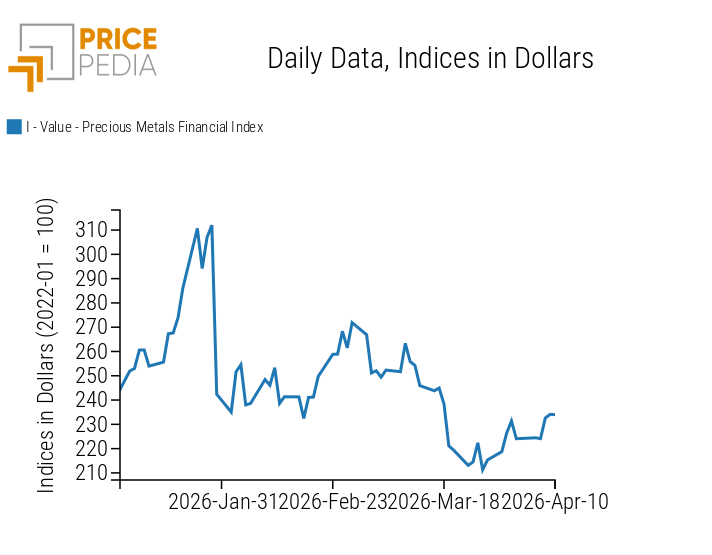
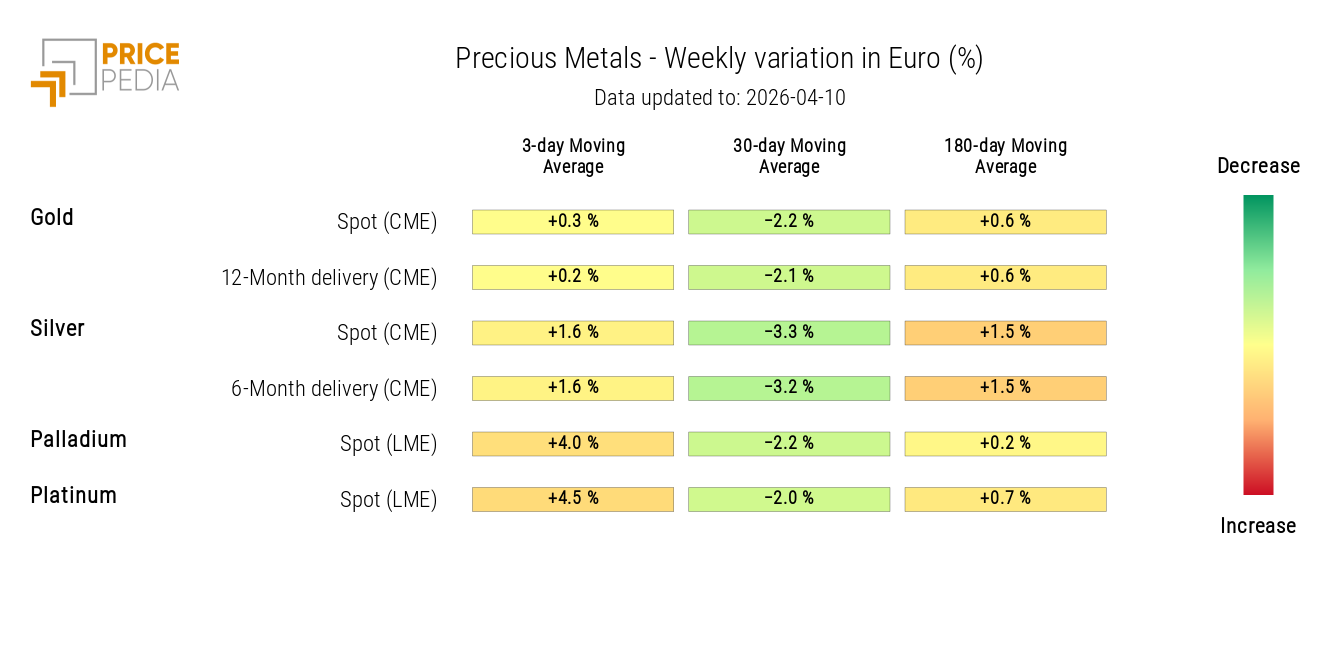
Financial prices of precious metals have shown a slight increase following the decline in oil prices and U.S. inflation data, which rose slightly less than market expectations. The negative correlation between oil and precious metals is currently linked to fears of excessive growth in energy inflation, which could prompt central banks to adopt more restrictive monetary policies. Such a scenario would reduce the attractiveness of gold compared to government bonds, such as U.S. Treasuries, which, in addition to being considered safe, also offer yields linked to interest rate trends.
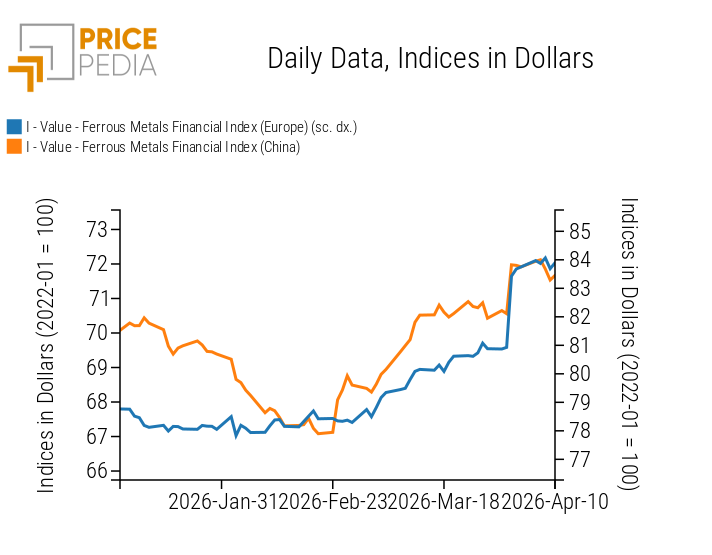
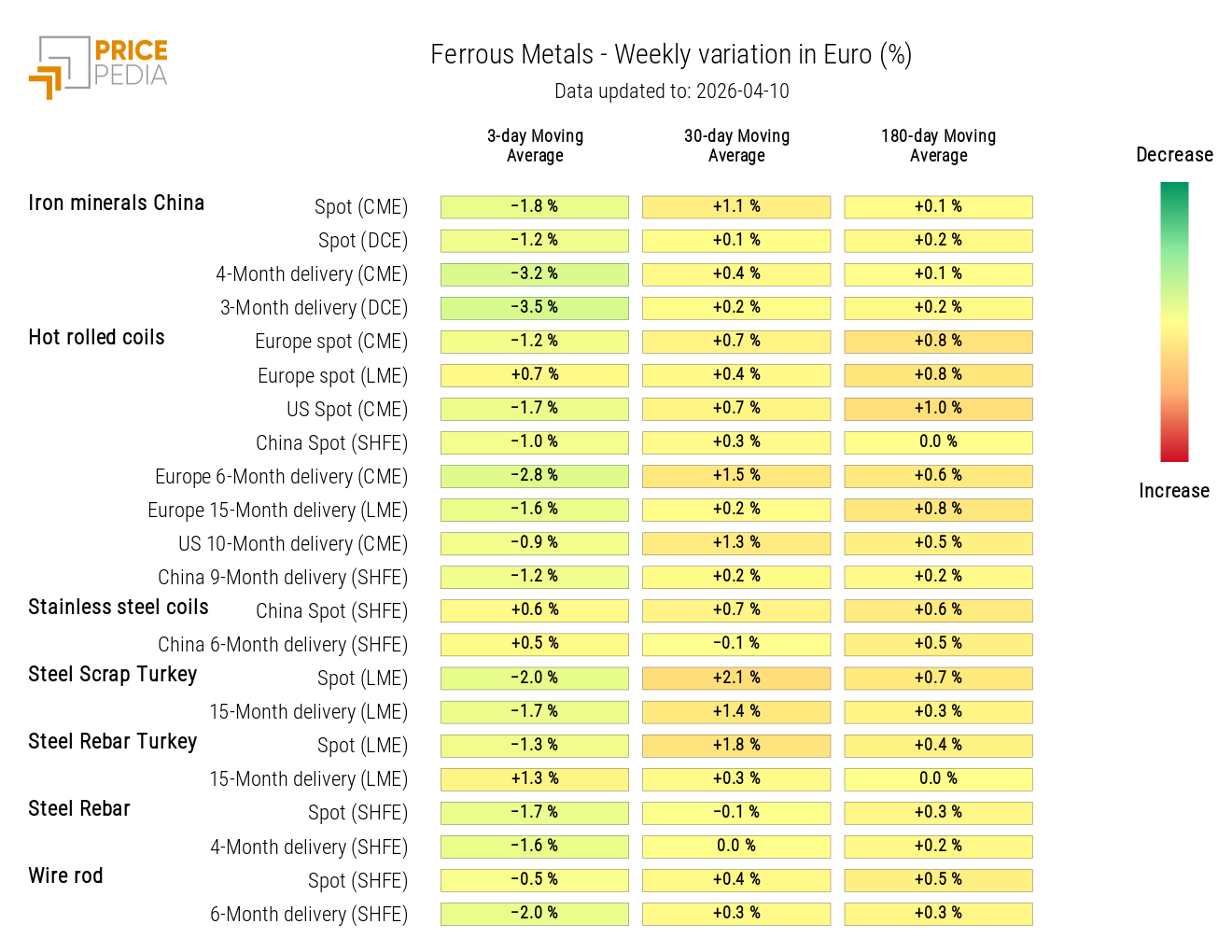
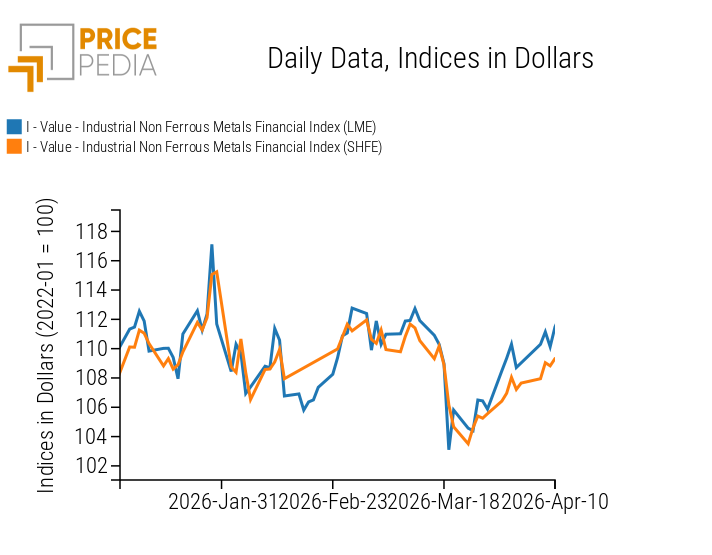
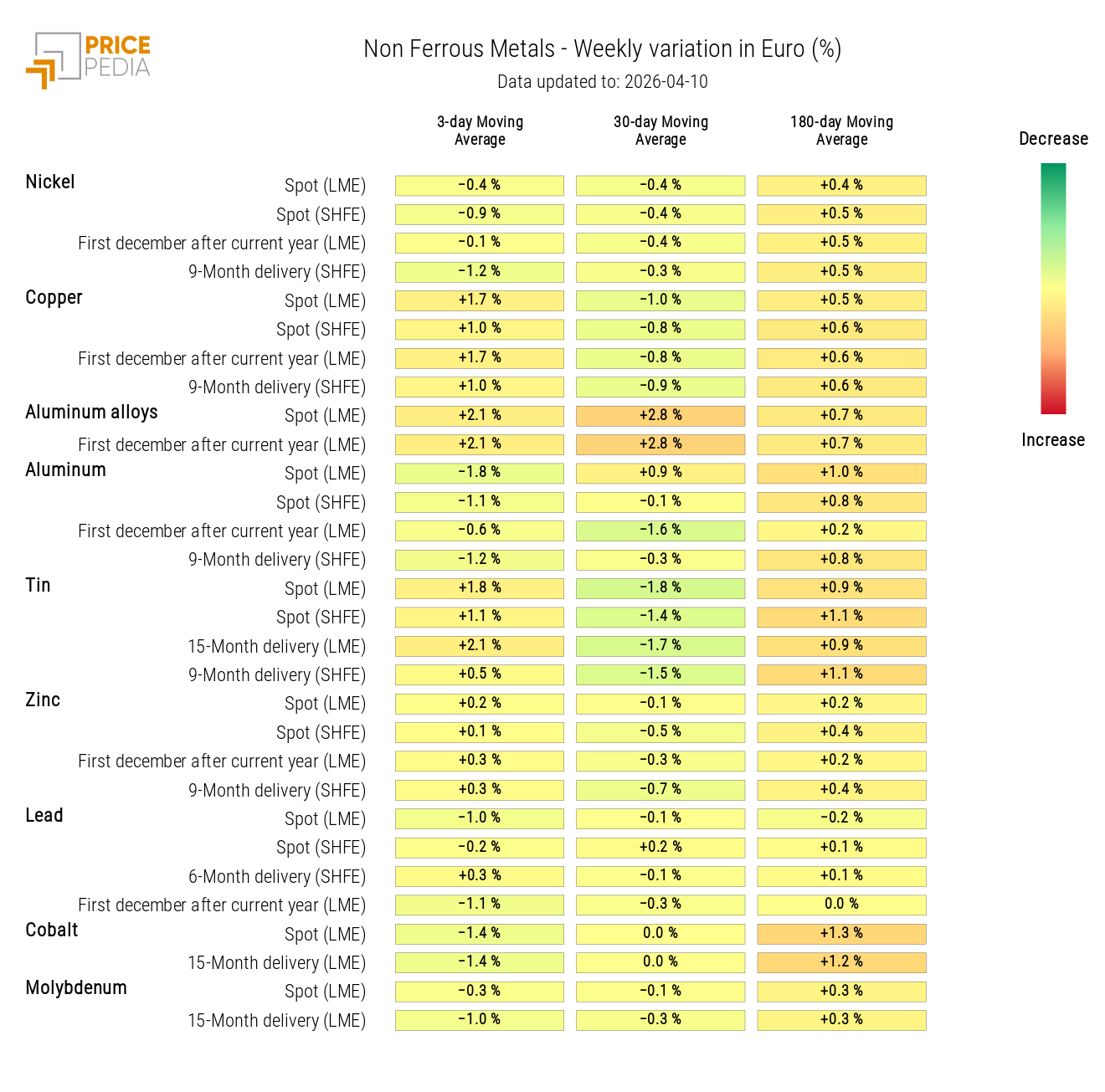
In the industrial metals segment, there is substantial price stability for ferrous metals, alongside a moderate increase in non-ferrous metals, mainly supported by the dynamics of copper and tin. Aluminum, however, follows a different trend, showing a decline due to expectations of a de-escalation of geopolitical tensions. Such a scenario would favor the resumption of transit through the Strait of Hormuz and reduce the risk of further disruptions or damage to production facilities in the Persian Gulf.
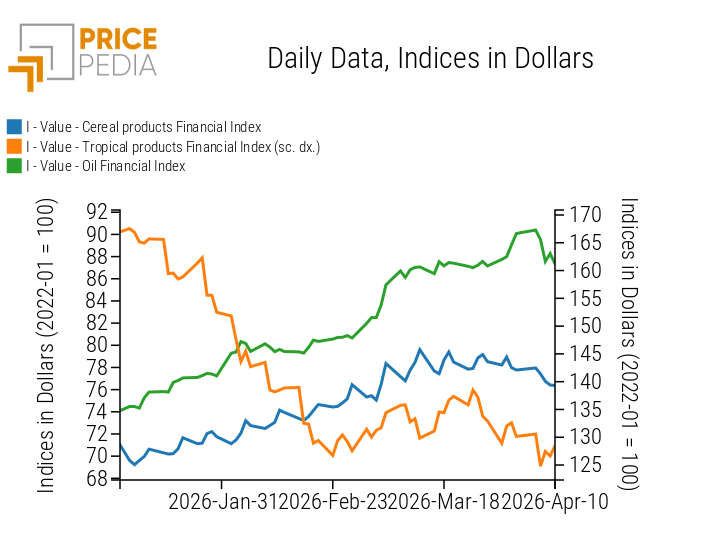
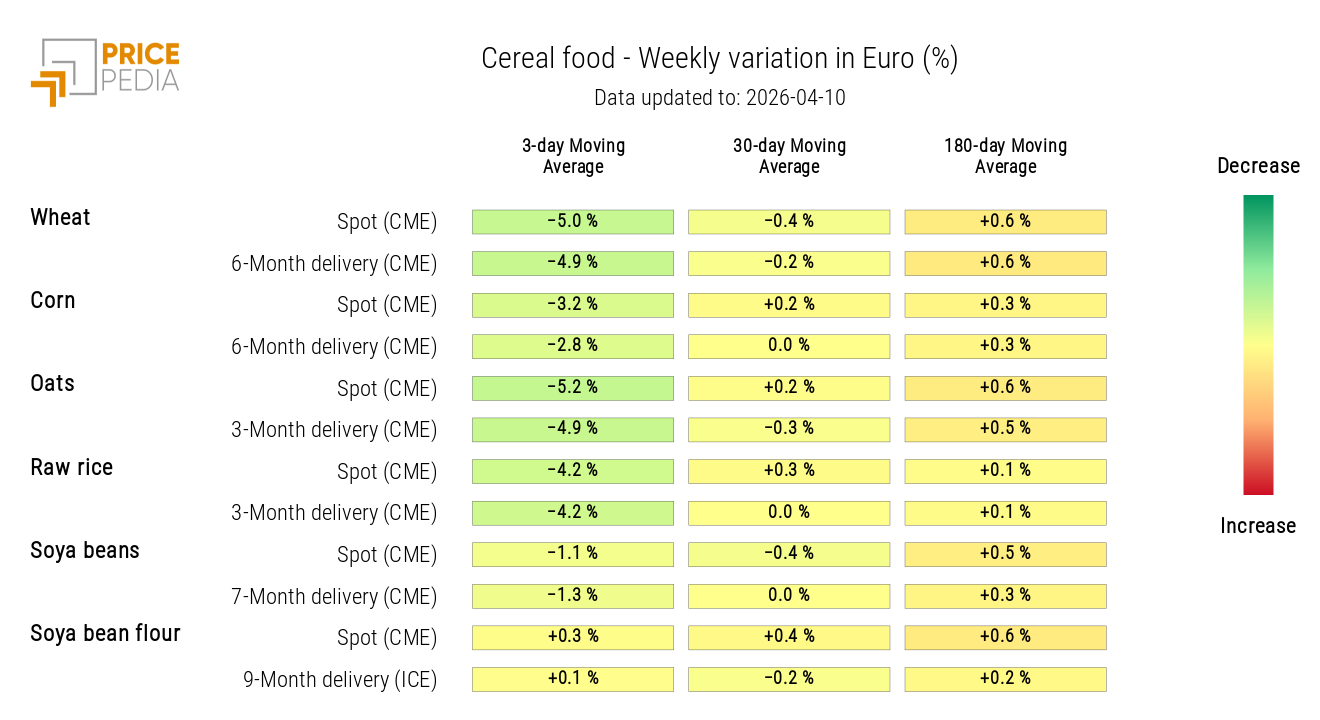
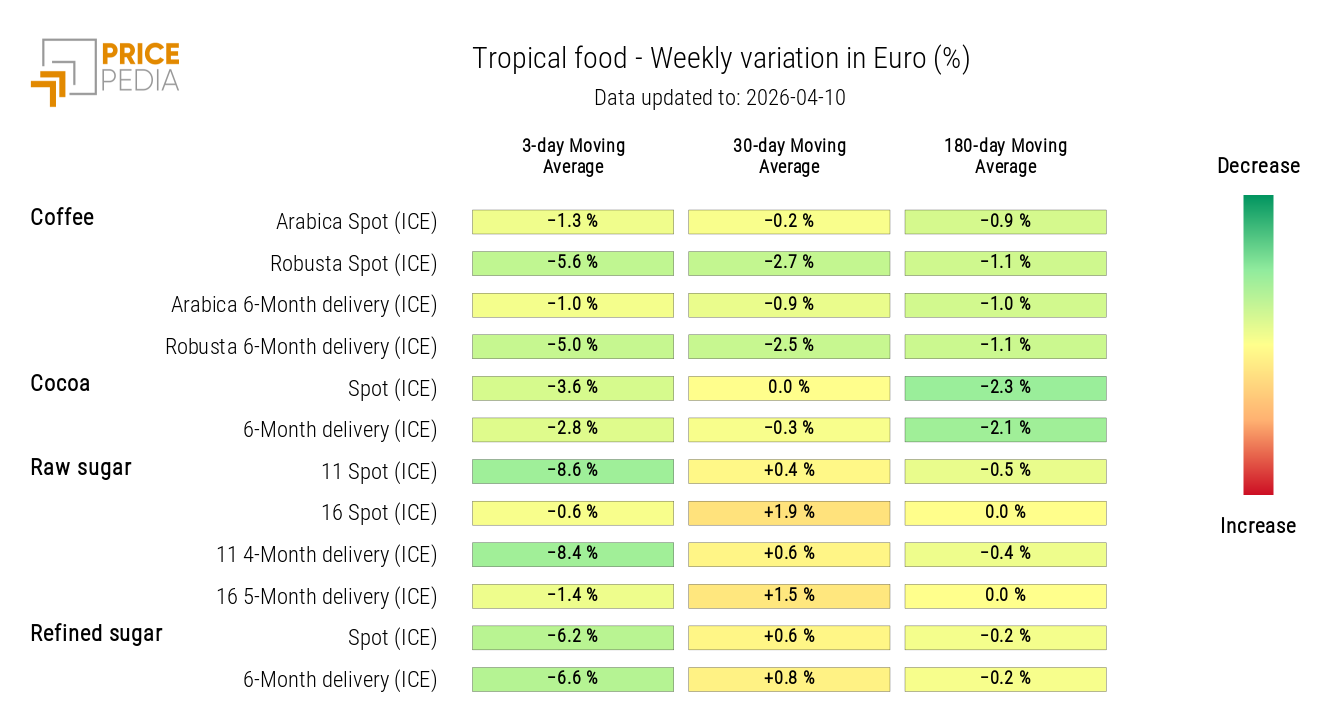
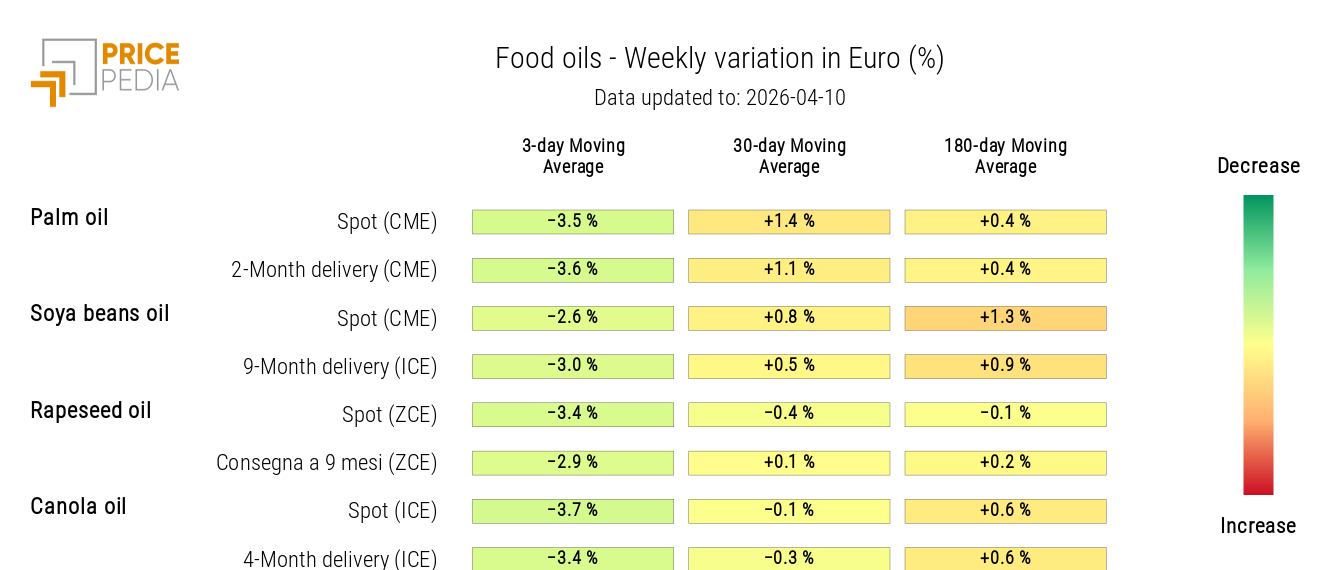
In the agricultural commodities sector, a generalized decline in prices is observed, affecting cereals, tropical commodities, and edible oils. In particular, a drop in sugar prices is noted, amplified by statements from India’s food secretary indicating that the government does not intend to introduce export restrictions during the year.
Effects of the war in Iran on transport costs
The blockage of the Strait of Hormuz has worsened maritime transport conditions, forcing many vessels to divert to alternative routes, slowing or interrupting transit and, in some cases, exposing them to the risk of attacks. For these reasons, it is useful to analyze to what extent these factors have affected international maritime transport costs.
To this end, the analysis focuses on two key composite indices of international maritime transport costs: the World Container Index (WCI), produced by Drewry, and the Baltic Dry Index (BDI), provided by the Baltic Exchange.
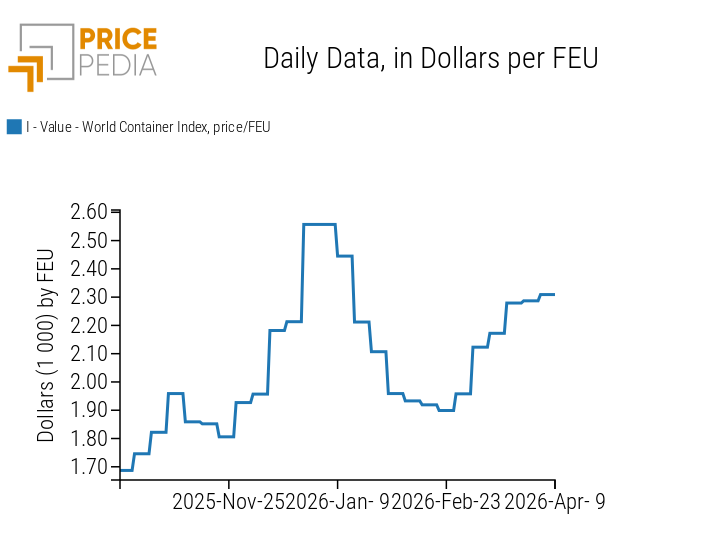
The former measures the trend in average container shipping costs on major East-West global trade routes, providing an up-to-date overview of international freight rates.
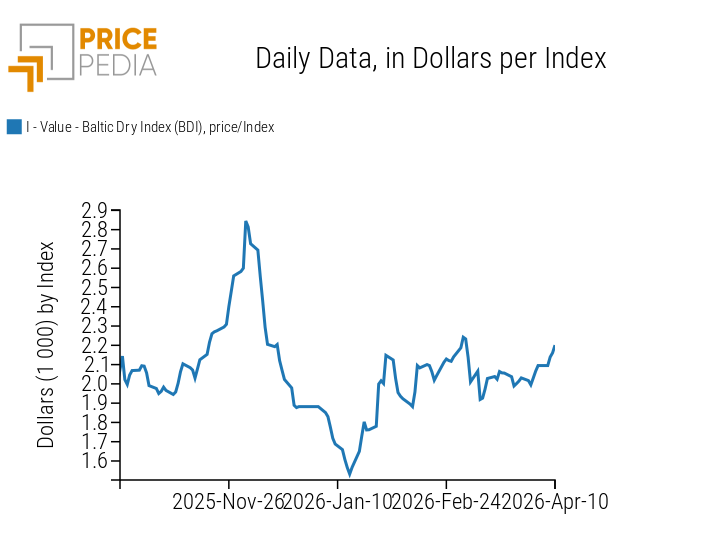
The BDI, on the other hand, reflects the cost dynamics of maritime transport for dry bulk cargo, such as iron ore, coal, or food commodities.
Below are the dynamics of the two indices described above over the past 6 months.
Freight rates for bulk carriers and container ships
| Container ships | Bulk carriers |
|
|
Analysis of the two charts shows that since the outbreak of the war in Iran, bulk carrier freight rates have remained stable, while container shipping rates have started to increase significantly. In particular, the WCI has risen by more than 20% since the start of the conflict, currently reaching $2 309/FEU.
All major routes monitored by Drewry have recorded price increases, with routes from China to the United States rising by more than 30%.
These data highlight a generalized increase in container shipping costs, despite the absence, for now, of a full-blown logistics crisis. Current WCI levels ($2 309/FEU) are significantly lower than those recorded during the 2024 logistics crisis linked to Houthi attacks, when prices reached around $6 000/FEU, and even further below the historical peaks of 2022, which exceeded $10 000/FEU.
NUMERICAL APPENDIX
ENERGY
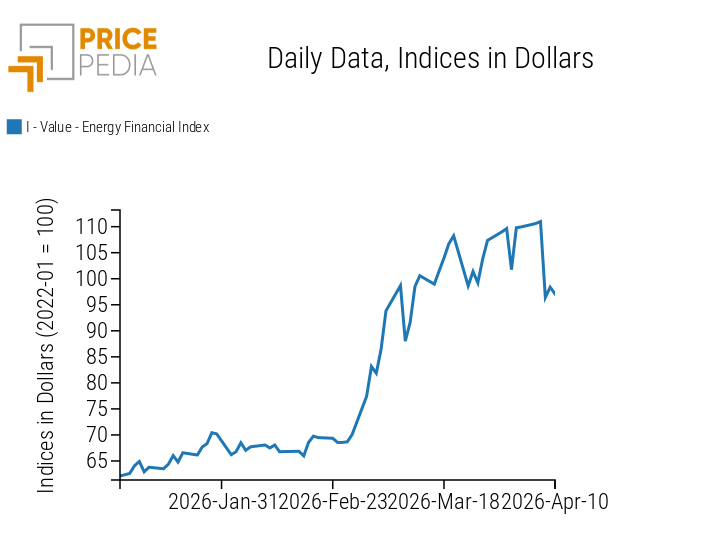
The PricePedia financial index of energy products shows a weekly decline following the announcement of a truce between the United States and Iran.
PricePedia Financial Index of energy prices in dollars
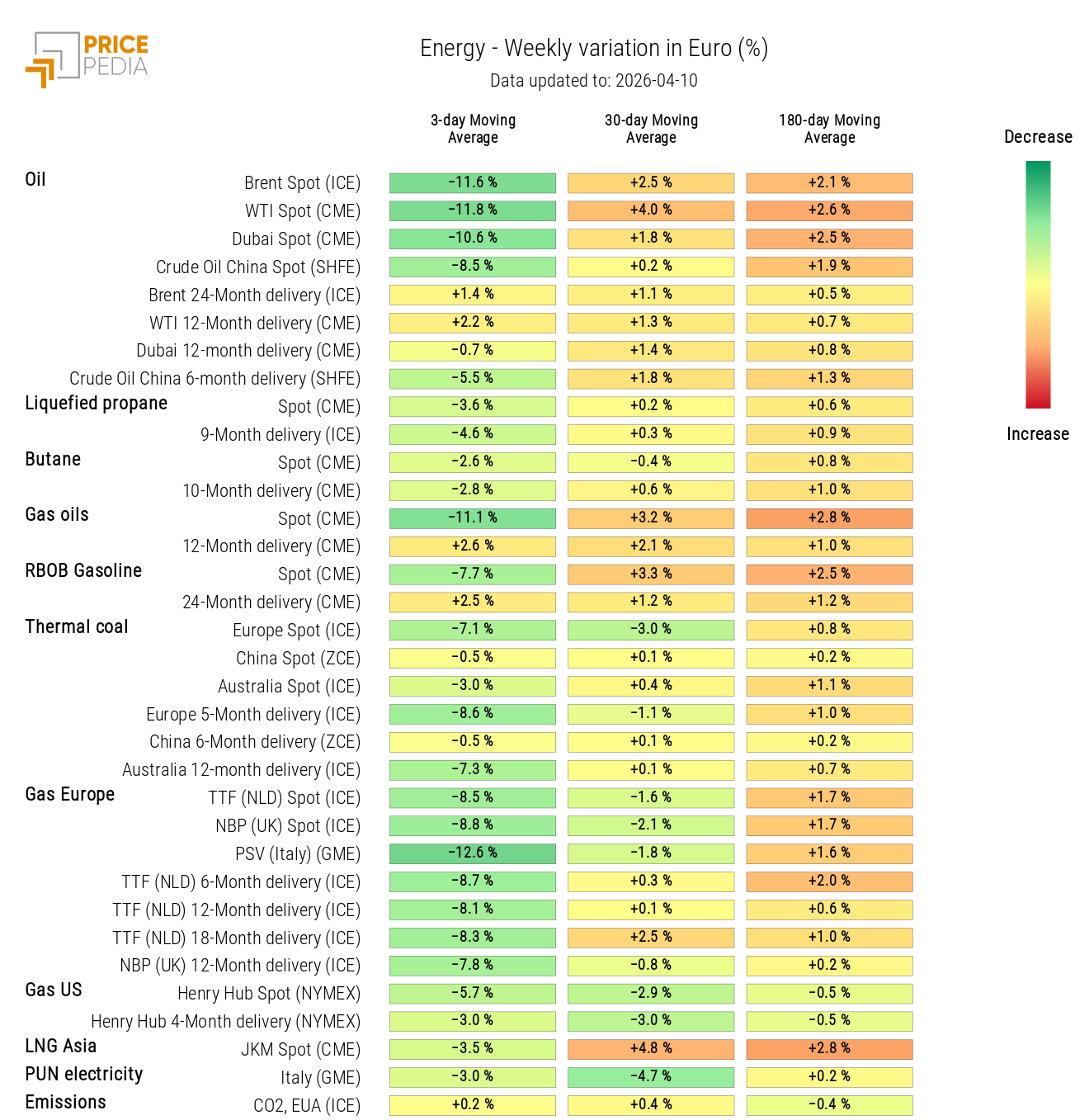
The energy heatmap shows a generalized decline in oil, natural gas, and distillate prices.
Heatmap of energy prices in euros
PRECIOUS METALS
The financial index of precious metals shows a slight recovery in safe-haven asset prices.
PricePedia Financial Index of precious metal prices in dollars
The heatmap analysis highlights increases in palladium and platinum prices.
Heatmap of precious metal prices in euros
FERROUS
Both ferrous metal indices remained relatively stable on a weekly basis.
PricePedia Financial Indices of ferrous metal prices in dollars
The heatmap shows a decline in prices of iron ore (China) and steel scrap (Turkey).
Heatmap of ferrous prices in euros
Do you want to stay up-to-date on commodity market trends?
Sign up for PricePedia newsletter: it's free!
INDUSTRIAL NON-FERROUS
Both PricePedia financial indices for non-ferrous metals show a weekly increase.
PricePedia Financial Indices of industrial non-ferrous metal prices in dollars
The heatmap analysis highlights weekly increases in copper and tin prices, alongside a decline in aluminum prices.
Heatmap of non-ferrous prices in euros
FOOD
All three financial indices for food products show a weekly decline in prices.
PricePedia Financial Indices of food prices in dollars
CEREALS
The cereal heatmap shows a generalized decline in prices.
Heatmap of cereal prices in euros
TROPICAL
The tropical heatmap shows particularly sharp declines in sugar No. 11 prices.
Heatmap of tropical food prices in euros
OILS
The edible oils heatmap shows a generalized decline across all prices.
Heatmap of edible oil prices in euros
You may be interested in:

Conflict and production disruptions are driving commodity markets
Published by Luca Sazzini. .
Conjunctural Indicators Commodities Financial WeekSupply concerns are driving up industrial metal prices [ Read all ]

China economic update February 2026
Published by Luca Sazzini. .
Conjunctural Indicators Global Economic TrendsWhat price trends can we expect in light of the conflict in the Persian Gulf? [ Read all ]

Commodity volatility accentuated by uncertainty over the outcome of negotiations with Iran
Published by Luca Sazzini. .
Conjunctural Indicators Commodities Financial WeekEU-Australia Trade Agreement: A New Chapter in Free Trade [ Read all ]