Conflict and production disruptions are driving commodity markets
Supply concerns are driving up industrial metal prices
Published by Luca Sazzini. .
Conjunctural Indicators Commodities Financial WeekIn the financial markets for energy commodities, price volatility shows no signs of easing, remaining almost entirely driven by developments in the conflict with Iran.
Brent opened the week higher, supported by the Houthis’ entry into the conflict, as they launched ballistic missiles against Israel in response to joint U.S. and Israeli attacks on Iranian nuclear facilities. The price increase intensified further following the Iranian attack on a Kuwaiti oil tanker and Iran’s progressive strengthening of control over the Strait of Hormuz.
Despite this escalation, on April 1 oil prices recorded a sharp daily contraction, with Brent falling by nearly 15% compared with the previous session, following statements by Donald Trump about a possible imminent resolution of the conflict. Prices later partially recovered after Trump himself threatened further escalation against Iran, warning that bridges and power plants could become military targets should Tehran fail to comply with U.S. demands.
The dynamics of U.S. WTI were more linear, with prices following an upward trend throughout the week, closing at $112 per barrel, up 12% compared with the previous week’s close.
In the European natural gas market, weekly prices declined, supported by favorable weather forecasts that limited demand. However, significant tensions remain in LNG supply ahead of the summer storage refilling season, with European storage levels still below 30%.
Among precious metals, a trend reversal was observed, with safe-haven asset prices rising on a weekly basis for the first time since the start of the conflict in Iran. Toward the end of the week, however, prices experienced a slight decline following renewed threats by Trump against Iran.
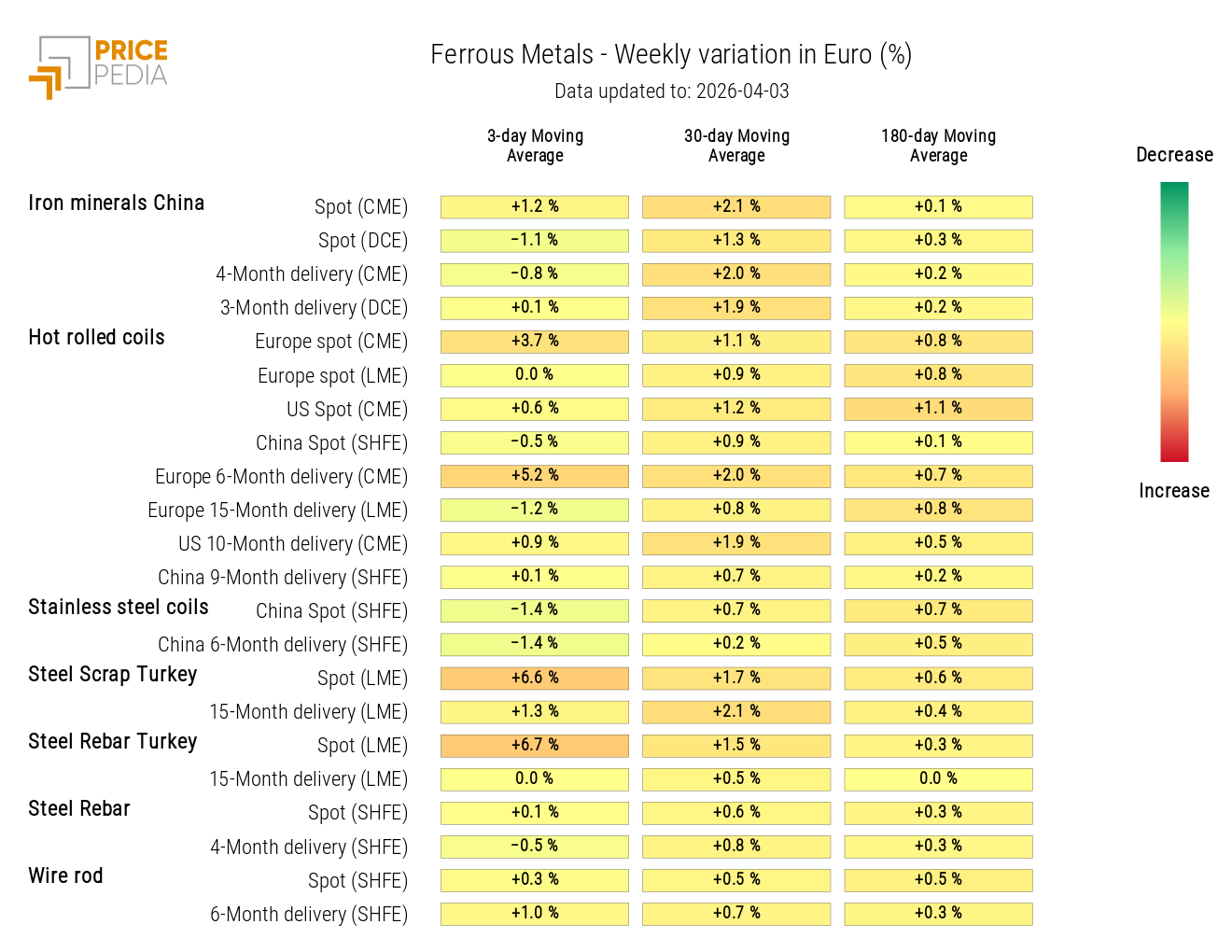
The industrial metals sector also recorded a broad price increase, affecting both ferrous and non-ferrous metals. In the ferrous segment, the rise was mainly driven by steel scrap prices in Turkey, which increased by 6% compared with the previous weekly close, primarily supported by supply shortages and rising logistics costs.
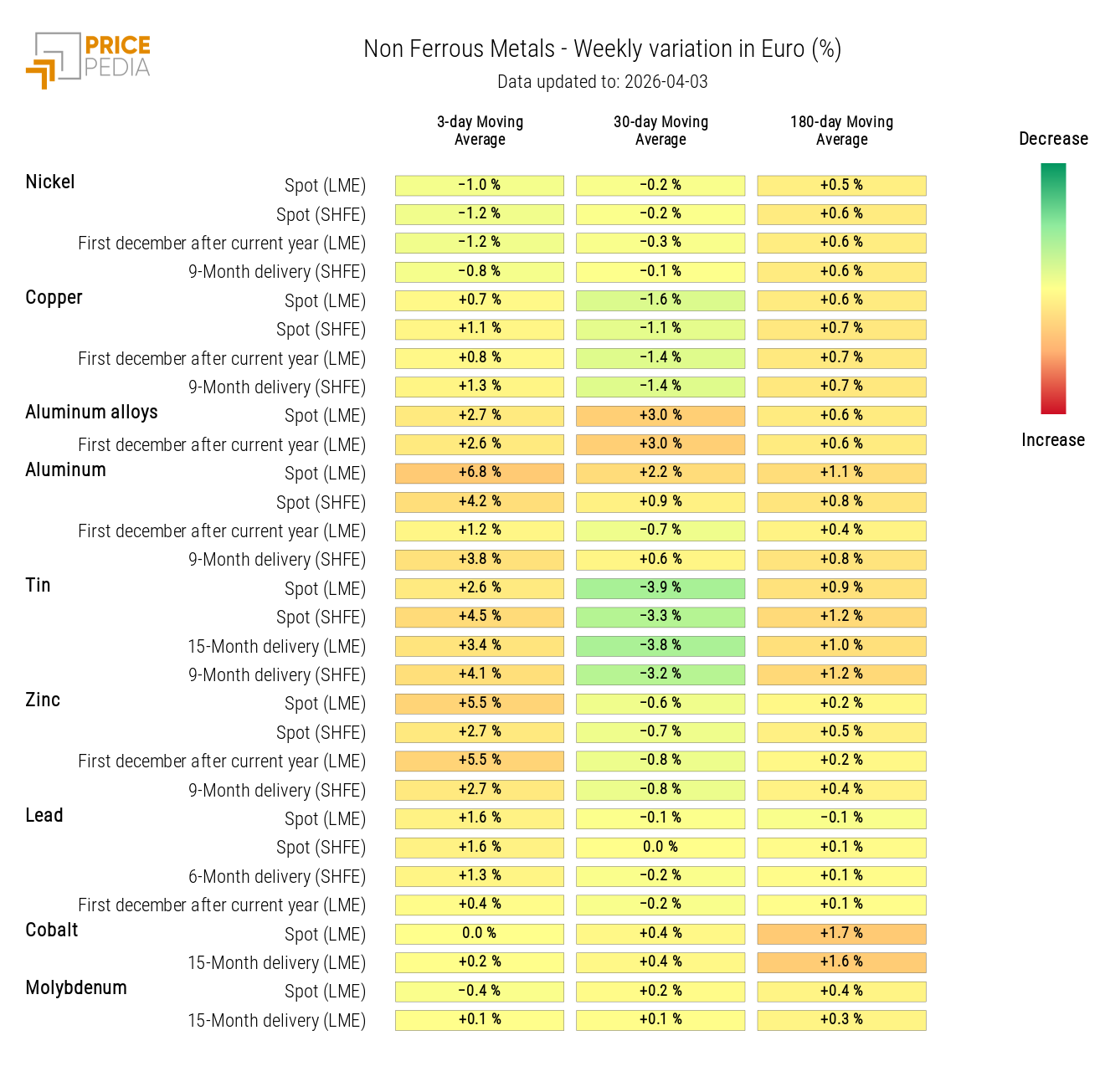
Among non-ferrous metals, the most significant increase concerned aluminum, affected by recent damage to two major regional producers (Emirates Global Aluminium and Aluminium Bahrain), which resulted in production shutdowns. These attacks increase the risk of prolonged supply disruptions, with potential supply losses that could persist even after a possible reopening of the Strait of Hormuz.
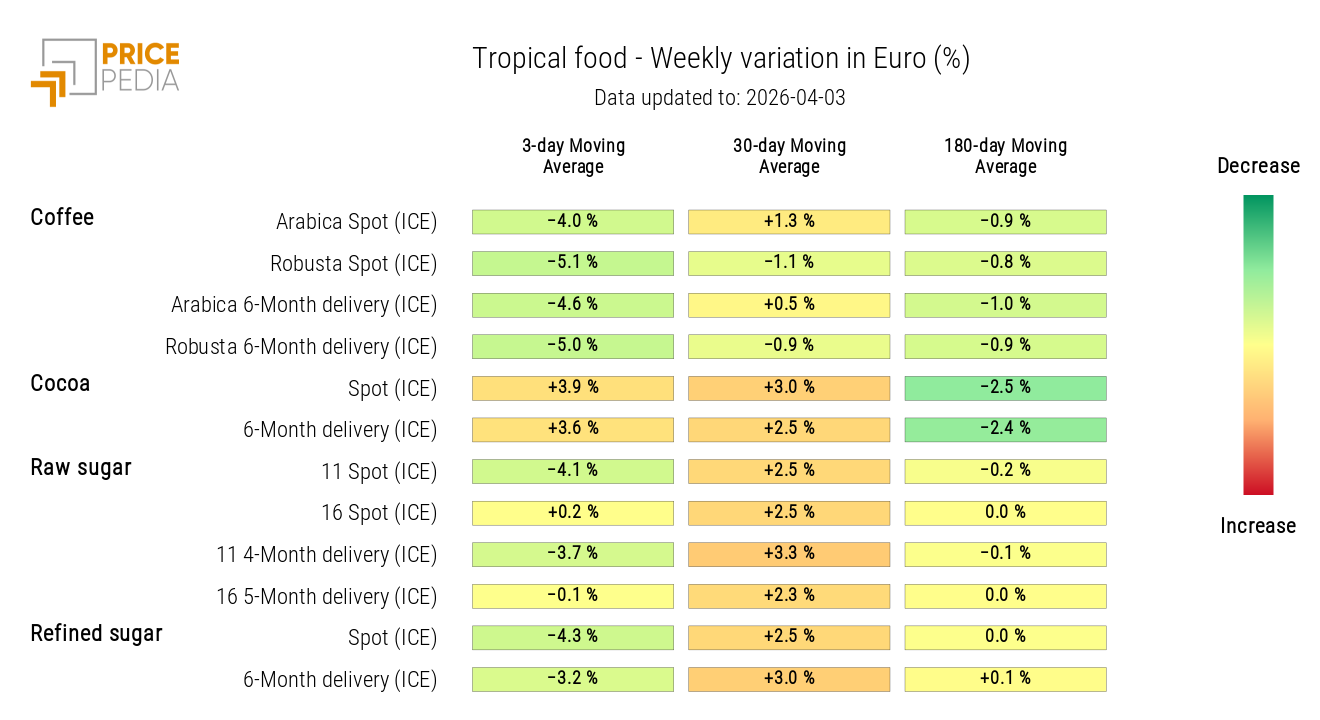
Regarding agricultural commodities, prices of tropical products continued their downward trend, led by declines in sugar and coffee, the latter influenced by increased exports from Uganda. In contrast, cocoa prices are rising due to concerns that El Niño could return toward the end of 2026, potentially harming production in key growing regions already affected by drought.
EU Inflation
New preliminary data on inflation in the euro area show a resurgence of inflationary pressures, mainly driven by rising energy costs. According to flash estimates published by Eurostat, annual inflation rose to 2.5% in March, reflecting the surge in energy prices linked to the Middle East conflict. The overall figure came slightly below analysts’ expectations (2.6%), but still marks a significant increase compared with February’s 1.9%.
In light of these data, it is very likely that the ECB’s next interest rate move will be upward, although it is still premature to determine with certainty the start of monetary tightening.
NUMERICAL APPENDIX
ENERGY
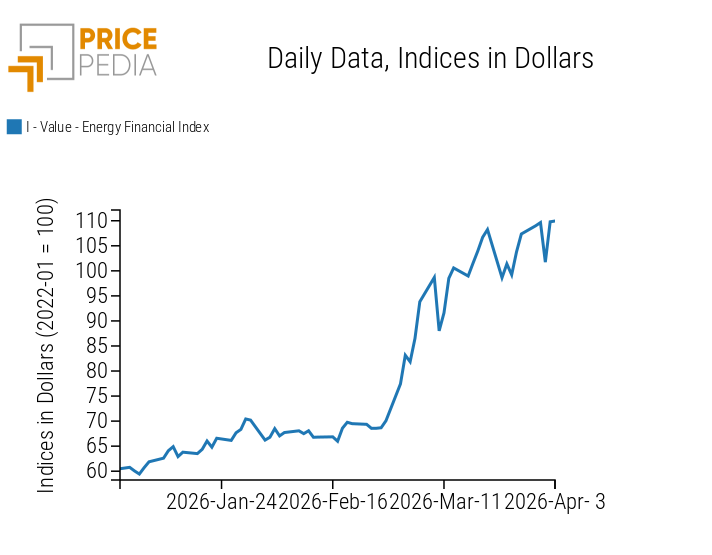
Despite strong and contrasting price fluctuations, the PricePedia financial index for energy products recorded a slight increase.
PricePedia Financial Index of Energy Prices in USD
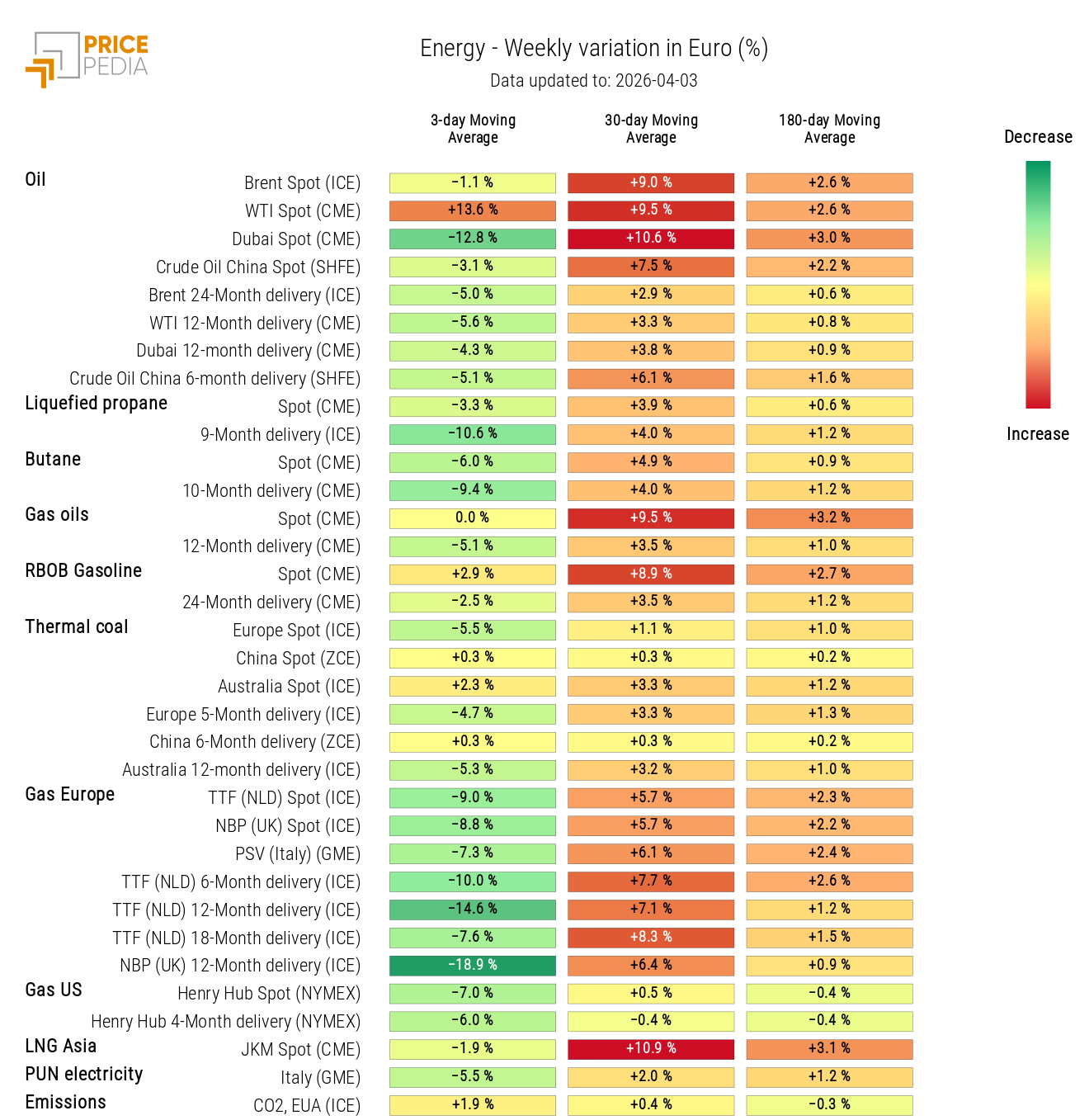
The energy heatmap highlights a surge in WTI prices and a significant decline in natural gas prices.
Heatmap of Energy Prices in Euro
PRECIOUS METALS
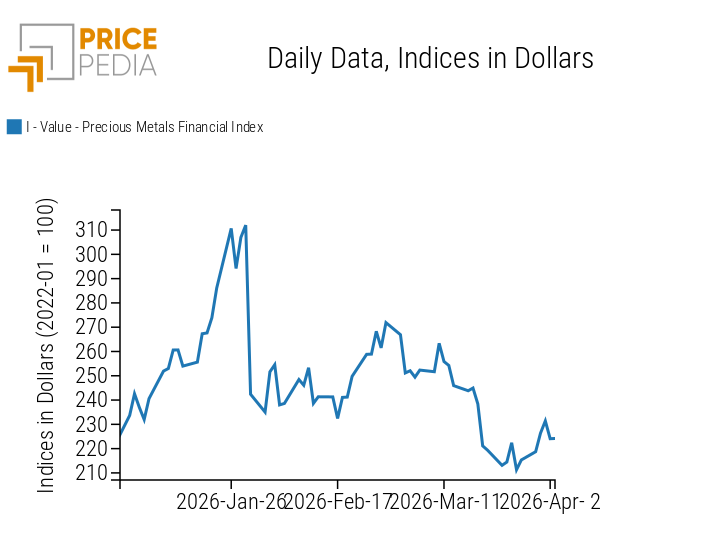
The precious metals financial index signals a recovery in safe-haven asset prices.[1]
PricePedia Financial Index of Precious Metals Prices in USD
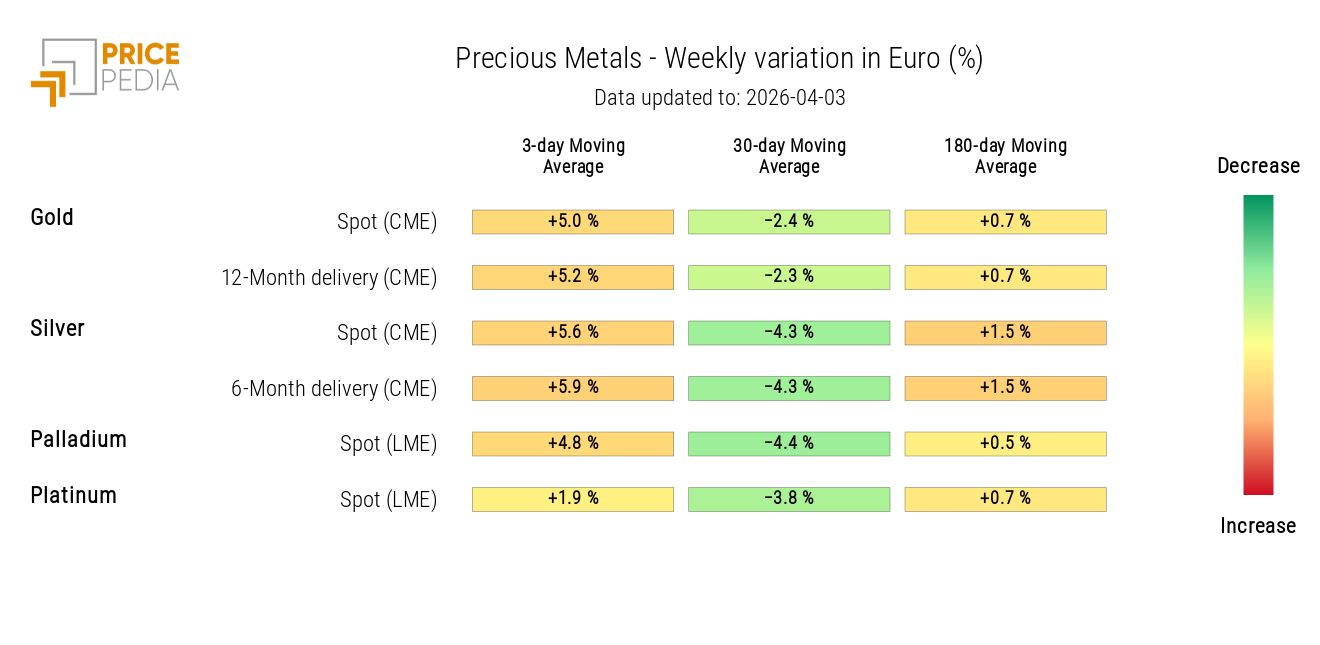
Heatmap analysis shows increases in the financial prices of gold and silver.
Heatmap of Precious Metals Prices in Euro
FERROUS METALS
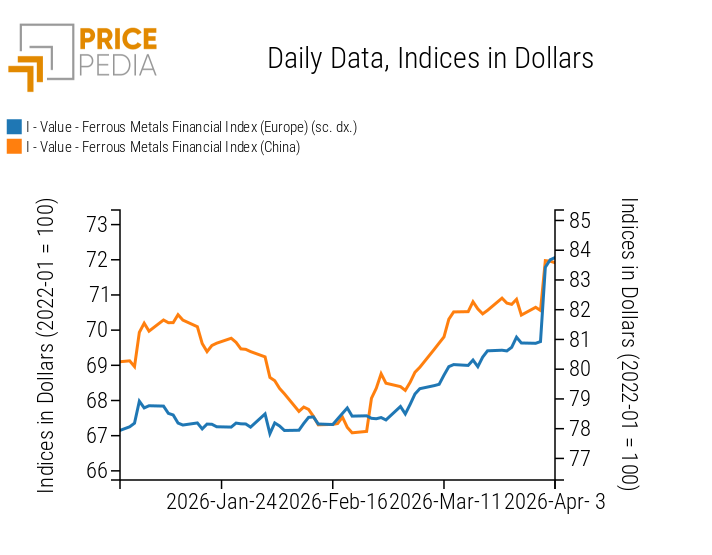
Both ferrous metal indices show weekly price increases.[1]
PricePedia Financial Indices of Ferrous Metal Prices in USD
Heatmap analysis highlights particularly strong price growth for Turkish steel scrap.
Heatmap of Ferrous Metal Prices in Euro
Do you want to stay up-to-date on commodity market trends?
Sign up for PricePedia newsletter: it's free!
INDUSTRIAL NON-FERROUS METALS
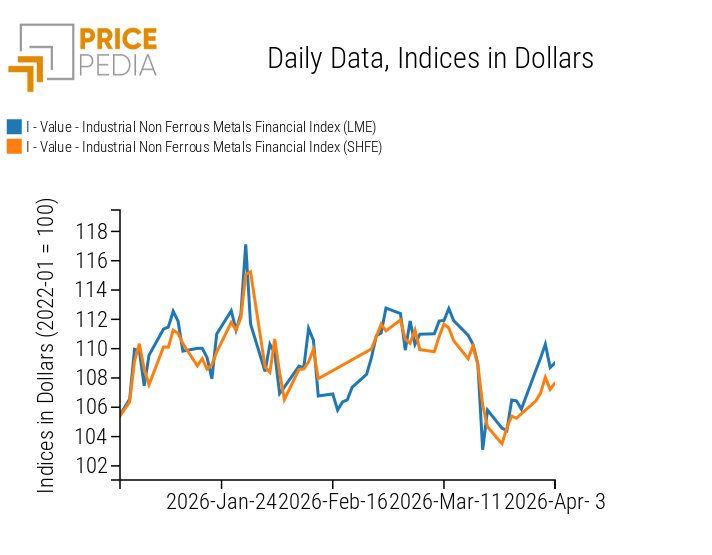
The two PricePedia financial indices for non-ferrous metals show a recovery in prices on the LME[1] and SHFE markets.
PricePedia Financial Indices of Industrial Non-Ferrous Metal Prices in USD
Heatmap analysis of non-ferrous metals highlights weekly price increases in aluminum, zinc, and tin.
Heatmap of Non-Ferrous Metal Prices in Euro
FOOD COMMODITIES
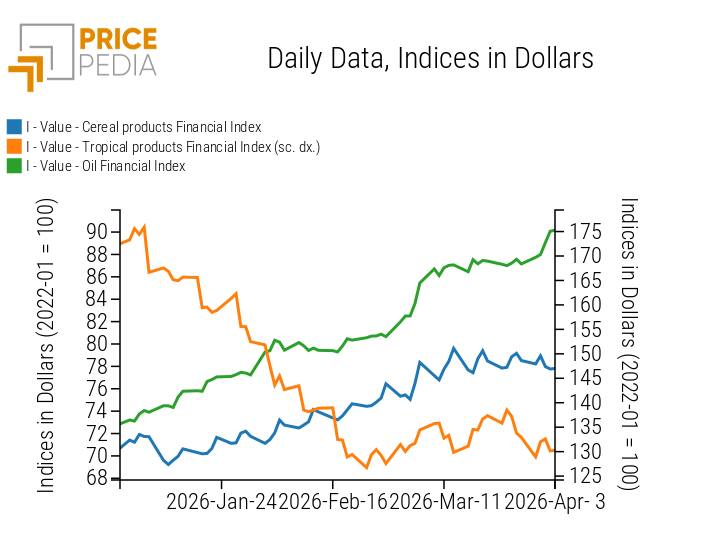
Financial indices for tropical products and cereals[1] show declining prices, while the overall food index recorded a slight increase.
PricePedia Financial Indices of Food Prices in USD
CEREALS
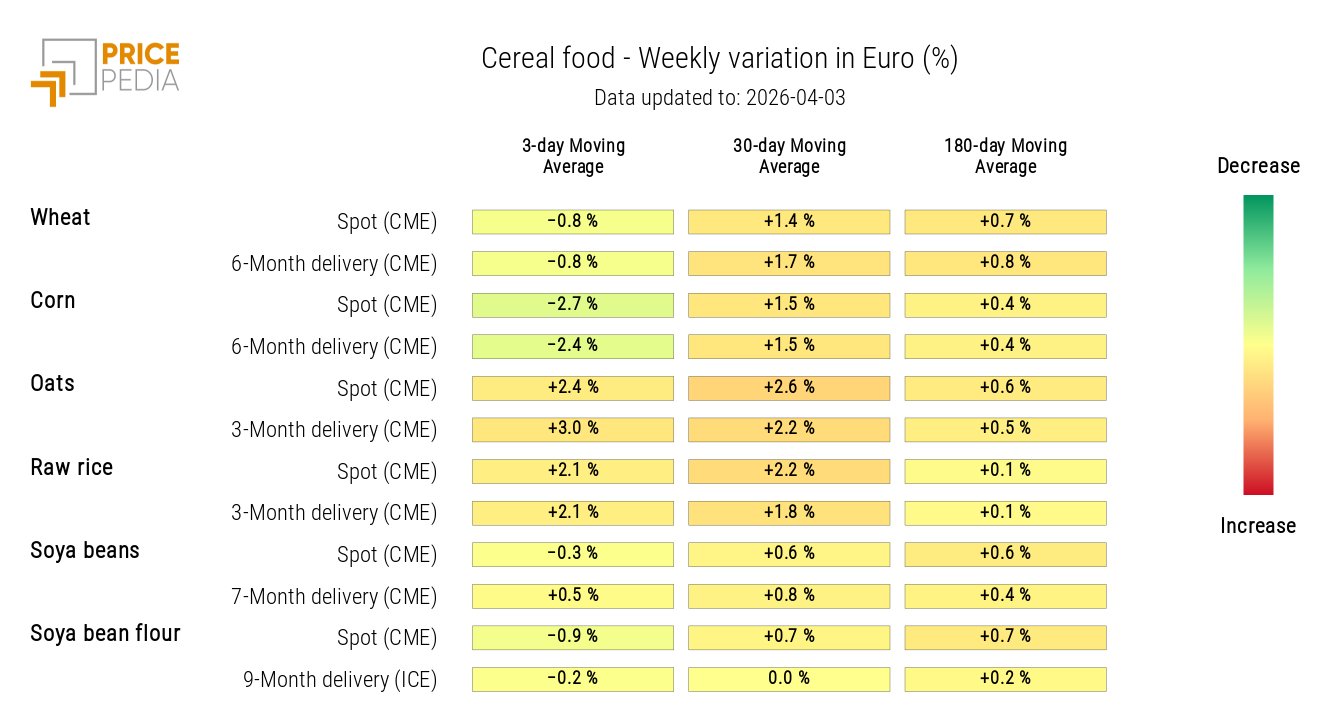
The cereal heatmap highlights a decline in corn prices alongside a recovery in oat prices.
Heatmap of Cereal Prices in Euro
TROPICAL PRODUCTS
The tropical products heatmap shows generalized price declines, with the exception of cocoa.
Heatmap of Tropical Food Prices in Euro
OILS
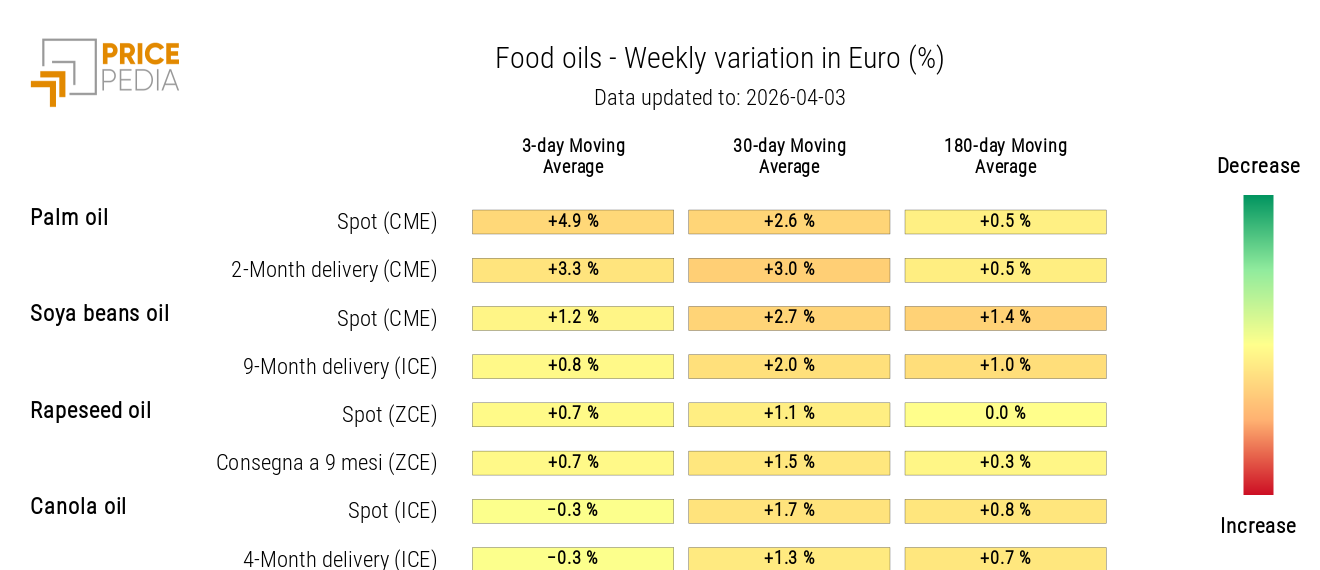
The edible oils heatmap highlights an increase in palm oil prices.
Heatmap of Edible Oil Prices in Euro
[1] The historical series of the PricePedia financial products index is updated as of April 2, due to the closure of Western financial markets for the Good Friday holiday.
You may be interested in:

China economic update February 2026
Published by Luca Sazzini. .
Conjunctural Indicators Global Economic TrendsWhat price trends can we expect in light of the conflict in the Persian Gulf? [ Read all ]

Commodity volatility accentuated by uncertainty over the outcome of negotiations with Iran
Published by Luca Sazzini. .
Conjunctural Indicators Commodities Financial WeekEU-Australia Trade Agreement: A New Chapter in Free Trade [ Read all ]

The impact of tensions in the Middle East on energy and metal prices
Published by Luca Sazzini. .
Conjunctural Indicators Commodities Financial WeekExpectations of less accommodative monetary policy are holding back the rise in metal prices [ Read all ]