Commodity volatility accentuated by uncertainty over the outcome of negotiations with Iran
EU-Australia Trade Agreement: A New Chapter in Free Trade
Published by Luca Sazzini. .
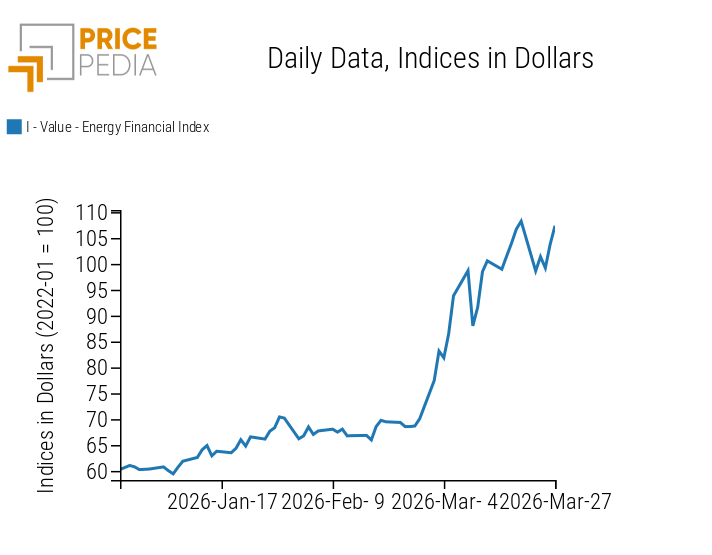
Conjunctural Indicators Commodities Financial WeekAt the beginning of the week, financial prices of energy commodities experienced a sharp correction, with Brent crude falling by -11% in a single day. The price decline was triggered by Donald Trump’s announcement regarding a pause in U.S. attacks against Iranian energy infrastructure, following positive signals reportedly emerging from alleged peace talks. Tehran, however, denied the existence of such negotiations and rejected the subsequent truce proposal advanced by the United States, which included limitations on Iran’s nuclear and missile programs. Iran in turn presented a counterproposal to end the conflict, including security guarantees, compensation for damages suffered, and recognition of its authority over the Strait of Hormuz among its conditions.
The stalemate in negotiations, combined with the continuation of Iranian attacks against Gulf countries, pushed oil prices back up, reaching 113 $/barrel by the end of the week. The International Energy Agency described the current situation as the most severe oil supply disruption in recent history, highlighting the fragility of market outlooks despite ongoing diplomatic efforts.
In this context, the European Commission decided to postpone the proposal for a permanent ban on Russian oil imports in order to avoid further exacerbating the energy shock.
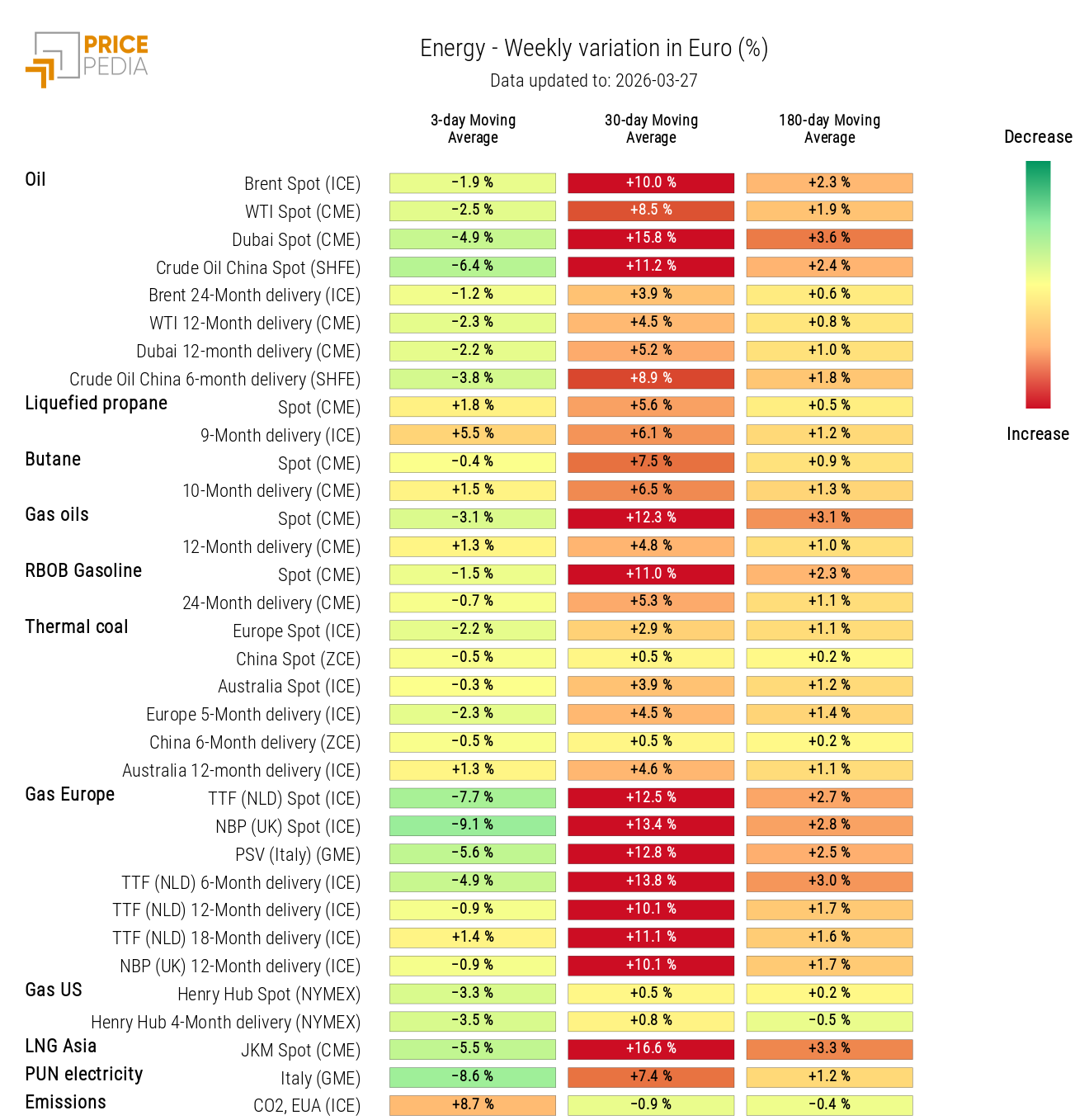
The European natural gas market also underwent a significant correction, with the TTF Netherlands benchmark returning to around 55 euro/MWh. Market fundamentals nevertheless remain particularly tight, with European storage levels below 30% and the risk of prolonged disruptions to Qatari supplies following last week’s attack on QatarEnergy. As reported in last week’s article: “The impact of tensions in the Middle East on energy and metal prices”, the Iranian attack reduced the company’s LNG export capacity by approximately 17%, damaging the world’s largest LNG export terminal. This situation increases competition for supply between the European and Asian markets at a time when the EU appears particularly vulnerable from an energy perspective.
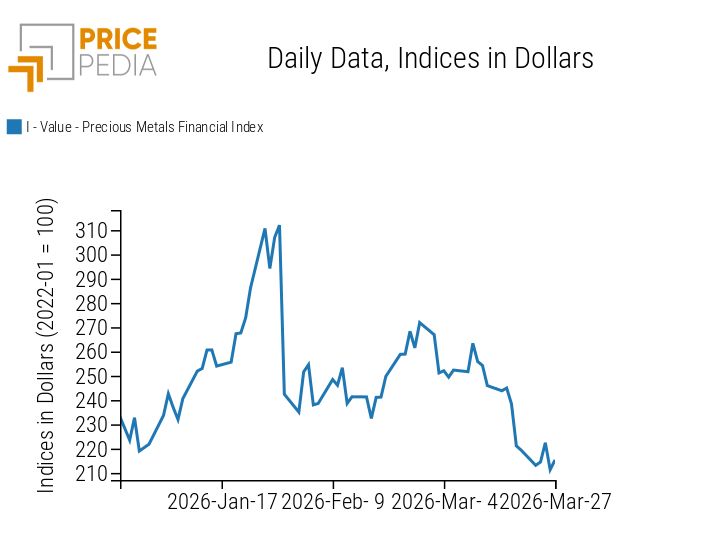
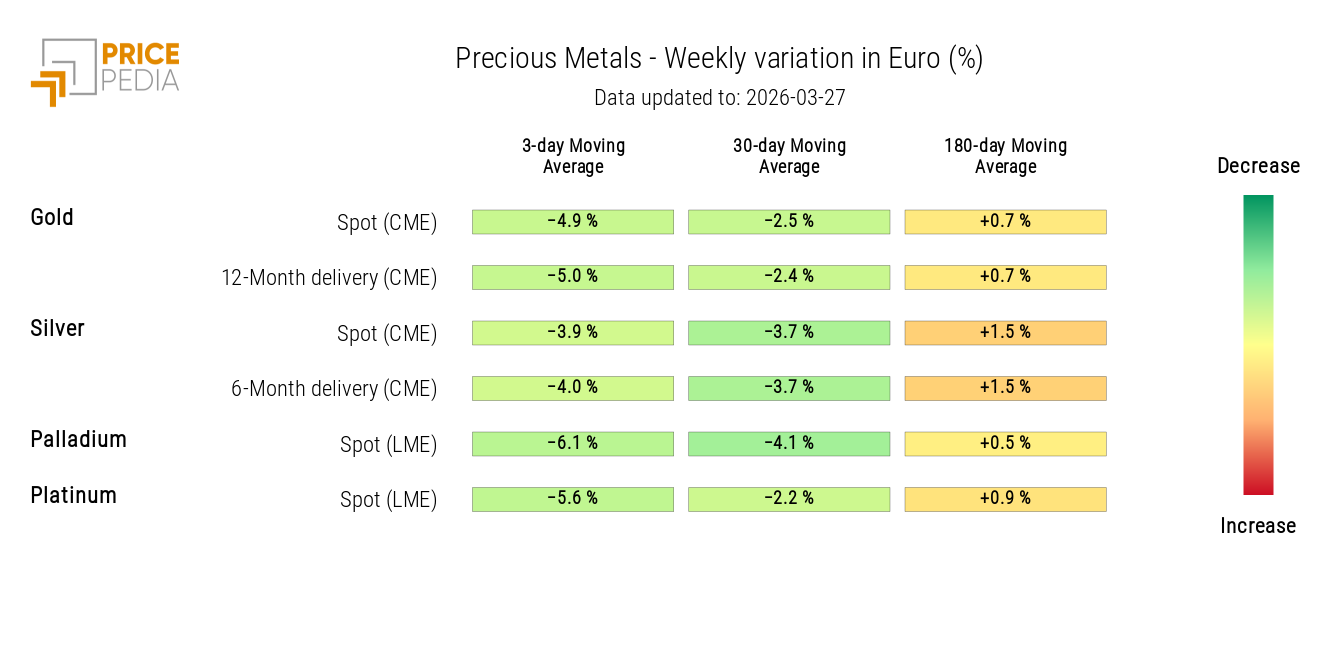
Financial prices of precious metals continued their downward trend, which began following the outbreak of the conflict, with gold closing the week below 4500 $/tonne. According to Bloomberg data, the Turkish central bank sold and swapped (through swap contracts) about 60 tonnes of gold, worth more than 8 billion dollars in total, during the two weeks following the outbreak of the conflict in Iran.
The escalation of tensions in the Persian Gulf has also led to declining prices of safe-haven assets, mainly driven by expectations of tighter Western monetary policies due to anticipated inflation increases linked to energy costs.
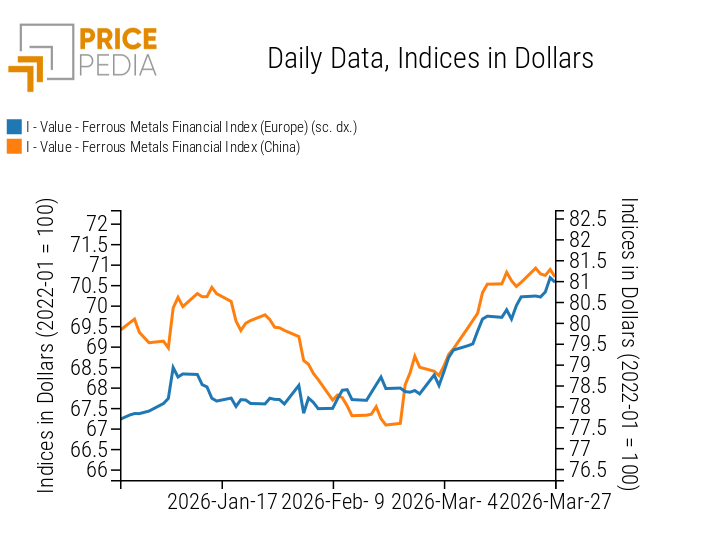
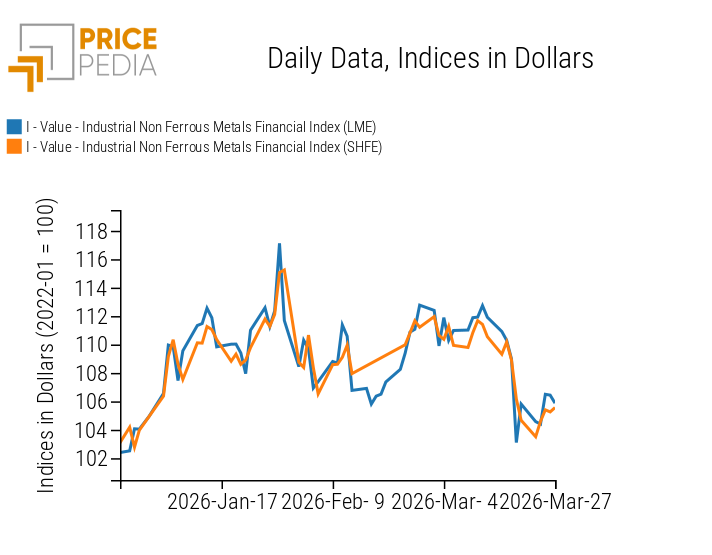
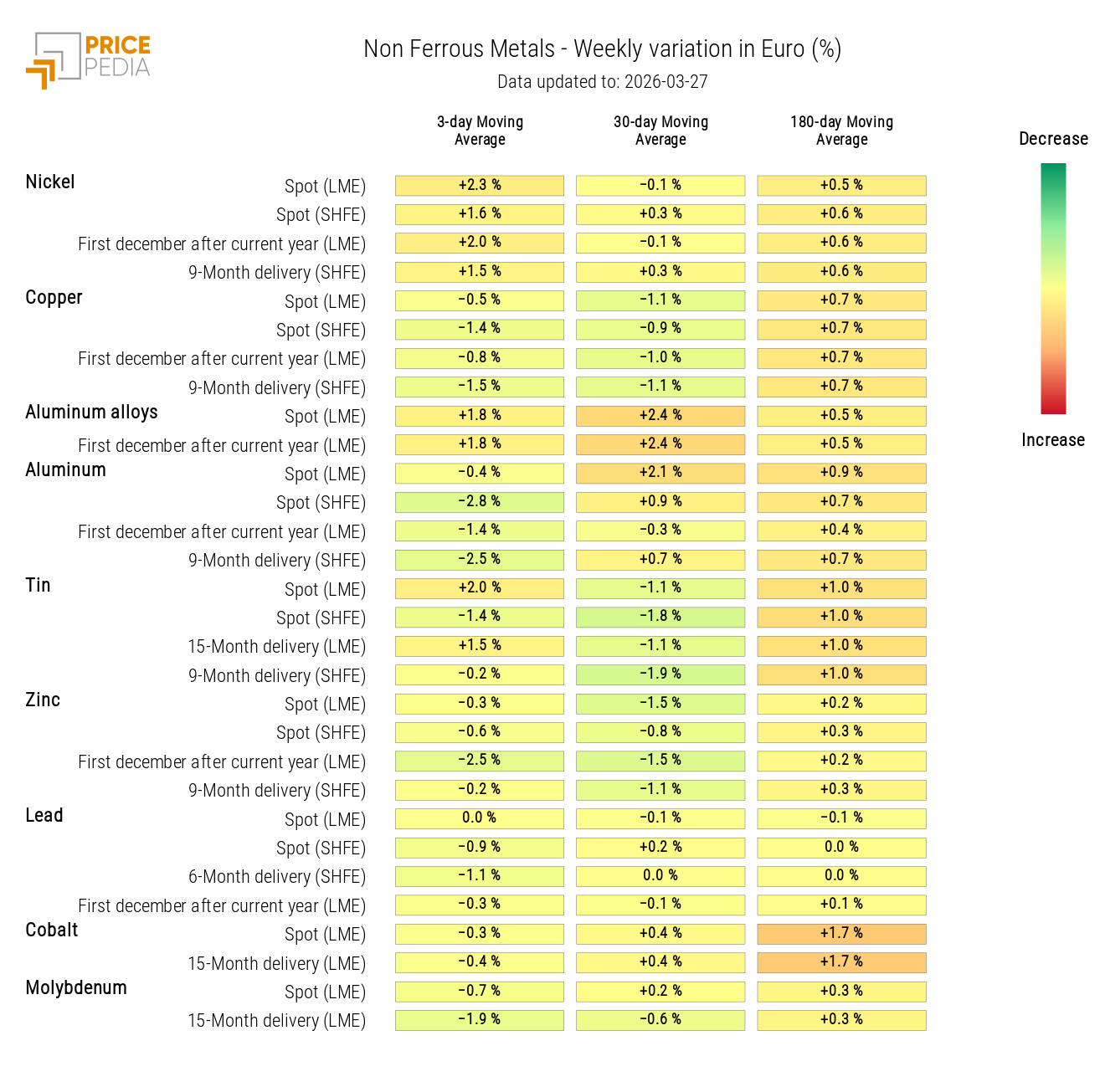
In the industrial metals sector, prices of ferrous metals continued to move sideways, while non-ferrous metals stabilized following last week’s sharp decline. Among the main weekly changes was the increase in nickel prices, linked to Indonesia’s plans to introduce new export taxes. Indonesia is the world’s leading nickel producer and represents a significant source of global supply. As such, changes in its trade policy are sufficient to influence international price dynamics.
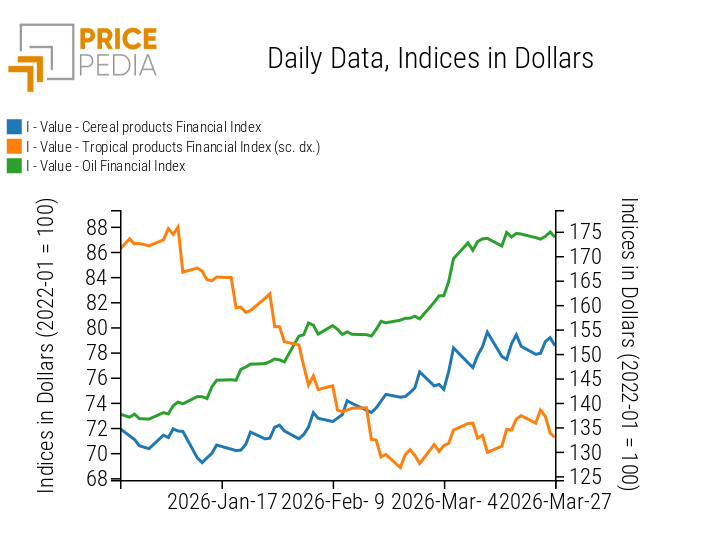
In the food commodities sector, price dynamics remained fragmented, with contrasting trends depending on the product category.
EU and Australia sign a new trade agreement
This week, the European Union and Australia concluded an ambitious free trade agreement after eight years of negotiations. The deal provides for the elimination of more than 99% of customs duties on European exports to Canberra, generating significant benefits for EU companies and estimated savings of about €1 billion per year in tariffs.
According to European Commission economists, EU exports to Australia could grow by 33% over the next ten years, with EU GDP increasing by up to €4 billion by 2030.
The sectors expected to benefit most from the agreement include European food products, such as wine, chocolate, and cheese, thanks to the elimination of tariffs, as well as industrial goods and services. For certain sensitive categories, quotas and safeguard mechanisms will remain in place to protect European farmers from potential import surges.
A key element of the agreement also concerns EU access to critical materials such as aluminum, lithium, and manganese, which are essential for clean energy industries, batteries, and digital technologies. The reduction or elimination of tariffs on these commodities will help strengthen and diversify European supply chains.
Overall, this agreement represents a significant step in the EU’s strategy to diversify global trade partners while strengthening economic and strategic ties with the Indo-Pacific region.
NUMERICAL APPENDIX
ENERGY
The PricePedia financial index for energy products recorded a sharp correction on Monday, followed by a recovery during the rest of the week.
PricePedia Financial Index of energy prices in dollars
The energy heatmap highlights a weekly decline in the 3-day moving average of oil and natural gas prices.
HeatMap of energy prices in euros
PRECIOUS METALS
The financial index of precious metals continues its downward price trend.
PricePedia Financial Index of precious metals prices in dollars
The precious metals heatmap turns green, indicating a generalized price decline.
HeatMap of precious metals prices in euros
FERROUS METALS
The two financial indices for ferrous metals recorded slight price increases.
PricePedia Financial Indices of ferrous metals prices in dollars
Do you want to stay up-to-date on commodity market trends?
Sign up for PricePedia newsletter: it's free!
INDUSTRIAL NON-FERROUS METALS
After an initial decline, both financial indices of non-ferrous metals recovered toward the end of the week.
PricePedia Financial Indices of industrial non-ferrous metals prices in dollars
Analysis of the non-ferrous heatmap highlights price increases in nickel, aluminum alloys, and tin.
HeatMap of non-ferrous prices in euros
FOOD COMMODITIES
All three financial food indices displayed mostly sideways weekly dynamics.
PricePedia Financial Indices of food prices in dollars
CEREALS
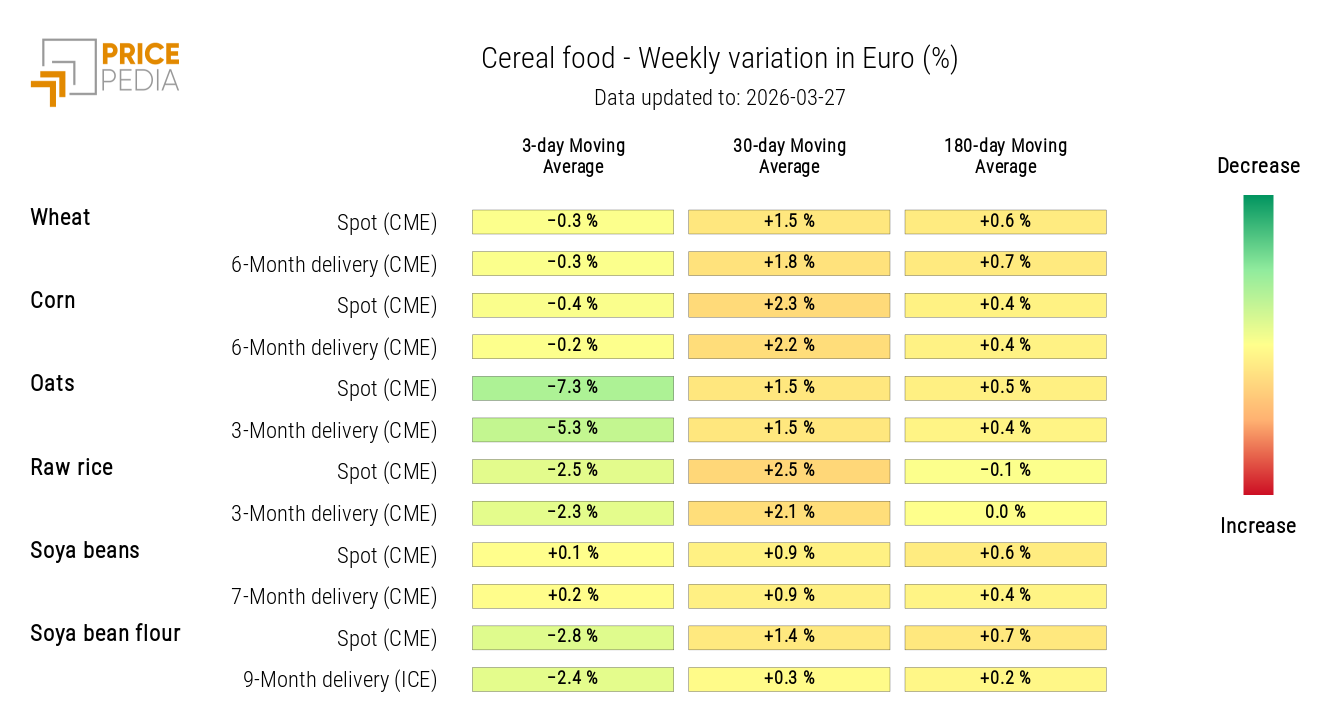
The cereals heatmap signals a weekly decline in oat prices.
HeatMap of cereal prices in euros
TROPICAL PRODUCTS
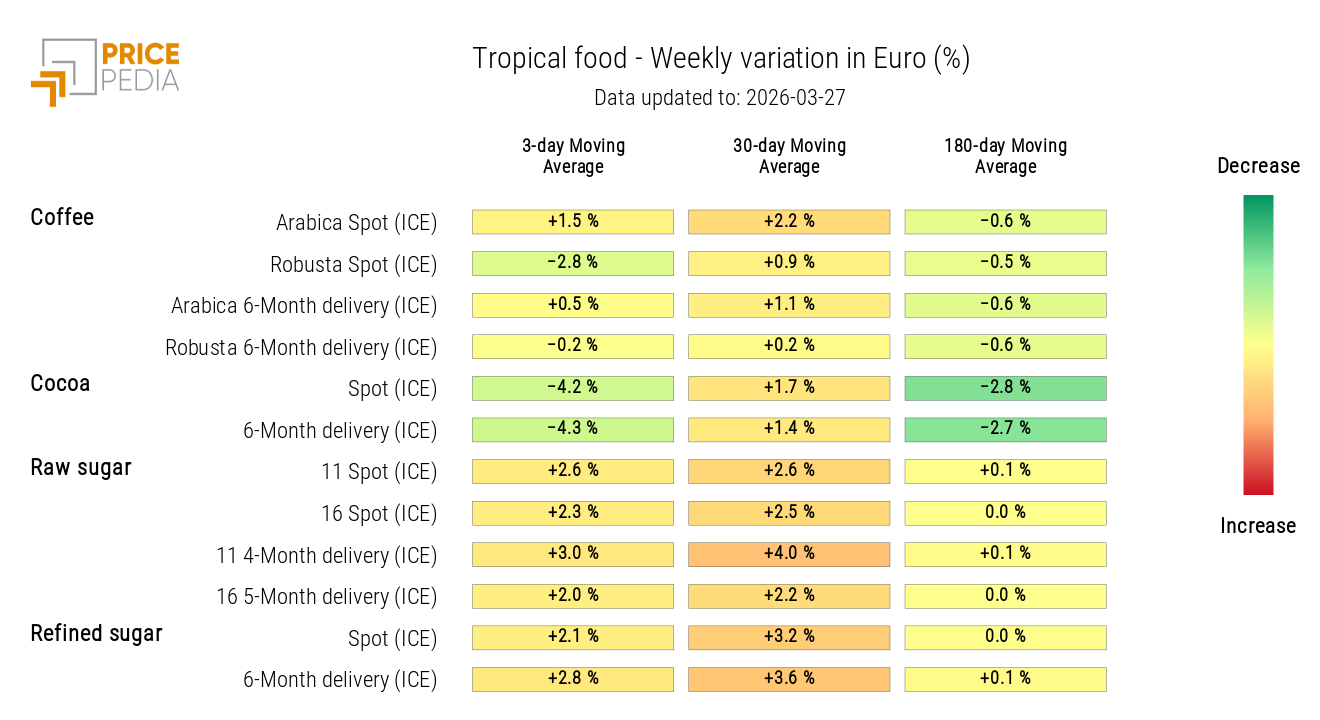
The tropical products heatmap highlights declining prices for cocoa and robusta coffee, alongside rising prices for sugar and arabica coffee.
HeatMap of tropical food prices in euros
OILS
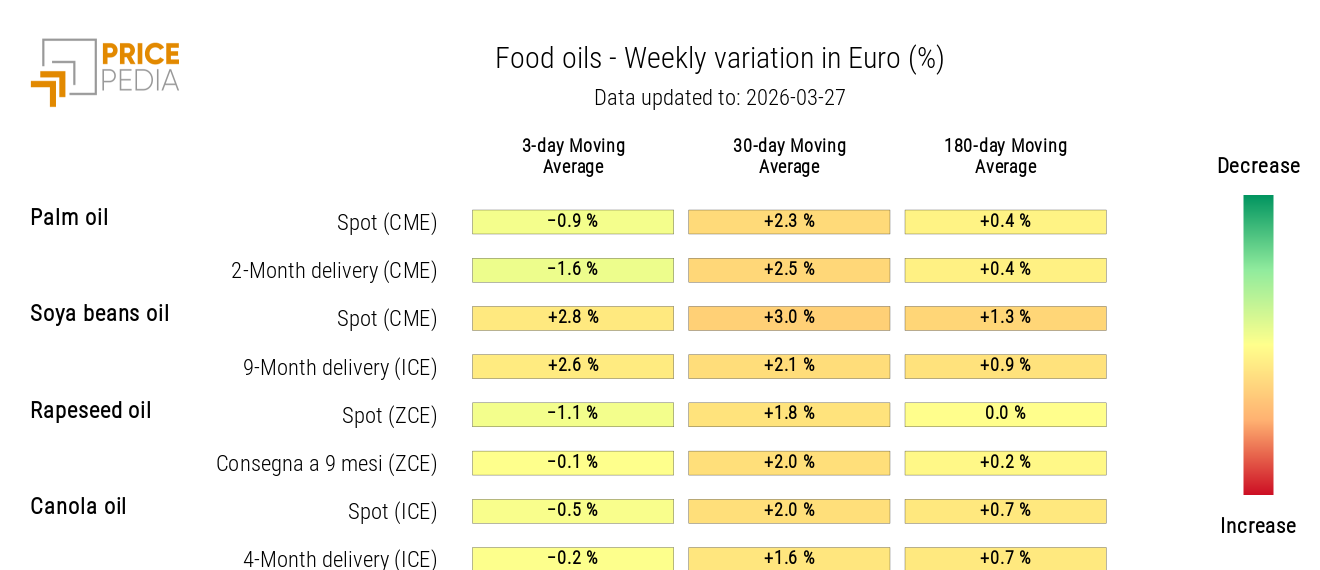
The edible oils heatmap shows a weekly recovery in soya beans oil prices.
HeatMap of edible oil prices in euros
You may be interested in:

China economic update February 2026
Published by Luca Sazzini. .
Conjunctural Indicators Global Economic TrendsWhat price trends can we expect in light of the conflict in the Persian Gulf? [ Read all ]

The impact of tensions in the Middle East on energy and metal prices
Published by Luca Sazzini. .
Conjunctural Indicators Commodities Financial WeekExpectations of less accommodative monetary policy are holding back the rise in metal prices [ Read all ]
Commodity prices at the mercy of the conflict in the Middle East
Published by Luca Sazzini. .
Conjunctural Indicators Commodities Financial WeekThe announcement of the IEA's additional supply is not enough to curb oil prices [ Read all ]