Direct and indirect channels of the energy shock on Kraft Paper prices
How the energy component is transmitted along the value chain
Published by Pasquale Marzano. .
Packaging Paper Price DriversIn the article The direct effects of Natural Gas on purchasing materials, it was highlighted that, for some commodities, there is a direct relationship between their price and that of natural gas. In the case of the paper value chain, a limited direct effect is observed, despite the fact that paper production is highly energy-intensive. This result is explained by the ability of production processes to internally generate energy, through the use of biomass, thereby reducing direct dependence on market energy prices.
However, even when direct transmission is relatively limited, energy costs still affect paper prices through indirect channels operating along the intermediate input value chain.
This article analyzes two specific cases within the paper industry to show how energy commodities also enter indirectly into price formation: kraftliner and kraft paper for sacks.
The case of Kraftliner
Kraftliner is one of the main types of paper used in the production of corrugated board (as the outer layer or liner) and is primarily made from virgin softwood fibers.
For this reason, its main cost driver is pulp, as described in the article Increasing trend for kraftliner prices.
In addition to its direct effects, energy costs tend to influence kraftliner indirectly through pulp prices: pulp production incorporates significant direct energy costs.
Overall, the direct and indirect effects of the energy component on kraftliner prices can be summarized in the figure below, which reports long-term elasticities across the different raw material channels. The chart shows both direct and indirect effects, excluding those related to transport and services which, although relevant, require further analysis.
Kraftliner: direct and indirect effects of the energy component
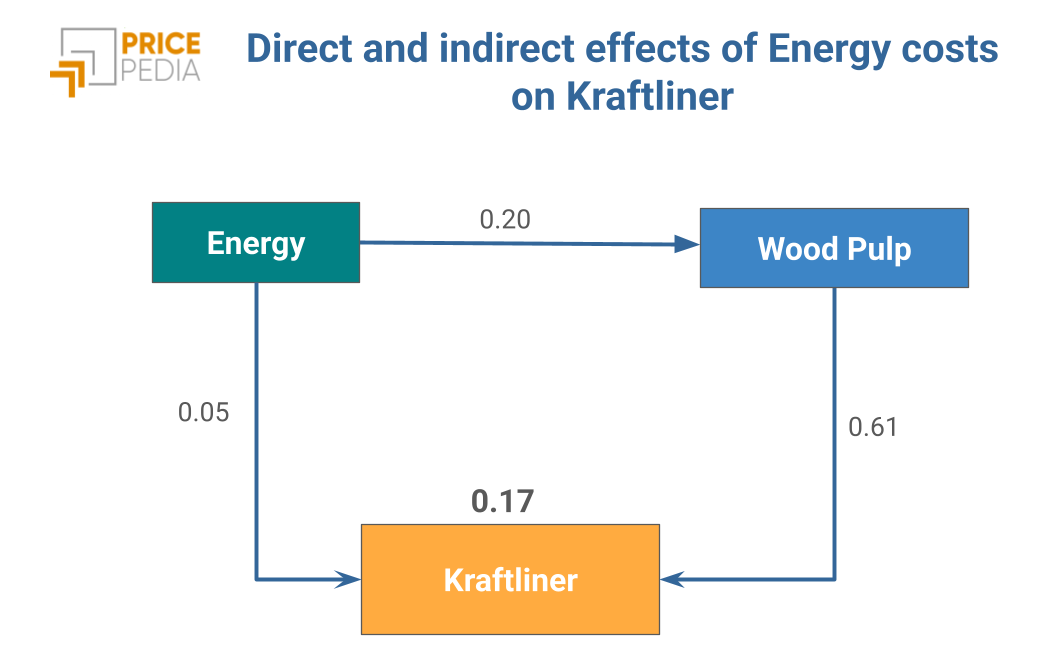
Although the direct energy effect is relatively limited, the overall impact is significant. This results in an energy-related elasticity of around 0.17: for example, if energy costs were to increase by 50% on average, kraftliner prices would tend to rise by more than 8%.
The case of Sack Kraft Paper
Indirect channels are even more relevant in the case of kraft paper for sacks. In a previous article, the energy component does not appear among the main direct determinants. However, it acts indirectly through both pulp prices and resin prices.
Also in this case, the direct and indirect effects of the energy component—excluding transport and services—can be summarized in the figure below, which reports long-term elasticities related to the price of kraft paper for sacks.
Kraft paper for sacks: direct and indirect effects of the energy component
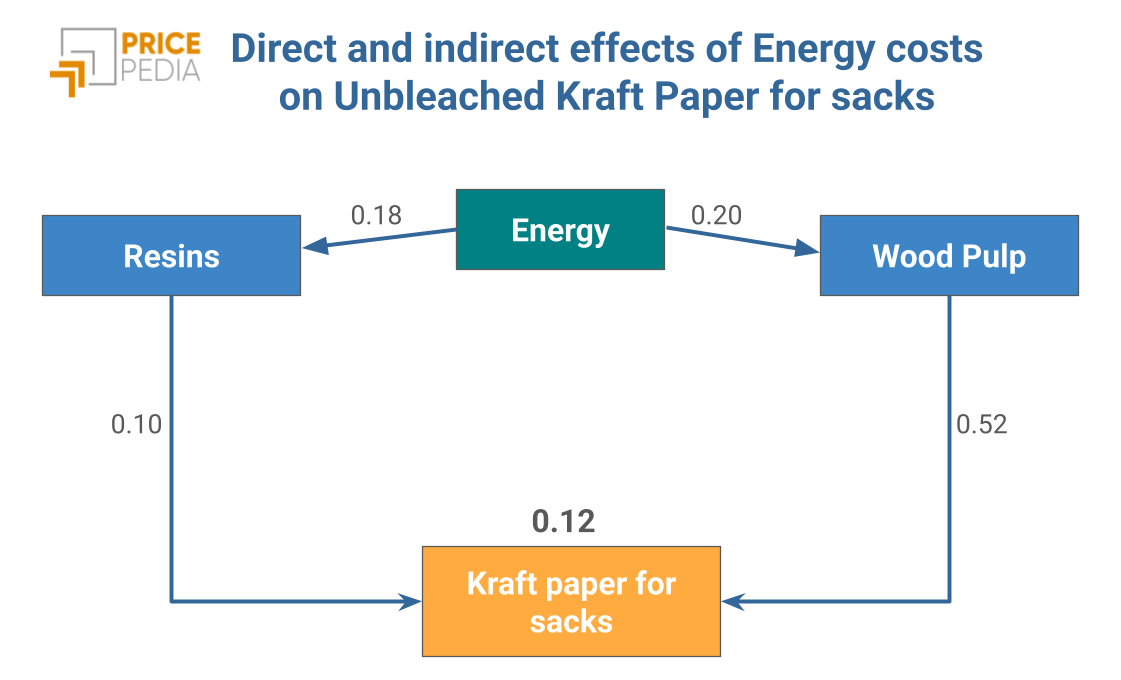
Compared to kraftliner, a greater weight emerges for the indirect channel linked to chemical inputs. In particular, the resins used to improve product performance depend on the urea value chain, which is linked to natural gas via ammonia.
In this case, energy costs enter the price formation of kraft paper through intermediate inputs whose prices are influenced by energy market dynamics.
For kraft paper for sacks, the overall effect of the energy component is estimated at 0.12.
The chart below reports the forecasts for kraftliner and kraft paper for sacks prices.
Kraft paper price forecasts for 2026–2027
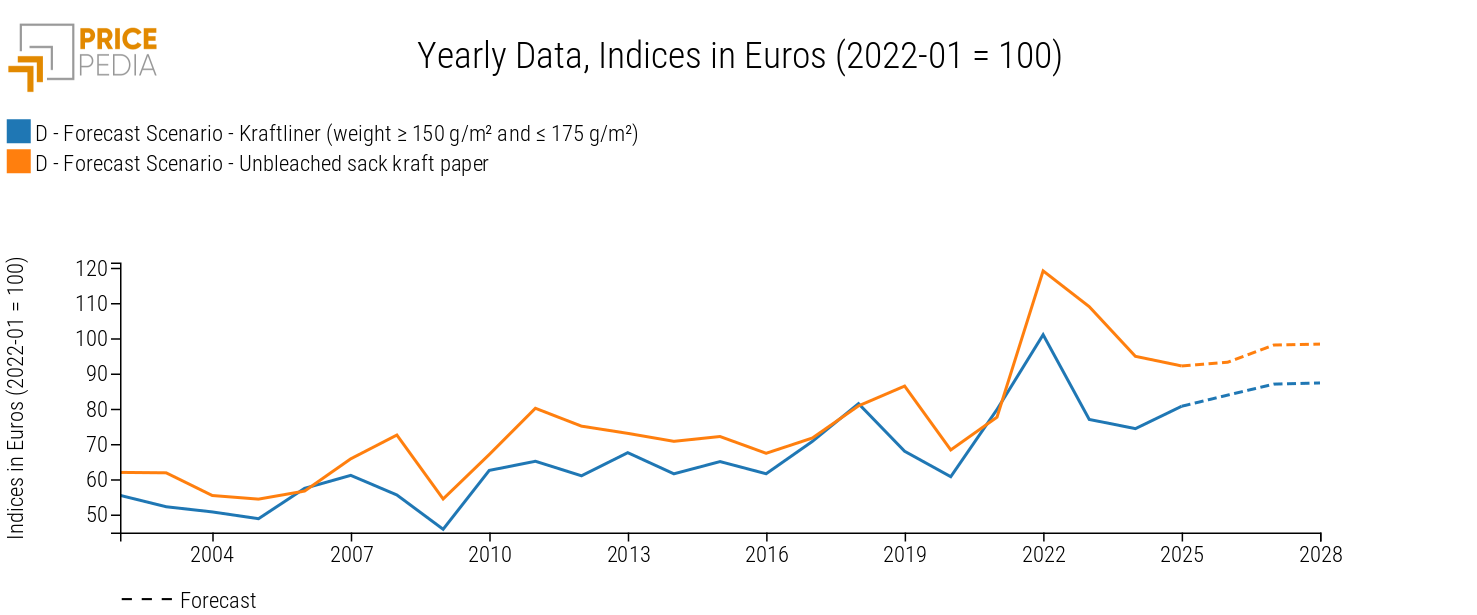
In 2026–2027, the expected overall increase in kraftliner prices exceeds 7.5%, while for kraft paper for sacks a lower growth of +6.4% is projected over the same period. This is consistent with a stronger impact of the energy component on kraftliner.
1. To measure the effect of energy costs on pulp, the econometric model described in the article NBSK pulp price forecast scenario was used.
You may be interested in:

Packaging paper prices rise in 2025
Published by Pasquale Marzano. .
Packaging Paper Cost pass-throughAn updated comparison with cost dynamics [ Read all ]

The price of sack kraft paper explained through its determinants
Published by Pasquale Marzano. .
Packaging Paper Price DriversPaper pulp is the main cost driver, but not the only one [ Read all ]
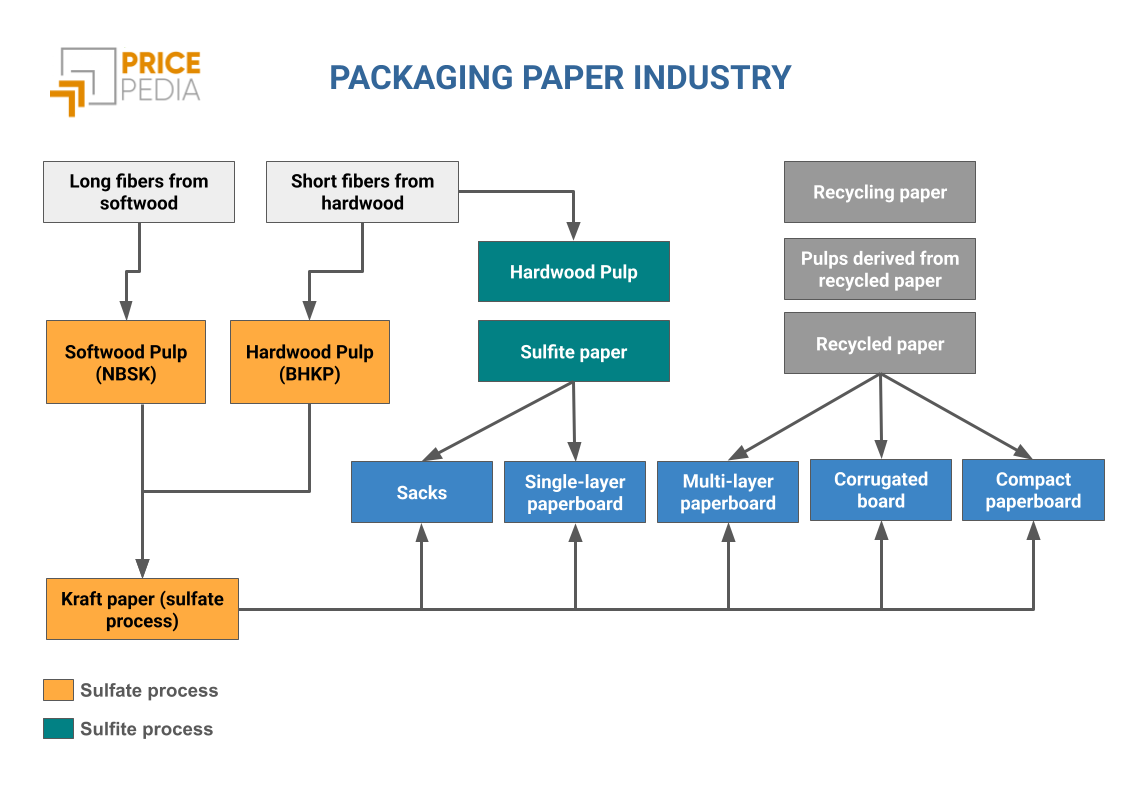
Price differentiation along the packaging paper supply chain
Published by Pasquale Marzano. .
Wood and Paper Packaging Paper Analysis tools and methodologiesThe case of multilayer paperboard [ Read all ]