Commodity prices at the mercy of the conflict in the Middle East
The announcement of the IEA's additional supply is not enough to curb oil prices
Published by Luca Sazzini. .
Conjunctural Indicators Commodities Financial WeekThe outbreak of the conflict in Iran is generating significant uncertainty in energy markets, where financial prices are now driven almost exclusively by developments in the crisis.
On Monday, March 9, Brent prices recorded an increase of nearly 7%, reaching $99 per barrel, supported by production cuts in Iraq, Kuwait, and the United Arab Emirates. The following day, intraday prices even reached $120 per barrel, before collapsing and closing at $87.8 per barrel.
The decline was mainly driven by President Trump’s announcement of a possible imminent end to the conflict, along with rumors of a potential easing of U.S. oil sanctions against certain countries. Additional pressure on the market came from G7 finance ministers, who were already considering a massive release of stocks from strategic reserves. This measure was then confirmed during the extraordinary meeting on Wednesday, when the International Energy Agency (IEA) authorized the coordinated release of 400 million barrels, the largest ever carried out.
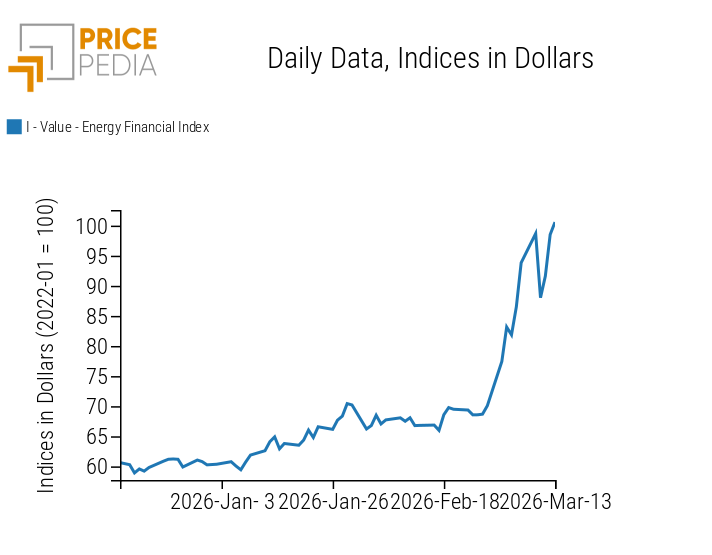
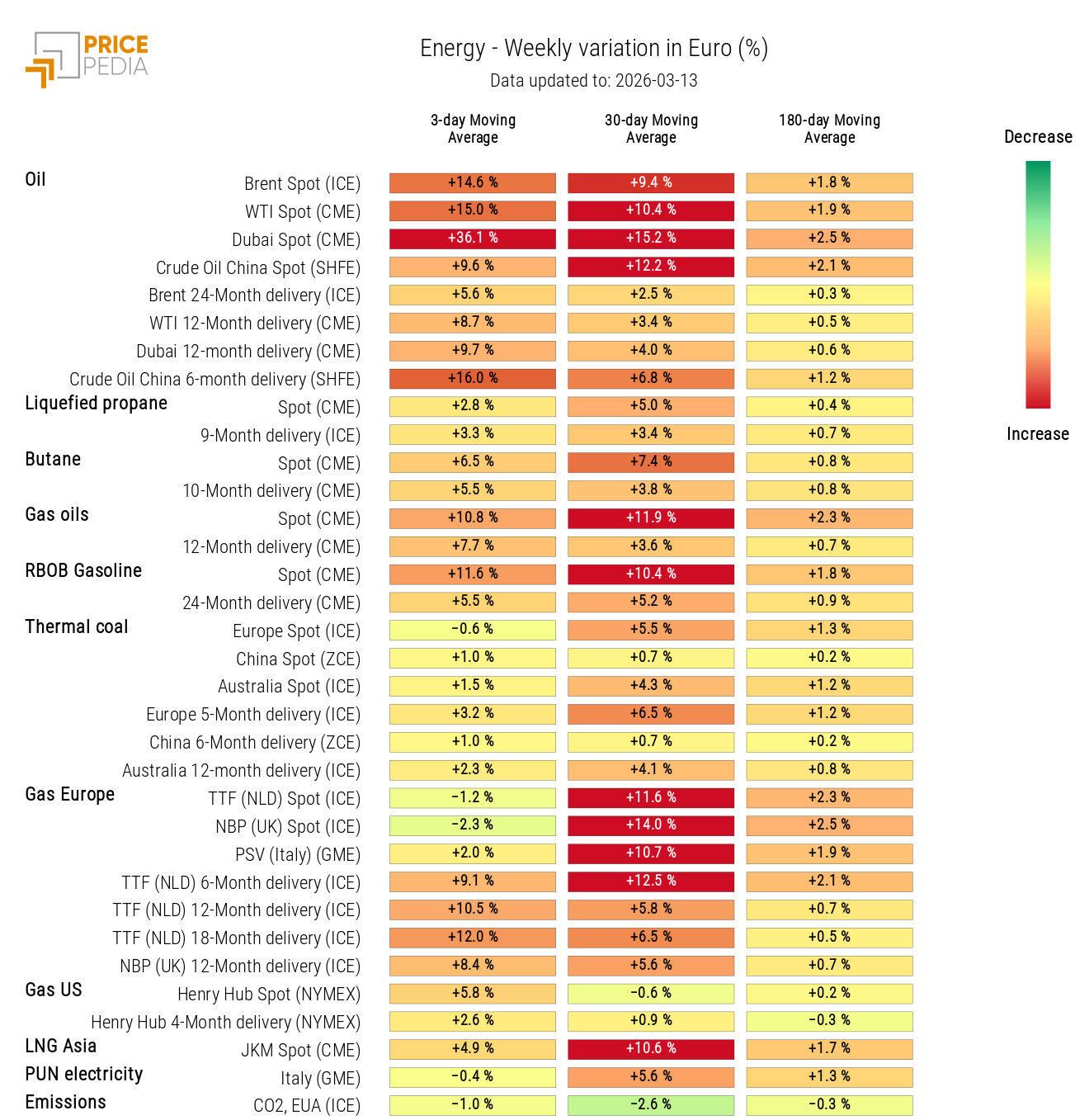
Despite this intervention, oil prices quickly resumed their upward trend due to the intensification of the conflict in the Middle East, closing the week above $100 per barrel. At present, the only factor capable of significantly reducing oil prices is the end of the conflict in the Middle East and the resumption of trade flows through the Strait of Hormuz.
Financial markets for distillates also remain strongly supported, with diesel and gasoline prices both showing weekly increases of over 10%. Meanwhile, spot prices for European natural gas TTF Netherlands are slightly down, although they remain around €50/MWh.
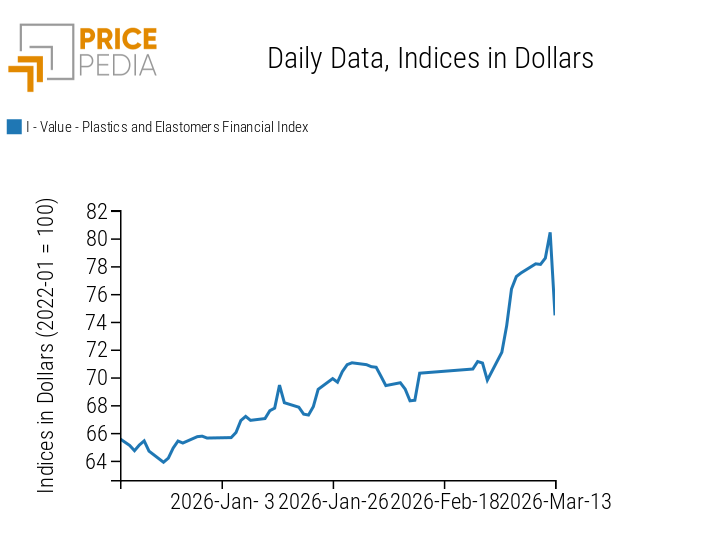
In the thermoplastics sector, Chinese prices of financial contracts listed on the Dalian Commodity Exchange (DCE) experienced a sharp correction on Friday, completely erasing the gains recorded during the week. In particular, PVC, polypropylene, and LLDPE recorded daily declines of -11%, -8%, and -6%, respectively.
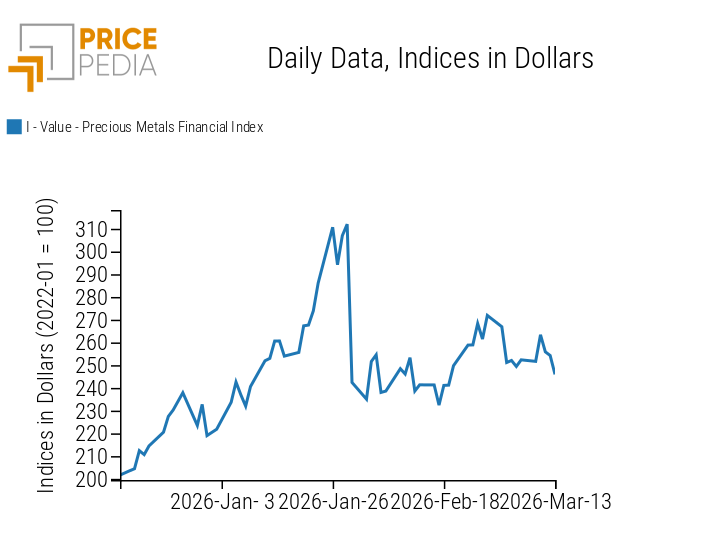
Precious metals prices remained broadly stable on a weekly basis, showing a slight decline. In this context of high uncertainty, the lack of an increase in safe-haven assets reflects expectations of tighter monetary policies, fueled by concerns that rising oil prices may translate into greater inflationary pressures.
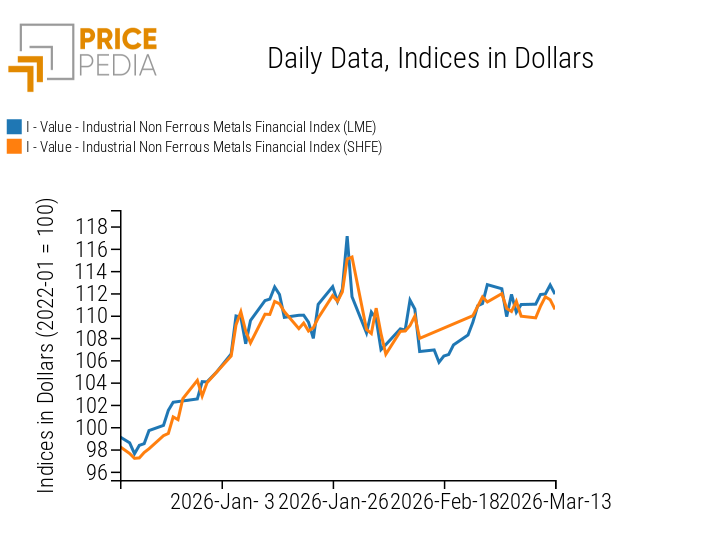
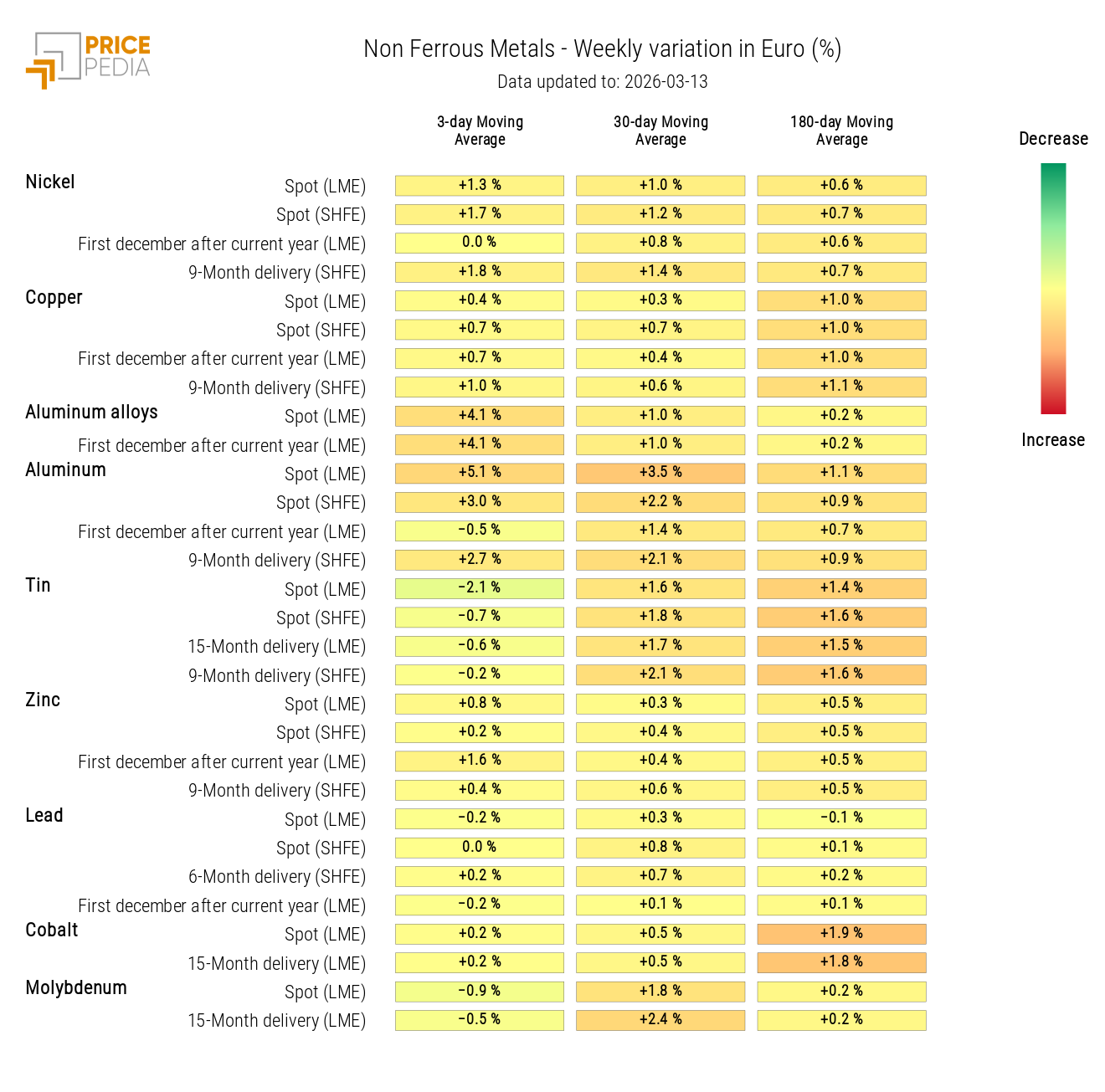
In the industrial metals market, price dynamics are mostly sideways, with the exception of aluminum, which on the London Metal Exchange (LME) surpassed $3500 per ton due to supply disruptions linked to the blockage of the Strait of Hormuz.
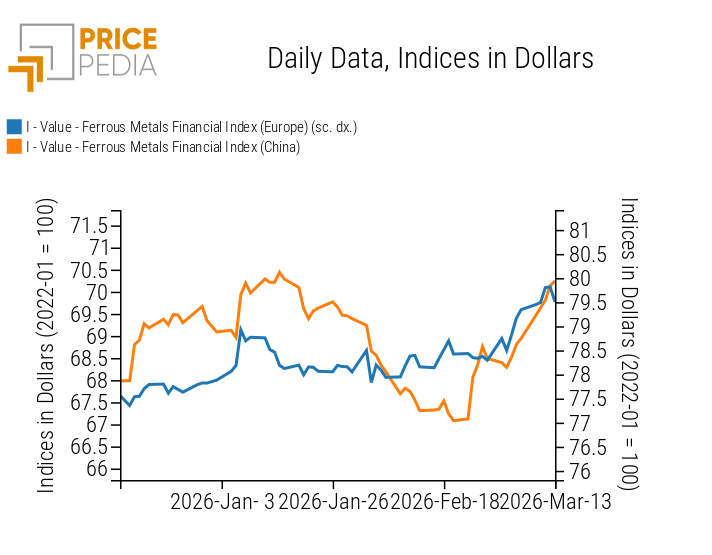
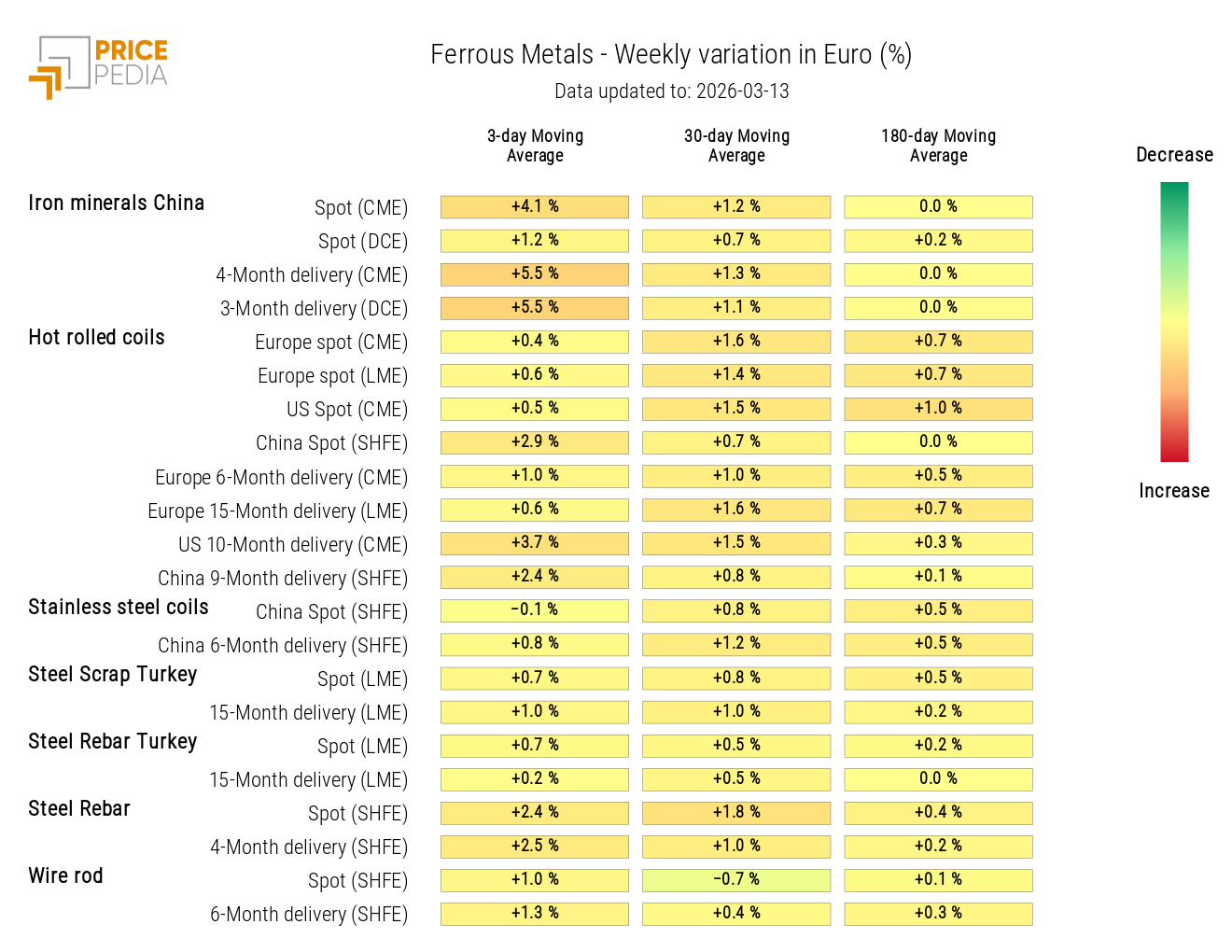
Among ferrous metals, increases are mainly observed on Chinese exchanges, particularly for iron ore, coils, and steel rebars. As for non-ferrous metals, in addition to the increase in aluminum and its alloys, there has been a rise in nickel prices. The latter is linked to expectations of possible production disruptions in Indonesia, where a significant portion of refining uses sulfuric acid produced from sulfur imported from the Middle East.
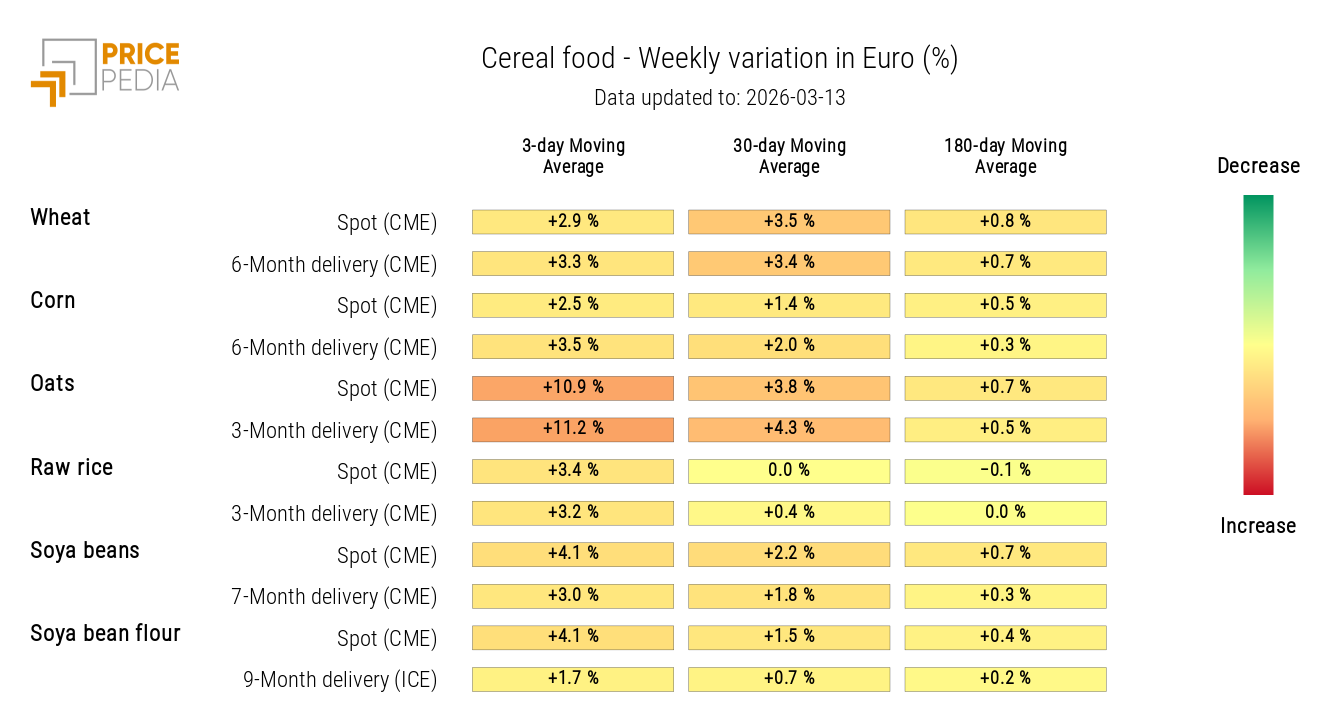
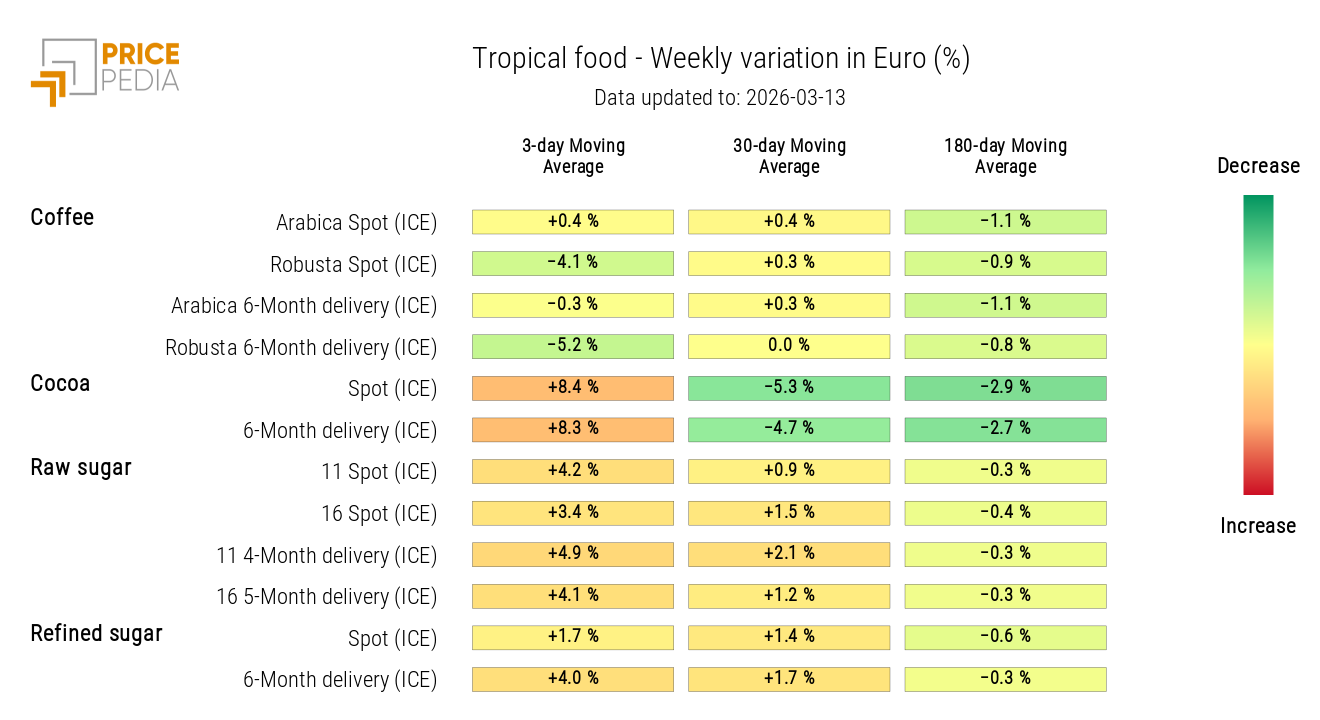
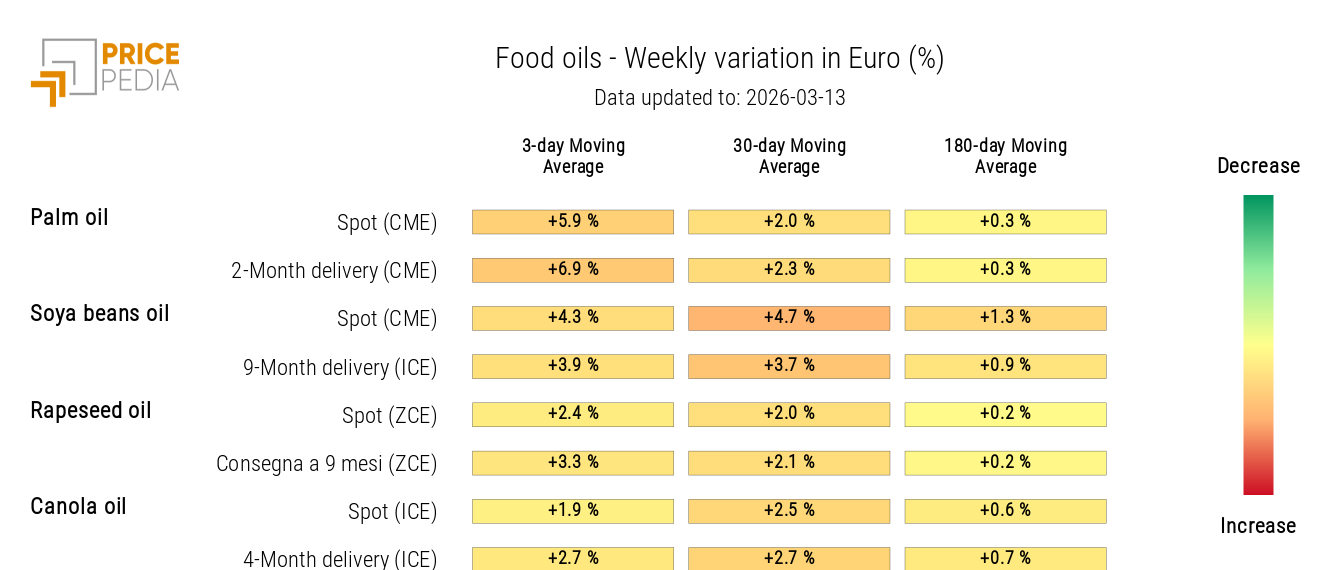
In the agricultural commodities sector, a particularly marked increase is observed in oat prices, which on the Chicago Mercantile Exchange have returned to levels of $3.63 per bushel. Other significant increases concern edible oils, cocoa, and sugar, the latter supported by expectations that, in the 2026/27 harvest, the Brazilian industry may allocate a larger share of sugarcane production to ethanol production. Among the declines, robusta coffee stands out, linked to improved supply prospects from Brazil.
US Inflation
The most recent data on U.S. inflation, measured by both the Consumer Price Index (CPI) and the Personal Consumption Expenditures (PCE), confirm the presence of persistent inflationary pressures, still far from the Federal Reserve’s (FED) 2% target.
In February, the CPI recorded a monthly increase of +0.3% and an annual increase of 2.4%.
PCE data, referring to January 2026, also show still significant inflationary pressures, with a monthly increase of 0.3% and an annual increase of 2.8%.
These data do not yet reflect the surge in energy prices in March caused by the escalation of the conflict in the Middle East. Markets therefore expect a possible increase in inflation in the coming months, which could delay potential rate cuts by the FED.
NUMERICAL APPENDIX
ENERGY
The PricePedia financial index of energy products shows strong fluctuations, with contrasting movements driven by developments in the Middle East conflict.
PricePedia Financial Index of energy prices in dollars
The energy heatmap highlights significant weekly increases in oil prices and its derivatives.
HeatMap of energy prices in euros
PLASTICS
The Chinese financial index for plastics and elastomers interrupts its upward trend, recording a sharp correction on Friday.
PricePedia Financial Index of plastics prices in dollars
PRECIOUS METALS
The financial index of precious metals shows a weekly decline in prices.
PricePedia Financial Index of precious metals prices in dollars
FERROUS
The financial index of metals in China shows a slight weekly increase, while the European one remains relatively stable.
PricePedia Financial Index of ferrous metals prices in dollars
From the heatmap analysis, an increase in Chinese prices of iron ore, coils, and steel rebars is highlighted.
HeatMap of ferrous prices in euros
Do you want to stay up-to-date on commodity market trends?
Sign up for PricePedia newsletter: it's free!
NON-FERROUS INDUSTRIAL
The two financial indices of non-ferrous metals show a slight increase in prices.
PricePedia Financial Index of industrial non-ferrous metals prices in dollars
From the non-ferrous heatmap analysis, increases in aluminum, aluminum alloys, and nickel prices are highlighted.
HeatMap of non-ferrous prices in euros
FOOD
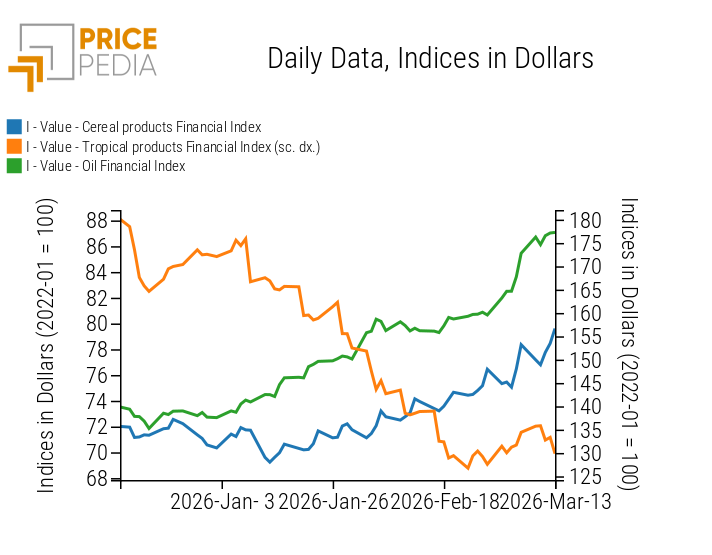
Indices for edible oils and cereals continue their growth phase, while the tropical index records a decline.
PricePedia Financial Index of food prices in dollars
CEREALS
The cereals heatmap shows a significant weekly increase in the 3-day moving average of oat prices.
HeatMap of cereal prices in euros
TROPICAL
The tropical heatmap indicates a recovery in cocoa and sugar prices, alongside a decrease in robusta coffee prices.
HeatMap of tropical food prices in euros
OILS
The edible oils heatmap shows a generalized increase in prices, particularly strong for palm oil.
HeatMap of edible oil prices in euros
You may be interested in:

Effects of the conflict in Iran on financial commodity prices
Published by Luca Sazzini. .
Conjunctural Indicators Commodities Financial WeekCommodity prices under pressure due to the blockade of the Strait of Hormuz [ Read all ]

Commodity markets under pressure amid geopolitical risks and trade uncertainties
Published by Luca Sazzini. .
Conjunctural Indicators Commodities Financial WeekFinancial prices of metals resume their upward trend [ Read all ]
Commodity prices amid geopolitical uncertainty and prospects for US tariff revisions
Published by Luca Sazzini. .
Conjunctural Indicators Commodities Financial WeekThe Supreme Court declares the Trump administration's global tariffs unlawful [ Read all ]