The impact of renewables on the PUN remains limited in the long run
There are still only few hours in which renewable sources set the price
Published by Luigi Bidoia. .
Electricity's National Single Price Electric Power Price DriversThe econometric analysis conducted on hourly PUN data makes it possible to attribute most of the divergence observed between gas prices and the PUN in the second half of 2025 to changes in the share of electricity generated from renewable sources[1]. The PUN, determined on an hourly basis (and, starting from October 2025, on a quarter-hourly basis), is set on the Day-Ahead Market (MGP) by the Italian power exchange operator according to the marginal pricing rule: the price is equal to the offer submitted by the most expensive producer whose output is required to fully meet the expected demand in a given hour or quarter-hour. In periods in which demand is met entirely by generation from renewable energy sources (RES), the price of electricity traded during that interval is relatively low, since the offer prices of RES are significantly lower than those of gas-fired power plants.
Renewables and the PUN price
The analytical question addressed here is whether a price-setting mechanism operating over very short time intervals is capable of producing significant effects over longer time horizons. While the hourly econometric estimation identifies the impact of renewables at the level of individual hours, it does not provide information on how frequently such conditions occur over the course of a month or a year. If, over the span of a year, the number of hours in which RES are able to fully cover demand is limited, the overall impact of renewables on the annual PUN may turn out to be modest—not necessarily in absolute terms, but relative to the other factors that contribute to price formation.
The table below reports a set of indicators that are useful for assessing how the main determinants of the PUN have changed over the past six years and what effects these changes have produced. This analysis complements the discussion of electricity consumption and the evolution of the generation mix in Italy presented in the article
How the Italian electricity market has changed over the last 6 years.
All data reported in the table are expressed in euros per MWh. The price of CO2 emission allowances, quoted in euros per tonne on the Intercontinental Exchange, has been converted into an equivalent price in euros per MWh by assuming an average emission factor of 0.35 tonnes of CO2 per MWh generated.
Determinants of the Italian National Single Price (PUN) (euro/MWh)
| 2019 | 2022 | 2024 | 2025 | Var% 2025/2019 | |
| Natural gas prices | |||||
| TTF | 14.7 | 123.9 | 34.5 | 36.2 | 146.9 |
| PSV | 16.0 | 123.7 | 36.6 | 38.6 | 141.0 |
| Thermoelectric variable costs | |||||
| Gas cost | 25.6 | 198.0 | 58.5 | 61.8 | 141.0 |
| CO2 cost | 8.7 | 28.3 | 22.9 | 25.9 | 197.9 |
| Margins and wholesale price | |||||
| Thermoelectric mark-up | 18.0 | 77.8 | 27.3 | 28.2 | 56.8 |
| Italian National Single Price (PUN) | 52.3 | 304.1 | 108.6 | 115.8 | 121.5 |
The analysis of the data reported in the table highlights the following key points:
- Over the period analysed, the price of natural gas in Italy has remained closely aligned with the dynamics of gas prices traded on the Dutch TTF market, with a slightly increased spread between the two prices.
- Between 2019 and 2025, the variable costs [2] of gas-fired power plants more than doubled for the gas component and nearly tripled for the CO2 emissions component. While in 2019 the cost of CO2 accounted for roughly one quarter of total variable costs for a gas-fired power plant, by 2025 this share had increased to around 30%.
- Sales margins for gas-fired power plants declined between 2019 and 2025, falling from 34% to 24%. However, this profitability indicator becomes less informative in a context—such as the current one—characterised by very large fluctuations in variable costs. Under these conditions, a more meaningful indicator is the change in the real value of the unit mark-up, adjusted for inflation. In the case of gas-fired power plants, the unit mark-up increased by 56.8% between 2019 and 2025, compared with cumulative inflation of 23%, pointing to a significant increase in real profitability.
- The increase in the profitability of gas-fired power plants, observed alongside a substantial rise in electricity generation from renewable energy sources between 2019 and 2025, indicates that hourly competition between renewable generation and thermoelectric generation has not yet produced appreciable benefits in terms of reducing the average annual level of the PUN.
From the PUN to the final price
The wholesale price of electricity determined by the Italian power exchange represents only one component of the total cost borne by firms for electricity supply. The final price paid by end users includes, in addition to the PUN, network costs, suppliers’ margins (generally incorporated into the energy component), excise duties and system charges.
The table below reports the mark-up applied to the energy component alone, derived from the best offers published by suppliers on the Portale Offerte, with reference to a contract characterised by an annual consumption of 100 MWh and a contracted capacity of 40 kW, values that are representative of a small artisanal or industrial firm. These data make it possible to analyse the changes in suppliers’ pricing policies over the past six years.
The table also shows the evolution of network costs per MWh and of system charges, including excise duties, calculated with reference to the same annual consumption of 100 MWh and a contracted capacity of 40 KW.
Finally, the table reports the actual costs per MWh borne by Italian industrial firms by size class. These figures reflect the effective overall burden paid by firms, based on existing contractual conditions, and are sourced from Eurostat: Electricity price statistics.
Suppliers’ margins for final customers (euro/MWh)
| 2019 | 2022 | 2024 | 2025 | Var% 2025/2019 | |
| Suppliers’ contract offers | |||||
| Energy component: mark-up vs PUN | |||||
| Variable-price contracts | 15.3 | 42.0 | 34.7 | 41.9 | 173.8 |
| Fixed-price contracts | 22.2 | 55.0 | 117.9 | 100.3 | 352.4 |
| Other bill components | |||||
| Network costs | 38.3 | 45.6 | 45.9 | 54.8 | 43.2 |
| Excise duties and system charges | 85.6 | 20.3 | 74.2 | 48.9 | -42.8 |
| Ex-post network costs and supply margins for: | |||||
| Micro enterprises | 76.2 | 2.6 | 93.4 | 111.9 | 46.8 |
| Small and medium-sized enterprises (SMEs) | 37.1 | -38.5 | 42.5 | 50.3 | 35.3 |
| Medium-sized enterprises | 28.4 | -29.4 | 28.6 | 28.6 | 0.6 |
| Large enterprises | 14.2 | -12.1 | 8.7 | 1.1 | -92.6 |
The analysis of these data highlights the following key findings:
- The 2022 energy shock prompted distribution companies to radically revise their pricing strategies, leading to a significant increase in the mark-up applied to the PUN for both variable-price contracts and, in particular, fixed-price contracts. In 2025, the best fixed-price contracts [3] offered by suppliers were almost five times more expensive than comparable contracts offered in 2019. This clearly indicates that, following the 2022 price shock, suppliers are willing to bear the risk associated with future price volatility only in exchange for a particularly high risk premium.
- Network costs have played a partial role in containing the increase in overall electricity costs faced by end users. Their growth, however, exceeded the rate of inflation over the period considered.
- System charges have been the cost component that most effectively mitigated the impact of high energy prices, at least up to 2025. In particular, 2025 benefited from the temporary suspension of system charges during the two central quarters of the year, which contributed significantly to lowering the final cost of electricity.
- From the perspective of prices actually paid by firms, supply margins differ markedly across firm size classes. For micro-enterprises, supply margins combined with network costs exceed 100 euros per MWh and have increased sharply over the past six years. For large enterprises, by contrast, these components are close to zero and have declined over the same period. This divergence reflects the stronger bargaining power of larger firms, which are better able to retain more favourable contractual conditions or to negotiate new contracts on improved terms.
Conclusions
The analysis presented in this article suggests that the increase in the share of electricity generation from renewable sources has so far had only limited effects on the overall annual expenditure borne by end users, through the channel of the PUN. More substantial effects may emerge in the future, as the number of quarter-hours and hours in which electricity generated from renewable sources is able to fully meet demand increases.
Changes in the PUN account for only part of the total costs borne by end users. A particularly important role is also played by distribution companies and by the public operator, both in their function as network managers and through fiscal and parafiscal charges. In particular, following the 2022 energy shock, distributors have significantly revised their pricing policies, transferring a growing share of market uncertainty onto final users.
This analysis is preliminary in nature, but it has the advantage of highlighting that an assessment of the electricity market, aimed at reducing the costs borne by firms for energy procurement, cannot be limited to the wholesale market alone. It must necessarily extend to the network and retail stages, which have a significant impact on the final price of electricity.
[1] See: The PUN price: neither inverse decoupling nor a CO2 effect.
[2] The costs of a power plant associated with gas consumption were calculated by assuming a gas input of 1.6 MWh to produce 1 MWh of electricity.
[3] Contracts offered by more than 200 suppliers on the Portale Offerte were ranked in ascending order based on total cost. The “best” contract was defined as the average of the first 10 contracts in the ranking.
You may be interested in:
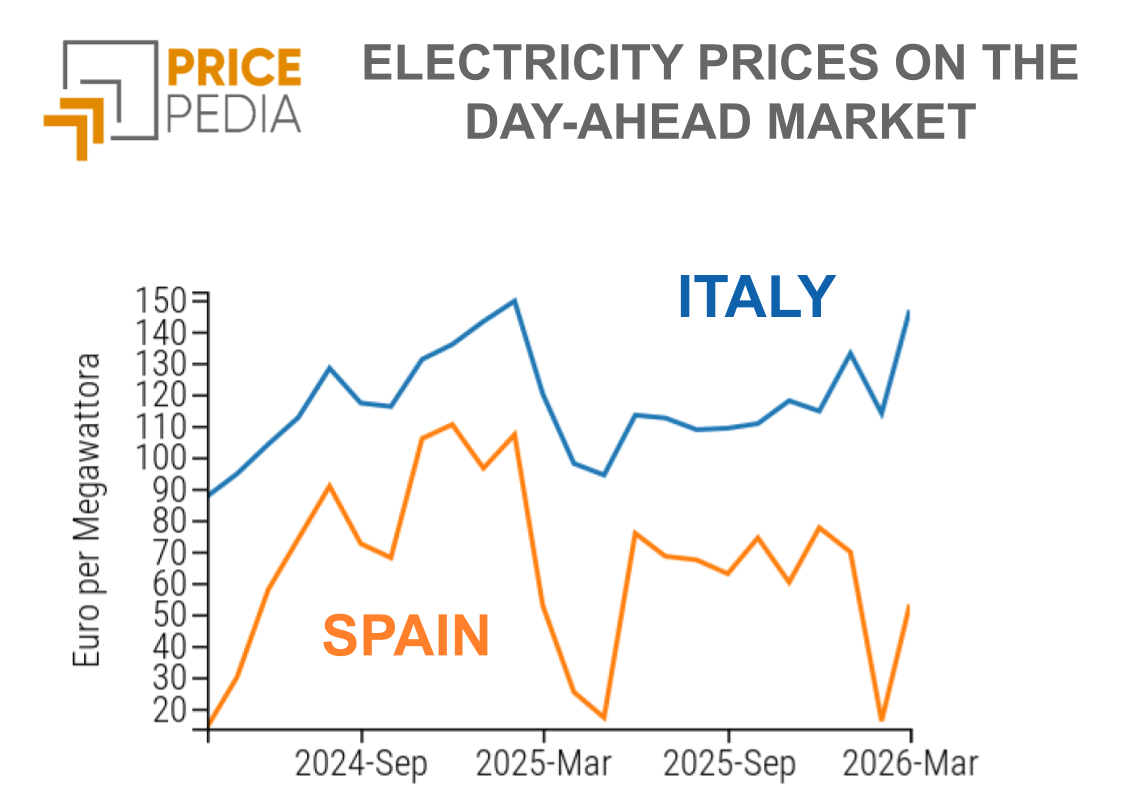
How Renewables Reduce the PUN’s Dependence on Gas Prices
Published by Luigi Bidoia. .
Electricity's National Single Price Electric Power Price DriversUna stima econometrica delle determinanti del PUN consente di misurare il contributo dei diversi fattori [ Read all ]

How the Italian electricity market has changed over the last 6 years
Published by Luigi Bidoia. .
Energy cost Electricity's National Single Price Electric Power Energy Transition Price DriversConsumi e mix produttivo: le basi per comprendere l’evoluzione dei prezzi [ Read all ]
PUN price: neither inverse decoupling nor a CO2 effect
Published by Luigi Bidoia. .
Electricity's National Single Price Electric Power Analysis tools and methodologiesLa quota di produzione da fonti rinnovabili spiega in larga misura il recente aumento del prezzo dell’energia elettrica. [ Read all ]